

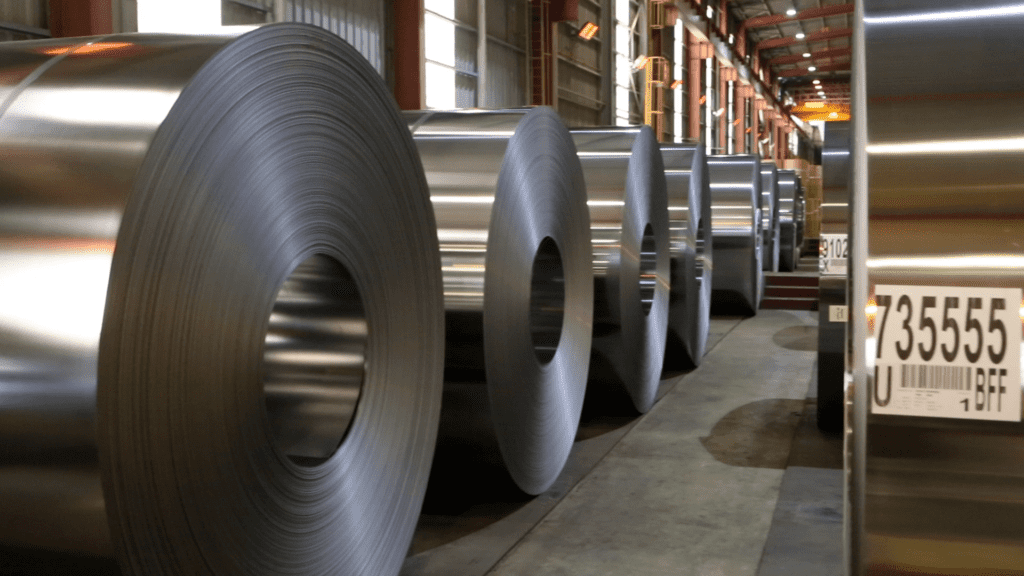
Demand on the rise in Italian HRC market; Northern Europe remains quiet
The European hot-rolled coil market remained quiet on Monday July 10, with few new trades reported. Prices were stable in the Northern European HRC market, while in the Italian market there was a slight price increase, which resulted from a reported improvement in trading.
Fastmarkets’ daily steel hot-rolled coil index domestic, exw Northern Europe was calculated at €680 ($745.76) per tonne on July 10, down by €2 per tonne from €682 per tonne on July 7.
The latest calculation of the Northern European index was stable week on week but down by €20 per tonne month on month.
Buyers in the region estimated tradeable values at €680 per tonne EXW for September-delivery HRC. Mill offer prices were reported at €680-800 per tonne EXW for September-delivery HRC.
“Northern European producers are trying to maintain higher offer prices but for large tonnages tradeable values are closer to €680 per tonne EXW,” a trader source told Fastmarkets.
In the week to July 7, mills in central Europe were reportedly targeting offer prices of around €750 per tonne EXW; however, this information was not widely confirmed by all market participants.
With trading slow and customers reluctant to restock, it remains uncertain whether the market will accept any further price rises.
Fastmarkets calculated its daily steel hot-rolled coil index domestic, exw Italy at €668.33 per tonne on Friday, up by €6.33 per tonne from €662 per tonne on July 7.
The Italian index was up by €18.33 per tonne week on week and up by €13.33 per tonne month on month.
In the week to July 7, mills were making higher offers of €680-700 per tonne EXW amid slightly improved apparent demand.
Buyers in the region estimated tradeable values at €660-670 per tonne EXW for September delivery HRC, while offer prices were reported on July 10 at €670-680 per tonne EXW for September delivery.
Market participants have turned more bullish because of indications that apparent demand has improved, Fastmarkets heard.
“The market conditions seem to be getting firmer,” a trader source said.
“There seems to be small improvement in apparent demand; however, restocking remains at rock-bottom prices,” a buyer source in the region told Fastmarkets.
Sources generally expect customers to restock before mills cut production for the summer months.
Import HRC offers from Asia were reported at €620-630 per tonne CFR to Italy on July 10.
Published by: India-Inés Levy


Wuppermann invests in Austrian tube mill
Wuppermann AG says it has approved the investment in the expansion of the tube mill at Wuppermann Metalltechnik GmbH (WMT) in Altmünster, Austria.
The planned total investment is around €40 million ($44m), Kallanish learns from the processor company, which is headquartered in Leverkusen, Germany, and has operations in Austria, Hungary and the Netherlands.
It plans to build a new hall complex for two tube welding lines and highly automated pre-material and finished goods warehouses. An adjacent plot of land, which was acquired in 2021, offers ideal spatial conditions to integrate the building into the landscape, Wuppermann notes.
It highlights the technological possibilities of the new tube welding line, with extensive automation of the entire tube production and logistics processes. “The use of artificial intelligence will bring us advantages, particularly in the quality of our products, but also in the efficiency of our processes,” says executive board spokesman Johannes Nonn.
Once all necessary permits have been granted, earthworks are scheduled to begin in 2024. After completion of the building, the installation of the tube welding line will follow. The existing tube welding line will remain in operation to guarantee an uninterrupted supply to customers. Production at the new tube welding line will start in 2025, after which the existing line will also be relocated to the new hall complex.
Christian Koehl Germany

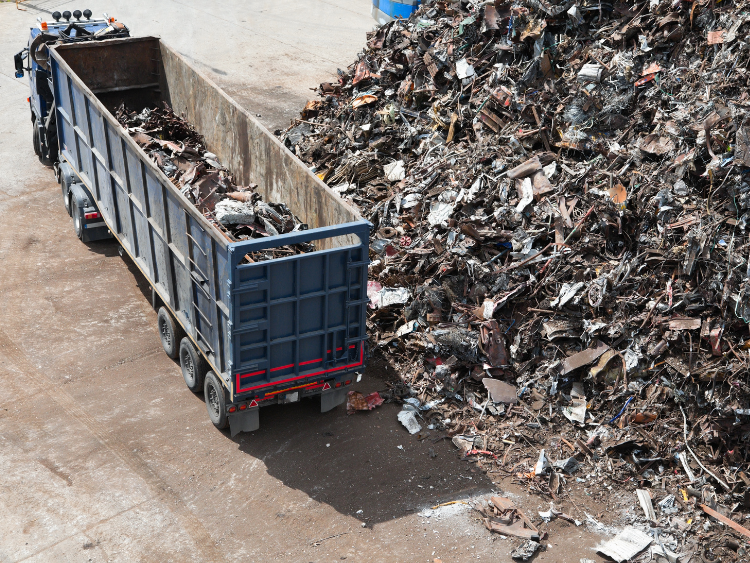
Alba axes steel scrap unit sale plan
German recycling group Alba Europe Holding says it has decided to stop the process for the sale of its listed steel and metal division Alba SE.
Last year, Alba Europe announced its intention to sell the majority of Alba SE (see Kallanish 11 March 2022), which is mostly owned by one of the holding’s owners, Eric Schweitzer. It cited the European Green Deal which would lead to a structural change in the steel industry in order to comply with climate protection. “We are therefore looking for a strategic investor” to share ambitions for organic growth and acquisitions, Schweitzer said then. He also pointed to the growing interest from steelmakers in securing direct access to scrap.
“The circumstances have changed fundamentally in the meantime,” Alba chief executive Robert Arbter says in the latest statement from the group. “The past year, with the Ukraine war and the European and German progress in climate protection policy, has shown that raw material and energy security are becoming more and more important.”
He notes the Alba SE unit has developed extremely positively despite volatile markets in a difficult environment, and that its business result for 2022 was above plan. The board therefore sees promising long-term development prospects and announced that the group will continue to invest in and develop its 21 steel and metal sites.
Christian Koehl Germany

Marseille judge suspends order to shut down Fos-sur-Mer
The administrative tribunal of Marseille has suspended the June labour inspection authority’s order to idle ArcelorMittal’s steelmaking facility in Fos-sur-Mer, southern France, due to excessive emissions, Kallanish notes.
On 16 June, the steelmaker was notified by the labour inspectorate of a decision to temporarily shut down the steel shop department of the Fos site. The shutdown would have also caused the shutdown of all other units. Faced with what it called “a disproportionate” and “totally unfounded” decision, ArcelorMittal has been working to avoid a plant stoppage and appealed to the Marseille tribunal (see Kallanish 28 June).
In the court document obtained by Kallanish, the judge says the closure of the site would generate considerable short and medium-term costs, “as well as a risk for the complex steel plant for which a shutdown process would take several weeks … Following exchanges with the labour inspectorate, the company has already implemented a certain number of measures”.
The steelmaker has also planned works in the short term to reduce pollution and has vowed to implement a feasibility study to modernise its steelmaking process to limit dust emissions. The judge concluded that the immediate shutdown of the steelworks “seriously undermines the freedom of trade and industrial activities”.
ArcelorMittal did not comment before press deadline.
Natalia Capra France
Rainfall hits Turkish Black Sea service centres, logistics
Heavy downpours have resulted in substantial damage to workplaces, houses and vehicles in several cities along the Black Sea coast of Turkey, with major mills Kardemir, Erdemir and Mescier nevertheless unaffected, according to market participants.
“The flood will affect the logistics operations because the Zonguldak-İstanbul and Zonguldak-Ankara highways have closed,” according to one participant.
On 9 July, the Disaster and Emergency Management Presidency (AFAD) of Turkey issued red alerts for 16 provinces nationwide to minimise the impact of severe rainfall, according to local media. The Zonguldak Eregli region was under water in a video published on the social media account of a trader and seen by Kallanish.
Crude steel producers were not affected, only warehouses, steel service centres and some re-rollers, according to market participants.
“There is a river at Ereğli which has some branch. Last weekend, it saw heavy rain and the dams overloaded; after that, the local authorities decided to open the dam gate. Then, near the river branch where many mills are located, the area came under water. Roads, houses, mills and steel service centres near the riverside are in the dangerous [zone] now. It will take 10-15 days for normal life to resume,” says one source.
There was no damage to the Mescier plant, but transportation is highly affected and vessels are unable to arrive at and exit ports, according to a market participant. Another source says those ports are used by small re-rollers in the Karabuk region, which mostly use them to import Russian billet and for limited export activity. No significant impact is expected on operations.
“There should be either no effect [from the flooding], or for a very short period, 1-2 days, after which it will settle,” a major producer source tells Kallanish.
“Cities and many villages are destroyed. I don’t know if something happened at the ports, but while cities and all their people are trying to survive there, we can’t expect a regular work flow, [including] in the ports,” a trading source observes.
“[Logistics operations in the] Karabuk region and local land roads are impacted; at the same time, there is not much effect on the steel market,” another trading source notes.
“Some steel service centre companies are affected, but we don’t know the full scale and possible effect at the moment,” a steel service centre representative opines.
“A few warehouses seem affected and I guess [affected material is] easily substitutable; all were commercial items,” a trader notes.
As of Monday, there was no impact on steel prices from the flooding damage. However, both flat and long steel prices were under pressure in general from last week’s semis price decrease by Kardemir and lower import prices, according to market participants.
Burcak Alpman Turkey , Elina Virchenko UAE