


Southern Europe rebar, wire prices steady; mills plan extended output cuts in long products to rebalance market
The rebar and wire rod markets in Southern Europe have been stable over the past week despite efforts – including planned production stoppages – by mills to boost prices.
Mills will start to suspend some operations during the summer months in an attempt to cut production costs and rebalance supply-demand dynamics, market sources said.
Fastmarkets’ price assessment for steel reinforcing bar (rebar) domestic, exw Italy was unchanged from last week at €670-685 ($749-765) per tonne on Wednesday.
Trading activity remained slow in the Italian rebar market where customers are opting only to restock in small volumes, sources said.
Although mills targeted prices of €685-700 per tonne exw, buyer estimates held at €670-685 per tonne exw, sources said.
Unpredictable energy costs and stable scrap costs have created resistance to a fall in prices while it remains to be seen whether the market will accept the mill’s attempts to raise prices.
Robust order books for July and August and improved exports could pressure prices upwards, sources suggested.
“Prices have risen as producers push for increases following further production cuts and significant tonnage exported for July-August delivery,” a producer source in the region said.
“Rebar prices are officially at €670 per tonne exw for new offers; however, deliveries are still taking place at lower levels,” a buyer source in the region said. “Demand is not so bad but it’s day by day – there’s not a run to buy… and no one is interested in buying big quantities.”
Prices in the Spanish rebar market dropped amid weak trading activity and a bearish outlook.
Fastmarkets’ price assessment for steel reinforcing bar (rebar), domestic, delivered, Spain was €640-650 per tonne on Wednesday, down by €20-35 from €660-685 per tonne last week.
Spanish mills will look to extend their summer closures by at least a week to rebalance the market, sources told Fastmarkets.
“Mills are attempting to raise prices but demand is not enough to support these price rises,” a producer source from Spain said.
Southern European wire rod
Fastmarkets’ assessment for steel wire rod (mesh quality), domestic, delivered Southern Europe was €590-610 per tonne on Wednesday, up by €10-20 from €580-590 since last week.
Prices rose in the Italian wire rod market because of mills targeting small price rises before summer stoppages. Demand has slightly improved because of buyers restocking in small volumes, Fastmarkets heard.
“Demand has stabilized at higher levels,” a producer source said. “We are targeting €590 per tonne exw at the moment.”
“A major integrated mill in the region has announced price rises of €30 per tonne exw but prices have not been accepted by the market yet,” a buyer source said.
Mills will shut down until mid-August at the earliest, with some mills planning extended output cuts, sources said.
Published by: India-Inés Levy

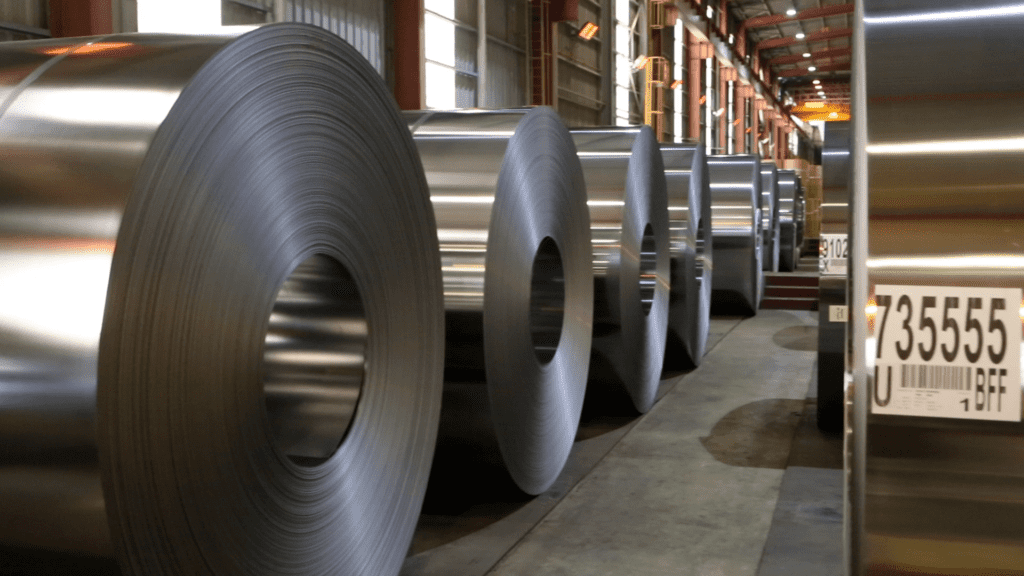
European HRC producers fail to achieve higher prices amid sluggish demand
European hot-rolled coil producers are struggling to achieve higher prices in deals while slow demand hampers their bullish attempts, Fastmarkets heard on Thursday July 13.
Even though the downtrend in the European HRC market has come to a halt and prices been stabilizing for a couple of weeks now, any attempts to push for an increase in price levels from the mill side have been largely unsuccessful, sources said.
“Demand is too slow [and] unsupportive of any rises. We should be happy prices have stopped falling now,” a trading source in Northern Europe told Fastmarkets.
Integrated mills in the region were heard offering September-October delivery coil at around €680-700 ($757-780) per tonne EXW, with buyers looking to pay no higher than €660-680 per tonne EXW.
Fastmarkets’ daily steel hot-rolled coil index domestic, exw Northern Europe, was calculated at €679.75 per tonne on Thursday, down by just €0.25 per tonne from €680.00 per tonne on Wednesday.
The latest calculation of the Northern European index was down by just €2.13 per tonne week on week, and down by €12.25 per tonne month on month.
The post-summer outlook is also quite dull due to persistently slow demand from the end-user side, according to sources.
Sources suggested that mills might start reducing output and taking some capacity offline in the fourth quarter to balance the market and spur at least apparent demand.
“I expect a stable market in the last quarter [of 2023] with flat prices, unless producers start switching off capacity; that might help spur buying a bit, but prices [for HRC are] unlikely to rebound sharply without a demand recover,” a distributor said.
Fastmarkets calculated its daily steel hot-rolled coil index, domestic, exw Italy, at €655.00 per tonne on Thursday, down by €1.88 per tonne from €656.88 per tonne on Wednesday.
The Italian index was down by €4.00 per tonne week on week, and by €5.00 per tonne month on month.
Demand for HRC in Italy also remained sluggish and most market sources do not expect major changes in conditions until the end of summer.
Local mills were aiming to raise prices to around €670-700 per tonne EXW, but transactions were still reported at €640-660 per tonne EXW maximum.
“Prices for processed HRC are still low. We are fighting for every euro of increase with buyers,” a steel service center source said.
HRC import prices have also stabilized recently, with offers from Asian mills reported at €600-630 per tonne CFR for September-October shipment, while one mill from Vietnam was offering HRC to Southern Europe at slightly lower levels – $645 per tonne (around €590 per tonne) CFR.
Published by: Julia Bolotova
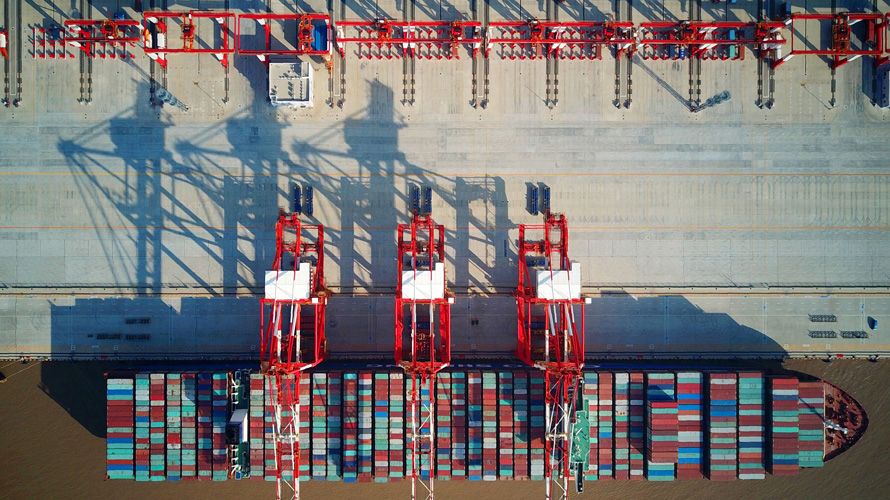
China’s finished steel exports rise 31% in H1, imports drop 35%
China’s finished steel exports increased sharply in the first six months of 2023, but imports decreased over the same period, according to data released by country’s General Administration of Customs on Thursday July 13.
Exports totaled 7.51 million tonnes in June, down by 0.7% year on year from 7.56 million tonnes and by 10.2% from 8.36 million tonnes in May.
Although June’s exports decreased, shipments in the first half of 2023 were up from the year-earlier period due to high export volumes in the past few months.
Exports totaled 43.58 million tonnes in the first half year, up by 31.3% year on year from 33.19 million tonnes (revised downward from 33.46 million tonnes previously), according to Chinese customs data.
China’s export prices of steel products were lower than the corresponding period of last year and lower than many suppliers in other regions due to the weak demand in the local market, so steel exports increased year on year, sources said.
For instance, Fastmarkets’ steel hot-rolled coil index export, fob main port China, averaged $634 per tonne and $563 per tonne in the first and second quarters of 2023 respectively. This compares with averages of $814 per tonne in the first quarter of 2022 and $773 per tonne in the second quarter of 2022.
At the same time, Fastmarkets’ price assessment for steel hot-rolled coil export, fob Black Sea, CIS, averaged $694 per tonne in the first quarter of 2023 and $616 per tonne in the second quarter of 2023. This is $60 per tonne and $53 per tonne higher respectively than China’s export prices over the corresponding periods.
But market participants were bearish on exports for the remainder of the year.
“The Russia-Ukraine war disrupted steel exports from these two countries in the first half year, so Chinese exporters got the chance to sell more steel to the international market,” an exporter in Shanghai said.
“But some suppliers have increased their export volumes over the past few months, which would be strong competition for China. Chinese steel may not be the first choice for foreign buyers in the second half year,” he added.
For instance, Vietnam exported 4.38 million tonnes of iron and steel in the first five months of 2023, up by 10% from 3.98 million tonnes in the same period of last year, according to Vietnamese customs data.
China’s imports of finished steel totaled 3.74 million tonnes in the first half of 2023, down by 35.2% year on year from 5.77 million tonnes, according to the country’s customs data.
China imported 612,000 tonnes of finished steel in June, down by 22.6% year on year from 791,000 tonnes and by 3% month on month from 631,000 tonnes.
Published by: Jessica Zong

ArcelorMittal Europe launches low-emission steel pipe
ArcelorMittal has launched new low-emission steel pipe in Europe, with up to 75% less CO2 equivalent, Kallanish learns from the company.
ArcelorMittal Europe say its Tubular Products division is able to manufacture and offer the first low-carbon-emission hollow sections made from the company’s recycled and renewable XCarb steel. It uses a high percentage of scrap and 100% renewable electricity. The electricity used comes from renewable sources, such as wind and solar, and is supplied through a recognised guarantee-of-origin system.
To calculate the total CO2 impact of the company’s low-carbon steel pipes, customers can use the figures provided in the Environmental Product Declaration (EPD). EPDs are publicly available documents based on a lifecycle assessment methodology and independently certified by a third party.
The pipe solutions aim to help companies in the construction, agriculture and energy sectors on their path to decarbonisation, to meet the climate targets set out in the Paris Agreement and the European Green Deal.
ArcelorMittal Europe – Tubular Products claims to be the region’s largest manufacturer of steel tubes, producing at 15 sites in Europe.
Christian Koehl Germany

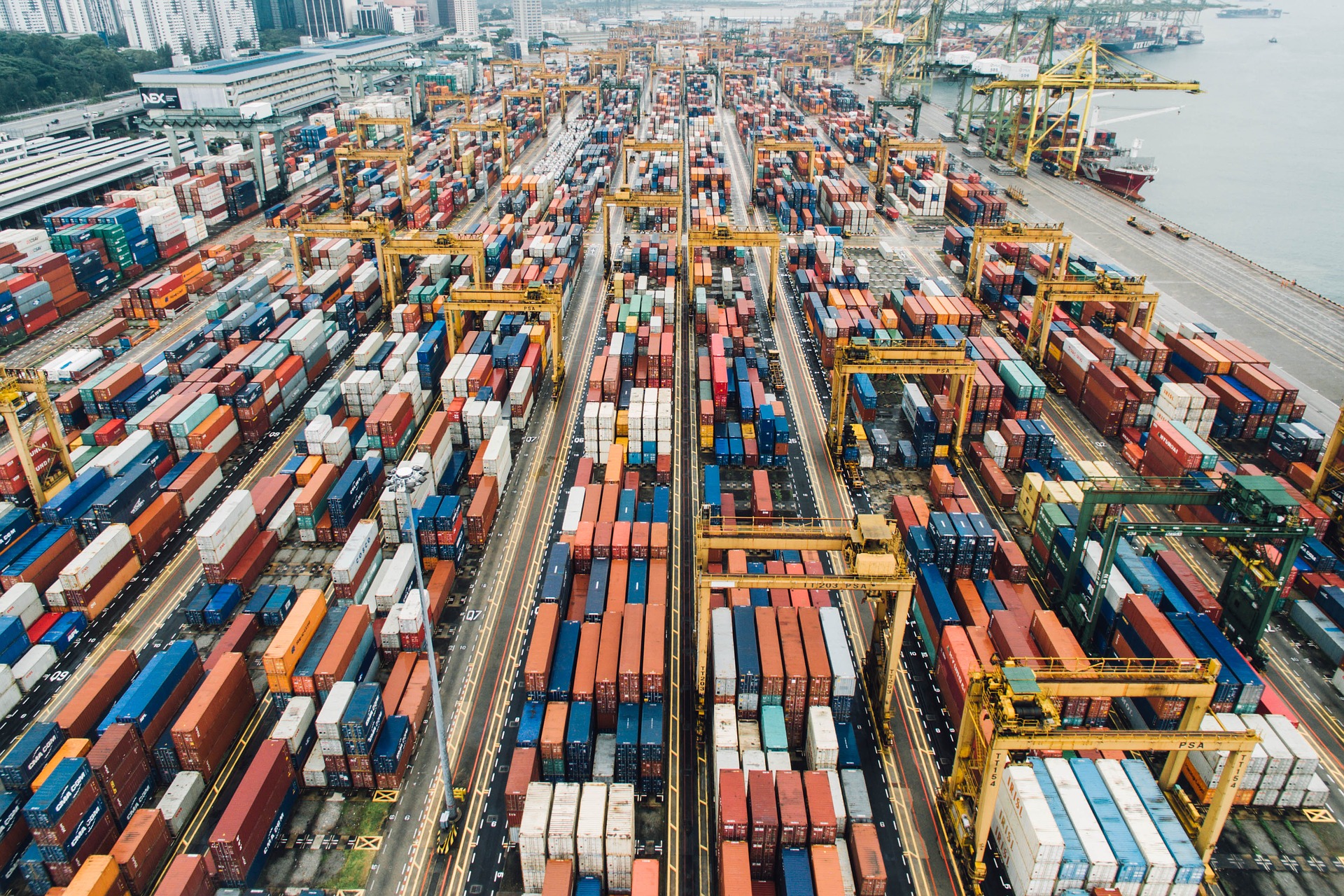
EU sets China/Turkey bulb flats provisional duties
The European Commission has announced the imposition of provisional anti-dumping duties on the import of steel bulb flat bars from China and Turkey.
This follows an investigation that was opened at the end of last year, following a complaint lodged by Spain’s Laminados Losal.
Chinese-origin imports will be subject to an anti-dumping duty of 14.7%, while Turkish imports are levied with 13.6%. The investigation is set to determine a definitive duty by the beginning of 2024, Kallanish notes.
Emanuele Norsa Italy

German construction orders decline for 13th month
Germany’s construction companies are pessimistic in their mid-term outlooks, expecting business to weaken further in the second half of the year, says association Hauptverband der Deutschen Bauindustrie (Bauindustrie).
It cites a poll in which 39% of all construction companies surveyed anticipate negative development. When asking residential construction companies, that number rises to 57%. That segment has been hit the hardest by inflation and rising interest rates, with many projects stopped or suspended, Kallanish understands.
The association reports some success for public construction/civil engineering, for example for railway projects, but not enough to make the overall picture rosier.
Nominal revenue in April was still slightly positive (+2.7%) year-on-year, but due to rising costs, real revenue was down 10.8%. Order intake fell by the same degree, and again more severely for residential construction, by 29.8%. Bauindustrie notes this is the 13th consecutive month of decline.
According to a manager at a big rebar distributor with activities in neighbouring countries, the construction economy in Germany is suffering even worse than in France, Spain, Italy or Poland.
On the intake side, mills’ base prices for rebar have sunk to around €330/tonne ($369), which plus the size extra of €265 would give €595/t delivered. Scrap prices have fallen accordingly, but not to the degree of the final product. Many therefore believe rebar prices have bottomed as mills will be unable to bear any further drops.
Christian Koehl Germany

High inventories may impact September restart: Assofermet
The scrap price increases in Italy towards the end of June have not spurred a scrap sales volume recovery.
“Considering mills’ still-elevated stocks of finished products, it is necessary to be cautious when talking about a recovery, as this large availability may have an impact on September and delay the market resumption [after August stoppages],” says Italian trade association Assofermet in a market note monitored by Kallanish.
The first days of June saw a further scrap price reduction after the steep declines in May. The decline however was balanced by mills’ lower needs and reduced scrap availability.
The June price reduction allowed several collection and recycling facilities to limit their sales and increase their stocks in view of a market recovery. This attitude caused prices to hike by €10-15/tonne ($11-16) in the second part of June, the association says.
Meanwhile, the pig iron market has been quiet in Italy, with demand weak. In June, mills bought almost no pig iron. Foundries have continued to procure material despite facing lower orders. Prices have moderately decreased over recent weeks due to low demand, Assofermet concludes.
The measure implemented in March 2022 by Italy’s economic development ministry (Mise) requiring scrap companies to notify authorities of every export sale has been extended until 31 December 2026 (see Kallanish passim). In the previous text of the measure, sellers were required to wait 20 days from the date of declaration before being permitted to ship their cargo. This has now been extended to 60 days.
“The action of the 60 days notification is a further obstacle to exporting and makes life difficult for our companies that do not benefit from the same government help as mills,” a source close to the association tells Kallanish. Italy is the only country in Europe trying to limit exports. Assofermet is against the move, as it strongly penalises one part of the value chain. The association will attempt to negotiate a rectification of the measure.
Scrap within the EU is structurally redundant and in surplus compared to the market requirements of EU steelmakers, while EU scrap consumption continues to be lower than collection, the association points out. From 2005, steel production in Europe has been steadily decreasing, falling from 182.3 million tonnes then, to 152.6mt in 2021, with a low of 132.2mt registered in 2020 due to the Covid pandemic, Assofermet concludes.
Natalia Capra France