


Negative sentiment intensifies in European HRC market on low demand
The mood in the European spot hot-rolled coil market was strongly negative July 14 due to limited demand and a seasonal activity slowdown.
Offers from integrated Northwest European mills have been limited as some have full order books until October. Scheduled maintenance during summer and healthy demand from the automotive industry supported those solid order books.
Other integrated mills, however, had August rolling coil to offer, indicating limited demand from distributors.
Spot demand has been low as European distributors have held back from bookings due to an uncertain outlook for the second half of 2023, sufficient stock volumes and weak demand from end-users, apart from the auto industry.
Market participants estimated HRC prices from Ruhr-area mills at Eur660-680/mt ex-works Ruhr, and offers from Northwest European mills outside the Ruhr area have been heard at Eur650-660/mt ex-works.
Some market sources believe that the mills, including those in Germany, were ready to give discounts to prices below Eur650/mt ex-works for bigger volumes.
Platts assessed domestic prices for hot-rolled coil in Northwest Europe down by Eur5/mt day on day to Eur660/mt ex-works Ruhr July 14.
“Market is almost dead,” a service center source said. “Demand from automotive industry is there, but construction and other industries is weak. And market has weakened further as Europe is entering slow summer period.”
Platts assessed domestic prices for hot-rolled coil in South Europe at Eur655/mt ex-works Italy July 14, unchanged day on day.
Tradable values have been heard at Eur650-660/mt ex-works Italy, and offers have been close to Eur700/mt ex-works Italy.
The strengthening of the euro against the US dollar has resulted in a price decline for imported coil. Although European buyers have shown little interest in overseas coil due to long lead times, they have been trying to use cheaper imports as leverage in negotiations with the EU mills.
Platts assessed imported prices for hot-rolled coil in South Europe down by Eur5/mt day on day to Eur595/mt CIF Italy July 14.
Offers of HRC from Vietnam have been heard at $640-$650/mt CIF Italy and from other Asian suppliers around $670/mt CIF Italy.
Author Maria Tanatar
LME scrap, rebar future contracts weekly trading volumes increase
Weekly LME scrap futures trading volumes over the week to July 13 totaled 132,030 mt, up from 43,250 mt recorded during the week ending July 6.
Platts, part of S&P Global Commodity Insights, assessed the LME July contract up $3.50/mt week on week to $373/mt on July 13, while August dropped $2/mt to $369/mt, September fell $1/mt to $371.50/mt and October softened $2/mt to $372/mt.
The soft contango over the July-August portion of the forward curve for Turkey scrap futures on the LME shifted to a soft backwardation, highlighting future traders’ expectations that prices for scrap in the physical market might weaken in the near term.
The soft contango over the August-October portion of the forward curve remained stable.
Spot prices for physical imports of premium heavy melting scrap 1/2 (80:20) decreased $5/mt week on week to $370/mt CFR Turkey on July 13, as Turkish mills targeted lower levels due to recent declines in domestic rebar and billet prices, while sellers resisted a significant fall in prices.
“With the current exchange rates, the European recyclers will be out of the game. The Turkish mills need no more than 20-25 deepsea cargoes for August shipment, so the buyers will be in no rush to import from US and Baltic suppliers,” a Turkish mill source said. Some market sources reported that Turkish mills were currently more inclined to purchase cheaper billets compared to imported scrap.
Most near-term rebar futures contracts on the LME also saw losses over the week to July 13, as buyers continued to view Turkish rebar prices in the export market as too high to work, despite lowered offers for Turkish rebar in the export market week on week. In addition, with cheaper options available from rebar exporters in other regions and weak demand in the domestic rebar market, rebar prices remained under pressure for both domestic and export markets for Turkish mills.
Platts assessed the July contract down week on week by $7/mt to $583.50/mt on July 13, while the August contract lost $9.75/mt to $579.50/mt, September was flat at $585.50/mt and October dropped $4/mt to $581.50/mt.
The backwardation over the July-August portion of the forward curve for Turkey rebar futures on the London Metal Exchange strengthened, highlighting that futures traders continued to expect softening of near-term rebar prices in the physical market.
The soft backwardation over the August-September portion of the curve shifted into a soft contango, while the flattened structure over September-October shifted into backwardation.
Turkish physical rebar export prices dropped $19/mt week on week to $580/mt FOB on July 13. The daily outright spread between Turkish export rebar and import scrap was assessed at $210/mt, down $14/mt.
Rebar futures weekly trading volumes in the week to July 13 on the LME totaled 4,900 mt, up from 1,430 mt recorded over the week to July 6.
Elsewhere, LME Indian scrap futures, which settle basis the Platts CFR Nhava Sheva shredded scrap assessment, traded 120 mt week on week to July 13. The contract has seen a total volume of 14,310 mt traded since its launch in July 2021.
Author Rabia Arif

Polish rebar prices stabilize in slow market
Official offer prices from two local producers were heard during the assessment week at 2,750-2,800 zloty ($692-705) per tonne CPT. This is roughly equivalent to 2,700-2,770 zloty per tonne EXW, and compares with 2,650 zloty per tonne CPT in mid-June.
Transaction prices, however, were still reported at lower levels – around 2,700-2,720 zloty per tonne CPT (2,650-2,690 zloty per tonne EXW).
Sources reported a slight uptick in apparent steel demand in July, related to limited restocking, but traded volumes remained limited in general.
Fastmarkets’ weekly price assessment for steel reinforcing bar (rebar), domestic, exw Poland was 2,650-2,700 zloty per tonne on Friday, unchanged since June 30.
In the secondary market, rebar prices were reported at 2,760-2,800 zloty per tonne CPT, compared with 2,750-2,760 zloty per tonne CPT in the preceding week.
Sources expect domestic rebar prices in the nation to stabilize in July, despite mills’ attempts to raise prices.
“Demand from construction is not strong enough to back any rises. Any revival of demand can happen no earlier than at the end of Q3 or Q4 2023, when Poland can, in theory, get access to EU funds,” a trading source said.
Import rebar offers to Poland were also flat week on week.
Rebar offers from Hungary and Germany were heard at €610-615 per tonne CPT Poland during the assessment week.
At the same time, Italian producers were aiming for €610-620 per tonne CPT.
Most import suppliers could offer lead times of 2-3 weeks to Poland, sources said, because they were selling from stock.
Published by: Julia Bolotova


European HRC buyers prefer to hold back from trading
Fastmarkets’ daily steel hot-rolled coil index domestic, exw Northern Europe was calculated at €672.25 ($737.59) per tonne on July 14, down by €7.50 per tonne from €679.75 per tonne on July 13.
The latest calculation of the Northern European index was down by €9.75 per tonne week on week and by €19.63 per tonne month on month.
Continued slow trading and a “hand-to-mouth” approach to bookings from most buyers have prevented prices from rising.
“No restocking is happening [right now] — as opposed to the expectations we had in June, most buyers are only [interested in] small tonnages,” a mill source said.
Distributors and steel service centers reported very slow sales in the downstream markets, along with difficulties in getting end users to accept higher prices.
“We have to fight for every [single] euro increase with our customers, so obviously we do not see any room for HRC price rises,” a service center source in Germany told Fastmarkets.
Most buyers put the tradable value of HRC in Northern Europe at €660-680 per tonne EXW on Friday.
Mills in the region were aiming for around €680-700 per tonne EXW for September-October delivery coil, but the upper end of the range was not deemed workable by most buyer sources.
One trading source reported a sale of HRC from Central Europe to Germany at €670 per tonne delivered.
Meanwhile, offers for September-delivery HRC from Italy were reported at €710-720 per tonne CPT to Germany, with one buyer reporting a small-tonnage transaction at €700 per tonne CPT earlier this week.
Fastmarkets calculated its daily steel hot-rolled coil index, domestic, exw Italy at €655 per tonne on Friday, unchanged from Thursday.
The Italian index was down by €7 per tonne week on week and by €1.13 per tonne month on month.
Trading was also quiet in Italy, where — despite recent reports of an uptick in demand — local buyers also preferred to only book small tonnages to cover their urgent needs.
“There has been a small improvement in apparent demand [for HRC], but buyers are aiming to restock at rock-bottom prices,” an Italian service center source said.
Official offer prices from local mills were reported €670-700 per tonne EXW for September delivery coil.
But buyers put the tradable level at €640-660 per tonne EXW, with transactions reported within that range.
Offers for September- to October-shipment HRC from Asia were heard at €590-630 per tonne CFR, with the lower end of the range reflecting offers from Vietnam.
Published by: Julia Bolotova
Tk Materials develops Automotive Circularity Platform
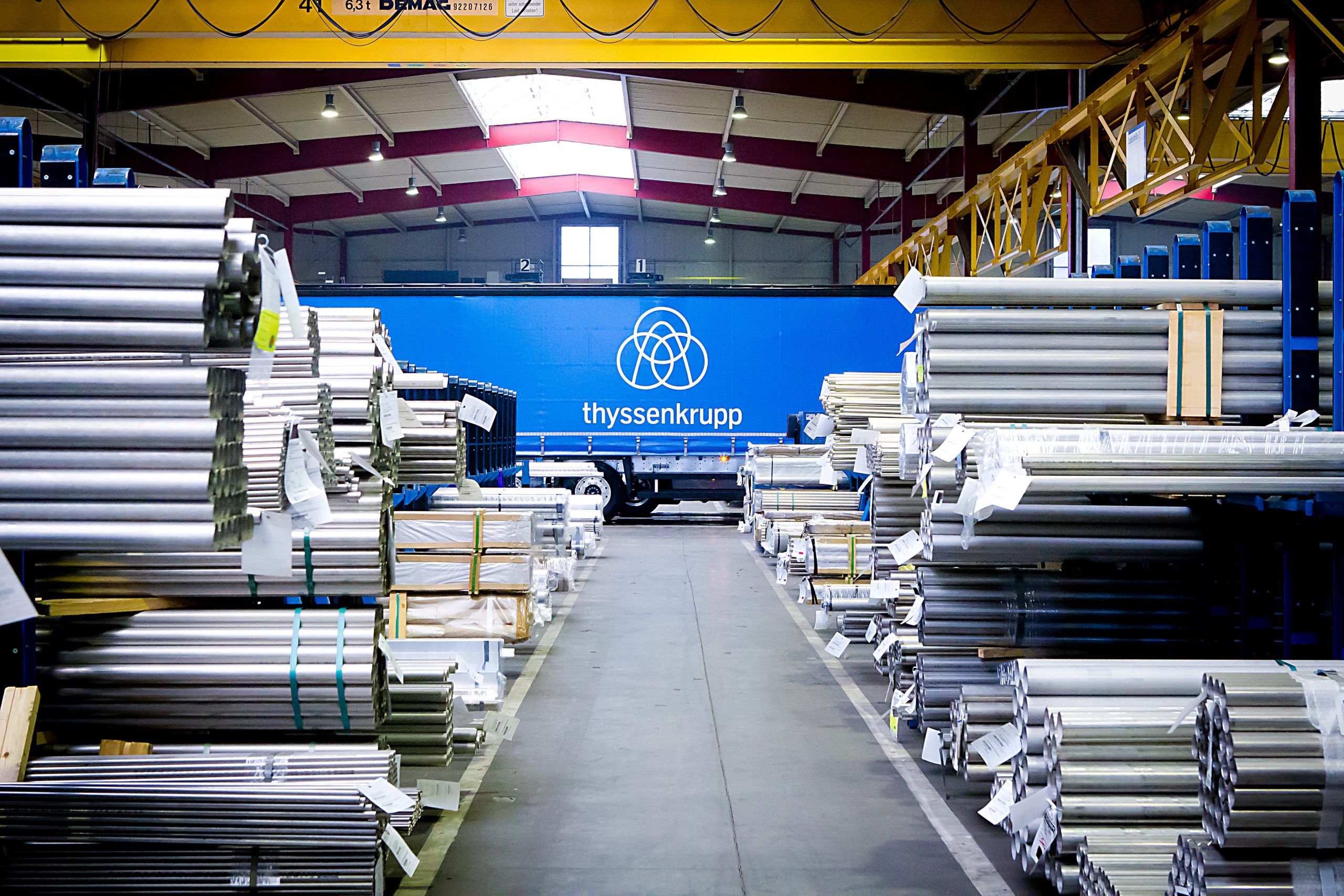
With its Automotive Circularity Platform (ACP), the company is seeking to digitalise the market for secondary materials recovered from end-of-life vehicles (ELVs). For this purpose, it has joined up with and Novelis Inc., a leading sustainable aluminium solutions provider and leading player in aluminium rolling and recycling.
ACP will be a digital marketplace that connects stakeholders throughout the automotive end-of-life value chain and empowers automotive suppliers to capture and reuse any materials, such as steel, plastics, and more.
The platform “can be used by any company involved in the production and processing of primary scrap (like steelmakers, carmakers) or scrap collectors handling secondary scrap from ELVs,” a tk Materials spokesman tells Kallanish. On the other end, ACP addresses also companies on the receiving end of the value chain, meaning mills.
The first step is to create a prototype of the platform for comprehensive testing and evaluation purposes. The results of the proof-of-concept analysis will serve as feedback for both companies to make enhancements and explore the possibility of wider adoption and use by their respective industry partners, tk Materials says.
Christian Koehl Germany

SSAB, Kirchhoff collaborate on fossil-free steel
Steel is the main component of cold-formed body parts such as those produced by Kirchhoff Automotive, located in southern Westphalia. Through the collaboration, Kirchhoff’s safety-relevant structural components will be manufactured with SSAB’s proprietary SSAB Fossil-free Steel. The automotive supplier announced earlier this year a similar cooperation with ArcelorMittal (see Kallanish 2 March 2023).
Kirchhoff’s crash boxes, lower beams and closure plates are manufactured using the cold forming process, and the individual parts weigh between 300g and 1.3kg. By using SSAB Fossil-free Steel, Kirchhoff expects to cut almost 40% of emissions in the production of a front bumper.
SSAB Fossil-free Steel uses direct reduced iron and is produced without using fossil energy. Instead, biogas and fossil-free electricity are used. The quality and properties of this material are just as good as those of the steel conventionally produced by SSAB, the steelmaker points out.
Christian Koehl Germany

Stalprofil commences new warehouse construction
Stalprofil has contracted P.B.M. Mostostal Będzin to build a high storage warehouse at its Dabrowa Gornicza site for PLN 22 million ($5.6m), Kallanish notes.
The new unit, scheduled for completion by end-2024, will have the capacity to stock 12,000 tonnes of steel products. It is part of the Polish distributor’s warehouse and logistics infrastructure expansion and modernisation programme.
The new warehouse will enable the addition of new steel products to the firm’s offering, shorten lead times for deliveries, and ensure greater automation and computerisation of the customer service process.
Stalprofil posted a 30% on-year reduction in standalone first-quarter revenue to PLN 232.6 million ($55.9m), while net profit slumped 89% to PLN 4.05m. Lower steel prices seen towards the end of 2022 continued in Q1, resulting in single-digit distributors’ margins.
Adam Smith Poland

Galati installs plate cooling unit, targets new markets
The new technology will enable the company to address the most profitable market segments, increase department productivity, expand the value-added product portfolio and improve the quality of finished products for the offshore, shipbuilding, construction and pressure vessel markets, the Romanian steelmaker says.
This will reinforce its commitment to customers in Romania, Central and Eastern Europe, the Middle East and America, the firm adds.
The technology, a MULPIC (Multi-Purpose Interrupted Cooling) system and water treatment plant, will be supplied by Primetals.
“The integrated cooling system is essential for modern plate mills, as we have here at Galati, to produce higher strength and value-added grades which require higher cooling rates and better cooling accuracy,” Liberty Primary Steel & Mining chief executive Sandip Biswas says in a note seen by Kallanish. The project should be completed by end-2024.
Galati’s heavy plate mill produces plate up to 4,000mm wide and 180mm thick, including thermo-mechanically controlled processed (TMCP) grades. It also has a fully integrated flow including a new hot leveler machine, US testing machine and a marking machine.
Last month, Galati received approval from a local Belgian court to acquire the coil rolling mills of Liberty Liège (see Kallanish passim).
Adam Smith Poland