

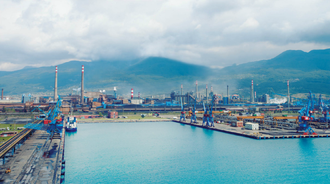
Antidumping duty hits Turkish mills’ coated coil exports to EU
Turkish exports of coated coil in widths of 600 mm and above in the first five months of 2023 fell 50% year on year to 342,500 mt, hit by antidumping duties imposed by the European Commission and low demand in most main export markets, including the US.
The EC last August announced antidumping duties on hot-dip galvanized steel coil and sheet imports from Russia and Turkey for five years.
Turkish HDG exports are subject to anti-dumping duties of 10.5% for MMK Metalurji, 2.4% for Tatmetal, and 11% for all other steel companies.
According to Turkish Statistical Institute data, exports to only Romania remained strong year on year in over January-May at 61,000 mt, after rising 1.5%, while shipments to other EU countries remained affected by the duty.
One of the sharpest declines was seen in shipments to Spain, which was Turkey’s second top export destination a year ago with 80,300 mt. Turkish mills shipped only 11,200 mt of coated coil to that country in January-May, while exports to Italy declined 70% to 10,400 mt.
Exports to Greece declined 42% to 25,700 mt, while shipments to Bulgaria totaled 21,000 mt, down 28%
One of the sharpest decline was seen in exports to the US with shipments slumping to 11,000 mt from 137,000 mt a year ago.
Turkish mills’ shipments to Canada fell 10% to 26,600 mt, while Ukraine became one of Turkey’s top export destinations with 36,000 mt in the five-month period, up 56%.
Platts, part of S&P Global Commodity Insights, last assessed the weekly Turkish HDG price at $840/mt ex-works July 14, down 2.9% week on week.
Author Cenk Can

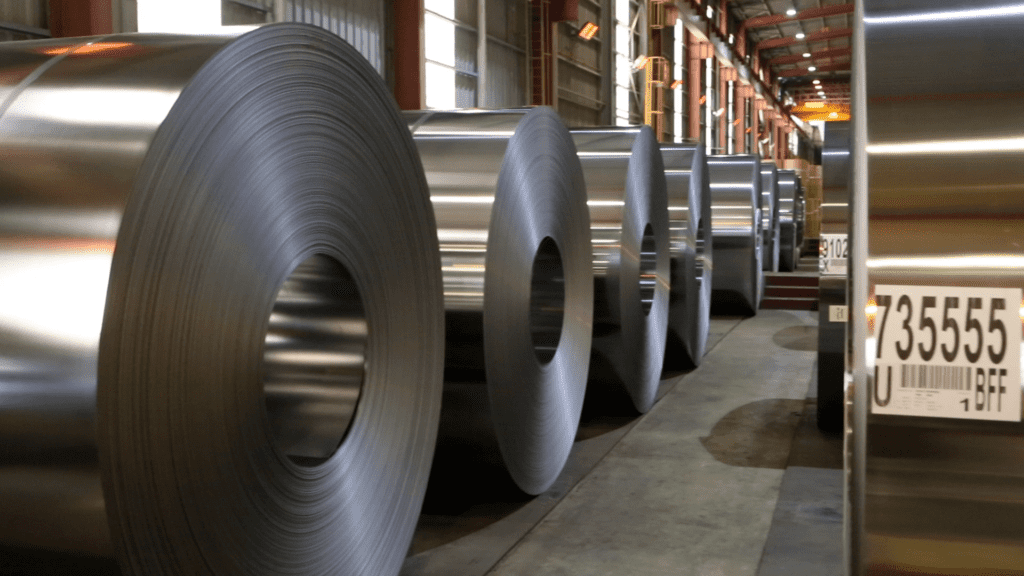
Northwest European HRC offers limited, buyers show higher interest in imports
The current exchange rate between the euro and the US dollar has supported buyer interest in imported HRC, sources said.
A transaction for HRC originating from Taiwan has been heard at Eur605-610/mt CIF Antwerp, and offers and tradable values for Asian material have been reported at Eur600-610/mt CIF Antwerp.
Platts assessed prices for imported HRC in Northwest Europe at Eur605/mt CIF Antwerp July 19, down Eur5.
“Import will remain competitive even with longer lead times, the first attempt of the European mills to increase offers would attract more overseas coil,” a trader said.
In the meantime, only a couple of NWE steelmakers have been active in the market, as others have reported full order books and some were planning summer maintenance, including the relining of blast furnaces.
The range of offers in Germany has also been wide—a re-roller has been offering HRC at Eur620/mt delivered Germany, some NWE integrated mills have been aiming for prices of Eur680-700/mt, delivered Germany, and offers from Central Europe have been reported at the equivalent of Eur650-660/mt, delivered Germany.
And market participants estimated tradable values at Eur650-680/mt EXW Ruhr.
Platts assessed prices for HRC produced in Northwest Europe at Eur660/mt ex-works Ruhr July 19, stable on the day.
“German mills are not really active, and they do not give official offers,” a German service center said. “So, prices should be stable, at least that is the sentiment, but in reality, they keep slowly sliding. And there are some steelmakers ready to give discounts.”
Platts assessed prices for HRC produced in Southern Europe at Eur655/mt EXW Italy July 19, unchanged.
Demand has been gradually decreasing as the European market enters a traditionally slow period in the second half of summer. In addition, distributors have been avoiding the booking of bigger lots due to an uncertain outlook for September. The blurry consumption expectations were caused by low demand from the majority of end-user sectors, with the exception of the automotive industry.
Author Maria Tanatar

US to continue AD, CVD duty orders on steel wire rod from 10 countries
The US International Trade Commission issued an affirmative determination July 19 to continue the existing antidumping and countervailing duty orders on imports of wire rod from 10 countries.
The decision follows a five-year sunset review of the existing antidumping orders covering these imports from Belarus, Italy, Russia, South Africa, South Korea, Spain, Turkey, Ukraine, the UAE and the UK and the countervailing duty order on wire rod imports from Italy and Turkey.
The Commerce Department in March determined that removing the existing duties would likely lead to the continuation or recurrence of dumping and subsidies.
Commerce listed the following likely dumping margins that would occur or recur if the duties were to be revoked: up to 280.02% for Belarus, 18.89% for Italy, 41.1% for South Korea, 756.93% for Russia, 142.26% for South Africa, 32.64% for Spain, 4.44% for Turkey, 44.03% for Ukraine, 84.1% for the UAE, and 147.63% for the UK.
In the countervailing duty review, Commerce said revoking the existing order would likely continuation or recurrence of countervailable subsidies at up to 44.18% for Italy and up to 6.09% for Turkey.
US duties on these imports were first put in place in 2018.
Author Justine Coyne

Italian first-half crude steel output declines
Italian crude steel output declined slightly, by 0.7% year-on-year in June to 1.9 million tonnes, according to data issued by local steelmakers association Federacciai. In the first six months of the year, production fell by 6.6% on-year to 11.4mt.
Flat steel production decreased by 8.7% to 861,000t last month and by 8.4% to 4.9mt in January-June. Longs output fell by 2.3% to 1mt and by 5.7% to 6.4mt respectively, Kallanish notes.
The Italian market, particularly long mills, is preparing for longer-than-typical maintenance stoppages this August. Some longs facilities are already idled until the end of August in an effort to address the issue of overcapacity. Both flats and longs markets are suffering from a steep decline in end-use consumption.
Italian crude steel output declined by 11.5% y-o-y in 2022 to 21.6mt. Flats production tumbled 13.8% to 9.5mt, while longs output fell by 12% to 12mt.
Natalia Capra France


ArcelorMittal begins XCarb heavy plate production in Spain
ArcelorMittal tells Kallanish it has started producing low-carbon-emission steel plate of up to 18 tonnes at its Spanish heavy plate mill in Asturias.
The steelmaker says it is the first producer in Europe with the ability to manufacture such products in these dimensions. 18-tonne heavy plate is used in major infrastructure projects, such as in the welded section and box girders for road and rail bridges.
The XCarb recycled and renewably produced heavy plates are manufactured using slab supplied by ArcelorMittal Industeel in France. This is an electric arc furnace-based steelmaking facility using almost 100% of steel scrap and 100% of electricity coming from renewable sources. This combination results in a nearly 60% reduction of CO2 emissions, compared with plate made by conventional blast-furnace steelmaking.
“We are immensely proud to now be able to offer heavy plates to our customers, with a reduced CO2 footprint. Our teams have worked very hard to bring this product to market, which we know meets a growing customer need for low-carbon-emissions steel in complex civil engineering projects,” comments Denis Parein, ArcelorMittal Europe heavy plate unit commercial director.
ArcelorMittal’s XCarb heavy plate will receive the Environmental Product Declaration, according to the EN 15804 European standard, by the end of this year, the executive confirms.
XCarb is a global programme by ArcelorMittal, launched in 2021, which aims to bring together all the group’s efforts and investments with the mission of reducing greenhouse gas emissions in the steelmaking chain. ArcelorMittal has a target of reducing CO2 emissions within Europe by 35% since 2030 and reaching net-zero by 2050.
Todor Kirkov Bulgaria

French rebar sales stagnate
The French rebar market remains subdued in July with continued low orders and uncertainty. Distributors say some customers have a better visibility thanks to orders coming from the infrastructure sector, but the weak performance of private residential construction is weighing on rebar sales volumes, Kallanish notes.
In June and July so far, distributors have continued to work with very low order books. Deals are being agreed for single days only, while visibility is zero. Customers are keeping their stocks low.
Some sales improvement is hoped for in the coming days as customers will need to buy some volumes for September, but no forecasts are possible considering the current low consumption and activity downstream remaining quiet. This is being exacerbated by the holiday period, which in France starts with the 14 July bank holiday.
Rebar prices remain stable on-month, after sentiment in the construction industry deteriorated. Apart from some orders for infrastructure projects, the majority of weekly rebar contracts are being carried out only back-to-back. Distributors say sales volumes can be as low as 25-50 tonnes.
Incursion of lower-priced Italian and Spanish material is being reported in the south, while German material is competing with domestic rebar in the north. Domestic rebar prices are hovering at €590-640/tonne ($661-717) delivered including size extras, depending on tonnage, sources suggest.
Natalia Capra France

Decarbonisation spurs new entrants, supply chain shifts: ING
Steel decarbonisation might be driven by “Tesla-style” new entrants rather than established steel majors. The supply chain could meanwhile evolve towards global production hubs of green iron and local sites that specialise in turning this into different qualities of steel. So says ING Bank.
Many steel majors have already embarked on decarbonisation. They have billions of dollars’ worth of coal-based steel assets on their balance sheets. “On a positive note, that provides them the capital to develop CCS [carbon capture and storage] and hydrogen. On a more negative note, it could limit real change as current assets may become stranded once hydrogen technology takes over,” the bank says in a report sent to Kallanish.
Disruptive change may however come from new entrants such as Vulcan Green Steel, Blastr, GravitHy and H2 Green Steel, the report continues.
Ukraine could be a country driving the change in the sector. “As the ongoing war persists, the financial focus of politicians and financiers is on short-term funding issues. But slowly, they’re beginning to look at long-term reconstruction efforts too,” ING Bank comments.
The World Bank estimates Ukraine’s reconstruction will cost more than $400 billion. Ukraine is seeking up to $40 billion to fund the first part of a Green Marshall Plan to rebuild its economy. The main priority will be on the iron and steel industry, with a vision to build a green steel industry of 50 million tonnes/year, the bank adds.
Ironmaking could in future be relocated from regions with high energy and hydrogen costs towards those with lower costs. Australia, the Middle East and the US, for example, are likely to have a competitive advantage in hydrogen production. Ironmaking may be concentrated in these regions and then shipped to higher-cost areas such as Europe as hot-briquetted iron. Alternatively, it may be relocated within Europe to regions with low renewable electricity prices, such as Sweden or Norway.
Developed countries might prefer to invest in the hydrogen route more quickly, while developing and coal-heavy countries like India and China may choose to rely more heavily on CCS technology. “The climate benefits from both and the discussion should focus on the speed of change rather than a battle between technology. Finally, such debates shouldn’t distract us from tempering the demand for steel, as the climate benefits most from steel that isn’t produced,” the bank says.
CCS costs in steel production range from €60-100/tonne ($67-112) of carbon. This is much cheaper than technology such as electric vehicles, home renovations and hydrogen-based solutions, which cost hundreds of euros per tonne of carbon that is reduced.
“Even so, CCS has not been applied a lot in steelmaking yet as it is not mandatory, and carbon is often not priced sufficiently across the globe. The European carbon price of around €85/t CO2 starts to bite – but steel producers still enjoy a number of free allowances, and prices have seen a recent increase, while investments in CCS take years to materialise,” ING concludes.
Adam Smith Poland
Demand improves for Italian HDG
Sellers are reporting some demand improvement for Italian hot-dipped galvanised coil but quiet activity for cold rolled coil which is competing with lower import offers.
While domestic producers are managing to sell at relatively good prices in Eastern Europe and France, other countries such as Germany and Spain are bidding at unsustainably low values for HDG, sources tell Kallanish.
Domestic transaction prices are flat compared to the beginning of July as the increases implemented for coil this month did not stick. Sellers are nevertheless not complaining about sales this month and the entire value chain seems to be enjoying the current price stability after the steep fluctuations of the past. The market will start going quiet from next week, in preparation for the August stoppages.
Transactions indicate HDG levels are at €760-780/tonne ($852-874) base ex-works depending on volumes and CRC at some €10-20/t less.
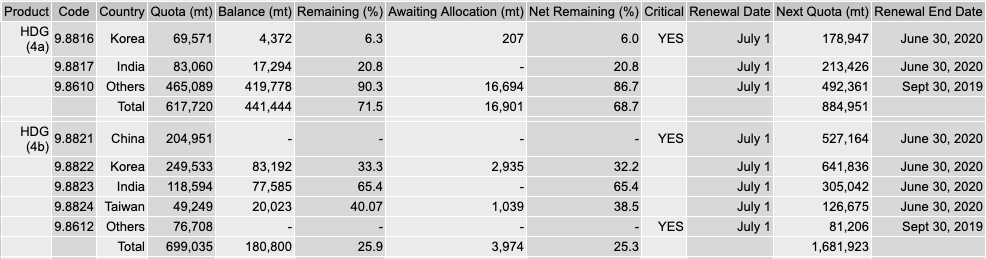
Some mild restocking is expected for both products in September for year-end delivery. Today’s main issue for HDG and CRC producers is that certain EU hot rolled coil safeguard quotas are being quickly exhausted, meaning importers will have to wait until the next quota term before they can clear material through customs.
Demand for HDG is stable and the domestic market seen as “positive”, but low volumes are reported for CRC. Buyers prefer imported CRC at €680-690/t cfr Italy and domestic volumes are thin.
HRC prices, meanwhile, also remain stable, with demand flimsy, at €650-660/t base ex-works, sources suggest.
Natalia Capra France

Trading slows, prices flatten in European heavy steel plate market ahead of summer holidays
Italy
Apparent demand for steel plate in Italy was slow over the past week, with stockholders seen to be largely holding back from trading.
“Trading has slowed down significantly since last week [the week to July 14]. We’ve been getting very few inquiries for small volumes [of steel plate] recently, it is a seasonally quiet period,” a trading source said.
Tradeable values for larger tonnages for September delivery were reported at €750-760 ($843-854) per tonne EXW during the week, while €770-780 per tonne EXW was achievable for smaller lots, which is largely unchanged from the previous week.
Offer prices from local re-rollers were still heard at around €800 per tonne EXW, but even sellers admitted that those levels were not achievable, given the slow market activity.
As a result, Fastmarkets’ weekly price assessment for steel domestic plate, 8-40mm, exw Southern Europe, was €750-780 per tonne on Wednesday, unchanged since July 5.
Sources expected those levels to be sustained until the end of August.
“During August the steel market in Europe is totally dead, so we expect prices to rollover. Starting in September some pick up [in prices] is likely due to expected restocking,” a mill source said.
Some lower overseas plate offers were reported during the week, mainly due to the strengthening of the euro against the US dollar, sources said.
Notably heavy plate from Indonesia with September shipment was offered to Italy at around €670 per tonne CFR in the assessment week, compared to around €690 per tonne CFR in the week prior.
Northern Europe
Trading activity was also seasonally quiet in Northern Europe, with big buyers also seen to be largely out of the market after restocking earlier this month.
Integrated producers in Northern Europe were mostly concentrating on long-term project business, and were therefore not very active in spot sales.
One mill in Germany reportedly had limited allocation of September-delivery plate at around €830-850 per tonne EXW, but sources said the lower end of the range was only available for the mill’s regular customers.
Another German mill was maintaining its offers for heavy plate for September-October delivery at more than €900 per tonne EXW.
Estimations of tradeable values from buyers were reported at around €850-870 per tonne EXW.
Fastmarkets’ weekly price assessment for steel domestic plate, 8-40mm, exw Northern Europe, was €850-870 per tonne on Wednesday, unchanged since July 12.
A re-roller in Denmark was offering S355-grade plate to Germany at €920 per tonne CPT, sources said.
In Central Europe, sources said a Czech mill was offering limited tonnages of plate around €800 per tonne EXW. An integrated mill from Poland was reportedly not active during the assessment week.
Buyers’ estimations for tradeable values for commodity-grade plates in Central Europe were reported at €800-840 per tonne CPT during the week.
And a producer from Romania was offering S355-grade plate quite aggressively in Central Europe, at around €800 per tonne CPT.
Published by: Julia Bolotova
