

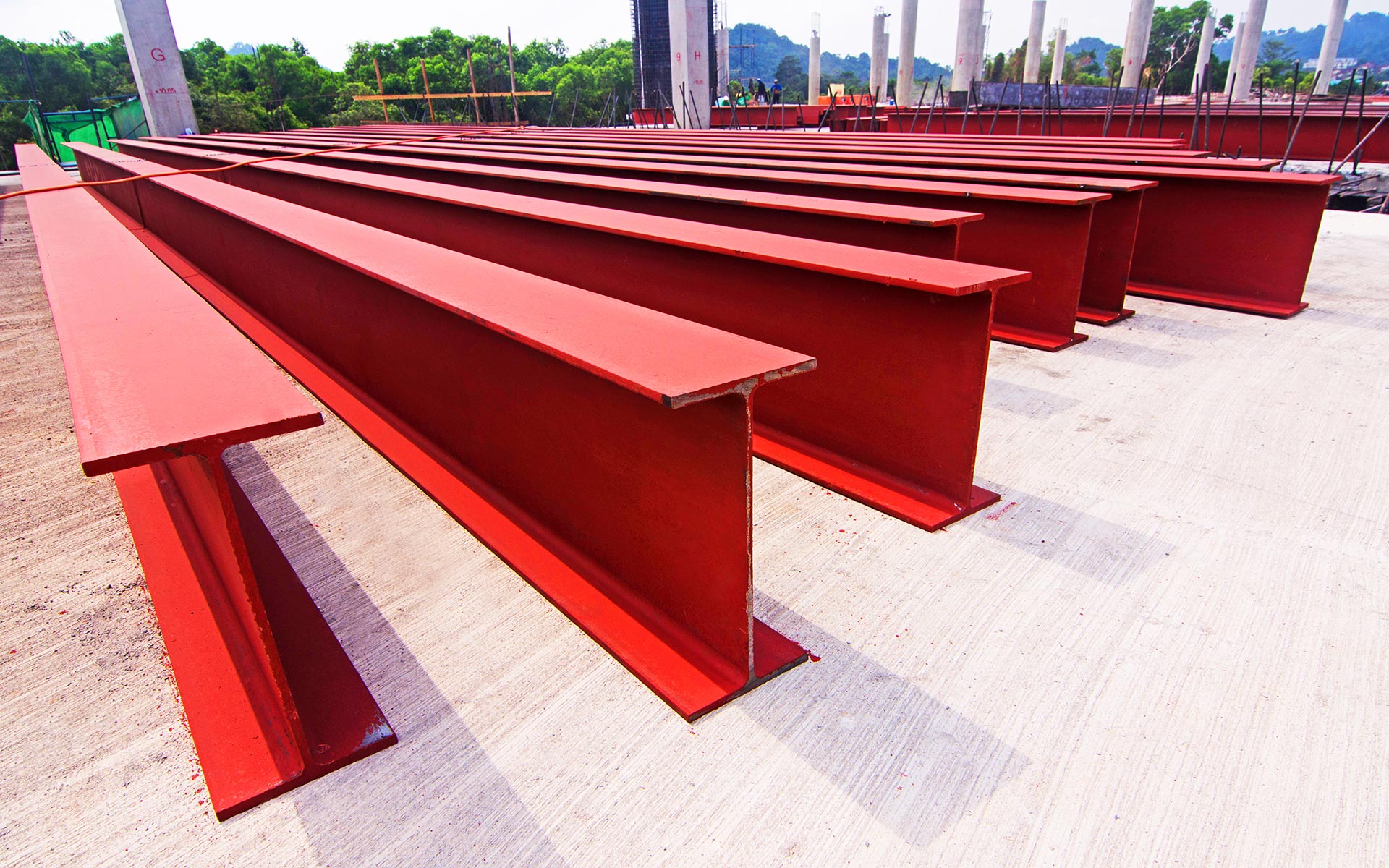
European steel beam prices relatively stable amid summer slowdown
Fastmarkets’ weekly price assessment for steel beams, domestic, delivered Northern Europe was €740-780 ($830- 875) per tonne on Wednesday, with the price range narrowing down by €10 per tonne at the top end of the range from €740-790 per tonne on July 12.
The market in Northern Europe was very quiet in the week to Wednesday, with much of the steel industry in the region now on holiday.
“We are in the middle of the summer already – it’s really quiet,” a trader told Fastmarkets.
Producers in some parts of Southern Europe, meanwhile, have not yet shut for the summer holidays, but there were few buyers active in the market, leading to slow purchasing and putting further downward pressure on prices.
“[Traders] are not buying, demand is really weak and [mills] are not searching for orders because they know there is no profit that they can make at this moment,” the trader said.
Early in the latest pricing session, however, a second trader told Fastmarkets there had been some limited restocking of small tonnages by major producers, with some of that material imported. The trader added, however, that attempts by mills to raise prices had been unsuccessful.
Scrap feedstock prices in Turkey’s bellwether market fell after some fresh deals came to light, with steelmakers in the country keeping their scrap purchases to a minimum.
Financial issues in Turkey, including rising interest rates, a depreciating Turkish lira and limited lines of credit, have all had an impact on finished steel sales, thereby reducing demand for scrap.
Fastmarkets’ calculation of its daily index for steel scrap HMS 1&2 (80:20 mix) North Europe origin, cfr Turkey was $351.44 per tonne on Wednesday, down $12.56 per tonne week on week from $364 per tonne.
Fastmarkets’ weekly price assessment for steel beams, domestic, delivered Southern Europe was €740-780 per tonne on Wednesday, with the price range narrowing downward by €10 per tonne from €740-790 per tonne a week earlier.
Published by: Holly Chant


Summer closures dampen trading in Northern European wire rod, rebar markets
Producers across Northern Europe have closed for the summer holidays and trading is expected to remain slow until mid-August when mills reopen.
Fastmarkets’ weekly price assessment for steel reinforcing bar (rebar), domestic, delivered Northern Europe, was €575-605 ($656-678) per tonne on Wednesday, widening by €5 per tonne at both ends of the range from €580-600 per tonne on July 12.
Market activity was limited in the Northern European rebar market in the week to Wednesday, with most producers heard to have closed for the summer holidays.
At the same time, some participants reported attempts by a few mills to raise their prices this week, but expressed doubts about whether the increases would be accepted amid such low activity.
“The market remains very quiet and demand is very weak because we are on holidays,” a buyer source from the Netherlands told Fastmarkets.
“Some mills are trying to raise prices, but I don’t know whether the market is accepting these price rises,” a trader source said.
At the same time, Fastmarkets’ weekly price assessment for steel wire rod (mesh quality), domestic, delivered Northern Europe, was €570-610 per tonne on Wednesday, unchanged from July 12.
Prices in the Northern European wire rod market were unchanged this past week given that demand remained slow, according to sources.
Published by: India-Inés Levy

Southern European long steel markets quiet amid summer closures
Production cuts will begin across the long steel markets in Italy and Spain when mills close for their typical six-week holidays. But prices were expected to remain largely stable for the duration of the summer, Fastmarkets heard.
Fastmarkets’ price assessment for steel reinforcing bar (rebar), domestic, exw Italy, was €670-685 ($751-768) per tonne on Wednesday, stable for three weeks.
Activity remained relatively quiet in the country’s rebar market. Customers were restocking in small tonnages before mills closed for the summer.
Mills have been looking to achieve price rises to €685-700 per tonne ex-works recently. Sale prices, however, have remained around €670-685 per tonne ex-works, and were expected to be steady until mid-August, when the mills reopen.
“The market is flat. Construction sites are ordering steel in anticipation of the summer closures, but this is typical every year,” a trader source in the region said.
“Prices have not changed since the beginning of July,” another buyer source said.
Mills were reported to have good order books for July and August because of increased consumption by the export market.
“Export prices are the same as last week. But, to be honest, Italian producers are not so interested in booking new tonnages for export, because we all have orders to load between July and August,” a producer source said. “We are all reducing output from the usual summer levels.”
Meanwhile, prices in the Spanish rebar market were stable.
Fastmarkets’ price assessment for steel reinforcing bar (rebar), domestic, delivered Spain, was €640-650 per tonne on July 19, stable week-on-week.
Mills in the Spanish market intend to prolong their seasonal closures to reduce supply and rebalance the market, given the current depressed demand, Fastmarkets heard.
Southern European wire rod
Fastmarkets’ price assessment for steel wire rod (mesh quality), domestic, delivered Southern Europe, was €590-610 per tonne on Wednesday, also stable week on week.
In mid-July, wire rod prices rose in the Italian market when demand improved slightly, with buyers restocking before the summer closures. But Fastmarkets heard that demand has remained flat this week.
Published by: India-Inés Levy
Steel hollow sections market in Europe drops on seasonally slow trading
Fastmarkets’ weekly price assessment for steel sections (medium), domestic, delivered Northern Europe, was €790-820 ($886- 919) per tonne on Wednesday, down by €20-40 per tonne from €810-860 per tonne a week earlier.
With most of Northern Europe on holiday, the market there was very quiet, but lower prices have been heard in the past seven days, markets participants said.
But while rolling and steel mills typically halt production over the summer break, muting the market, one trader in Northern Europe said that trade has been slower than in previous years.
A second trader heard offers around €820-840 per tonne delivered to Germany from Bulgaria, with prices higher than the Northern Europe domestic delivered prices due to higher transport costs.
In Southern Europe, the holiday period usually comes later, in August, Fastmarkets heard.
A producer source in that region said that the market there was more or less unchanged in the past week.
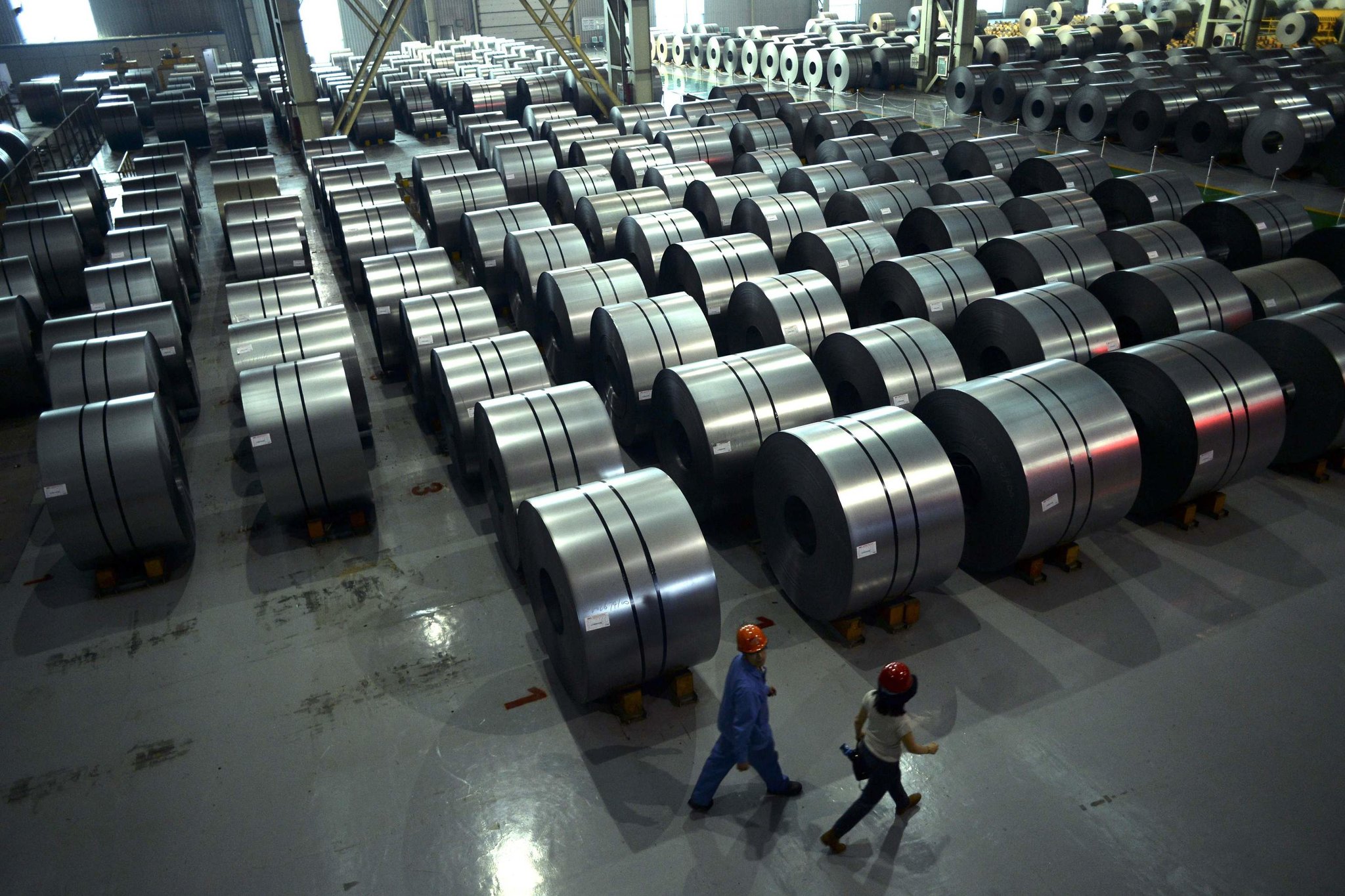
Meanwhile, hot-rolled coil feedstock prices fell in the assessment week, with purchasing scarce due to the seasonally muted trading.
Fastmarkets’ daily calculation of its steel hot-rolled coil index, domestic, exw Northern Europe, was €666.25 per tonne on Wednesday, down by €13.75 per tonne from €680.00 per tonne a week earlier.
The weekly price assessment for steel sections (medium), domestic, delivered Southern Europe, was €790-820 per tonne on Wednesday, down by €20-40 per tonne week on week from €810-860 per tonne.
Published by: Holly Chant
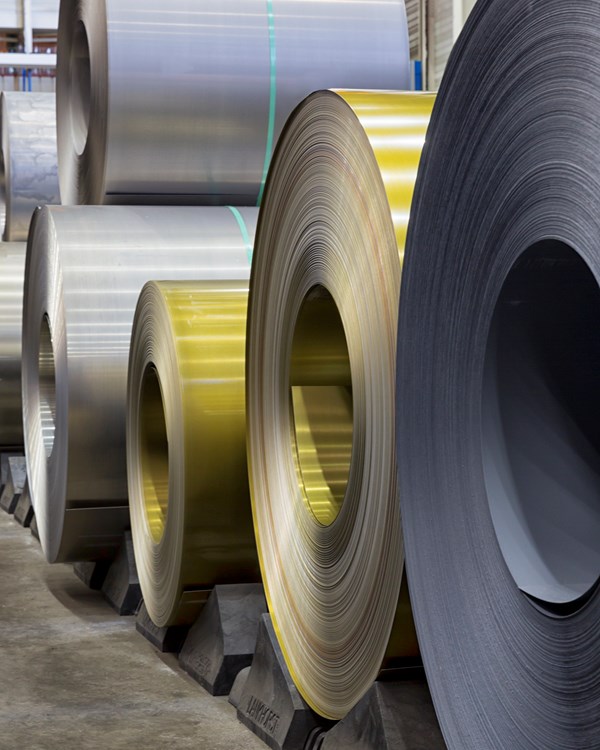
European HRC market seasonally slow; prices under pressure from weak demand
In Northern Europe, firm offers were scarce because some major integrated producers either had technical issues or claimed to have healthy order books and were sold out for October deliveries already.
In general, mills in the region were able to offer September- and October-delivery HRC.
A trading source told Fastmarkets that an integrated mill in the Benelux region was not offering HRC this week.
“The reason is that they have a big delay with a blast furnace repair. So they do not need orders,” the source said.
An integrated producer in the region estimated tradable values at €700 ($785) per tonne ex-works, but buyers deemed such a level to be completely unworkable.
Buyers estimated tradeable values for HRC produced in the region to be no higher than €650-670 per tonne ex-works, depending on tonnage.
A buyer source reported an offer from a re-roller in Benelux to Germany at €640 per tonne delivered, while another source reported a transaction from the same mill at €620 per tonne delivered.
Sources also reported transactions for HRC from Central to Northern Europe at €640-650 per tonne delivered, but mostly for small lots.
Demand for coil was slowing further due to seasonal factors and a gloomy post-summer outlook, according to sources.
Even though inventories among buyers have been decreasing, they were gradually holding back from restocking, citing weak prices and slow demand downstream.
Fastmarkets’ daily steel hot-rolled coil index domestic, exw Northern Europe was calculated at €659.17 per tonne on July 20, down by €7.08 per tonne from €666.25 per tonne on July 19.
The latest calculation of the Northern European index was down by €20.58 per tonne week on week and by €20.58 per tonne month on month.
Fastmarkets calculated its corresponding daily steel hot-rolled coil index domestic, exw Italy at €638.75 per tonne on July 20, down by €3.13 per tonne from €641.88 per tonne on July 19.
The Italian index was down by €16.25 per tonne week on week and by €13.25 per tonne month on month.
In Italy, the market was also seen slowing down ahead of summer stoppages.
Buyers reported tradeable values for September-delivery HRC at €640-650 per tonne delivered on Wednesday, which would net back to €625-635 per tonne ex-works, sources said.
Official offers were heard at higher levels, reaching up to €700 per tonne ex-works, but these were never sealed in transactions, according to sources.
Bids were heard at even lower levels, though — at around €610-615 per tonne ex-works.
“The Italian market is very calm and there is almost no trading unless you are very cheap. People want to book domestic HRC at import prices,” a second trading source said.
Import offers were more attractive mainly due to the strengthening of the euro against the US dollar. But European buyers were not very active with import bookings due to safeguards concerns, and an uncertain pricing outlook for the fourth quarter.
September-shipment HRC from Japan was on offer at $680 per tonne CFR to Antwerp, but sources said that sellers were ready to consider bids at $650 per tonne CFR.
HRC offer from Asian mills were reported at €600-610 per tonne CFR to Italy for September-October shipment, while one mill from Vietnam was offering HRC to Southern Europe at slightly lower levels — $645 per tonne CFR.
Published by: Julia Bolotova

DB Cargo cutbacks to spare steel: reports
Deutsche Bahn (DB) has spoken out against media reports stating that its freight train subsidiary DB Cargo is loss-making and facing massive cutbacks on personnel and operations. This issues it is facing would nevertheless have limited impact on steel transports.
The cutbacks would essentially affect the operation of single wagons transports, which require overproportional cost and effort, and are not profitable in any country where DB Cargo operates, it says in a statement.
The company notes that one remedy would be advanced digitalisation using a system named Digitale Automatische Kupplung (DAK). This programme requires support from the ministry of transport and digitalisation, which the company hopes to receive in the public interest of strengthening rail transport versus road truck transport.
The company’s problems with single wagon transport would be of little harm to the steel industry, which normally requires big loads with many wagons. In fact, reports by Reuters and Handelsblatt cite an internal paper of DB stating that it eventually would confine itself to serving customers from the steel, automotive and chemicals industries.
DB’s official statement does not mention those industries, nor did the company provide details to Kallanish on its preferred customer groups. In recent years, DB Cargo has announced a number of cooperations for the transport of steel and scrap that also involved neighbouring countries. Most recently, it announced an extension of its collaboration with Austria’s voestalpine (see Kallanish 3 July).
Christian Koehl Germany


Van Leeuwen, ArcelorMittal offer low-emission tube
Van Leeuwen Pipe and Tube Group and ArcelorMittal Europe have announced a new partnership to offer low-carbon-emission steel tubes, Kallanish hears from the companies.
The Dutch distribution company and the steelmaker’s ArcelorMittal Europe – Tubular Products unit will join up for tubes made from ArcelorMittal’s proprietary XCarb steel. XCarb recycled and renewably produced steel tubes can help customers realise CO2 emissions savings of up to 75% compared with conventionally produced steel tubes, ArcelorMittal points out.
The partnership aims to enable companies in construction and engineering industries to reduce the carbon footprint embedded in the products they purchase as part of their Scope 3 emissions.
The electricity for the EAFs in which XCarb is made comes from renewable sources such as wind and solar, and is supplied via a recognised Guarantee of Origin (GoO) scheme. These steel tubes are the first on the market that enable such a significant reduction in CO2 emissions, and which come with an Environmental Product Declaration (EPD), the steelmaker claims.
At an event held at Van Leeuwen’s headquarters in Zwijndrecht, the first truck delivery with XCarb steel tubes arrived at the warehouse.
Christian Koehl Germany

Decarbonisation too slow, stranded asset risk growing: GEM
The transition away from coal-based steelmaking is moving far too slowly, says US-based non-governmental organisation Global Energy Monitor (GEM).
As of March 2023, 43% of planned capacity uses largely gas and electricity-based electric arc furnaces, while 57% of planned capacity uses the coal-based blast-basic oxygen furnace route.
However, the International Energy Agency (IEA)’s Net Zero by 2050 scenario indicates that 53% of overall steelmaking capacity needs to use EAF technology by 2050. 42% of primary steelmaking alone needs to use EAFs in a hydrogen-based direct reduced iron or iron ore electrolysis configuration to meet that goal.
“Current capacity plans will result in a mere 32% of total capacity using EAF in 2050, far less than what is needed. While the growing proportion of EAF in planned capacity is promising, existing BF-BOF capacity must be closed and planned BF-BOF capacity cancelled,” the NGO says in a new report seen by Kallanish.
Overcapacity remains a big problem. OECD reported a 26% global excess capacity – 632 million tonnes – in 2022. The Global Steel Plant Tracker indicates a 11mt net capacity gain in 2022 and a fall in capacity utilisation rates of top producers from 75% in 2021 to 72% in 2022.
“While overcapacity presents a challenge to steelmakers in terms of profitability, it also creates an opportunity to shift investments in the sector to support the green steel transition,” Global Energy Monitor observes.
Three-quarters of steelmaking capacity under development is in Asia, with 55% from China and India. Considering the BF-BOF route in isolation, Asia is responsible for 99% of new developments. India is now the world’s largest developer of new BF-BOF capacity, holding 40% of BF-BOF capacity under development, while China is responsible for 39%.
Stranded asset risk is growing: the steel industry could face as much as $554 billion in stranded asset risk amid decarbonisation and simultaneous BF-BOF capacity buildout. From 2021 to 2022, BF-BOF assets under development in countries with net-zero carbon commitments increased approximately 7% or 36m t/year.
Governments are handing out subsidies for green steel now, notably in the EU, US, and Australia. “The green steel transformation is becoming a race, and governments subsidising uneconomic capacity using the coal-based blast furnace-basic oxygen furnace route will be left behind,” the organisation notes.
“Capacity development plans in Southeast Asia need to be redesigned in alignment with net-zero plans, meaning no new coal-based blast furnace-basic oxygen furnace steelmaking developments and plans to retire and replace blast furnaces with fossil-fuel-free alternatives,” it concludes.
Adam Smith Poland

European Commission approves funding for thyssenkrupp’s ‘tkH2Steel’
The EU Commission has granted state aid approval for German federal and state government funding of the “tkH2Steel” decarbonisation project in a total amount of around €2 billion ($2.2 billion), Kallanish learns from thyssenkrupp.
The funding will take place via two interlinked instruments, “Initial Grant” and “Conditional Payment”, thus underwriting and promoting, above all, innovative plant technology and an early end to natural gas use.
The pioneering concept is characterised in particular by its innovativeness and the extremely ambitious hydrogen ramp-up, tk points out. It claims that “tkH2Steel” will become a driver of the European hydrogen economy. Consequently, it will function as a sheet anchor for investments in the rapid development of a cross-border hydrogen infrastructure. Thyssenkrupp’s own investment is just under €1 billion, it adds.
The core of the “tkH2Steel” concept lies in the integration of a technologically new plant combination at Europe’s largest iron and steel plant. The 100% hydrogen-capable direct reduction plant with two downstream melters has a production capacity of 2.5 million tonnes/year of DRI, making for 2.3mt of hot metal. It is the first plant combination of its kind in the world with this technological concept, tk states.
Since work was already approved to start earlier, tk Steel previously commissioned SMS Group with the construction of the DRI plant, as well as the two melters and associated secondary units. The detailed planning and preparatory construction measures are already correspondingly advanced, it notes.
Christian Koehl Germany

Italian plate demand slows after restocking
After increasing in the first half of July amid restocking for September availability, Italian plate demand is now going quiet.
A €30/tonne ($33) increase implemented by producers this month was successful, but values need to be consolidated and some sources believe there is no more space for increases, market sources tell Kallanish.
Mills will close July with good order books despite the slowdown seen in recent days. Producers are quoting end-August delivery for plate with rough edges and September for other grades. Stronger demand continues to be reported for S355 grade compared to S275.
On average, S275 is now hovering at €760-780/t ex-works and at €800-810/t for S355, flat on-week. Before the upcoming August stoppages, mills will hike S275 offers to €800/t ex-works and S355 to some €830-840/t, to prepare buyers for deals to be made in September.
Sentiment on the producing side remains bullish thanks to new infrastructure projects in Italy financed by the EU Recovery Fund. The market continues to feel the lack of supply from Ukrainian producers, present on the market with plate and slab before the war started. Imported slab in Italy is hovering at $610/t cfr on average.
Natalia Capra France