

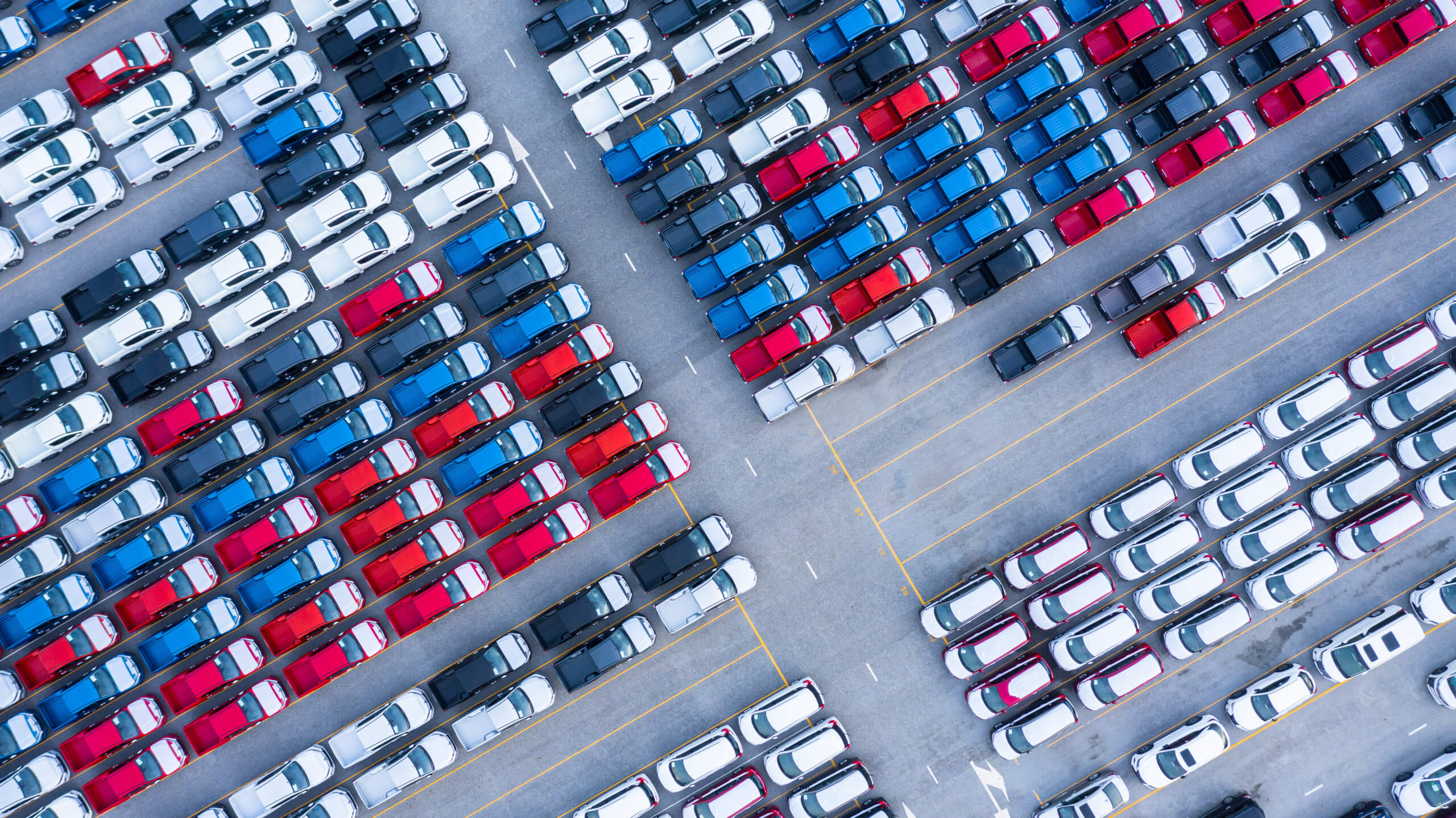
Spanish automobile production grows on-year in June
Spain’s automotive sector saw performance increase year-on-year in June, Kallanish notes.
According to national automotive association Asociación Nacional de Fabricantes de Automóviles y Camiones (Anfac), output in June was 235,749 units, up 1.4% versus the same period in 2022. Six-month production amounted to 1.31 million vehicles, up 16.1% over January-June last year.
“Step by step, the automotive industry is recovering its stability, demonstrating its capacity for resilience,” comments Anfac president José López-Tafall. “Production grew in June, despite performance being exceptionally high in the same period in 2022 when the sector saw an oversupply of components that had been missing in previous months. Exports were also positive due to strong demand from the markets in which the sector operates, while the domestic market is still far from pre-pandemic levels.”
Meanwhile, higher demand from Germany, France, Turkey, Italy, and the UK boosted Spanish vehicle exports. In June, the country shipped abroad 211,984 units, up 10.1% compared to a year earlier.
European markets had a 91.5% share in Spanish deliveries that month, a 0.3 percentage point growth on-year. January-June exports rose 22.1% over the same period in 2022 to 1.19 million vehicles, Anfac data show.
Todor Kirkov Bulgaria


ArcelorMittal, Gestamp develop scrap usage scheme
ArcelorMittal says it has agreed to partner with Spanish automotive component producer Gestamp to jointly design and implement a circularity scheme that will enhance the recycling of steel between the two companies.
The collaboration will strengthen environmental sustainability throughout the industrial supply chain, ArcelorMittal tells Kallanish.
“We are delighted to have signed this agreement with Gestamp, that enforces the work we are doing together on environmental sustainability in the automotive sector,” ArcelorMittal Europe Flat Products chief marketing executive Paul Brettnacher observes. “This step is a new milestone for ArcelorMittal in our work to offer our automotive customers a broad range of low-carbon emissions steel grades, after other successes such as the commercialisation of Usibor1500 made with XCarb recycled and renewably produced substrate.”
According to Gestamp, the return of high-quality pre-consumer scrap, with traceability of its origin, quality and processing, for the production of low-emission steel products will allow it to secure the circular supply chain to its customers with secondary raw material.
Todor Kirkov Bulgaria
EU HRC demand seasonally soft; sentiment weakens

Stahlmarkt-Consult questions subsidies for steel industry’s energy transition
The European steel industry is about to enter a long-term period of tax-payer-funded subsidisation, a mechanism that is highly questionable from an economic point of view, says German consultant Andreas Schneider.
Last Thursday, the European Commission gave the green light for German public funding for thyssenkrupp’s “tkH2Steel” project to the tune of €2 billion ($2.2 billion). It is the second such notice, following approval for Salzgitter’s SALCOS earlier this year. Similar applications are pending from ArcelorMittal and the Saarland mills.
In his blog “Stahlmarkt-Consult”, Schneider questions the diversification of funds for different companies and locations. He warns the supporting funds have the primary aim to advance technological progress, and that “it makes little sense to distribute such support parallel to different locations”.
Schneider anticipates European steel will become noticeably more expensive towards the end of the decade. This will hurt steelmakers’ customers, who are already wondering if today’s generous subsidies for mills will benefit buyers in any way. “There is very little discussion about who in the value chain will pay the bill for the transition,” Kallanish hears from Schneider. “Small and medium-sized steel fabricators will be facing increasing prices, which their customers will be hardly willing to pay,” he adds.
He points out that “it is totally unclear yet how the international competitiveness of steel-made products can survive.” This is especially the case since nobody can seriously forecast the availability of hydrogen, or its costs, o energy prices later this decade.
He warns that the cost of the transition will mean an additional push to drive steel-intensive industries to regions with lower costs. “And the subsidies will not help mills, if their customers run away from them,” Schneider concludes.
Christian Koehl, Germany
Metinvest eyes Danieli joint venture for Italian plant
Metinvest and Italian equipment maker Danieli will create a joint venture to build a new steelmaking plant in Italy that plans to produce low-carbon steel, Kallanish learns from a source close to the steelmaker.
Danieli president Gianpietro Benedetti says in a joint note that the plant will be key for the post-war recovery of Ukraine. Feasibility studies are now underway to select the right location for the future mill that will see an investment of €2 billion ($2.2 billion), financed by a pool of public and private European financial institutions. The venture is the first step towards Metinvest’s shift towards “green” steel.
The future electric arc furnace plant in Italy will be fed by raw material coming from Metinvest facilities in Kryvyi Rih. “In addition to the environmental modernisation of the Ukrainian steel mills and the increase of DRI pellet production in Kryvyi Rih, the new Italian site will play a significant role in the environmental transformation of the group, of Ukraine and the European Union,” the note says.
Several city councils around Porto Nogaro in northern Italy, where Metinvest is rumoured to be planning the electric arc furnace works, have voted against the construction of the plant. City councils such as Grado, Marano and others located in the lagoon and coastal area, a famous tourist destination, strongly oppose the project. They have issued motions and are asking the Friuli Venezia Giulia region to also vote against the project, arguing it will disfigure and pollute the landscape besides impacting tourist activity.
In July last year, Metinvest management visited the area for a series of meetings with Friuli Venezia Giulia regional authorities and Benedetti. Metinvest refused to comment at that stage as the final investment decision was yet to be reached. However, regional authorities said they were ready to invest €80 million, for which an agreement was expected to be signed by the end of August 2023.
Benedetti told local press at the time that Metinvest will need to produce about 1.5 million tonnes/year of slab after losing its flagship Azovstal plant in Ukraine. The steelmaker will also have to establish a second mill, at a cost of about €350m, to produce hot strip. The two facilities may cost €800m in total (see Kallanish passim).
“Metinvest has planned the construction of a new ‘green’ steelmaking plant long before the start of the full-scale Russian invasion. The ongoing hostilities and the blockade of Ukrainian ports for steel and mining products have accelerated this project, which will secure our products in the market, employ thousands of employees in Ukraine, increase revenues and ensure long-term support to the country’s economy,” comments Metinvest chief executive Yuriy Ryzhenkov.
Natalia Capra, France
Europe could see ‘pronounced’ Q3 demand downturn: SSAB
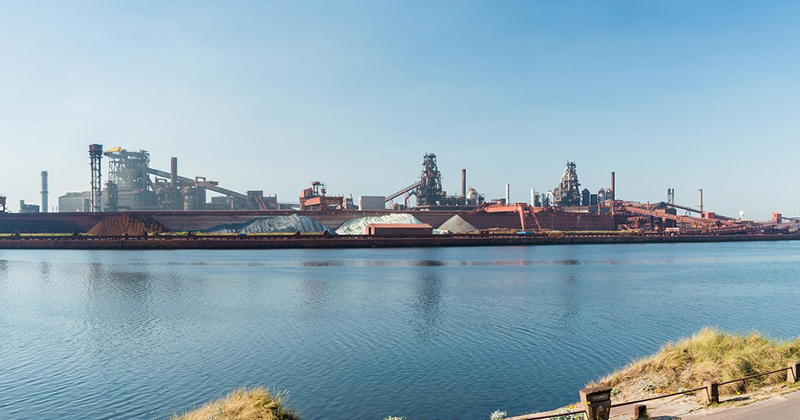
ArcelorMittal secures EU funds for Dunkirk EAF shift
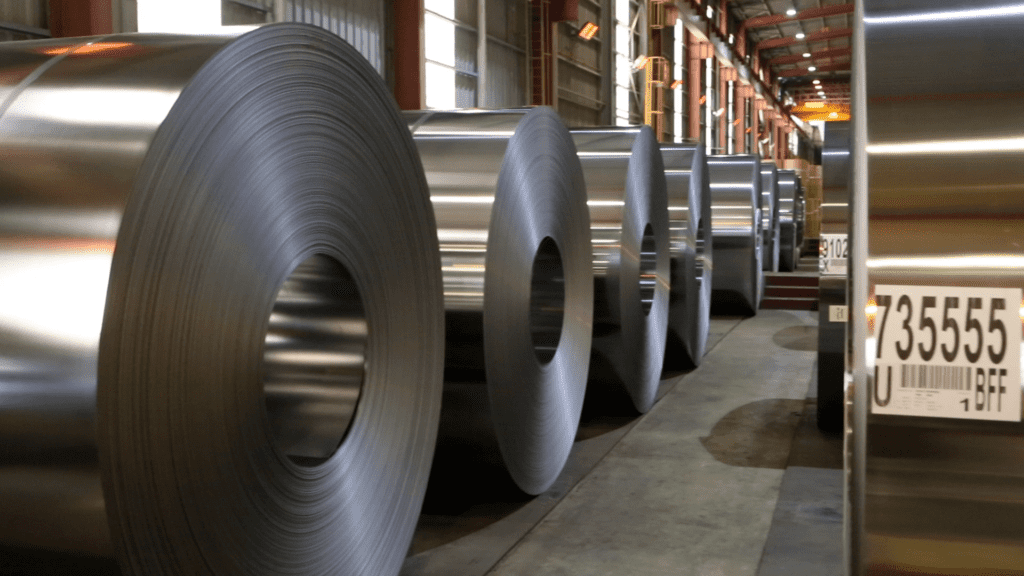
European steel HRC prices largely flat in seasonally slow market
Fastmarkets’ daily steel hot-rolled coil index, domestic, exw Northern Europe was calculated at €656.25 ($730.79) per tonne on July 21, down by €2.92 per tonne from €659.17 per tonne on July 20.
The latest calculation of the Northern European index was down by €16.00 per tonne week on week and by €23.75 per tonne month on month.
Most of the first-tier mills in the region were heard to be out of the market for various reasons, including full order books for October deliveries, technical issues, and scheduled equipment repairs.
One integrated producer was said to be offering September-delivery HRC at €650-660 per tonne ex-works.
Sources also reported offers from a re-roller in the Benelux region to Germany at €620-640 per tonne delivered, with transactions heard at the lower end of the range.
One Central European mill was able to offer small volumes of HRC for prompt shipment to Germany at €680 per tonne delivered, but the mill had short payment terms, sources said.
Trading in the region was weak due to seasonality and bearish expectations amid slow demand from most end-user sectors.
Fastmarkets calculated its corresponding daily steel hot-rolled coil index, domestic, exw Italy at €638.33 per tonne on July 21, down by €0.42 per tonne from €638.75 per tonne on July 20.
The Italian index was down by €16.67 per tonne week on week and by €13.02 per tonne month on month.
In Italy, buyers reported achievable prices for September-delivery HRC at €640-650 per tonne delivered on Wednesday, which would net back to €625-635 per tonne ex-works, sources said.
For October-delivery material, some mills were hoping to achieve slightly higher prices of €670-680 per tonne delivered, which would net back to €655-665 per tonne ex-works, sources said.
The Italian market was also quiet ahead of seasonal summer stoppages in August. Sources reported that local mills were planning to make these stoppages longer than usual this summer (by about a week, on average) due to slow demand.
HRC offers from Asian mills were reported between $645 per tonne and $670 per tonne CFR to Italy, for September-October shipment.
Published by: Julia Bolotova


Polish wire rod market slows, prices stabilize ahead of summer holidays
Official offers for July-rolling low-carbon drawing-quality wire rod by local steelmakers were reported at 2,800-2,900 zloty per tonne CPT this week, unchanged from the prior week.
But a few transactions for limited volumes were reported at lower levels – 2,750-2,800 zloty per tonne CPT during the assessment period, also largely stable compared to the previous week.
Trading in the nation remained limited, with buyers tend to book only small lots to cover urgent needs.
“Demand is still very weak and there have been no signs of improvement, mainly due to slow performance of end-user sectors – construction in the first place,” a distributor in Poland said.
Import wire rod offers to Poland were also seen as stable over the past seven days.
One Ukrainian supplier was offering mesh-quality wire rod from stock at €610-615 ($679-685) per tonne CPT depending on tonnage, sources said. Transactions for small lots were heard within the range during the week to Friday.
Another Ukrainian supplier was more aggressive with its offers for mesh-quality wire rod reported at €600 per tonne CPT. Such material was offered from the stock of a mother-company in Poland, sources said.
Offers from an Italian mill were reported at €610-620 per tonne CPT for July output.
A mill from Moldova was offering drawing-quality wire rod at €620 per tonne CPT.