

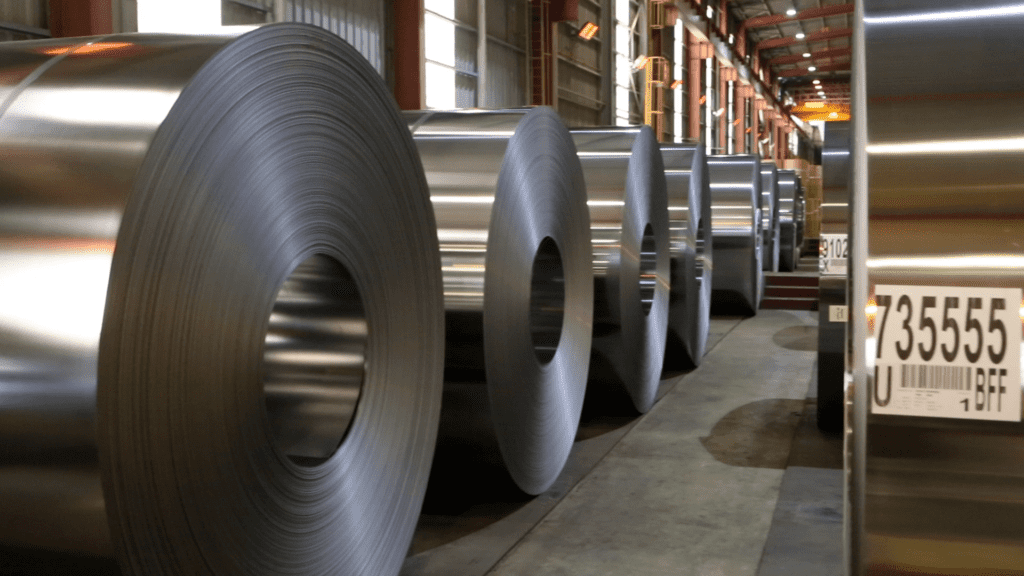
Seasonal slowdown keeps EU HRC prices stable, offers limited
The number of offers remained limited, as a majority of mills remained inactive in the market due to either full orderbooks or effects from planned maintenances.
“I must say that market is very quiet, and most mills are not pushing except those that have short delivery times and prices around Eur660/mt base delivered [Italy],” an Italy-based source said. “Others are all around Eur700/mt delivered but not willing to give discounts.”
Platts assessed domestic prices for hot-rolled coil in South Europe at Eur645/mt ex-works Italy on July 24, unchanged on the day. The assessment was based on tradable values reported at Eur640-Eur650/mt ex-works Italy.
Despite low demand and exchange rates supporting interest in imported coil, market participants did not expect domestic prices to drop.
“I struggle to see prices moving significantly below current levels, as there has been a lot of destocking and for all the gloom on demand, sales have not been as bad,” a trader said.
Platts assessed domestic prices in Northwest Europe stable on the day at Eur655/mt ex-works Ruhr on July 24.
Offers from one mill were reported at Eur650-Eur700/mt ex-works Ruhr. Tradable values were heard at Eur650-Eur670/mt ex-works Ruhr.
A couple of market participants said that mills have been aiming for the higher prices, but they were unable to confirm new target prices.
“The increase was nothing substantial, just a euro here and there, but at the end most of them confirming the August prices for September, some even with a little discount,” a service center source said. “[A big producer] was the most demanding at the end for September — especially for hot rolled products asking for an increase of Eur15-30/mt depending on the specific product, and cold rolled was almost a roll-over.”
Author Maria Tanatar

Minimal trading reported in European HRC market following mill summer closures
Mills have closed for summer holidays until mid-August and sources expect demand to be flat for the next six weeks.
Fastmarkets’ daily steel hot-rolled coil index domestic, exw Northern Europe was calculated at €655.83 ($729.59) per tonne on July 24, down by €0.42 per tonne from €656.25 per tonne on July 21.
The latest calculation of the Northern European index was down by €14.17 per tonne week on week and by €17.47 per tonne month on month.
Buyer estimates for Northern European HRC were reported at €650-660 per tonne EXW on Monday.
“The market is deadly quiet with the summer holidays having fully started,” a trader source in the region said. “I don’t expect any price movements till September.”
Fastmarkets calculated the corresponding daily steel HRC index domestic, exw Italy at €645.00 per tonne on July 24, up by €6.67 per tonne from €638.33 per tonne on July 21.
The Italian index was down by €11.25 per tonne week on week and by €8.75 per tonne month on month.
In Italy, buyers reported achievable HRC prices for delivery at the end of September and beginning of October at €640-660 per tonne EXW.
The Italian market was quiet because of seasonality and weak demand.
HRC offers from Asian mills were reported at $580 per tonne CFR to Italy for September-October shipment.
Published by: India-Inés Levy


GFG appoints executives to drive energy transition
GFG Alliance has appointed three new executives it says will support major transformation projects, including the expansion of the group’s high-quality magnetite iron ore reserves, and converting remaining blast furnaces to electric arc furnaces, Kallanish notes.
Stefan Håkansson of energy group E.ON has been appointed as global head of sustainable energy projects. Paul Altschwager of international energy and convenience retailer EG Group has been named chief capital officer. Francisco Irazusta of Tubos Reunidos has become chief executive and executive director of InfraBuild.
Håkansson, who will join after summer, will help drive GFG’s CN30 ambition and renewable energy development, as it invests in solar, wind and green hydrogen installations to decarbonise its iron and steel operations, GFG says.
Altschwager, starting from 1 August, will enable the group to build on progress following agreements with Greensill’s administrators on debt restructuring, the AUD 405m ($273.1m) debt facility repayment at Liberty Primary Metals Australia, the refinancing of the group’s US steel businesses, and the $350m ABCF raised by InfraBuild from Blackrock and Silver Point, the group observes.
Irazusta, who starts from 1 October, will ensure InfraBuild continues its strong financial performance in the 2023 fiscal year, and follows its recent success in the debt markets.
“The huge experience Stefan, Paul and Francisco all bring will help ensure our star businesses continue to perform and we provide a powerful platform to drive investments to capitalise on our advantages in magnetite iron ore and sustainable energy solutions which are so key to green steel production and the future of our group,” says GFG executive chairman Sanjeev Gupta.
Adam Smith Poland

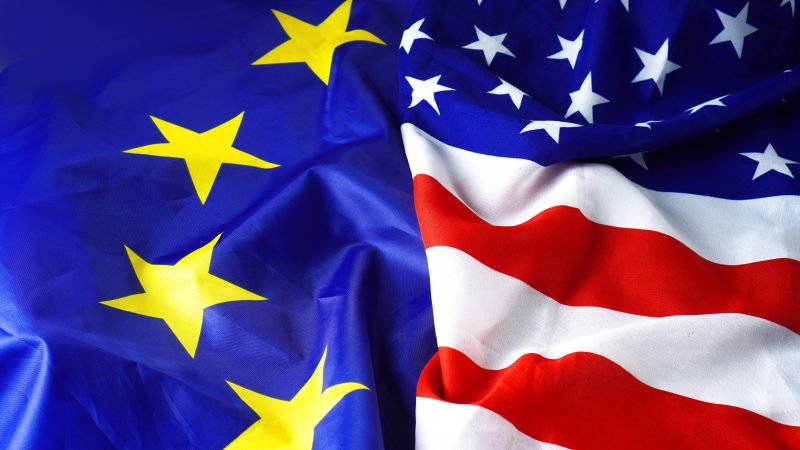
EU, US remain at odds over steel deal
The European Commission wants to reach a steel trade deal with the US to avoid the return of Section 232 and EU retaliatory tariffs, but will not sign an agreement that breaches global trade standards, says EU trade commissioner Valdis Dombrovskis.
Experts have argued that elements of Washington’s proposed solution could unfairly discriminate against imports from some countries and breach WTO rules.
In a working paper published earlier this month, David Kleimann, visiting Fellow at Bruegel, said US proposals are “exclusive and coercive club setting, devoid of defined obligations for domestic restrictions”, and mean the EU would have to shelve its Carbon Border Adjustment (CBAM) regulation and accept WTO-inconsistent policy solutions (see Kallanish passim).
US proposals for embedded emission benchmarks restricting market access for imports would be expected to accommodate EAF performance standards and blast furnace transition from the outset. This would make for de-facto discrimination, for international trade legal purposes, against imports from non-member countries, Kleimann noted.
“As the EU, we’re committed to multilateralism, to the rules-based global order,” Dombrovskis told The Financial Times. “We would like to avoid engaging in agreements which manifestly violate World Trade Organisation rules.”
The sides have struggled to find an agreement on the Global Arrangement on Sustainable Steel and Aluminium (GSA) ahead of a deadline in October. Without a deal, the US and consequently EU tariffs would return in December.
“We respect the EU’s concerns but we continue to wait for a proposal from their side that meets our high level of ambition and addresses our shared concerns on climate change and overcapacity,” Sam Michel, a spokesperson for the US trade representative’s office, is quoted as saying.
Dombrovskis declined to speculate on whether he and US trade representative Katherine Tai could prolong the truce if there were no agreement by October. “We’re committed to reaching a deal by this autumn,” he posted on Twitter after a meeting with Tai last week.
Adam Smith Poland
Italian bureaucracy hinders recovery-fund infrastructure: Assofermet
Bureaucratic delays registered in Italian infrastructure projects funded by the post-pandemic national recovery plan, PNRR, may result in incomplete projects and the country missing out on a strong opportunity for economic development, warns Italian trade association Assofermet.
Such significant allocations of resources risk remaining unfinished in the absence of a simpler bureaucracy that allows for effective grounding of the planned works.
The PNRR scheme will bring great benefits to the Italian and international economy as well as the steel sector. Members of the association will take part in tenders, and both scrap suppliers and distributors will act as key suppliers.
“Italy should speed up the process to start the projects … The government will have to be more prepared and organised both for obtaining the fourth instalment and for managing the huge resources made available,” Assofermet says in a note sent to Kallanish. It highlights the long delays seen in Italy in agreeing on the reception of the third instalment of PNRR funds.
Thanks to the simplification of paperwork, some railway and port infrastructure has received funding and is being implemented. The improvement of the entire Italian economy, in which infrastructure is highly strategic, depends on the successful achievement of the PNRR.
Assofermet sees the development of all green hydrogen projects as the right direction to implement the energy transition. Italy has vowed to develop several hydrogen valleys that will help promote the decarbonisation of the industry. “If Italy succeeds in having a decarbonised metallurgy and steel industry before other countries, Italian products will be more competitive both on EU markets and outside the [European] Union territory,” the association concludes.

German labour interest group questions steel transition subsidies
Germany’s Marxist-Leninist MLPD party has criticised German mills’ attempts to obtain public financial support for their technological/energy transitions.
The party’s North Rhine Westphalia chapter says the €2 billion ($2.2 billion) support thyssenkrupp requested from the German government would come from tax funds, while the profits would remain with the private company.
“This is an additional push for the distribution of financial funds from the bottom to the top,” Kallanish reads in a press release by the party. The state would retrieve the money via tax increases and cutbacks in social spending, and inflation will be aggravated. “Effectively, steel workers and the general public will be paying twice,” MLPD notes.
It attacked thyssenkrupp Steel chief executive Bernhard Osburg for his unvarnished statement that “we are not an NGO nor a welfare organisation, but a commercial company that needs to generate profit”. For the same reason, 1,000 jobs at tk Steel and 7,000 across the larger group were axed over the last three years, the party points out.
“Only if society is freed from the pressure of maximum profit, are investments possible for the benefit of the masses and the environment,” MLPD states.
Christian Koehl Germany

EU steel imports fall in H1, excluding HRC
EU imports of finished and semi-finished steel fell significantly during the first six months of the year, with the exception of hot rolled coil and semis, according to the latest numbers put together by Eurometal.
Overall imports dropped 18.34% year-on-year to 18.8 million tonnes. Italy was the largest importing country, with almost 4mt, followed by Belgium and Spain, at 2.4mt and 2mt respectively.
Intake declined of most long and flat products. Tubular products saw only a minor reduction, of 1.9% y-o-y, while semis intake recovered over 36% y-o-y to over 60,000t.
Despite the overall negative trend, it is worth noting that the largest sub-group was among the few to register a recovery. In the six months, the EU imported over 4.2mt of HRC, up 1.3% y-o-y. HRC import activity has accelerated since May, and has continued strongly in July, Kallanish notes.
Emanuele Norsa Italy