


Steel rebar, wire rod prices stable in Poland; mills hope for post-summer recovery
Rebar offers from three local producers were broadly stable week-on-week.
One mill was hoping to get 2,640 zloty ($660) per tonne ex-works. Another producer was quoting rebar for the local market at 2,660 zloty per tonne CPT, roughly equivalent to 2,630-2,640 zloty per tonne ex-works. A third producer was hoping to get 2,680 zloty per tonne CPT, about 2,650-2,660 zloty per tonne ex-works.
Rare transactions were reported within the range of 2,600-2,650 zloty per tonne ex-works during the week. Mills in the region were able to offer rebar from stock with quick shipment, market sources said.
“As usual during summer vacations, demand [for rebar] is rather weak, but mills are reluctant to cut prices to less than 2,600 zloty [per tonne ex-works],” a trading source said.
Fastmarkets’ weekly price assessment for steel reinforcing bar (rebar), domestic, exw Poland, was 2,600-2,650 zloty per tonne on Friday, stable week on week.
In the secondary market, rebar prices were reported at 2,750 zloty per tonne CPT, compared with 2,750-2,800 zloty per tonne CPT in the preceding week.
Current prices were expected to be maintained over the next 2-3 weeks amid the traditional summer trading lull. In September, however, market sources expected to see a rebound in demand from the construction industry.
“Everyone is hoping for better demand in September,” a second source said. “There are many projects waiting for building permits.” This was because the Polish government was offering subsidies to people purchasing their first apartments, so there was not enough housing stock on offer at the moment.
Wire rod
The wire rod market has also been quiet recently, with prices said to be stabilizing.
Official offers of low-carbon drawing-quality wire rod issued by local steelmakers were reported at 2,800-2,900 zloty per tonne CPT this week, although the upper end of that range was deemed unworkable by most buyers.
In fact, sources reported that one local mill was actually selling wire rod at lower prices of 2,750-2,760 zloty per tonne CPT.
One deal for a low tonnage was reported at 2,800 zloty per tonne CPT.
Fastmarkets’ weekly price assessment for steel wire rod (drawing quality), domestic, delivered Poland, was 2,750-2,800 zloty per tonne on Friday, unchanged since July 7.
Import wire rod offers to Poland were also seen as stable over the past seven days.
One Ukrainian supplier was offering mesh-quality wire rod from stock at €610-615 ($674-680) per tonne CPT depending on tonnage, sources said.
Transactions for small lots were heard within the range during the week to Friday.
Another Ukrainian supplier was offering mesh-quality wire rod at €570 per tonne DAP border, which would net back to about €595-600 per tonne CPT.
Both Ukrainian mills were said to have limited allocations for exports, with both citing improved demand for long steel in Ukraine and a priority on domestic sales.
Offers from an Italian mill were reported at €600-610 per tonne CPT for mesh-quality wire rod with August delivery.
And a mill in Moldova was offering drawing-quality wire rod at €620 per tonne CPT, also flat week-on-week.
Published by: Julia Bolotova

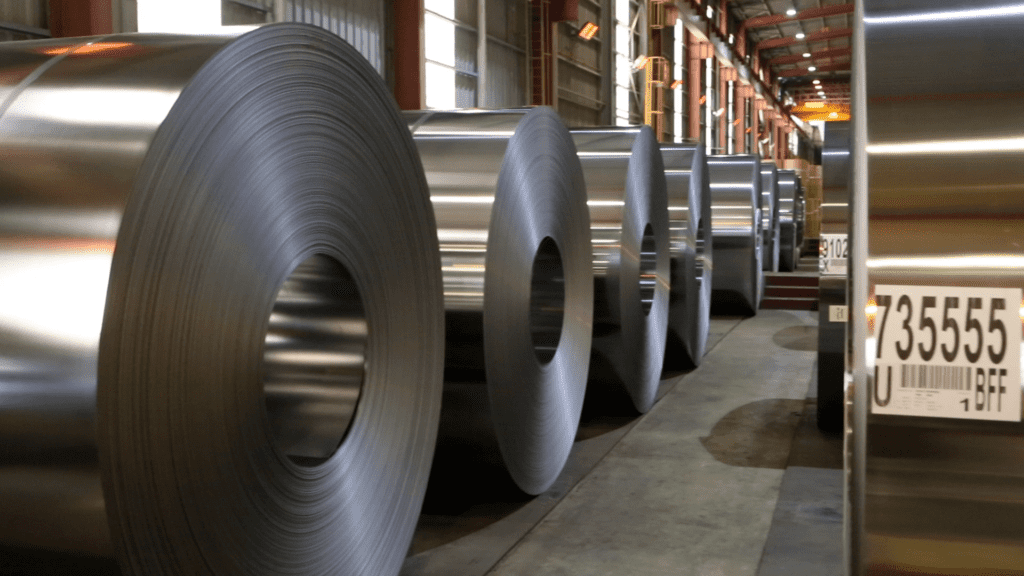
Steel HRC prices flat in Europe as holiday lull begins
Fastmarkets’ daily steel hot-rolled coil index, domestic, exw Northern Europe, was calculated at €656.00 ($725.12) per tonne on July 28, up by €0.37 per tonne from €655.63 per tonne on July 27.
The latest calculation of the index was down by just €0.25 per tonne week on week, but down by €14.63 per tonne month on month.
Neither mills nor buyers were particularly active in the seasonally slow market.
“Mills offer [HRC] but there’s no hurry to buy, because demand is weak, stocks are more or less at the right level, and import volumes are high,” a trading source said.
One producer in Germany was hoping to achieve €700 per tonne ex-works for November-rolling HRC, but no deals at that price have been heard yet, market sources said.
In general, there were only a few producers active in the market, with September-October delivery HRC on offer at €660-680 per tonne ex-works, while buyer estimates of the tradable value were closer to €650-660 per tonne ex-works.
“Prices have been flat for several weeks and will stabilize [after the] summer holidays,” a second trader in the region said.
As for the post-holiday outlook, there was cautious optimism that apparent demand for HRC would improve due to restocking, market sources said, although the availability of low-priced imports was likely to decline quickly due to the fast uptake of European Union import quotas.
“There’s a risk the quota volume might be reached and even exceeded, which might make imports more expensive [and reduce] pressure on the domestic market,” a distributor said.
Fastmarkets calculated its daily steel hot-rolled coil index, domestic, exw Italy, at €644.58 per tonne on July 28, up by €1.25 per tonne from €643.33 per tonne on July 27.
The Italian index was up by €6.25 per tonne week on week, but was down by €0.60 per tonne month on month.
Trading in the Italian market was practically non-existent ahead of the normal August holiday stoppages.
Buyers said that the tradable value for September-October delivery HRC was no higher than €640-650 per tonne ex-works on July 27.
An offer for September-delivery HRC from a re-roller was heard at €650-660 per tonne ex-works.
And one buyer source said that it was negotiating a booking for October-delivery HRC with an integrated mill in the region at €670 per tonne delivered (equivalent to about €655 per tonne ex-works).
HRC import offers in Italy were also broadly stable, with little buying interest reported despite the competitive offers.
HRC for late September/early October shipment from Vietnam was said to be available at €580 per tonne CFR to Italy.
Taiwan and Japan were offering HRC with the same shipment dates at a slightly higher price of €600-610 per tonne CFR.
Published by: Julia Bolotova

German construction crashes after boom years
Germany’s construction industry appears to be suffering even more than in neighbouring countries, amid an overall slowing economy in Europe. However, the current performance must be viewed against the boom that had prevailed for years, which makes the fall even harder.
“For years, construction flourished more than was healthy, and production capacities were massively expanded with investment in machinery,” a manager of a rebar distribution group says. Consequently, suppliers of material now have big problems filling those capacities.
“The benders are vying for orders, and are undercutting one another with prices for jobs,” he tells Kallanish, noting that pricing has become totally unrealistic. He adds this is a problem that no bender would like to admit. “If you ask them, it’s never themselves, they always keep pointing at others,” he says. “I’ve heard that all too often.”
“It is a drama,” a manager at another big company concurs. “It’s really obscene when you see benders selling their processed rebar at below the purchasing price; they work for nothing, and concede losses.” He adds that he does not believe in a major rebound after the summer break, or for the rest of the year for that matter.
He thus echoes Feralpi chief executive Giuseppe Pasini who last week stated that the market for long products, particularly in Italy and Germany, is not sending signals for a rebound in September.
Christian Koehl Germany


Vallourec anticipates positive second half
French pipemaker Vallourec says it sees US pricing stabilising in the second half of the year at “healthy levels” and market headwinds slowing.
A decline in tube prices and profitability due to lower sales volumes should be slightly offset by higher international pricing in the third quarter, the company says in its first-half earnings report monitored by Kallanish.
While US prices are forecast to decrease moderately in Q3, sales volumes should bottom as distributor inventories normalise. “Our results in Q2 2023 continued the excellent performance we have produced over the last several quarters. Favourable pricing and solid execution across the Group and especially in the Eastern Hemisphere drove robust profitability,” says chief executive Philippe Guillemot.
“US tube pricing has been on a downward trend, though it remains at healthy levels … Outside of the US, demand for our tubular products remains strong, and pricing has continued to show an upward trend. We are capitalising on this via our premium production hubs in Brazil and Asia, while continuing to wind down our tube production activities in Germany,” he adds.
The company’s Brazilian capacity increase is underway and is expected to be completed in 2024. The closure of sites in Europe is slightly ahead of schedule. Vallourec expects German tube production operations to cease in Q4.
Consolidated H1 revenue was €2.6 billion ($2.8 billion), up 31% year-on-year thanks to stable sales volumes, positive price/mix effect, improved Mine and Forest division performance and the euro-dollar currency effect. Ebitda increased notably, reaching €694m compared to €205m in H1 2022. This reflects increasing margins.
Overall, the company registered a positive performance in the global Oil & Gas market in terms of prices and volumes and a recovery in iron ore volumes. For the first half, tube revenue was up 27% y-o-y due to higher pricing.
H1 gross capital expenditure stood at €119 million, up from €59m in H1 2022. Full-year 2023 gross capex is expected to be around €220m, including approximately €70m related to the transfer of Oil & Gas volumes from Germany to Brazil.
Natalia Capra France

Factors combine to finally halt EU construction: Eurofer
The sustained increase in construction material prices, coupled with labour shortages in certain EU countries and growing economic uncertainty, has finally impacted the positive trend in construction output observed since the fourth quarter of 2020, says Eurofer.
In Q4 2022, EU output recorded its first decline since then, by 0.1%, while it was nearly flat, at 0.1% growth, in Q1 2023.
Gross fixed investment in construction dropped in Q1 by 0.4% on-year after eight consecutive quarterly increases. However, two out of the last three quarter-on-quarter developments showed a clear slowdown in construction investment, signalling that activity in the sector has lost ground, the European steelmakers’ association notes in a report seen by Kallanish.
Q2 growth was driven mainly by “other construction” investment, particularly in civil engineering. Its expansion is projected to continue during 2023, but at a much slow pace due to lower public expenditure in construction. As expected, residential investment continued to drop, due to higher mortgage rates resulting from monetary policy tightening by the ECB to curb inflation.
Growth has been supported by generous housing and renovation schemes in place in many EU Member States. However, the impact of these is likely to fade due to downside factors including construction material cost and supply shortages.
The EU construction sector is expected to experience a mild recession in 2023, falling 0.5% on-year, and to recover modestly, by 0.7% in 2024, Eurofer says.
“Civil engineering will continue to be supported by EU-wide public policies … but their effects have become increasingly uncertain and difficult to quantify due to the recent deterioration of the economic outlook. The suspension of the Stability and Growth Pact has been extended until the end of 2023, which will leave room for government spending in infrastructure. However, the visible effects in terms of construction output related to these projects will be lagged over time,” the association concludes.
Adam Smith Poland

European stainless flats demand resumes, prices to increase
European stainless steel coil prices have reached rock bottom and will increase in new contracts, sources tell Kallanish. Mills in Europe are pushing prices up by some €50/tonne ($54) for hot and cold rolled coil for September delivery and plan a second step of increases for October delivery.
All steelmakers plan to idle their facilities for longer than usual this year due to poor sales and overcapacity. Because of the stoppages, deliveries of agreed contracts are being delayed.
European stainless flat steel market sentiment is now changing. Some northern European service centres have noticed a demand surge in July, with the return of apparent demand and restocking. This follows a long period of sluggish sales for HRC and its derivatives.
At present, stainless CRC in northern Europe is at €2,230-2,280/t delivered on average and HRC at about €2,100-2,130/t delivered. Scrap prices in Europe have also recovered this month by around €50/t, due also to extreme shortages, after prices reached unsustainable levels in June.
Natalia Capra France