

Hartlepool Steel Terminal receives shipments, eyes import/export boost
The Hartlepool Steel Terminal, owned and operated by PD Ports, has welcomed its first shipments.
The 75,000 square feet facility allows customers to discharge different steel products – including coil, steel plate, beams, pipes – on to the same berth, reducing both shipping and onward freight costs, PD Ports tells Kallanish.
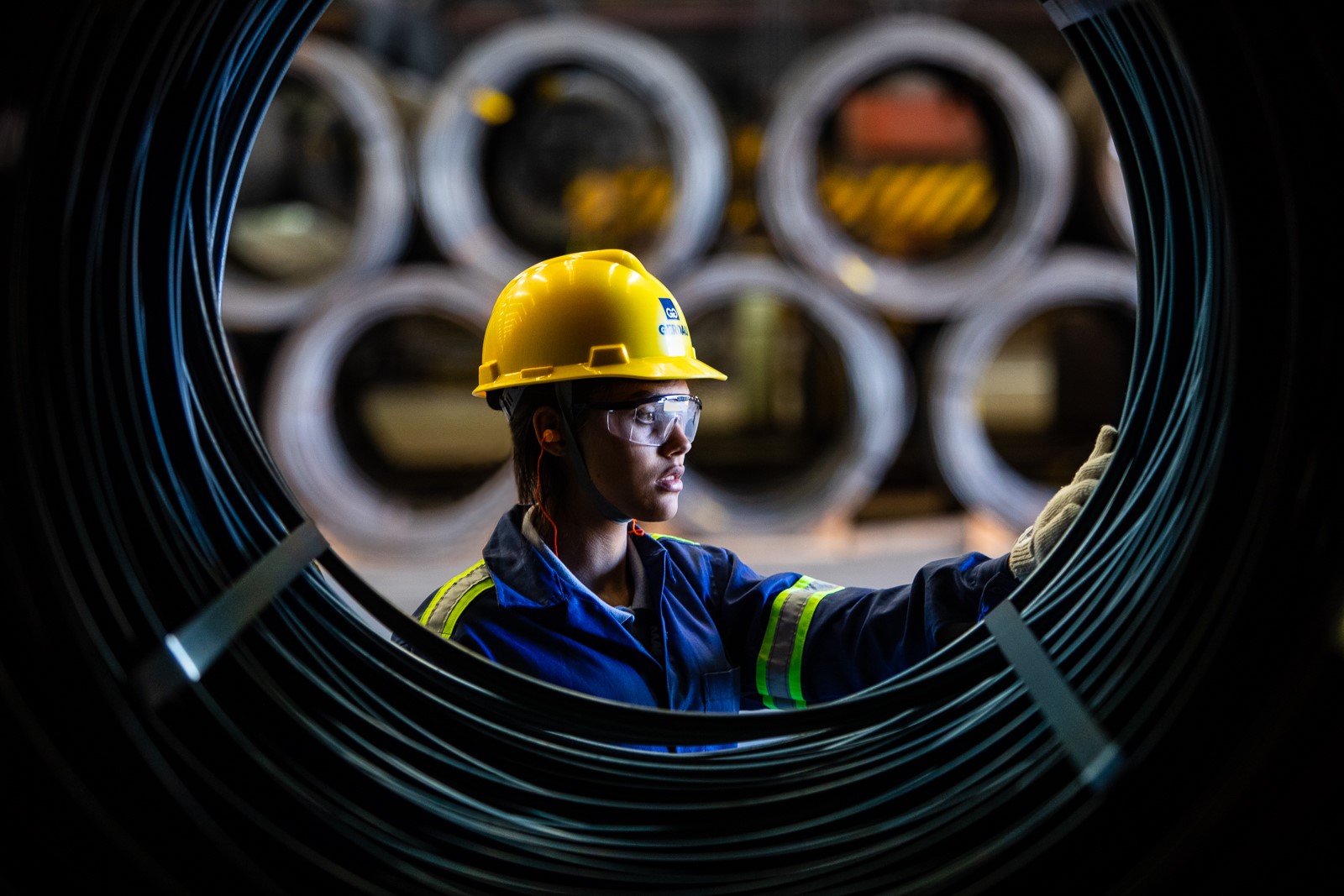
It has been upgraded to store steel coil with the installation of a specialist storage system – the KLP Roll Stop System by Lankhorst Engineered Products – which can hold individual coils of up to 30 tonnes.
The Port of Hartlepool is the only northeast UK coastal port that can receive both short-sea and deep-sea volumes of steel coil, offering capacity for more than 50,000t of the product, PD Ports claims. Shipments of various steel products, including the first shipments of steel coil, will arrive in Hartlepool this month, including vessels from Brazil, Turkey and Germany.
The port has already handled 50,000t of import and export steel products in the first six months of 2023, a figure which is expected to grow significantly thanks to the new steel coil offer. The project represents a diversification for the terminal building, which previously supported the oil and gas industries.
“This new facility is a significant investment in our operations at Port of Hartlepool, making it a truly global terminal and one that will support North-East manufacturing businesses in sourcing their products from around the world,” says PD Ports business development manager Roy Merryweather. “It will open up access to the best quality steel available internationally, including many grades that are not made in the UK.”
Adam Smith Poland


Acciaierie d’Italia to idle blast furnace
Italian steelmaker Acciaierie d’Italia (ADI) is idling blast furnace no.1 for the entire month of August. The company is installing so-called Meros filters at the agglomeration equipment, completing the work required to achieve national environmental authorisation Autorizzazione Integrata Ambientale (AIA), a source close to the company tells Kallanish.
BF no.1 will resume operation in September after the filters have been fully installed and are in operation. Acciaierie d’Italia employs over 10,000 workers and is currently operating with BFs No.2 and 4. In the second half of 2023, it has vowed to start the refurbishment of blast furnace no.5, which has been idle for several years, and begin construction of an electric arc furnace.
The group produced 3.5 million tonnes of crude steel in 2022 and 3.3mt of pig iron, generating revenue of €3.9 billion ($4.3 billion) and a positive Ebitda of €327 million. In 2021, it posted turnover of €3.3 billion, up from €1.6 billion in 2020, while crude steel production was 4.1mt, an increase from 3.4mt in 2020.
Natalia Capra France

ArcelorMittal confirms hybrid EAF investment in Spain
ArcelorMittal has officially announced its decision to give a green light for its decarbonisation plan in Spain, Kallanish learns from the company.
The company’s project includes the construction of a 2.3 million tonnes/year green hydrogen-based direct reduced iron unit, complemented by a 1.1m t/y hybrid EAF, which will substitute the current blast furnace.
“We began the initial engineering and design (FEED) phase of the DRI/EAF projects as we prepare to close the agreements on the commitments with the equipment manufacturers to establish the supply schedule, after having completed all the preliminary evaluation stages,” says ArcelorMittal.
The EAF is expected to be operational in the second half of 2025. “Once started, the plant will be able to produce high volumes of low carbon steel wire rod and rail, which will place the Spanish unit in a highly competitive, particularly for high value-added products market.”
The project is expected to cut almost 70.9 million tonnes of CO2 emissions, the steelmaker adds.
The investment is €1 billion ($1.1 billion), including a €450m contribution from the Spanish government. The co-funding is part of the national recovery and resilience plan approved by the European Commission.
Todor Kirkov Bulgaria
EU HRC prices stabilize in slow market
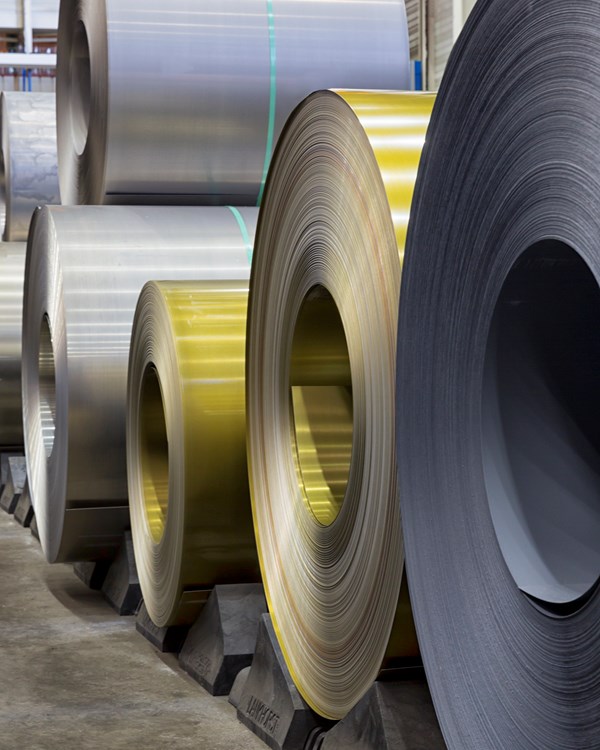
Domestic prices for hot-rolled coil in Europe have been stable on July 31 as the market entered a traditional slow period.
Sentiment in the market has remained largely downward due to low demand from the construction industry and a negative outlook for steel consumption by carmakers.
“Demand remains the issue and it would not be solved by lower prices – the buyers would not buy more at any prices if they understand that their customers do not need material,” a European trader said.
Lower availability of imported coil combined with the effects of summer maintenances at European mills might partially offset the negative factors, sources said.
Safeguard quotas for Other Country and South Korea origin have been almost filled, making the cheapest material unattractive for the EU buyers due to risks related to safeguard duty.
Platts assessed domestic prices for hot-rolled coil in Northwest Europe unchanged on day at Eur645/mt ex-works Ruhr on July 31.
The assessment was based on tradable values estimated by market sources at Eur640-650/mt ex-works Ruhr.
Platts assessed domestic prices for hot-rolled coil in South Europe at Eur635/mt ex-works Italy on July 31, stable on day.
Tradable values have been reported at Eur630-650/mt ex-works Italy.
Platts is part of S&P Global Commodity Insights.
Author Maria Tanatar

European steel HRC market quiet amid summer closures
Fastmarkets’ daily steel HRC index, domestic, exw Northern Europe, was calculated at €654.92 ($721.34) per tonne on Monday, down by €1.08 per tonne from €656.00 per tonne on July 28.
The latest calculation of the Northern European index was down by €0.91 per tonne week on week and by €19.18 per tonne month on month.
Market participants were largely absent from trading, resulting in seasonally slow activity.
“[The market] is dead at the moment,” a trading source said.
Some sources forecast that there would be a pick-up in demand by September and said that mills could look to achieve price rises before the autumn.
During the week to July 28, one mill in Germany expected to achieve €700 per tonne ex-works for November-rolling HRC, according to market sources. It remained uncertain whether this price would be achieved.
Offer prices of HRC were in the range of €660-680 per tonne ex-works, while buyers’ estimates of tradeable prices were still being reported at €650-660 per tonne ex-works.
Meanwhile, Fastmarkets calculated its daily steel HRC index, domestic, exw Italy, at €635.00 per tonne on Monday, down by €9.58 per tonne from €644.58 per tonne on Friday.
The Italian index was down by €10 per tonne week on week and down by €15 per tonne month on month.
Trading in the Italian market was almost nonexistent, but this was typical during the summer-holiday period.
Buyers reported tradeable prices for September-October-delivery HRC at €630-640 per tonne ex-works on Monday.
“Market activity is completely dead,” the first trading source said, “especially in Italy because of the summer holidays.”
Published by: India-Inés Levy
