


UK launches safeguard extension review
The Trade Remedies Authority (TRA) has initiated an extension review of the UK safeguard measure on 15 categories of steel products, Kallanish notes.
The measure is due to expire on 30 June 2024. The review will recommend to the Secretary of State for Business and Trade if the safeguard measure should be extended by up to two further years to 2026.
Interested parties have until 19 September to register their interest on the public case file.
The safeguard measure was transitioned from the EU after the UK left the bloc. Unusually, the UK has pre-empted the EU by launching its extension review first. EU steelmaking representatives have in recent months voiced their concerns over the possibility that the bloc will choose not to extend safeguards beyond mid-2024, while the EU’s Carbon Border Adjustment Mechanism only comes into force in January 2026.
Adam Smith Poland


Swedish fabricator Proplate lifts revenue, prepares investment
Proplate Oxelösund AB, a Swedish manufacturer of complex steel parts and assemblies for industries, lifted 2022/23 fiscal year revenue by 18% on-year to SEK 429 million ($39m). This is double the figure of three years ago and results in a net income of SEK 15.4m, Kallanish hears from the company.
It notes that its performance defied the challenges arising from a shortage of materials following Russia’s invasion of Ukraine, along with general price increases in areas such as electricity, transport, steel and packaging materials.
With a strong presence in the crane manufacturing sector in Europe and the US, the company says it is preparing further investment in its production facility in Sweden. Last year, it carried out several investments, including new office premises, expansion of the painting shop, and new training premises. It also expanded its capacity in the area of high-strength steels especially for the German market, including a blasting machine, welding robot, CNC machine and paint box (see Kallanish passim).
Proplate underlines its focus on long-term partnerships with customers that include Liebherr, Kobelco, Manitowoc, Toyota Material Handling, Epiroc, and Metso Outotec. These partnerships have helped to secure increased sales from existing customers, while also building new customer relations in Europe and the US, Proplate notes.
Proplate’s production facilities are located southwest of Stockholm. They are directly connected to the neighbouring mill of SSAB, one of its steel suppliers and also a customer for its mining equipment.
Christian Koehl Germany

West Midlands signs UK Steel Charter
West Midlands metro mayor Andy Street has signed the UK Steel Charter, making it the first combined authority to commit to using UK-made steel wherever possible in key regional projects.
The West Midlands is home to at least 15 sites manufacturing, processing and handling steel, including Marcegaglia’s Oldbury site, currently under refurbishment, which produces welded steel tubes.
Marcegaglia UK acquired the Oldbury site in 2021 and is currently undertaking a £32 million ($40m) investment programme. This will create up to 70 more jobs in the West Midlands region, on top of the 175 the company employs. The scheme will bring capacity to manufacture steel products in the UK that are not currently produced domestically, allowing for more UK-made steel to be used in projects of all kinds, UK Steel says in a note sent to Kallanish.
The West Midlands Combined Authority (WMCA) is mounting a 860-tonne order for UK-made steel in the expansion of the Metro Rail for the Wednesbury to Brierley Hill scheme.
“This initiative can help to increase the amount of high-quality steel manufactured in Britain and increase the supply of British made steel contributing to key West Midlands projects,” Street says.
“All major construction and engineering projects both here in the West Midlands and throughout the UK will reap benefits from purchasing steel that is made, processed, and delivered here in Britian,” says UK Steel director general Gareth Stace.
“On top of this, Marcegaglia acquired upstream manufacturing facilities in Sheffield this year. This primary stainless steel making asset is worth several hundreds of millions to the UK economy. The investment in this facility means a return to full capacity of 500,000 tonnes of steel,” comments Marcegaglia UK general manager Nick Haycock.
“The UK has now become the second most important country for the Marcegaglia Group. Producing our steel tubular products here means UK-made steel is supplying national projects like HS2. It is now crucial to create a robust UK industrial strategy to support the competitiveness of the UK steel industry, to preserve and develop production and increase employment, also in view of the export flows requirements,” Haycock adds.
Adam Smith Poland
German car production rises, but industry stays wary
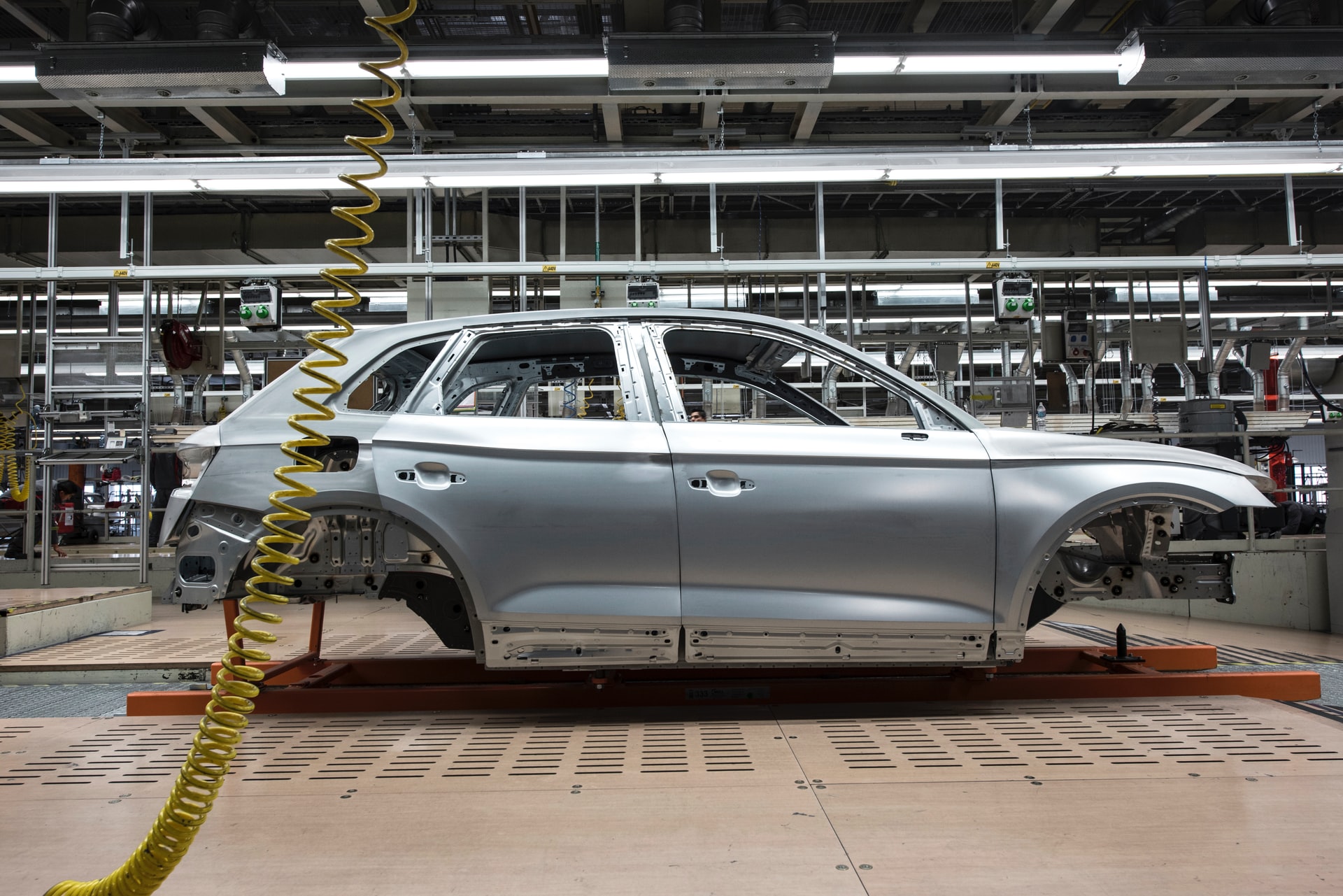
In July, 300,300 passenger cars rolled off production lines in Germany, Kallanish learns from the latest national automotive association VDA figures.
Production was thus 20% higher than in the same month of the previous year. A total of 2.5 million passenger cars were produced in the first seven months. This is an increase of 31% on the same period last year.
Despite the positive trend of the past months, VDA notes that output remains significantly below pre-Covid levels. In the first seven months of the current year, 11% fewer vehicles were produced than in the first half of the pre-Covid year 2019.
Last month, VDA president Hildegard Müller cautioned that figures from the first half-year are a “rear-view mirror view”, as the order backlog has been worked down. She warned that “our expectations for the coming quarters are not positive”.
Data now available for electric vehicles (EVs) for the first half of the year show that production in this segment is growing particularly strongly. In H1, 672,900 electric cars were produced in Germany, up 93% year-on-year. The production of pure battery electric cars (BEV) is growing particularly strongly. A total of 523,900 BEVs came off the production line in the first six months, 142% more than in the corresponding period last year.
VDA claims that Germany has overtaken the USA in the production of e-cars and is now in second place worldwide. For many German steelmakers and fabricators, this is hardly good news. Special bar qualities (SBQs) are to a large extent sold for making combustion engines. SBQ makers are the losers in the transition towards electric vehicles, as the latest quarterly figures of Swiss Steel have shown, for example.
Christian Koehl Germany

Court decision could spell Celsa ownership change
Spanish-headquartered, major European long steelmaker Celsa could be taken over by the investment funds representing its main creditors after the latest court ruling.
The firm has for a long time been at the centre of a court battle in Spain with its main creditors. This week’s verdict from the judge paves the way for the company to be taken over by creditors including Deutsche Bank, SVP, Cross Ocean, Anchorage, Golden Tree, Attestor, Goldman Sachs, Sculptor and Capital Group.
In September 2022, Celsa’s creditors submitted their restructuring plan to the court for the company’s debt of €2.8 billion ($3 billion). The creditors – representing almost the entire jumbo and convertible debt – proposed a new financial scheme which includes investment funds taking over almost the full ownership of the Rubiralta family-owned steelmaker, to extinguish the jumbo debt.
After a year of hearings and debates, the judge sided this week with the restructuring plan proposed by the creditors, confirming that Celsa’s overall value was not greater than the existing debt. In his decision, the judge stipulated that the investment funds will have to work towards preserving and boosting the value of the company as well as preserving jobs.
This court decision cannot be appealed, due to a new law issued last year by the Spanish government, Kallanish notes. It remains unclear, nevertheless, when the decision of the court will be implemented.
The investment funds have already issued statements to the Spanish press pre-announcing changes to the company’s board of directors.
Celsa, on the other hand, has issued an official statement to explain it is studying the sentence of the judge in detail. The company notes that the decision of the judge would give control of a strategic Spanish company to foreign entities, which would need to be approved by the Spanish government. The company also stresses that it maintains the support of all strategic partners – including suppliers, trade unions and local authorities. All these entities, including the Spanish government, expressed their support during the trial towards Celsa’s business continuity, the producer adds.
Celsa was founded in the 1960s as a rolling mill near Barcelona by Francesc Rubiralta Vilaseca. The original site was equipped with an EAF in the 1970s to become a steelmaker. It then started expanding through acquisitions, first in Spain and then abroad, in France, Poland, Norway and the UK. Francesc Rubiralta Rubio, the son of the founder, became chief executive of Celsa Group in 2010 and has been Eurofer president since November 2022.
Emanuele Norsa Italy

EU HRC: Picture mixed, demand low
The picture remained unclear in the European hot-rolled coil (HRC) market today, with steelmakers still pushing higher offers but buyers reticent given low demand.
Argus’ daily northwest EU HRC index rose by €3.75/t to €644.25/t ex-works, while the daily Italian HRC index nudged up by €1/t to €630.50/t. The twice-weekly cif Italy HRC assessment was unchanged at €600/t, while the weekly Italian cold-rolled coil (CRC) assessment slipped by €7.50/t to €722.50/t ex-works. The daily northwest EU CRC assessment was static at €730/t.
An Italian mill offered at €680-690/t base delivered Italy for HRC, and €790/t base delivered for CRC. Availability was reportedly for October, although some said September was still available. A price of €670/t ex-works was also mentioned, but a source said traders were offering custom-cleared port material at a significantly lower price, in some cases for thinner gauge material.
Service centres continued to compete for sheet sales as end buyers were reluctant to replenish, and with the end of the financial year approaching for some. One north European service centre said it was selling hot-dip galvanised sheet around €760/t base, coil equivalent, which is below replacement cost based on new production offers.
“When interest rates stay high, investment will stay low. That will have an impact on the economy and might lead to a longer recession period,” one service centre executive said. Another said it was very difficult to make sales given the competition. “We are checking if the requests of the European mills will be accepted. I am personally not confident due to the actual market demand,” an Italian SSC said, while another said it would be “almost impossible” to see price increases without demand rising.
“End-users are slow and even distribution is not buying much, as they want to stay as lean as possible. There are not much negotiations, [end-users] have limited consumption — everybody is in a wait-and-see mood and they buy in the last minute and then they have the negotiation power,” a seller said.
Automotive demand was still a concern, after flooding in Slovenia disrupted supply from one important supplier.
At the same time, import offers were uncompetitive, at least from origins without quota issues. One trader said demand for non-safeguard material — likely Saudi Arabian — was very strong, with a mill receiving hundreds of thousands of inquiries from European buyers.
There is a fairly broad consensus that the other countries quota will fill immediately upon resetting in October, and may well do the same in January because of the amount of material on order. Offers from quota-blocked countries, such as Taiwan, are still close to €600-610/t cfr Antwerp, but are not interesting for buyers. A buyer said it had $640/t cfr Italy available, but again for material under the “other countries” quota. Another one said €590-620/t cfr Italy was on offer.
Some Italian buyers have booked import material for arrival in December at $650/t cfr south Europe to be cleared under the other countries quota from 1 January, saying the price is worth the risk, which they assess anyway as not that high — if the quota does exhaust on day one, all of the material will be subject to a pro-rata duty according to the tonnage volume, meaning that only a few euros per tonne extra might be applicable.
Prices rose on fairly brisk trade in the futures market, with the strongest increases on the front month. September traded €13/t higher on screen to €663/t, while October rose by €5/t to €665/t and November by €9/t to the same level. December increased by €10/t to €670/t.
Source: Lora Stoyanova, Argus Media
