


Bowim earnings remain under pressure despite higher deliveries
Bowim’s consolidated revenue in the first half of 2023 dropped 24% on-year to PLN 1.09 billion ($252.7 million), while net profit plummeted 95% to PLN 5m.
This is despite the Polish distributor’s shipments inching up 2% to 247,085 tonnes, driven by a 7% hike in sheet sales to 99,329t and 17% jump in rebar to 40,490t.
Imports accounted for 36% of purchases in H1, a big jump from 26% a year earlier.
Costs of energy and input materials dropped by 11.6%, Kallanish notes.
Besides the risks related to the Ukraine war, such as supply chain disruption, an additional risk is the possible circumvention of EU sanctions by steel processed and supplied from third countries using Russian-origin feedstock, says Bowim.
In full-year 2022, Bowim’s consolidated shipments fell 7% on-year to 499,883t, with sheet comprising 196,413t, down 4%.
The Polish Union of Steel Distributors (PUDS) said in June that Poland’s steel market has become highly import dependent, with distributors no longer able to rely on the stability of guaranteed local mill supply (see Kallanish passim). Price volatility has intensified significantly, making buyers ultra cautious, while Italy has substantially increased traded volumes with Poland.
Adam Smith Poland


Saarland mills acquire port logistics company
Dillinger Hütte and Saarstahl, through their parent holding Stahl Holding Saar (SHS), have acquired logistics company Dillinger Hafen-Umschlagsgesellschaft mbH (DHUG) in the port of Dillingen. The seller is Rotterdam-based HES International.
DHUG is a major logistics partner, especially for local and international customers from the steel industry and from the energy and construction sectors, Kallanish learns from SHS.
In addition to loading, unloading and transshipment of various bulk materials, DHUG offers five hectares of paved area and multifunctional covered storage facilities. A roll-on/roll-off (ro-ro) loading ramp, a quay for lifting operations and a multipurpose crane for general cargo are available on site.
Jonathan Weber, SHS board member for transformation, explains the reasons for the purchase: “The geographical proximity to DHUG is a strategic advantage for future electric steel plants in the Saar region. For the upcoming transformation process, waterways, alongside rail and roadways, are becoming increasingly important for efficient and environmentally conscious delivery.”
In addition, SHS and its French subsidiary Saarstahl Rail will in future increasingly require easily accessible storage areas, such as those at DHUG, for plate and rails, SHS notes.
Christian Koehl Germany

ArcelorMittal accelerates low-carbon steel delivery to automotive suppliers
ArcelorMittal is teaming up with French automotive component maker Lisi Automotive to build components and assembly systems using the steelmaker’s low-carbon, sustainably produced XCarb steel. The aim is to reduce carbon footprint in the vehicle manufacturing process, Kallanish notes.
“Today, ArcelorMittal can manufacture wire rods with less than 700kg of CO2 per tonne of steel at its plants in Hamburg and Warsaw, saving up to 70% of CO2 emissions compared with traditional production methods based on the blast furnace route. With the innovative DRI route of steelmaking, which is a key part of ArcelorMittal’s decarbonisation strategy, the CO2 impact of the products will be reduced even further,” the firms say in a joint note.
For Lisi, the use of XCarb steel will represent a carbon footprint reduction of up to 45%, reducing up to 10.000 tonnes of CO2 emissions in its production process. This is the equivalent of the emissions of 10,000 Paris-New York journeys for one passenger, Lisi explains.
ArcelorMittal is investing heavily in low-carbon emission steel production. Earlier this year, it signed a partnership with French automotive supplier Snop to test the use of its high-strength, low carbon-emissions Usibor steel in structural car parts. While tests are underway, the two firms signed an agreement that also covers the supply and purchase of other XCarb solutions, including XCarb green steel certificates (see Kallanish 3 July 2023).
The steelmaker intends to reach carbon neutrality by 2050 and cut CO2 emissions by 35% by 2030 in Europe. The company started producing XCarb low-carbon products last year at its Sestao plant using the electric arc furnace route, scrap steel and 100% renewable electricity.
Natalia Capra France

Green steel uptake varies between industries, regions: conference
Calls for environmentally sound steels are getting louder from carmakers and other major customers of high-end steels. But the picture is not all that unanimous, said speakers at the MBI Infosource Stahltag in Frankfurt last week.
“[Big] customers keep pushing us for green steel; some want it as early as tomorrow,” said Sebastian Bross of Salzgitter AG. As head of the distribution unit, Salzgitter Mannesman Handel, however, he also sees difficulties further downstream. “Distributors feed smaller customers who know little of the transition, of CBAM, of credit insurance and such, and they find it spooky,” Kallanish heard him say at the conference. “It will be the task of the distributors to bring that across.”
Asked from the audience about the level of acceptance in the construction industry, Bross came up with an observation on regional differences. Benelux and Scandinavia have a good awareness of green steel, while “the further you go east in Europe, the thinner it gets”.
Alexander Becker, chief executive of Georgsmarienhütte group (GMH), highlighted the group’s good relationship in this regard with Volkswagen, as it recently received the carmaker’s sustainability award. But his impression was split. Big groups like VW or Bosch are moving on green steel, “but where are the others?” he asked. He pointed at a big gap of perception between what a company’s ceo proclaims at a presentation, and what the purchasing department actually asks for. “They are worlds apart, sometimes,” he stated.
One remarkable impression within the sector of special bar qualities is that customers are apparently starting to prefer the cleaner footprint of EAF mills over oxygen-route mills like Saarstahl or Moravia Steel. “We are running at full capacity, and I can only explain it with a shift of volumes,” Becker opined.
Christian Koehl Germany

Polish rebar prices recover on restocking
Domestic producers in Poland raised rebar offers 2,800-2,850 zloty ($646-657) per tonne CPT, which equals to 2,780-2,820 zloty per tonne ex-works.
Earlier this week, however, a deal for a sizeable tonnage was concluded at lower level — 2,730 zloty per tonne CPT, which nets back to about 2,710 zloty per tonne ex-works.
Buying continued improving in the assessment week, however, it has been driven mainly by a restocking, rather than real demand from the construction sector, according to market sources. Only the residential sub-sector was showing some signs of improvement.
“Everyone is afraid that surge in demand was caused by empty stock, not by a real demand from the construction industry,” a trading source said. “It seems that a pick-up in demand from residential construction companies might not be enough to fully compensate for missing big infrastructure projects.”
As a result, Fastmarkets’ weekly price assessment for steel reinforcing bar (rebar), domestic, exw Poland was 2,710-2,820 zloty per tonne on Friday, up by 10-50 zloty per tonne from 2,700-2,770 zloty per tonne the week before.
Market sources expect that rebar prices in Poland could continue to rise in the coming weeks, supported by a pick-up in the residential sub-sector and continued restocking
In July, the Polish government launched a support program for the nation’s first-time homebuyers, offering home loans with a fixed 2% interest rate over 10 years, with the difference to the actual interest rate covered by the state.
In addition, one major local producer was expected to halt production for maintenance until early November, so sources expect limited availability to support the uptrend.
Currency fluctuations, particularly the Polish zloty weakening against the euro during September, made imports from the EU less attractive and supported a domestic price increase. The Polish currency was trading at 4.62 zloty to €1 on September 22 compared with 4.48 zloty to €1 on September 1, according to the exchange rate website Oanda.com.
Import offers for rebar from two Italian mills were reported at €590 per tonne CPT and €610 per tonne CPT to Poland during the assessment week.
Published by: Julia Bolotova, Darina Kahramanova


Trading limited in European HRC market, prices edge lower
HRC buyers in Europe were largely inactive on Friday, postponing restocking activity until October.
Even though the stock levels across the entire supply chain arel ow, buyers remain in no rush to purchase tonnages, principally because of a lack of orders from end-users.
“We don’t need more [HRC] in stock. With current demand levels, we can [easily] survive with what we have,” a stockholder in Germany said.
One producer estimated the tradable price for HRC in Northern Europe at €630-650 ($671-692) per tonne ex-works.
And another mill said it would like to achieve €670 per tonne ex-works for November-rolling HRC, but admitted this was far above the current achievable level.
Buyers, meanwhile, gave lower estimates, with none higher than €620-630 per tonne ex-works.
Lead times for HRC at most EU mills varied between five and six weeks, sources said, adding that European mills might need to cut output during the fourth quarter to balance the market.
Global steelmaker ArcelorMittal announced some equipment stoppages at its mill in Bremen, Germany, earlier this week. It said it would be halting blast furnace (BF) No2 on October 1 for about 30 days, while BF No3 will have a short-term stoppage of five days during the week starting October 9.
ArcelorMittal Bremen’s two BFs have a combined capacity for 3.6 million tonnes per year of pig iron. The Bremen steelworks also produces hot-rolled, cold-rolled and galvanized coil.
Market participants said they expect to see only a limited effect on the flat steel market, because the stoppages were planned, only short term and no equipment apart from the BFs will be stopped.
“To make a difference [to the supply-demand balance for HRC], all European mills would have to adjust production. The market is heavily oversupplied, given the current demand levels,” a trading source said.
Fastmarkets calculated its daily steel hot-rolled coil index domestic, exw Northern Europe, at €629.79 per tonne on September 22, down by €3.96 per tonne from €633.75 per tonne on Thursday.
The index was down by €5.09 per tonne week on week and by €5.21 per tonne month on month.
The calculation of the corresponding daily steel hot-rolled coil index, domestic, exw Italy, was €618.54 per tonne on Friday, down by €3.96 per tonne from €622.50 per tonne on Thursday.
The Italian index was down by €7.46 per tonne week on week and by €8.96 per tonne month on month.
Italian buyers have adopted a wait-and-see attitude, but several sources told Fastmarkets they would come back to the market in the first half of October, when the situation with imports becomes clearer after the renewal of the EU’s quarterly import quotas and material gets cleared through customs.
“Restocking should start after [HRC] imports gain clearance, in about two or three weeks,” a trading source said.
Buyer ideas of the tradable price for HRC in Italy were generally no higher than €600-620 per tonne ex-works.
HRC from Asian countries was said to be on offer at €585-610 per tonne CFR Italy for January-arrival, with the lower end of the range available from Vietnamese suppliers. No new trades were reported on Friday.
Published by: Julia Bolotova
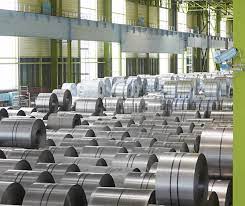
Dunaferr steelworks plans to decarbonize output with new EAF
On September 20, the parties signed a Memorandum of Understanding (MoU) in Budapest that set out the terms of collaboration, in the presence of senior executives from all three.
Under the plan, the Dunaferr steelworks will switch from the coal-intensive steelmaking route to electric-arc furnace (EAF) technology. The company will replace its existing blast furnaces and basic-oxygen furnace with a new 150-tonne EAF, to be supplied by CISDI. This will allow the Dunaferr site to slash its carbon dioxide emissions by as much as 80%, the company said.
The plans would be subject to EU regulatory approval, however, the release said.
According to market sources, the Dunaferr steelworks is currently idle, with both BFs offline and the rolling mills stopped in August due to a lack of feedstock.
Dunaferr has two blast furnaces with combined capacity for 1.4 million tonnes per year of pig iron, This is used to produce hot-rolled, cold-rolled and hot-dipped galvanized coil steel products.
The design capacity of Dunaferr’s HRC mill is around 2 million tpy, according to Fastmarkets’ company database.
What is driving decarbonization in the EU?
Low-carbon steel has become an integral part of sustainability goals for BF-based steelmakers in recent years.
Major European BF-based steelmakers have been investing in green steel projects, cutting emissions to comply with strict EU regulations.
Under the European Green Deal, the European Commission proposed a new EU target to reduce greenhouse gas emissions by at least 55% by 2030, compared with the levels emitted in 1990.
Most commonly, producers would switch from BF+BOF steelmaking to EAF-based steelmaking, with some also opting to install direct-reduced iron (DRI) modules to ensure a supply of raw materials on-site.
The growing cost of carbon emissions in the EU has also pushed mills to seek alternative ways of steelmaking.
In particular, the carbon permit price under the EU Emissions Trading System (ETS) was €82.68-89.87 ($88.05-95.71) per tonne in August 2023, having reached an all-time high of €105.73 per tonne in February this year.
Market sources expected the gradual elimination of free carbon-emissions allocations under the European ETS to drive decarbonization in steelmaking and to spur buying interest for CO2-reduced steel products.
This elimination of free carbon allocations was scheduled to begin in 2026. By 2030, free allocations will be cut nearly in half (down by 48.50%), while by 2034 the free carbon allowances will be completely eliminated.
As a result, some market participants expected the carbon permit price to rise exponentially. Some of those involved in the European steel industry have estimated that CO2 allowance prices will jump to €200-250 ($213-266) per tonne when the free allocations are phased out in 2034.
Current premiums for flat green steel in Europe were offered in the range of €100 to €300 per tonne “for nearly 100% decarbonized steel,” Fastmarkets has reported.
Fastmarkets’ weekly assessment of the green steel, domestic, flat-rolled, differential to HRC index, exw Northern Europe, was €100-250 per tonne on September 21, unchanged since August 24.
Demand for green steel was still patchy across Europe, with buyers saying that they largely felt no pressure to book decarbonized steel at the moment.
The range of premiums remained quite wide, reflecting the immaturity of the market and the offer-bid mismatch.