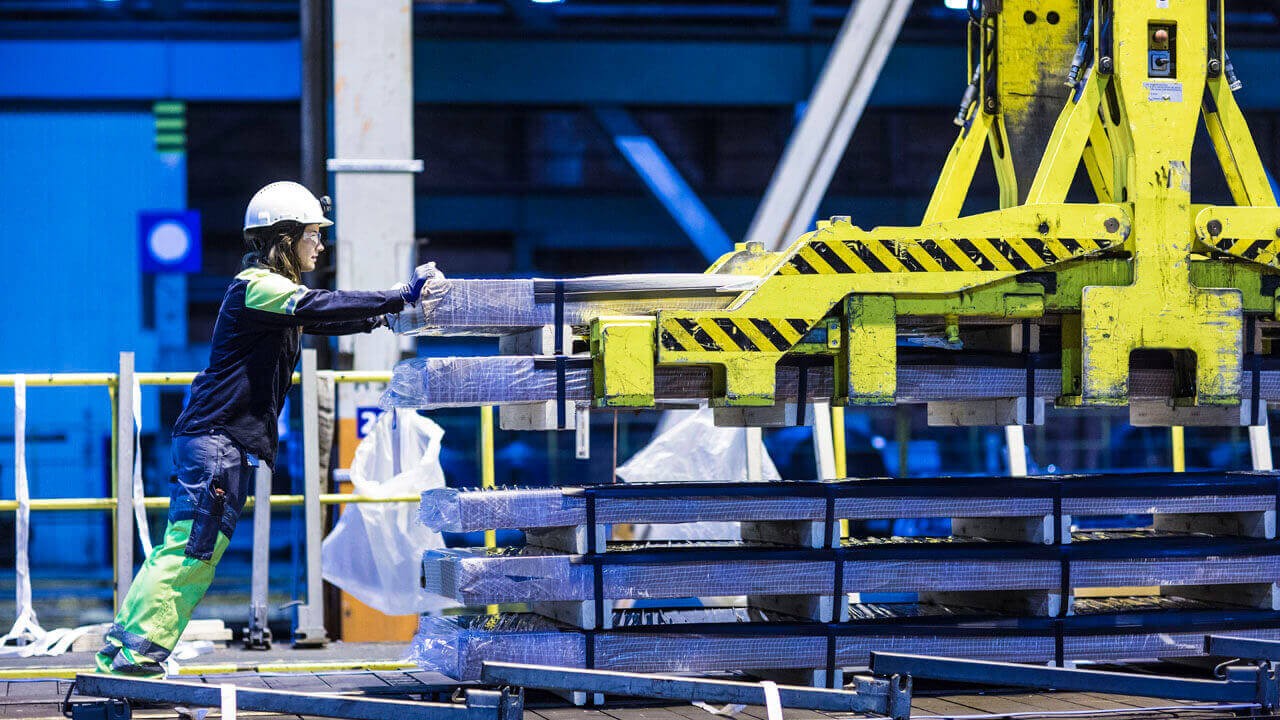
SSAB considers cutbacks at Raahe
SSAB announces that its Finnish business unit is in cost-cutting negotiations, potentially to reduce its workforce, in Raahe because of continued weak demand.
The objective is to structurally reduce fixed costs by at least €10 million ($11m) on an annual basis, the steelmaker tells Kallanish. The negotiations will discuss alternatives to increase flexibility in operations and adjust to weakened demand, while taking account of future needs.
”The aim is to work together to find solutions to increase flexibility, mobility and multi-skills so that our operations respond more flexibly than at present to future needs,” says Jarkko Matkala, SSAB Raahe’s site manager.
The negotiations concern the Raahe works’ organisation, and would affect around 2,400 employees. Unless agreement is reached on the primary operations models, the negotiations could result in workforce reductions, the company notes.
The negotiations will last an estimated six weeks unless otherwise agreed. SSAB employs a total of around 4,700 people in Finland.
Christian Koehl Germany

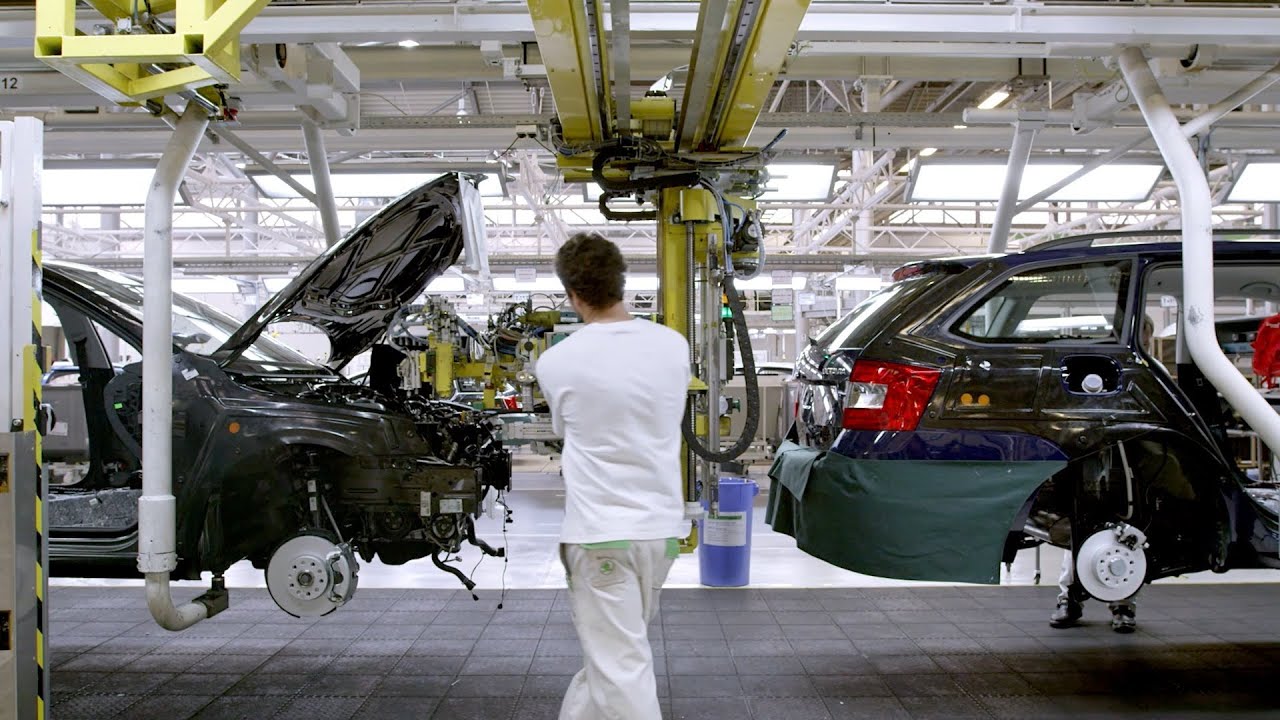
Spanish auto industry’s summer performance remains stable
The Spanish automotive sector saw a year-on-year recovery in production in July but lost strength during the August holidays. Exports followed a similar seasonal pattern, Kallanish notes.
National automotive association Asociación Nacional de Fabricantes de Automóviles y Camiones (Anfac) released July and August figures jointly due to the summer seasonality.
Output in July and August reached 204,142 units and 91,837 units, representing growth of 34% and a 17.9% decline on-year, respectively. Eight-month cumulative production amounted to 1.61 million vehicles, up 15.3% over the same period last year.
A recovery in sales in major markets boosted Spanish vehicle exports in July. Exports totalled 188,062 units, up 38.2% y-o-y. In August, however, shipments declined sequentially by 49.1% to just 95,622. This volume was down 8.1% on-year. Spanish eight-month exports grew 21.3% over January-August 2022 to 1.47 million vehicles.
European markets represented 90% of Spanish deliveries in both July and August, Anfac data show.
Todor Kirkov Bulgaria

Beltrame creates downstream partnership for carbon-neutral steel
Italian merchant bar maker Beltrame is partnering with purchasing group Sider Center for the distribution of its carbon-neutral steel products under the brand name “Chalibria,” the company confirms to Kallanish.
The agreement comes in the wake of Beltrame’s investment in the sustainability of its products. The steelmaker is heavily reducing its European facilities’ carbon footprint and developing a circular economy across its supply chain.
“The synergy and common vision between players in the same sector, of which Gruppo Beltrame and Sider Center represent a positive example, is the winning card for finding solutions that mutually optimise the business towards the sustainable transition,” Beltrame cco Enrico Fornelli comments.
“This strategic collaboration confirms the intention to provide the national market with expertise and availability of the carbon neutral product on which Beltrame is making important investments,” Sider Center’s president, Stefano Dall’Aglio, says in a note sent to Kallanish.
Beltrame will invest around €200 million ($212m) in its plants in Italy, Romania, France and Switzerland over the next five years as part of its Chalibria plan. This is a structured decarbonisation process based on energy efficiency, consumption reduction and a revamp of the reheating furnaces. There will be an increase in the use of renewable energy and the circular economy. The project will replace the consumption of natural resources with recycled polymer material and reuse of white slag instead of lime and hydrogen solution. The steelmaker intends to cut 40% of emissions by 2030 compared with 2015 levels (see Kallanish 3 April).
Natalia Capra France

Vallourec closes German pipe operations for good
Vallourec’s Düsseldorf-Rath plant produced its last pipe last Thursday. This marks the end of the German pipe operations of Vallourec, which it took over from Mannesmann in 2005. The mill in Mülheim an der Ruhr stopped production earlier this month.
“This is the closing of an important chapter of German industrial history,” said a commentator at radio station WDR. According to daily newspaper NRZ, the last rolling of a customer order occurred on Thursday. Some other operations, such as delivery, will be maintained until the final shutdown at the end of the year, Kallanish learns from the paper, which cites shop chairman Vilson Gegic.
The mills started production in the late 19th century under the Mannesmannröhren-Werke (MRW) brand. Following the dismantlement of the traditional Mannesmann group in the early 2000s, Vallourec took over four pipe mills, of which two were closed earlier. For the two remaining mills it started looking for a buyer in late 2021, but half a year later decided on a closure. The two sites together have employed 2,200 people.
Other German pipe mills under the Mannesmann/MRW label back then were acquired by Salzgitter AG and are still operational.
Christian Koehl Germany

August crude steel production rises in India, falls in Iran, Worldsteel says
Significant growth in India
Crude steel production in India increased year on year by 17.4% to 11.9 million tonnes in August, and by 10.5% year on year for the period from January to August, Worldsteel said.
The country was also the world’s second-largest steel producer in August, with domestic consumption for the full year of 2023 expected to increase by 7.5% to 128.85 million tonnes, the Indian Steel Association (ISA) said in May.
Moderate increase for Chinese steel output
The top crude steel producer, China, reported a moderate increase in output in August, to 86.4 million tonnes. This was up by 3.2% compared with the corresponding month a year earlier, as well as a more modest 2.6% year-on-year rise for the period January-August.
The production increase in China was despite strict government restrictions intended to limit the sector’s growth, according to Jens Björkman, chairman of the raw material suppliers committee of the International Rebar Producers and Exporters’ Association (Irepas).
But with winter approaching, China was expected to reduce its steel production, Björkman said.
Recent monetary relaxation and stimulus packages, specifically targeting the real estate and steel sectors, might fall short in terms of reviving demand and stabilizing prices, he added.
Sharp decline in Iran
Steel production in Iran decreased by 24.1% in August to 1.6 million tonnes, and the country produced 19.7 million tonnes of crude steel in the first eight months of the year, an increase of 1.1% year on year.
The reason for declining production in the Middle Eastern country was electricity shortages.
Such shortages are a common problem in Iran during the hot summer months, when household consumption for air-conditioning increases. As a result, supply to industries is reduced, and steelmaking is no exception.
In addition, the Iranian government imposed a 2% export duty on all raw materials and steel products, announced on September 4. This would be in addition to a pre-existing 0.5% duty.

Published by: Serife Durmus


European HRC mills attempt to rebalance supply-demand by cutting output
Many mills across Europe have cut output or weighed up the benefits of cutting output in an attempt to lower production costs amid ongoing weakness in the flat steel market, sources said.
Fastmarkets calculated its daily steel hot-rolled coil index domestic, exw Northern Europe at €631.88 ($672.54) per tonne on Monday, up by €2.09 per tonne from €629.79 per tonne on Friday September 22.
The index was down by €5.62 per tonne week on week and by €11.87 per tonne month on month.
Subdued demand from key end-use sectors, combined with an imbalance in supply-demand dynamics, resulted in minimal market activity in European HRC prices.
Market participants told Fastmarkets they expect restocking activity to restart at the beginning of October.
Producers, meanwhile, are likely to begin cutting output to rebalance the market, sources said.
“Output cuts are one of the few things that can help to rebalance the market. But if mills [instigate] stoppages now, the effect will only be seen in the first quarter of 2024,” a European trader source said.
Buyer estimates for HRC were reported at around €615-630 per tonne ex-works in Northern Europe.
In the week to September 22, producer estimates for HRC in the region came in at €630-650 per tonne ex-works.
Meanwhile, the calculation of the corresponding daily steel hot-rolled coil index, domestic, exw Italy was €621.67 per tonne on Monday, up by just €3.13 per tonne from €618.54 per tonne on Friday.
The Italian index was down by €4.58 per tonne week on week and by €13.55 per tonne month on month.
The Italian HRC market remains quiet amid slow demand and mixed sentiment, sources told Fastmarkets.
“Prices are relatively stable since last week, [but] buying activity is currently weak,” a trader source said.
And a buyer told Fastmarkets: “We are facing very slow demand and an ongoing wait-and-see attitude among [end users].”
Buyer ideas of the tradable price for HRC in Italy were generally no higher than €620-630 per tonne ex-works.
Mills were reported to be offering HRC for November-delivery, sources said.
Imports
Interest in imported HRC remains subdued, mainly due to the long lead times, the small gap with domestic prices and safeguard-related risks.
Import offers for HRC from Asian exporters were reported at €600-610 CIF.
Published by: India-Inés Levy

Acciaierie d’Italia workers to stage strike Sep 28, seek govt support over falling crude steel output
The workers’ representatives of Acciaierie d’Italia will stage a strike Sept. 28 in Taranto and seek government support against the company’s falling crude steel output and failure to step up progress toward ecological transition, local unions told S&P Global Commodity Insights Sept. 25.
According to metalworkers’ unions, Acciaierie d’Italia’s full-year 2023 steel production will reach about 2.5 million mt, well below the company’s target of 4 million mt.
Although “at the moment BF2 and BF4 are working as well as the melting shop 2 and rolling mill 2, the rest are not working,” a union said.
The steelmaker idled production at BF2 in July amid low demand, declining steel prices and high production costs, while the 3.5 million mt/year BF5 has been idled since 2015. BF2 was expected to restart production in the second half of the year, S&P Global reported previously, citing Franco Bernabe, chairman of Acciaierie d’Italia and president of DRI D’Italia.
“We need cash to make works maintenance and the funds promised for the DRI to produce low carbon steel,” another union said, adding that they are seeking to change the governance of Acciaierie d’Italia and will meet government representatives Sept. 27 to discuss the situation of the company.
At present Acciaierie d’Italia’s shareholding is held by the state financial body Invitalia (38%) and ArcelorMittal SA (62%).
“We want Invitalia, and therefore the Italian government to become the majority shareholder as well, as we urge to have the funds for the DRI,” a union’s spokesperson said.
In July DRI Italia, the company managing the installation of two DRIs in Italy, chose to work with Paul Wurth, an engineering company and technology provider for the global ironmaking industry two develop two DRI plants, one in the north of Italy for local steelmakers and the other for Acciairie d’Italia. However, the Italian government has since withdrawn its Eur1 billion investment from the PNRR, National Recovery and Resilience Plan, for the construction of the DRI.
The DRIs are considered essential to help Italian steelmakers reduce their dependency on scrap, a key raw material that is expected to become less available in the future.
Acciaierie d’Italia and DRI Italia declined to comment when contacted by S&P Global.
The PNRR is a strategic plan that aims to modernize and improve the Italian economy, making it more sustainable. It includes investments in various sectors, such as healthcare, education, research and innovation, digitalization, as well as infrastructure, which includes steel.
It is part of a six-year Next Generation EU program from 2021 to 2026, namely the Eur750 billion package.
The Italian government decided to withdraw the funds for the DRI as it thought the adoption of the DRI could be not done within 2026. Neither the Italian government nor Paul Wurth responded to queries when contacted by S&P Global.
Annalisa Villa


More steel output cuts urged as ArcelorMittal prepares Bremen halt
The European steel coil market requires more production cuts in order to prevent prices from falling further amid weak market fundamentals, sources said Sept. 22.
In the week to Sept. 22, the standoff between European buyers and steelmakers continued: Northwest European mills have been reluctant to accept prices below Eur630/mt ex-works and buyers have been aiming for Eur600/mt ex-works.
“The market needs actions from mills, they need to stop furnaces otherwise the market has no chance to recover,” a representative from a European-based service center said.
“The mills most likely would call it ‘planned maintenance’, but it is clear that autumn is not the time for maintenance and that the current prices are the reason.”
A trader said: “Mills have to stop production, with current raw material costs, low demand and strong bearish approach of buyers they have to stop the furnaces …there is no other way to create some shortage of coil and to stimulate apparent demand.”
The comments were made shortly after ArcelorMittal said it planned to temporarily curtail production at Bremen to allow “essential repairs and maintenance” to be carried out.
“ArcelorMittal is finally making moves to cut production, it should have been earlier to prevent the price fall,” an Italian trader. “Without big output cuts European market has no hope of seeing a price recovery.”
In a statement released on Sept. 20, the company said that from Oct. 1 the plant’s blast furnace 2 would be shut for approximately 30 days while the facility’s sintering plant would halt production for a period of 60 days.
From Oct. 9, the company plans to halt production at BF 3 for approximately 41 days.
The two BFs at Bremen have a combined capacity of 3.8 million mt/year.
In an undated statement published on the ArcelorMittal Belgium website, the company also said it had temporarily shut BF A at its steel plant in Ghent.
According to the statement, the production halt commenced on Sept. 14 with the restart of operations planned for the end of November.
The company said the temporary shutdown was necessary to perform essential maintenance required to ensure a smooth transfer of production over to the site’s new direct reduced iron installation and electric furnaces once completed.
“This way we can guarantee that blast furnace A remains operational until after the construction of the new DRI installation and electric furnaces,” the company said.
Platts, part of S&P Global Commodity Insights, assessed domestic hot-rolled coil prices in Northern Europe at Eur630/mt ex-works Ruhr Sept. 21, down 27% since March 30.
Euan Sadden | Maria Tanatar
Revista InfoAcero Septiembre 2023
En el siguiente enlace pueden acceder a la edición de Septiembre de nuestra revista InfoAcero
Destacamos a continuación algunos de sus contenidos:
- Opinión – D. Arturo del Valle– Junta Directiva UAHE.
- Evolución del Índice de Precios de Productos Siderúrgicos – UAHE.
- Sector Siderúrgico: Previsiones Siderurgia en Europa- Informe Eurofer 3er trimestre.
- Información Asociativa: 19º Forum Productos Siderúrgicos, Castelldefels – 4 Octubre.
- Próximos Eventos: Flat Steel 2023- Estambul, 19 Octubre // Steel Tech 2023- Bilbao, 25-27 Octubre.