


EU recyclers warn against Critical Raw Materials Act
European recyclers umbrella organisation EuRic has issued a note of concern on a report presented to the European Parliament on critical raw materials (CRMs).
The report was drafted by the Parliament’s Committee on Industry, Research and Energy (ICRE) and EuRic expressed satisfaction with its original version issued at the beginning of the month. The organisation stated it was particularly satisfied with the lists of strategic and critical raw materials which prevented the inclusion of materials like ferrous scrap or aluminium.
However, amendments occurred around mid-month that have raised concern. “The recent last-minute endorsement for the formation of a secondary list of strategic raw materials (SRMs), with ferrous scrap quoted as example, raises several questions,” Euric writes in its latest statement. “The inclusion of ferrous scrap without sufficient data sets an alarming precedent for the unrestricted addition of materials to the list, lacking clear conditions or a methodology for assessment,” Kallanish reads.
According to EuRic, consistent data gathered over years demonstrates that steel faces no supply risk issues; it is abundant, enabling Europe’s recycling industry to meet and even exceed steel demand. Essentially, EuRic and its members fear that the inclusion of ferrous scrap will block EU scrap merchants from selling scrap to overseas markets (see separate story).
EuRic calls on the Parliament to incentivise the environmental advantages of using recycled steel scrap in steelmaking, and to promote electric arc furnace technology in Europe. This latter ambition however creates a contradiction, as increasing EAF production would require increasing scrap feed, which would be an argument in favour of export restrictions.
Christian Koehl Germany


New EU Russia sanctions concern UK manufacturers
New EU sanctions on Russia could significantly impact UK downstream manufacturers who source steel worldwide. They must therefore urgently study the legislation, warns the Confederation of British Metalforming (CBM).
The new rules, which come into force from 30 September, require evidence that iron and steel used to produce goods in a third country – outside the EU, including the UK – does not originate from Russia. Material test certificates will be required to confirm the facility and location at which the material was originally melted and poured as well as for secondary steel processes.
CBM president Stephen Morley says many firms will be unaware of this change to exporting. It could cause products to be delayed at customs and, in some instances, trigger “catastrophic production stoppages in critical automotive and aerospace sectors”, he tells The Manufacturer magazine.
“It is important to recognise that the scope of the EU measures on iron and steel products extends far beyond primary and secondary steel products to encompass many finished goods, including fasteners and other industrial consumables. They will also cover many ‘retail’ products, such as stoves, cookers and kitchen and sanitary ware,” Morley observes.
“Effectively, it is a case of prepare for the worst-case scenario, while fervently hoping that EU authorities recognise that the stringency of compliance requirements will jeopardise the flow of UK to EU supply chains,” he adds.
“There’s a lot of mixed messaging out there currently, with some suggestions that German Customs may take a more pragmatic view about what evidence is required, whilst the latest info from Belgium and France suggest a more stringent approach,” Morley continues.
“These sanctions – across the board – could have a dramatic impact on both UK exporters and importers, with many of our members bringing in their steel from all over the world. It’s a delicate issue and our best advice is to plan ahead to avoid any supply chain disruption,” Morley warns.
CBM represents UK manufacturers of fasteners, forgings and pressings, cold rolled and sheet metal products.
The new sanctions have recently seen Turkish billet buyers postpone bookings from Russia to evaluate their impact (see Kallanish passim).
Adam Smith Poland
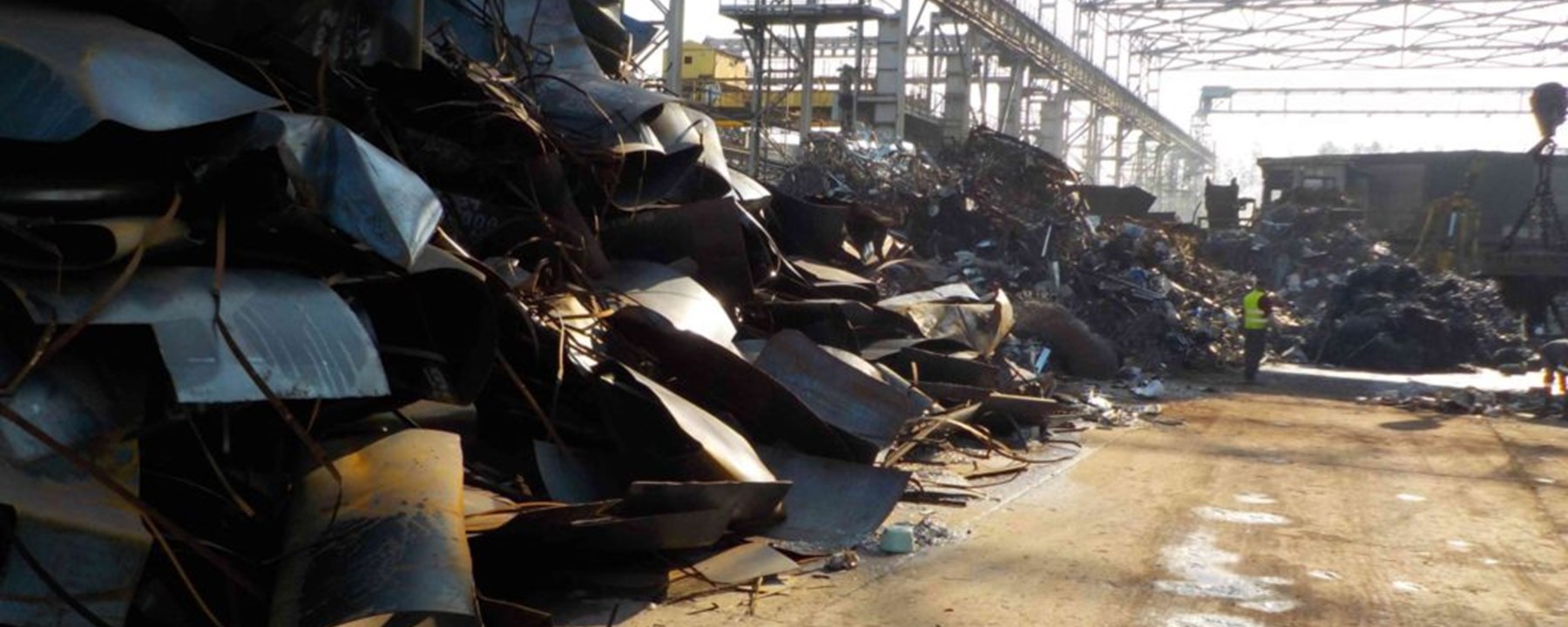
EU raw materials act hits scrap business: Stahltag
Amendments to the EU’s Critical Raw Materials Act (CRMA) are concerning the bloc’s scrap merchants. The latest version of the CRMA report contains ferrous scrap, to the surprise and dismay of many in the sector.
This “is a blow for us,” Sebastian Will, head of ferrous scrap at German recycling federation BVSE, said at last week’s MBI Infosource Stahltag in Frankfurt. “We fear the consequences that list will bring for us.”
Earlier this month, the European Parliament adopted by 515 votes to 34, with 28 abstentions, amendments to the latest report version published in early September. The adopted text states: “By six months from the adoption of this Regulation, the Commission should submit to the European Parliament and to the Council a list of strategic secondary raw materials, including ferrous scrap.”
Will said political limitations on ferrous scrap exports would take away overseas markets for EU merchants. It would especially limit exports meant for Turkey, “where the scrap price is made”. He pondered: “Will the price double?” Will anticipates that EU mills would not be able to cover their demand, and might go for scrap from the USA. “And then the Turks will bid, too, and we will be in the four-digit figures,” he warned at the event attended by Kallanish.
Another topic he addressed in his presentation is the increasing role of analytical tools in scrap processing., especially as “there will be much consumer scrap accruing in the mid-term”. He referred to “Reders”, the joint project of thyssenkrupp and recycling group TSR, which created the “TSR40” scrap grade that is especially suited for feed in blast furnaces. He spoke of “designer scrap” that reduces risks in the steelmaking process. But he also noted that a facility, as set up at TSR last year, “is expensive, and not immune to errors”.
He presented three scenarios of scrap demand in Germany if oxygen-route mills increase their feed in the converter, or blast furnace as in the project above. With a scrap feed of 15%, oxygen-route mills would need 3.7 million tonnes; at 30%, it would be 7.5mt; and if 50% is technically feasible, demand would reach 12.4mt. In that case, it would surpass the demand of the country’s EAF mills, which currently stands at 10.1mt.
Christian Koehl Germany

EU flat steel producers expected to trim Q4 output to balance supply, demand
A deteriorating macro-economic situation in Europe, coupled with an expected influx of steel imports into the region in the fourth quarter were the key factors putting pressure on domestic steel prices, sources said.
Fastmarkets calculated its daily steel hot-rolled coil index domestic, exw Northern Europe, at €628.08 per tonne on September 26, down by €3.80 per tonne from €631.88 per tonne on September 25.
The index was down by €6.92 per tonne week on week and by €15.67 per tonne month on month.
Apart from slow end-user demand, market participants said they were waiting for the start of the new import quota period on October 1, to better gauge the situation regarding HRC shipments to the EU.
“There are significant tonnages of imported HRC sitting in European ports, awaiting the new safeguard quota period. It is likely that those volumes will put downward pressure on domestic European prices once they [are released],” a trading source in Germany said.
Market participants said they estimate imported HRC volumes of between 500,000 tonnes and 1 million tonnes in October.
But some sources said that the impact of an influx of imported material on domestic HRC prices will be less significant than expected.
They said that much of the imported HRC was booked at the end of the second quarter – when the gap between domestic and import prices was more than €100 per tonne – and domestic prices have fallen significantly since June, so the gap will, ultimately, not be that dramatic.
By way of comparison, Fastmarkets’ daily steel HRC index domestic, exw Northern Europe, averaged €692.69 per tonne in June, while the monthly average for August was €643.86 per tonne, and prices have been trending lower through September.
Getting the right balance
Sources also said that, considering the weak end-user demand and limited hope for a price rebound this year, the logical step for the European mills would be to trim output to balance supply and demand.
But most agreed that the effect of the various shutdowns would only start to show in the first quarter of 2024.
“The only thing the European mills could do to shift the balance in the market [in the near term] would be to reduce their own output and take a more unified approach to pricing – because we still can see some producers making panic sales at quite low prices,” a trading source said.
“If producers gradually start switching off furnaces now, we might see a [price] rebound in the first quarter of 2024,” he added.
Some capacity has already been taken offline in Europe during the third quarter and some further stoppages have been announced for October 2023.
Notably, Europe’s leading steelmaker, ArcelorMittal, announced some equipment stoppages at its mill in Bremen, Germany, in the week to September 22. It said it will be halting blast furnace (BF) No2 on October 1 for about 30 days, while BF No3 will be subject to a five-day outage from October 9.
ArcelorMittal Bremen’s two BFs have a combined capacity for 3.6 million tonnes per year of pig iron and the Bremen steelworks also produces hot-rolled, cold-rolled and galvanized coil.
The company also started maintenance at its 2.35-million-tpy BF “A” at Gent in Belgium in mid-September, with repair works scheduled to last until the end of November.
ArcelorMittal Gent has two BFs with a combined capacity of around 4.35 million tpy of pig iron. The Gent steelworks also produces hot-rolled, cold-rolled and galvanized coil.
Salzgitter, one of Germany’s leading steel producers, idled its 2-million-tpy pig iron BF “A” for relining from August 14.
Sources said that production lost from the planned relining of BF “A” would be compensated through the stockpiling of slab delivered from other companies in the group, as well as by the restarting of its 800,000-tpy pig iron BF “C”, which has been idle since 2019.

