


EU, US fail to secure deal on steel, aluminum sustainability; extend deadline to year-end
The US and the European Union have been unable to secure an agreement for a Global Arrangement on Sustainable Steel and Aluminium (GASSA) at a summit in Washington but have extended the deadline for negotiations until the end of the year, according to a joint US-EU statement.
The joint statement comes as European Commission President Ursula von der Leyen and European Council President Charles Michel met with US President Joe Biden to discuss a range of issues including curbing excess steel and aluminum capacity and supporting decarbonization within the metals industry.
“Throughout these two years, we have made substantial progress to identify the sources of non-market excess capacity,” the statement reads. “We have also achieved a better understanding of the tools to address the emissions intensity of the steel and aluminum industries. We look forward to continuing to make progress on these important objectives in the next two months.”
The statement did not list the specific areas of contention that still need to be addressed.
The GASSA initiative is aimed at developing common rules for trade in the steel and aluminum sectors in order to restore market conditions on the international steel markets and to limit the CO2 intensity of steel and aluminum in all types of production. It stems from an Oct. 31, 2021 agreement regarding the Section 232 tariffs first put in place by former President Donald Trump in 2018 under which blanket import tariffs of 25% on steel and 10% on aluminum were applied for most countries.
At the time, the US and EU reached an interim arrangement that replaced the Section 232 tariffs on EU-origin metals with quotas — 3.3 million mt/year for steel and 384,000 mt/year for aluminum – in effect from January 2022. However, this arrangement is set to expire at the end of this year with the EU pushing for the removal of tariff rate quotas, or TRQ as part of a final deal.
The original deadline to wrap up GASSA negotiations was set at Oct. 31.
Steel groups respond
German Steel Association President Bernhard Osburg said in statement the group regrets that “a great opportunity has been missed here and now appeal to the EU Commission to use the time until the end of the year to look for common solutions and agree on effective measures.”
“Time is of the essence: The steel industry in Germany and Europe is in the midst of the transformation to climate neutrality and thus in an extremely vulnerable phase,” he added.
In the face of the current markets downturn, the European metals industry is especially keen to promote exports.
Up to 1 million mt/year of primary aluminum capacity in Europe was taken offline in the last two years. This year sees no relief as demand for primary aluminum outside China — impacted by high inflation, energy prices and supply chain bottlenecks — contracted by 5.5% in first half 2023. Overall, the global market appears in surplus with the H1 supply exceeding the 33.7 million mt demand by 700,000 mt with 600,000 mt of this accumulated outside China.
Platts, part of S&P Global Commodity Insights, assessed domestic prices for hot-rolled coil in Northwest Europe at Eur605/mt EXW Ruhr Oct. 20, unchanged on the day.
Kevin Dempsey, CEO of the US-based American Iron and Steel Institute said the industry “appreciates the US government’s ongoing efforts to negotiate a new international arrangement to address both non-market excess capacity in steel and the carbon intensity of steel imported from around the world,” but is “disappointed that to date the EU has not been prepared to agree to US proposals to establish new trade measures that can effectively address these two key issues, which are critical to the future of both the US and EU steel industries.”
“We recognize that these discussions are challenging and we thank the Biden administration for continuing to press for an agreement that ensures the long-term viability of the American steel industry,” Dempsey said in a statement. “We will continue to advocate for an agreement that provides for meaningful and enforceable measures to restrict steel imports from all countries that contribute to non-market excess capacity and that also provides for tariffs on imports of higher carbon emissions intensity steel products.”
Authors: Euan Sadden, Justine Coyne


US, EU extend negotiations on global steel, aluminum pact as no deal reached at summit
The US and EU were unable to reach an agreement for a Global Arrangement on Sustainable Steel and Aluminum during a summit in Washington Oct. 20. Negotiations for a GASSA deal will continue until the end of 2023, extending an original targeted deadline of Oct. 31.
Background
- On Oct. 31, 2021, the EU and the US agreed to re-establish historical transatlantic trade flows in steel and aluminum.
- The US agreed to suspend Section 232 duties (25% on steel and 10% on aluminum) and allowed duty-free importation steel and aluminum from the EU at a historical-based volume while the EU suspended its rebalancing duties on selected US products including steel and aluminum.
- The US and the EU agreed to suspend the WTO disputes they had initiated against each other regarding the US Section 232 measures and the EU’s additional duties.
- The EU and the US also agreed to negotiate a global arrangement to address carbon intensity and global overcapacity across the steel and aluminum industries with an Oct. 31, 2023 deadline set to wrap up negotiations.
Why it matters?
Trade
- Without an agreement in place or extension granted, the US Section 232 tariffs on EU steel and aluminum would go back into effect at 12:00 am Jan. 1, 2024. EU retaliatory duties against the US could also be put back in place.
- The move by the US and EU to address emissions in addition to excess capacity is a new approach to trade remedies that typically only target dumping and subsidies.
Emissions
- The International Energy Agency estimates that direct CO2 emissions due to crude steel production is approximately 1.4 mt CO2/mt of steel produced. Overall, the steel industry accounts for about 6-9% of global CO2 emissions, depending on estimates.
- The global aluminum industry accounted for 270 million mt of direct CO2 emissions in 2022, about 3% of the world’s direct industrial CO2 emissions, according to the IEA.
- According to the IEA, both the steel and aluminum industries are not on track to achieve net zero emissions by 2050 on a global basis.
Excess capacity
- According to the Organization for Economic Cooperation and Development Steel Committee, global steelmaking capacity increased to 2.46 billion mt in 2022, with excess capacity surging to 632 million mt.
- A September report by the OECD Steel Committee found global steel production is projected to reach 2.5 billion mt in 2023, with an increase of 56 million mt this year alone, marking the largest annual expansion in a decade.
- China’s aluminum output has surged over the past two decades, with the county accounting for roughly 59% of global aluminum production in 2023, according to data from the Aluminum Association. Total aluminum production in China this year is estimated to be 41.2 million mt, up from 2.4 million mt in 2000.
- A 2021 study by the OECD that looked at 32 aluminum firms—representing 70% of the market—globally found that firms in China receive vastly more government support than similar firms in the rest of the world. The report estimates the value of China’s support to have ranged between 4% and 7% of the annual revenue of these firms compared with about 0.2% of annual revenue at other firms in the sample.
- The global aluminum surplus is expected to be about 800,000 mt in 2023, Alcoa CEO William Opliger said during the company’s third quarter conference call Oct. 18.
Steel Prices
- Global steel prices have been under pressure in 2023, falling from record highs reached in 2021 and 2022 as demand recovered from the COVID-19 pandemic and as prices rose in the wake of the Russia-Ukraine war.
- The benchmark Platts TSI US hot-rolled coil index has averaged $908/st year-to-date through Oct. 19 on an ex-works Indiana basis, according to S&P Global Commodity Insights data. This is down from a full-year average of $1,016/st in 2022.
- Domestic prices for hot-rolled coil in Northwest Europe have averaged EUR733/mt year-to-date through Oct. 19 on an ex-works Ruhr basis, down from a full-year 2022 average of EUR904/mt, according to S&P Global data.
- Domestic prices for hot-rolled coil in China, meanwhile, have averaged $585/mt year-to-date through Oct. 19, down from an average of $680/mt for full-year 2022 on an FOB basis for SS400 grade coil, according to S&P Global data.
Aluminum Prices
- Global aluminum pricing has been challenged in 2023 on lower demand in most end markets, particularly building construction and packaging.
- In the US, the benchmark Platts aluminum P1020 transaction premium delivered Midwest has averaged 24.28 cents/lb this year through Oct. 19 down from a full-year average of 29.69 cents/lb in 2022, according to S&P Global Commodity Insights data.
- In Europe, the Platts P1020 aluminum duty-paid in-warehouse Rotterdam premium has averaged $295/mt this year through Oct. 19, down sharply from a full-year average of $461/mt in 2022.
Authors: Euan Sadden, Justine Coyne
EU energy reform signals positive, says Unesid
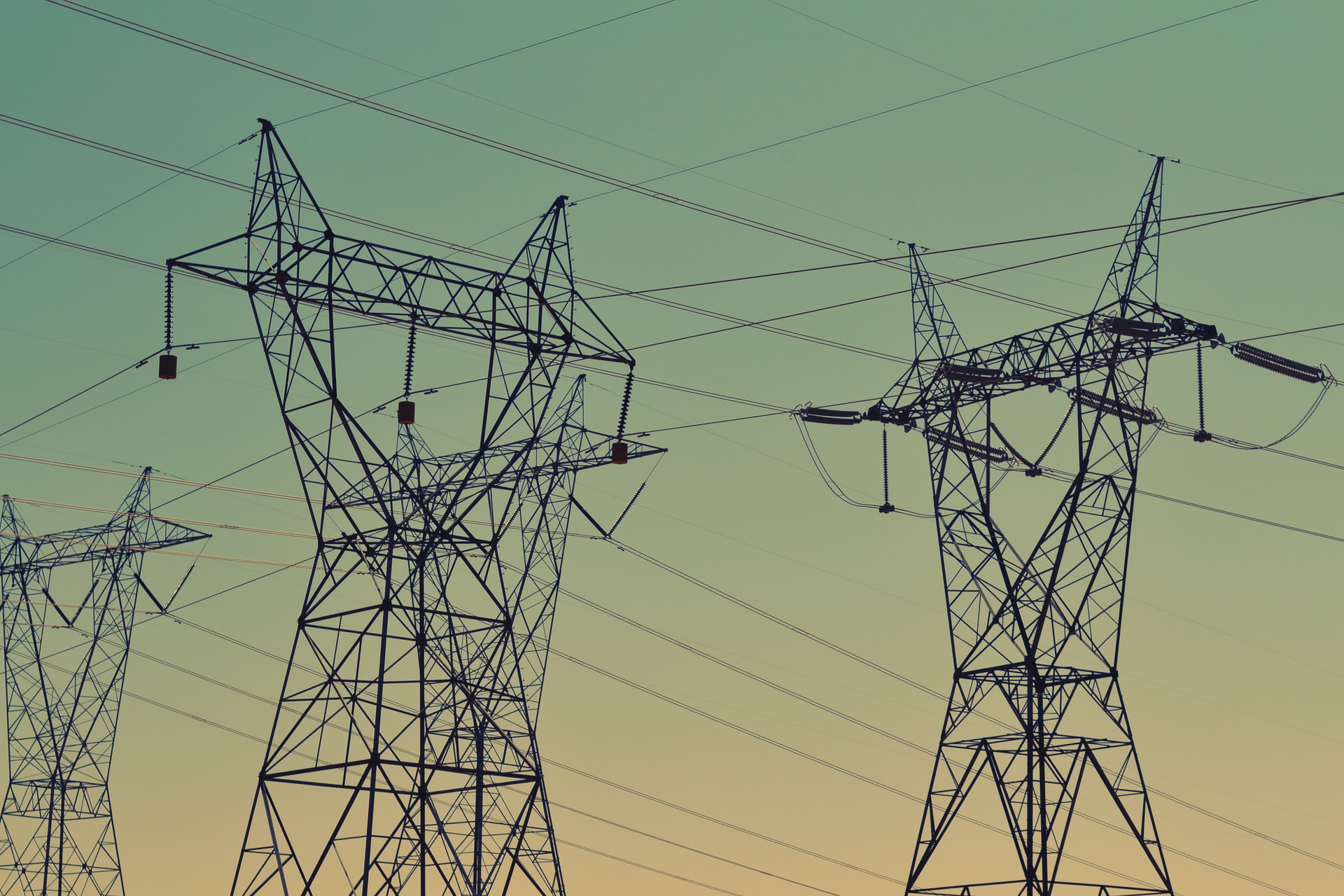
According to national steelmakers’ association Unesid, once the text has been finalised, it will be necessary for the Spanish government to have the political determination to ensure competitive, stable and predictable prices for industrial consumers.
Unesid points out that, despite the Spanish government’s and other countries’ attempts, the current system “sanctifies” pricing in the spot market, in such a way that all electricity that is negotiated in that market will be transacted at the price of the most expensive, usually that generated with natural gas.
“If mechanisms that effectively encourage bilateral contracts are not established, the industry will be forced to pay for a significant portion of its electricity at the rate of natural gas prices,” the association observes.
Regarding contracts for difference (CFD), Unesid maintains that the agreement will allow the countries to ensure prices to final consumers, and will provide an important guarantee to electricity producers.
CFDs allow national governments to agree on a stable price for the purchase and sale of electricity in a fixed period with suppliers and then return the difference depending on whether the final price has been higher or lower than what was agreed, Kallanish notes.
The association, however, is concerned that “while the agreement supports the French government’s treatment of its consumers or the German government’s plans to dope its industry, other countries with a smaller budget or political will may unfairly leave their industry at a clear disadvantage”.
The reform is the EU’s long-term response to the energy crisis experienced in 2022 as a result of the Russia-Ukraine war. Despite a high share of renewables in power generation, sharp increases in gas prices have led to more expensive electricity, since the EU electricity market was mainly based on the use of fossil fuels. After implementing measures to counter the rise, such as subsidies and the suspension of VAT, the reform is now focused on long-term solutions, to avoid similar situations in the future.
Todor Kirkov Bulgaria


EU, US continue sustainable steel agreement negotiations
The EU and US will continue negotiating on the Global Arrangement on Sustainable Steel and Aluminium (GASSA) till the year-end deadline, after failing to reach an agreement in time for Friday’s EU-US summit in Washington.
The summit had been hotly anticipated to produce an interim agreement that would go some way to establishing a permanent GASSA between the EU and US, with other developed economies also expressing a desire to join, Kallanish notes.
Eurofer said earlier this month the meeting should outline “an ambitious framework that will provide clear guidance and include the substantive elements of” GASSA, while the details will need to be worked out in the coming months.
The OECD recently noted that global excess steelmaking capacity has exceeded 600 million tonnes/year, with the majority found in Asia, the Middle East and North Africa. Some 150m t/y of new capacity additions scheduled by 2026 are meanwhile primarily carbon-intensive blast furnaces, Eurofer pointed out.
However, negotiations were reported to have broken down on the eve of the summit. The EU-US joint statement following the meeting focused on geopolitics and made little mention of GASSA, other than to say: “Throughout these two years [of negotiations], we have made substantial progress to identify the sources of non-market excess capacity. We have also achieved a better understanding of the tools to address the emissions intensity of the steel and aluminium industries.”
“We look forward to continuing to make progress on these important objectives in the next two months,” the statement published on 20 October adds.
If no agreement is reached by year-end, Section 232 duties will be reimposed on EU steel supply.
Adam Smith Poland

European prices stabilise for now, CBAM looms: conference
Steel prices in Europe are now finding stability. Going forward, with the Carbon Border Adjustment Mechanism (CBAM)’s crucial role in promoting “greener” steelmaking practices and growing importance of scrap in green steelmaking, the industry is poised for significant changes.
The emergence of a two-tier market in Europe is likely amid CBAM, while divergent economic dynamics across different regions are contributing to the increasing complexity of the steel industry’s landscape.
These issues were discussed by panellists at Kallanish Flat Steel 2023 in Istanbul last week, with southern Europe editor Emanuele Norsa leading the discussion.
One of the central themes discussed was the state of steel prices in Europe. Despite hitting a low point, it was noted that current stability is primarily attributed to raw materials costs. While steel mills are eager to increase prices, their efforts face obstacles due to the prevailing weak market sentiment.
The EU is now subsidising its steel industry as part of its decarbonisation efforts. This was considered unthinkable a decade ago but is now deemed a necessity. Opinions on CBAM vary, with some seeing it as a way to level the playing field and others viewing it as just another trade measure. In any case, it is expected to increase costs for European end users.
The panel emphasised that CBAM, whose effects will be felt tangibly from 2026, is now regarded as an indispensable instrument in the drive towards decarbonisation. This marks a significant shift in consumer behaviour, notably among customers, including automakers, who are now increasingly inquiring about low-emission steel products.
Scrap will become increasingly important as a “green” steelmaking feedstock, leading to potential shortages, pointed out Ian Roper of Kallanish Consulting Services.
Elina Virchenko UAE