

European HRC prices flatten despite mills’ bullish attempts at rises
In Northern Europe, integrated mills were pushing offers toward €635-645 ($674-685) per tonne ex-works for HRC, with lead times of four to six weeks.
Market sources pointed out, however, that some German producers were delaying order deliveries.
At the same time, buyers’ estimates of tradeable values were no higher than €600-620 per tonne ex-works.
One source reported hearing a transaction at less than €600 per tonne ex-works in the region, but this was not confirmed by other sources.
“Cost-wise, HRC prices should be no lower than €640 per tonne ex-works,” a mill source told Fastmarkets.
“The problem,” a steel service center said, “is that mills still have December- and even November-delivery HRC which nobody needs. Buyers will start restocking for January-delivery somewhere around November.”
Several sources suggested that larger distributors were postponing purchases until a major industry trade fair in Stuttgart, Germany, in early November.
Fastmarkets calculated its daily steel hot-rolled coil index, domestic, exw Northern Europe, at €611 per tonne on October 24, up by €1 per tonne from €610 per tonne on October 23.
But the index was down by €7.57 per tonne week on week and by €18.79 per tonne month on month.
Output cuts by some steelmakers in Europe in recent weeks have yet to have an effect on the market.
“It is likely that we will see some spikes in apparent steel demand in the first quarter [of 2024], and then the tighter supply will support price rises,” a trading source said. “So far, the HRC market is rather oversupplied.”
In Southern Europe, meanwhile, Fastmarkets’ daily steel hot-rolled coil index, domestic, exw Italy, was €600 per tonne on October 24, down by €2.50 per tonne from €602.50 per tonne the previous day.
The index was up by €7.29 per tonne week on week but down by €18.54 per tonne month on month.
Offers of HRC for November-December delivery from local mills in Italy were heard at €620-630 per tonne ex-works, while buyers’ estimates of the tradable price were reported at €580-600 per tonne ex-works.
But mills were reluctant to sell for less than €600 per tonne ex-works, sources said.
Market sources indicated slightly better activity in Italy, with some distributors and steel service centers feeling the need to restock, but “nothing was booming,” Fastmarkets heard.
Asia-origin HRC imports for January shipment were on offer to Italy at around €580-600 per tonne CFR, mainly from Vietnam, South Korea and Japan, stable week on week.


Eni, Snam CCS project to help decarbonise steel
Italian energy companies Eni and Snam’s carbon capture and storage (CCS) project in Ravenna, Italy, will serve Italian and European hard-to-abate sectors such as the steel industry. European energy-intensive industries will prefer to store their CO2 in Italy rather than other facilities in Europe, a source close to Eni tells Kallanish.
The project will store CO2 in depleted gas reservoirs off the coast of Ravenna. In 2022, Eni and Snam signed an agreement to create an equally owned joint venture and develop Phase 1 of the Ravenna CCS project, which will be launched in 2024. This includes the capture of 25,000 tonnes of CO2 emitted from Eni’s natural gas treatment plant in Casalborsetti.
“Once captured, the CO2 will be piped to the Porto Corsini Mare Ovest platform and injected into the homonymous depleted gas field in Ravenna’s offshore,” the firms explain in a project presentation.
While CCS projects have been developed globally, this represents the first Italian effort and aims at decarbonising the entire hard-to-abate production cluster in the Po Valley. It will also target other Italian regions and countries in the Mediterranean area.
The Ravenna CCS hub’s phase two is scheduled to start in 2027 and aims to store 4 million t/year of CO2. Of this, 1mt will come from plants owned by Eni and the remaining 3mt will be reserved for other industrial emitters. Eni and Snam say they are in talks with hard-to-abate industries in the region including steel and have signed a letter of intent with four polluters in the Ravenna industrial area.
“Total storage resource in the Adriatic is estimated at 500 million tonnes, giving the possibility in subsequent development phases to increase storage capacity to more than 10 million tonnes/year, covering the decarbonisation needs of additional clusters,” the project presentation concludes.
Natalia Capra France

Danieli foresees challenging two years ahead
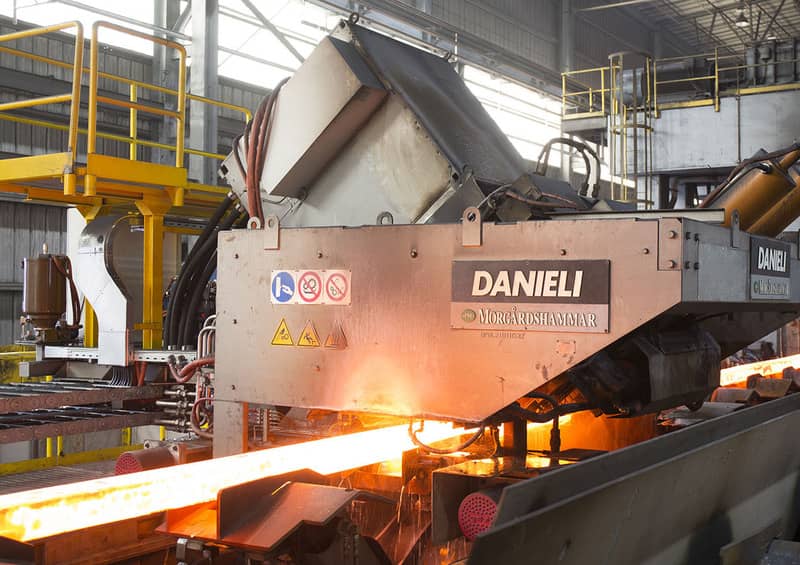
Danieli forecasts a global fall in steel demand for the fourth quarter as well as first half of next year, with the possible exception of India, Southeast Asia and the Middle East, Kallanish notes.
In its report for the fiscal year through June 2023 (FY23), the Italian equipment maker says it is preparing “for the market downturn of the next two years or so”, but forecasts a lower impact on the specialty steel sector.
Thanks to significant investments aimed at cutting emissions and improving product competitiveness and quality, Danieli’s plantmaking division has a strong order backlog, the firm observes.
While it vows to continue investing in innovation and digitalisation of the steelmaking process, the company has registered growing international success for its MIDA mini-mills technologies such as the Digimelter, which replaces the traditional EAF technology. Also in demand are direct casting-rolling for flat (QSP-DUE) and long (QLP) products.
These technologies, also adopted by competitors, have opened up several opportunities, particularly in Europe. “On the contrary, in India and China, where not enough gas is available, coal-based blast furnaces continue to be installed, although utilising innovative technologies that allow for reducing CO2 emissions,” the report affirms.
In FY23, Danieli posted €4.1 billion ($4.3 billion) revenue and €424 million Ebitda. For FY24, Danieli forecasts €4-4.3 billion revenue with Ebitda of €400-430m.
Specialty steel producer Acciaierie Bertoli Safau (ABS), Danieli’s steelmaking division, is planning to verticalise and acquire a scrap collection company, while continuing to pursue its investment of €650m to reach annual production of 2.3 million tonnes.
The steelmaker plans more investments in its upstream and downstream facilities besides its future acquisition of a scrap merchant. This follows the entry into production of ABS’ QWR 4.0 wire rod mill and the new high-quality ore-grinding ball production plant last year.
ABS posted FY23 turnover of €1.1 billion with €58.8m Ebitda. The production sold during the year reached approximately 1.2mt, a 10% decline compared to the previous financial year.
In July, ABS completed the purchase of scrap company Rott-Ferr, in line with its verticalisation strategy. The scrap firm has an annual scrap collection capacity of approximately 100,000 tonnes.
Natalia Capra France
German construction ‘nears collapse’, awaits state support impact
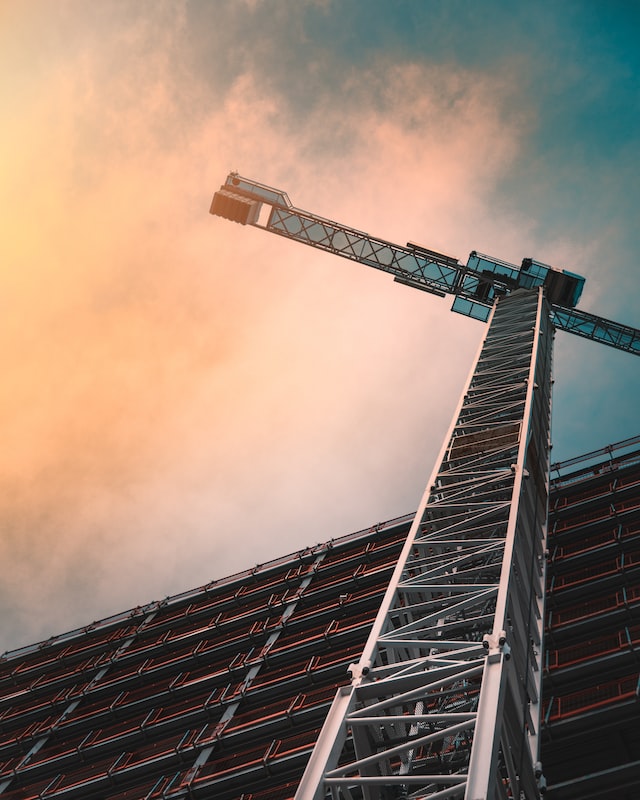
Germany’s construction industry continues suffering from a slump in demand for apartments and residential housing, which is putting pressure on construction material and labour pricing.
According to national construction federation Hauptverband der Deutschen Bauindustrie, the price for new constructions in August this year saw a downturn for the first time since 2020. The federation also notes a shift of activity from newbuilding to complementary works in existing buildings. The considerable decline in orders and permissions for new buildings has a direct effect on pricing for all services. “Companies are making price concessions to keep their staff in work,” says Bauindustrie managing director Tim-Oliver Müller.
“If prices continue not to cover the costs any more, a wave of bankruptcies could be looming,” he warns. In fact, cases of bankruptcies in the first half of 2023 rose by about 40% year-on-year. Revenues no longer cover costs. One of four companies active in new residential housebuilding are not breaking even, which is the highest ratio since 2011. In the first eight months of the year, the number of permissions issued for residential units fell by 28% in comparison with the first eight months of 2022.
The downturn is tracing through to ancillary trades which depend on construction. “Construction is a key sector for all trades, and it is just about to completely collapse,” warns Jörg Dittrich, president of the German Confederation of Skilled Crafts and Trades (ZDH).
Consumers are scared off by skyrocketing prices for real estate over recent years, rising interest rates for loans, and too much bureaucracy. Federations keep calling on the government to facilitate procedures and to deliver incentives. They appreciate that a recent measure, the “Construction Package” (Baupaket), points in the right direction.
However, one buyer of construction materials including reinforcing steels warns it will take time until the measures takes effect. “It is a good gesture and will have a positive impact, but for another half a year we will not see movement,” he tells Kallanish.
German rebar mills recently dared to announce a hike in base prices, four months after they bottomed slightly above the line of €300/tonne ($319). Most deals will have been done at around €320-330, which plus size extra of €265 translates to a delivered price of €585-595/t. Following a buying spree in late September, mills are now utilised and trying to fetch €350/t or more for new orders. It remains to be seen if the elevated prices will be upheld in the next buying wave, presumably in December or January.
Observers in both Germany and Austria tell of a fierce price war among benders of rebar, which are selling at lower than intake prices, thereby confirming the concerns expressed by German industry representatives.
Christian Koehl Germany