Beyond electricity: is hydrogen the key to greener smelting and refining?
In the metals and mining industry, the top contributors to CO2 emissions are smelting and refining processes.
To date, much of the industry’s decarbonisation efforts have been focused on electrification. However, we’re starting to see a shift towards hydrogen as a replacement for fossil fuels in metallurgical processes.

Given the range of differences between the higher and the lower 10% emitters in these emissions, it’s clear that each production value chain requires a unique approach to decarbonisation.
The need to transition from fossil fuels
Our report finds that iron and steel production accounts for 93% of GHGs in the metals and mining industry due to the use of coal in metallurgical reactions. By contrast, the production of non-ferrous metals accounts for 62% of emissions due to the onsite fuel mix in power plants or grid electricity.
Despite the need to decarbonise these processes, at present, most global efforts are focused on electrical consumption targets. In turn, fossil fuel emissions in the non-ferrous industry especially, remain largely unaddressed.
As such, there’s a clear need for organisations to look beyond green electricity measures and to also focus on technological innovations that address the wider power generation mix.
Hydrogen as a replacement fuel in iron and steelmaking
In iron and steel production, 93% of emissions originate from the smelting process, which includes the use of blast furnaces, coking, and sinter plants.
In refinery operations, steelmaking, and the use of casting plants account for another 5% of emissions. Overall, the carbon impact of steelmaking represents a significant 92% of emissions, largely from burning carbon-rich fuels.
The use of hydrogen as a replacement for blast furnaces has been investigated extensively. Research suggests that the fuel can act as a cleaner, making it an effective alternative to coal and coke due to its capabilities of reducing carbon in the direct reduction of iron (DRI) process.
The use of hydrogen in alumina refining
Our research finds that 78% of aluminium value chain emissions arise from the smelting process, the casthouse and electrolysis. The electrolysis emissions that arise from the reduction process ranges from 0 to 14 tonnes of CO2e/tonne of aluminium.
Breaking down the aluminium refining process further, 70% of emissions arise from steam during digestion and 30% comes from fossil fuel combustion in calcination.
Norwegian aluminium company Hydro has been conducting experiments at its Navarra plant, and has found that hydrogen could act as a replacement for natural gas at cast houses and in digestion processes.
Similarly, the Anglo-Australian mining group Rio Tinto and Japan’s Sumitomo corporation are currently working on a proposal for the construction of a hydrogen pilot plant that will trial lower-carbon alumina refining. The initiative will use a 2.5MW electrolyser with a production capacity of more than 250 tonnes of hydrogen annually, which could pave the way for hydrogen adoption across the industry.
Hydrogen as a replacement for natural gas in copper heating
In copper mining operations, 22% of emissions come from consumption in loading and hauling activities, and 10% is attributed to the smelting process.
Solvent extraction-electrowinning (SX-EW) processes represent 20% of global copper production, whereas the recycling of scrap copper accounts for approximately one third of the market.
In the copper industry, hydrogen can be used as an alternative to traditional fuels. Aurubis, a global supplier of non-ferrous metals, has been running trials that suggest hydrogen can replace natural gas in anode furnaces and replace ammonia in cathode shaft furnaces.
Hydrogen also has the potential to replace natural gas in the copper heating process and act as a reducing agent in slag-cleaning and anode furnaces.
Hydrogen use in zinc fuming processes
Zinc mining contributes 20% of the total CO2 emissions in the zinc value chain – mostly from electricity consumption during the crushing and grinding stages. Zinc smelting accounts for the other 80%.
In the smelting process, 80% of fossil fuel emissions come from the pyrometallurgical treatment of leach residues in the electrolytic process. Whereas imperial smelting furnace (ISF) and vertical retort (VR) processes, contribute 20%.
Hydrogen and ammonia are both promising alternatives to coal use, especially in the fuming process for zinc-contained residues. However, operational application is still in the trial stages and further kinetic studies are required in combination with large-scale experiments for validation.
Final thoughts
Hydrogen has the potential to play a key role in iron and steel decarbonisation and to contribute in part, to the decarbonisation of non-ferrous value chains. Moving forward, organisations need to take a strategic viewpoint on its inclusion in energy mixes and its use as an alternative fuel in metallurgic processes.
However, for hydrogen to be incorporated into metal and mining production chains, more research, collaboration and policy backing is needed. The progress of green hydrogen projects like Hydro’s Navarra, Aurubis’ trials, and Rio Tinto’s projects are promising and will undoubtedly provide positive results and learning points alike.
Beyond electricity: is hydrogen the key to greener smelting and refining?
Source: woodmac.com


European HRC producers mull price rises on higher costs
Fastmarkets calculated its daily steel HRC index, domestic, exw Northern Europe at €615.21 ($648.91) per tonne on October 27, up by €1.79 per tonne from €613.42 per tonne on October 26.
The index was also up by €2.08 per tonne week on week, but down and by €10.42 per tonne month on month.
Market sources largely agreed that that HRC prices have touched the floor and further drops were seen as unlikely due to mounting costs at mills.
December-delivery HRC was offered by integrated mills in the region at €620-650 per tonne ex-works, while buyer’s estimates of achievable values were still in the range of €600-620 per tonne ex-works, stable from a day earlier.
A re-roller in the Benelux region was offering similar material at €595-600 per tonne ex-works.
But sources pointed out that lower prices were only achievable for December-delivery tonnages, while mills planned to announce increases for January-delivery coil.
Deals have been scarce recently, with most buyers tending to book small volumes to cover urgent needs.
But sources noted a slight increase in buying interest this week, because there is more of an understanding that prices have reached a floor.
“Big distributors and steel-service centers are sending inquiries. Nobody is looking to buy big tonnages yet, but compared to a completely quiet first half of October we are now seeing some movement in the market,” a mill source in Northern Europe said.
Producers hope to achieve price increases for HRC with January lead times on the expectation of fewer imports, production cuts and the emergence of some restocking demand.
Some buyer sources, however, were more pessimistic, claiming the slow consumption at present was not supportive of any price rises.
“Demand is still very weak and there is no light in the end of the tunnel. Lead times are short, some even within four weeks, which indicates the thin orderbooks mills have at the moment,” a steel-service center source in the region said.
Fastmarkets’ daily steel HRC index, domestic, exw Italy was €600.63 per tonne on October 27, up by €0.63 per tonne from €600 per tonne a day earlier.
The index was up by €3.96 per tonne week on week, but down by €8.33 per tonne month on month.
Offers for December-delivery HRC from Italian producers were reported at €620-630 per tonne ex-works, however such levels were not achieved in deals yet.
Buyer’s estimates of the tradable price were closer to €600 per tonne ex-works since mills were rejecting bids below this level.
Market sources also noted slightly improved trading in Italy, with some distributors and steel service centers feeling the need to replenish inventories, Fastmarkets heard.
Asia-origin HRC imports for end-December-January shipment were on offer to Italy at around €580-600 per tonne CFR, mainly from Vietnam, South Korea and Japan, which is stable week on week.
Published by: Julia Bolotova


Polish domestic rebar, wire rod prices flatten on subdued trading
Attempts by local mills to achieve higher prices were not widely accepted by buyers, and demand for both productshas remained low. Most market participants have decided to wait for new offers to be published in November before making purchasing decisions.
Rebar
Polish mills were offering rebar at 2,800-2,840 Polish zloty ($661-671) per tonne delivered in the week to October 27, a consumer source told Fastmarkets. This would net back to 2,780-2,810 zloty per tonne ex-works.
Market sources reported even lower offers from some Polish mills, in the range of 2,725-2,737 zloty per tonne ex-works. But deals were heard at 2,820 zloty per tonne delivered during the assessment week, which would net back to 2,800 zloty per tonne ex-works.
As a result, Fastmarkets’ weekly price assessment for steel reinforcing bar (rebar), domestic, exw Poland, was 2,725-2,810 zloty per tonne, widening downward slightly from last week’s assessment at 2,730-2,810 zloty per tonne.
The market remained comparatively quiet during the assessment week. Demand from the construction sector, which is the major consumer of rebar, was still soft. After some restocking in the first weeks of October, market participants were waiting to see the new offers for November.
Most buyers were waiting because steel scrap prices were decreasing. In Poland, most new contracts for scrap are signed by the tenth day of each month. This period will be crucial to understanding the direction that rebar prices will take, a consumer source told Fastmarkets.
This week, prices in the secondary market were 2,780-2,800 zloty per tonne CPT.
More import prices for rebar were in the range of €615-630 ($649-665) per tonne CPT, market sources said. Imports were not particularly attractive, given recent currency exchange rates.
According to online currency converter Oanda.com, the Polish currency was trading at 4.234 zloty to $1 on October 27. A week earlier, it was trading at 4.219 zloty to $1.
Expectations of short-term price developments were mixed.
A distributor source forecast that prices would decrease further in November, when one of the leading local producers would be back in the market after a maintenance stoppage.
According to the same source, prices from the Polish mills would decrease to 2,680-2,700 zloty per tonne CPT next month. And the expected price in the secondary market would be 2,720-2,750 zloty per tonne CPT.
“There will not be enough demand to hold prices up around 2,800 zloty per tonne CPT,” the source said.
Other market participants were more optimistic, however. According to a consumer source, the situation in the construction sector was not particularly bad. “If the winter is mild, this would support demand from construction. Besides, the current prices for rebar are too low,” the source said.
Another producer source also said that mills would continue to try to push prices upward because of high production costs.
Wire rod
The wire rod market was also quiet this week. Market participants estimated the workable prices between 2,800 and 2,900 zloty per tonne CPT. But no major deals were heard.
“Customers are waiting for the offers in November. It is a ‘dead season’ now,” a distributor source told Fastmarkets. The same source added that price increases in November might be inevitable, due to rising costs at mills.
Fastmarkets’ weekly price assessment for steel wire rod (drawing quality), domestic, delivered Poland, was 2,800-2,900 zloty per tonne on October 27, unchanged for the past month.
Two other producer sources in Europe shared the view that an increase in wire rod prices was necessary. According to them, the price should be at least 3,000 zloty per tonne CPT to cover the increasing production costs.
Offers of imported wire rod, mesh quality, from Italy, were heard at €615-620 per tonne CPT, while mesh quality wire rod of Ukrainian origin was offered to Poland at €620 per tonne DDP.
Published by: Julia Bolotova, Darina Kahramanova
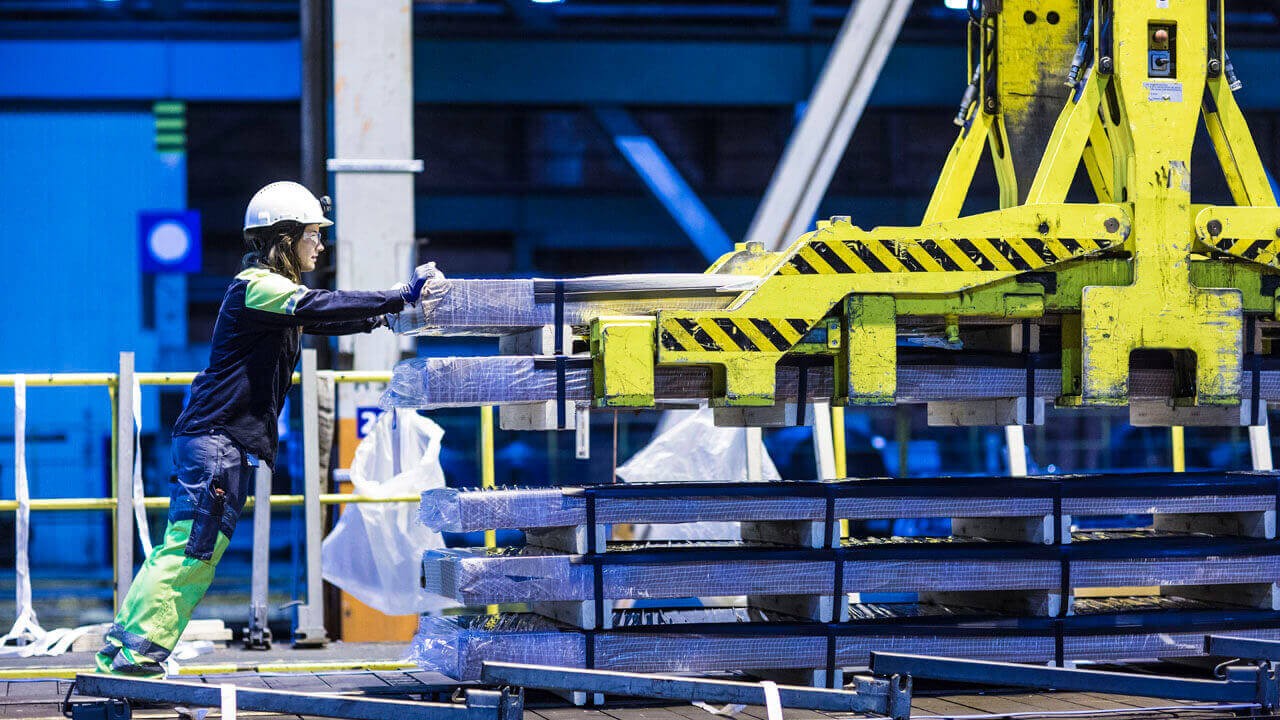
Gestamp purchases zero-carbon steel from SSAB
According to Gestamp, the agreement represents a new step in the long-standing partnership with SSAB that comprises a variety of actions addressing all aspects of the development chain, from sales to production to testing of steel products.
“This partnership will further strengthen our position in the development of innovatively designed and sustainable automotive parts for increasingly safer and lighter vehicles, thus reducing energy consumption and environmental impact,” Gestamp chief purchasing officer Javier Imaz says. “The agreement enforces Gestamp’s ESG strategy related to the circular economy that the company is applying throughout its business model.”
SSAB plans to deliver fossil-free steel to the market on a commercial scale in 2026 and to largely eliminate CO2 emissions from its operations by 2030. During the steelmaking process, coking coal will be replaced by renewable electricity and hydrogen.
Todor Kirkov Bulgaria

Austrian industry frets over crashing demand
“We see orders declining by as much as 30%, and there is no relief in sight,” says Markus Ritter, representative of WKO’s department for mining and steel, and managing director of rebar mill Marienhütte. He speaks of a “troublesome development in our industry”.
Ritter’s assessment comes on the occasion of the upcoming collective bargaining for wages at mining and steel companies, in which Ritter heads the side of employers. On the labour side, companies are also hurting from wage increases of close to 10% since the previous collective bargaining round, he notes.
“This big surge of wage costs in comparison to our European competitors means a troublesome loss of competitiveness,” Ritter says. At the same time, the steel industry is driven by high energy costs and the technological transition towards low-emission steelmaking. “We need to develop new ways of production, make them economically feasible, and stay competitive at the same time,” he observes. “These challenges can only be coped with when we agree with the unions on a conservative wage agreement.”
He emphasised that the paramount aim of his department in the negotiations is the preservation of Austria as a location for profitable industries.
Christian Koehl Germany

Steel market spirals into deeper recession in 2023, faces growing unpredictability for 2024
Collapsing demand resulting from high inflation and interest rates, exacerbated by conflicts and persistently elevated power prices, is clouding the steel market outlook for 2023. Recession in apparent steel consumption is expected to further deepen (-5.3%) this year, while the anticipated rebound (+7.6%) in 2024 faces geopolitical unpredictability and prolonged economic uncertainty. Imports, despite a declining trend in line with very weak demand, continue to maintain their market share (28%) above historical levels.
“The perspectives for the European steel sector get gloomier every quarter amidst disruptive wars, global tensions, an unresolved energy crisis, high inflation, tightening economic conditions and historically high import shares that are strangling manufacturing. This situation negatively impacts steel demand. It is essential that EU policymakers steer a course which maintains a sustainable industry in Europe and responds to the call of the clean tech value chain – of which steel is a fundamental part – for an EU Clean Industrial Deal and urgent actions to keep Europe in the world’s clean technology race”, said Axel Eggert, Director General of the European Steel Association (EUROFER).
EU steel market overview
In the second quarter of 2023, apparent steel consumption recorded its fifth consecutive slump (-7.6%), totalling 35.6 million tonnes. This volume, although higher than the previous quarter, is still below the levels seen in 2021 and the first half of 2022. This negative trend is expected to continue for at least another quarter, leading to a deeper reduction in apparent steel consumption for the whole of 2023 (-5.2%, previous estimate -3%). This would mark the fourth annual recession in the last five years (-7.2% in 2022). In 2024, a stronger rebound is projected (+7.6% from +6.2%), but that recovery is conditional on still very uncertain positive developments in the industrial outlook and steel demand.
Domestic deliveries followed the same downward trajectory in the second quarter of 2023, declining for the fifth consecutive time (-6.5%). Imports, reflecting the prolonged downturn in demand, continued to fall (-10.2%), but their pace more than halved compared to the first quarter (-26.6%). However, the share of imports out of apparent consumption has further expanded (28%), remaining at considerably high levels in historical terms.
EU steel-using sectors
Against this challenging backdrop, steel-using sectors in the EU displayed unexpected resilience and continued to moderately grow (+0.8%) also in the second quarter of 2023. This was due to the positive performance of the automotive, mechanical engineering and transport sectors, offsetting poor output in domestic appliances, tubes and metalware, along with the ongoing recession in construction (-2.5%), which accounts for 35% of steel consumption. As long as high interest rates impact demand, the recessionary trend in the construction sector is expected to continue.
Steel-using sectors’ growth is projected to halve (+0.6%) in 2023 compared to previous estimates (+1.3%), and to continue to slow down (+0.4%) in 2024, following a likely downturn in the automotive sector.
Source: Eurofer


China’s overcapacity problem returns
Throughout most of 2023, Chinese steelmakers increased steel production. Amid weak domestic demand, this forced Chinese steelmakers to increase exports by 30%, reaching local highs. This situation has once again exposed the problem of excess steelmaking capacity in China.
Although many expect the Chinese authorities to introduce an order to limit the level of steelmaking at the level of 2022, but, apparently, it will not happen, as the Chinese authorities prioritize the goal of achieving GDP growth of 5%, which requires maintaining high performance in the production sector, including in the steel industry.

Unjustified expectations
In the first half of 2023, Chinese steelmakers mainly increased steel output amid expectations of economic recovery after the zero tolerance policy to COVID-19 was abolished from December 2022. In January-September, Chinese steelmakers produced 795 million tons of steel, up 1.7% from the same period in 2022. Everyone expected that there would be more activity primarily in the construction sector. But this did not happen.
This explains why, despite the growth in production, the sentiment of Chinese steelmakers in 2023 was very volatile. The business expectations index (PMI) in China’s steel sector was above or near the 50-point level at the beginning of the year and during the summer, indicating relatively positive sentiment in the industry. In turn, the collapse of the PMI in April-May was due to weak demand and lower prices for steel products despite the peak season.

Waiting for a decline
Despite the overall growth in production in the last 9 months, there has been a month-on-month decline in recent months. In August-September, the monthly decline in steelmaking was about 5% – to 86.4 million and 82.1 million tons, respectively, compared to 91 million tons in June and July.
For the past few years, the Chinese authorities have followed a policy of stabilizing steel production at the previous year’s level. This was presented as measures to reduce greenhouse gas emissions. Earlier it was expected that this year also such restrictions would be introduced, as these intentions of the Chinese authorities were announced at the beginning of this year. However, in fact, there have been no official announcements of steel production cuts so far, except for official directives in a few provinces, such as Tangshan and Yunnan. It is likely that there will be no official industry-wide measures until the end of 2023.
«Decisions on output restrictions in China occur with a certain time lag. The discussion only arises a few months after the emergence of imbalances caused by unreasonably high output volumes. This usually manifests at the end of the year. Whereas traditionally the first half of the year is when output is rising. According to the same scheme, the first half of 2024 again has a chance to be marked by excessive steel output,» says Andriy Tarasenko, chief analyst at GMK Center.
The lack of a centralized order to limit steelmaking may be due to the fact that the priority for the Chinese authorities is now to achieve the GDP growth target of 5%. This requires keeping production performance at a high level. In other words, the pursuit of economic goals forces to abandon administrative restrictions.
Nevertheless, weak domestic demand, which is difficult to push up significantly even by economic incentives, low domestic prices for steel products, high prices for raw materials lead to a drop in margins and force Chinese steelmakers to voluntarily reduce production. For example, steelmakers in a number of Chinese provinces in September-October reduced production of steel products in the construction segment to avoid losses amid low prices and the general weak situation on the construction market.
The rise of exports
This year, Chinese steelmakers are breaking all local records for steel exports. At the end of January-September 2023, Chinese steel companies increased export shipments by 31.8% compared to the same period of 2022 – up to 66.8 million tons.
The dynamics of steel exports showed very high growth during February-May – 40-55% year-on-year, but since June the figure has declined to +/- 30% due to slowing demand from foreign customers. In September 2023, exports totaled 8.06 million tons of steel, down 2.6% from August.
The significant growth of Chinese steel exports was due to insufficient domestic demand and low domestic prices for steel products, as well as the devaluation of the yuan against the dollar, which made Chinese steel products more competitive. In addition, strong demand from some importing countries – in the Middle East, Southeast Asia and North Africa – as well as China’s efforts to promote projects under the One Belt, One Road program contributed to exports.
Until the end of this year, there may be a slight slowdown in export dynamics due to the expected decline in steel production and lower demand from foreign buyers. SteelMint estimates that depending on the absence or presence of measures to reduce steelmaking, exports through 2023 could be around 79.5 million tons or 89 million tons, respectively.

Nevertheless, periods of sharp growth of steel exports from China will appear in the future, as the problem of overcapacity has not gone anywhere, domestic demand in China may be weak for some time, and control over production levels may not be timely.
«China’s overcapacity problem has come to a head with renewed vigor. Every self-respecting researcher of the global steel industry expects a reduction in steel production in China due to objectively declining domestic steel consumption. But this reduction is happening in a painful way for the global steel industry, with overcapacity leading to falling prices and margins around the world. Therefore, it is likely that we may see a new round of protectionism in the industry, similar to what we saw after the previous surge in Chinese exports in 2015,» adds Andriy Tarasenko.
Steel forecasts
SteelMint estimates that if the measures to reduce smelting are not implemented, China’s steel production could end the year 47 million tons (to 1.065 billion tons) higher than last year’s figure (1.018 billion tons in 2022). If the Chinese authorities do introduce a control policy, SteelMint estimates that China could end 2023 with an estimated steel output of 1.011 billion tons, just 7 million tons less than last year. Steel output in Q4 (no more than 300 million tons) could be the lowest this year.
Prospects for 2024 remain uncertain, but the most likely scenario in the association Worldsteel called the continuation of demand growth at the level of 2023 – by 2%, to 939.3 million tons after a decline in 2022 by 2%. This will be supported by infrastructure investment and a likely stabilization in the real estate market.
«The real estate market is expected to stabilize in the second half of 2023 as the Chinese government has taken some measures to stabilize the economy since July. Infrastructure investment growth remained strong in 2023 due to the authorities’ stimulus measures. Infrastructure investment is expected to remain moderately positive in both 2023 and 2024. Assuming the Chinese authorities take additional measures to support the economy, steel demand in 2024 could remain at 2023 levels. There is a downside risk in both 2023 and 2024 if the stimulus effect is weaker than expected,» Worldsteel said in its October report.
Stimulating measures of the Chinese authorities will be a supporting factor for steel production and consumption in China next year. Thus, in mid-October, the Chinese Central Bank allocated the largest since 2020 financial support for banks in the amount of $39.6 billion. In addition, the continuation of high exports and the priority of the Chinese authorities in favor of achieving the planned level of economic growth may have a positive impact on steel production in 2024. The latter excludes measures of administrative restriction of production in the Chinese steel industry.
Source: GMK Center