


Polish rebar, wire rod prices remain broadly unchanged amid subdued demand
Rebar
Polish mills offered rebar at about 2,800 Polish zloty ($675) per tonne CPT during the assessment week, which nets back to about 2,780 zloty per tonne ex-works, sources told Fastmarkets.
Demand remained soft and no major deals were heard in the market.
Buyers continued to push for lower prices. Bids for larger quantities of about 1,000 tonnes were heard at 2,720 zloty per tonne CPT, which nets back to about 2,700 zloty per tonne ex-works.
But, according to a buyer source, the workable level for Polish domestic rebar is 2,750 zloty per tonne CPT, which nets back to about 2,730 zloty per tonne ex-works.
Fastmarkets’ weekly price assessment for steel reinforcing bar (rebar), domestic, exw Poland was 2,700-2,780 zloty per tonne in the week to November 10, widening downward 30 zloty per tonne from 2,730-2,780 zloty per tonne on November 3.
“Demand is generally weak. There is no restocking because the traders still have material bought at below 2,700 zloty per tonne CPT. In addition, the demand from the construction sector and the prefabrication producers is weaker [in the week to November 10],” a distributor source told Fastmarkets.
Prices of domestic rebar in the secondary market decreased slightly to 2,770-2,780 zloty per tonne CPT, compared to 2,780-2,800 zloty per tonne in the previous week.
Offers of imported material from Italy were heard at around €620-630 ($662-673) per tonne CPT, but these levels were not widely accepted by the market.
“Italy seems to be out of the market with these prices,” a second distributor source told Fastmarkets. Even lower offers of imported rebar from Italy at €615 were considered too high for the Polish market.
Offers of imported material from Ukraine were heard at €560 per tonne DAP border.
Wire rod
Polish mills continued offering wire rod in the range of 2,900-3,100 Polish zloty per tonne CPT this past week, sources told Fastmarkets.
But demand for the material remained moderate and no major deals were heard.
According to Fastmarkets’ sources, the workable level for wire rod varied between 2,850 zloty and 2,900 zloty per tonne CPT.
Fastmarkets’ weekly price assessment for steel wire rod (drawing quality), domestic, delivered Poland was 2,850-2,900 zloty per tonne on November 10, narrowing upward by 50 zloty per tonne from 2,800-2,900 zloty per tonne on November 3.
A market source told Fastmarkets that Polish producers considered increasing wire rod prices by €30 for November-rolling material but gave up the idea due to the poor demand.
According to a third distributor source, the demand for wire rod was slightly better during the assessment period, but it remained still weak.
“It is not restocking yet, [but] the end users need wire rod for their production”, the source said.
Offers of imported material from Italy were heard between €620-640 per tonne CPT depending on the destination.
Published by: Julia Bolotova, Darina Kahramanova


Prices unchanged in European HRC market; little market activity reported
Fastmarkets calculated its daily steel HRC index, domestic, exw Northern Europe at €652.29 ($696.90) per tonne on Monday, down by €0.38 per tonne from €652.67 per tonne on Friday November 10.
The index was up by €9.79 per tonne week on week and by €35.21 per tonne month on month.
Minimal market activity was reported on Monday. Tradeable values were pegged at €640-660 per tonne ex-works.
Meanwhile, HRC for December-January delivery was on offer from mills in the region at €680-700 per tonne ex-works, Fastmarkets heard.
During the week to November 10, mills were reported to be attempting further price rises at around €680-700 per tonne ex-works.
But some buyers challenged the sustainability of price rises given ongoing low consumption from the automotive and construction industries, Fastmarkets heard.
In Southern Europe, Fastmarkets calculated its daily steel HRC index, domestic, exw Italy at €630 per tonne on Monday, unchanged from November 10.
The Italian index was up by €2.50 per tonne week on week and up by €36.98 per tonne month on month.
Buyer estimates were reported at around €630 per tonne ex-works.
During the week to November 10, producers were reported to be selling at similar levels.
Italian mills were also reported to be eyeing higher prices of €655-665 per tonne exw bolstered by buyer restocking and constricted supply as a result of production cuts, Fastmarkets heard.
No fresh import offers were reported on Monday amid safeguarding risks and long lead times.
Published by: India-Inés Levy
Metinvest focuses on Europe, ore shipments fall: Dankova
Metinvest’s steel enterprises are operating at 65-75% of their capacity as of November, says company financial director Yulia Dankova.
“Our mining and processing plants are now operating at 35-40% of their capacity,” she tells Ukraine-based dsnews.ua. “In general, in the first half of 2023, the company produced more than 1 million tonnes of steel, 4.75mt of iron ore concentrate and more than 3mt of coal concentrate. As a result of the war, Metinvest lost control over two large plants in Mariupol and suspended production in Avdievka.”
Before the war, the Mariupol plants supplied companies abroad with semi-finished products, and coal concentrate went from the US to Ukraine, she adds. “Currently, Metinvest’s assets in Italy, the UK and the US operate as independent enterprises. The company’s coal mines in the US have shifted product sales to domestic and export markets, and rolling mills are buying semi-finished products on the open market,” she explains.
Since the Black Sea ports, through which raw materials and metal products were traditionally exported to Asia and Europe, are blocked by Russia, the company had to build new logistics chains, Kallanish notes.
“We now supply raw materials to European countries by rail, and ship by sea from eight European ports in Poland, Croatia and Romania. The company has completely reoriented all metal exports to the European market,” Dankova observes. “However, compared to steel products, the situation with the export of iron ore is much worse. Due to the impossibility of exporting raw materials by sea, the company is forced to significantly reduce utilisation of the Kryvyi Rih mining and processing plants.”
Currently, raw materials are exported through western border crossings to consumers in Europe and onwards to European ports, but overall export volumes are significantly lower than pre-war due to high costs for transportation, she notes.
“After the first ships with grain and metal left Ukrainian ports, there was cautious optimism that Ukraine would be able to restore full-fledged exports, but this is not a stable route yet and we cannot count on it for the moment,” Dankova concludes.
Earlier, Metinvest said it plans to import electricity in the winter, because blackouts are unavoidable in Ukraine amid Russian air strikes and shelling (see Kallanish passim).
Svetoslav Abrossimov Bulgaria


Salzgitter sees mixed tubes business performance, Trading suffers
In the first nine months of a difficult year so far, Salzgitter’s Steel Processing unit, which covers tube and plate activities, actually lifted revenue by €127 million on-year to €1.684 billion ($1.8 billion). However, order intake suffered a drop of €446m to €1.74 billion, Kallanish hears from the German steelmaker.
Salzgitter’s portfolio covers one of the widest ranges of tubes in Europe. Reviewing the year so far, it notes that the realignment of the European energy market aims at securing the supply of natural gas and hydrogen and carbon disposal. This constellation gives rise to huge medium- and long-term market requirements for the large-diameter pipe of Europipe, its joint venture with Dillinger, Salzgitter says.
Inquiry activity for medium-diameter line pipe proved stable at the start of the year, but deteriorated markedly over the course of the second quarter. Demand for the tubes of Mannesmann Grossrohr GmbH (MGR), which was already weakening in the first half of the year, thus dwindled further as the year progressed. The precision tubes market, too, was characterised by weak economic momentum.
Of Salzgitter’s other divisions, the most noticeable drop occurred in Trading, with sales down by €1.1 billion to €2.56 billion, and order intake by €501m to €2.36 billion. The losses occurred due to lower margins in stockholding distribution, whereas they remained stable in international trading, the company notes.
Shipments in this division dropped from 2.86 million tonnes to 2.36 million tonnes. Amid average inventory prices declining with a time lag, stockholding distribution delivered a negative result. Against that, stable margins were achieved in international trading and at the Universal Eisen und Stahl Group (domestic plate distribution), but could not compensate for the losses in stockholding distribution.
Christian Koehl Germany
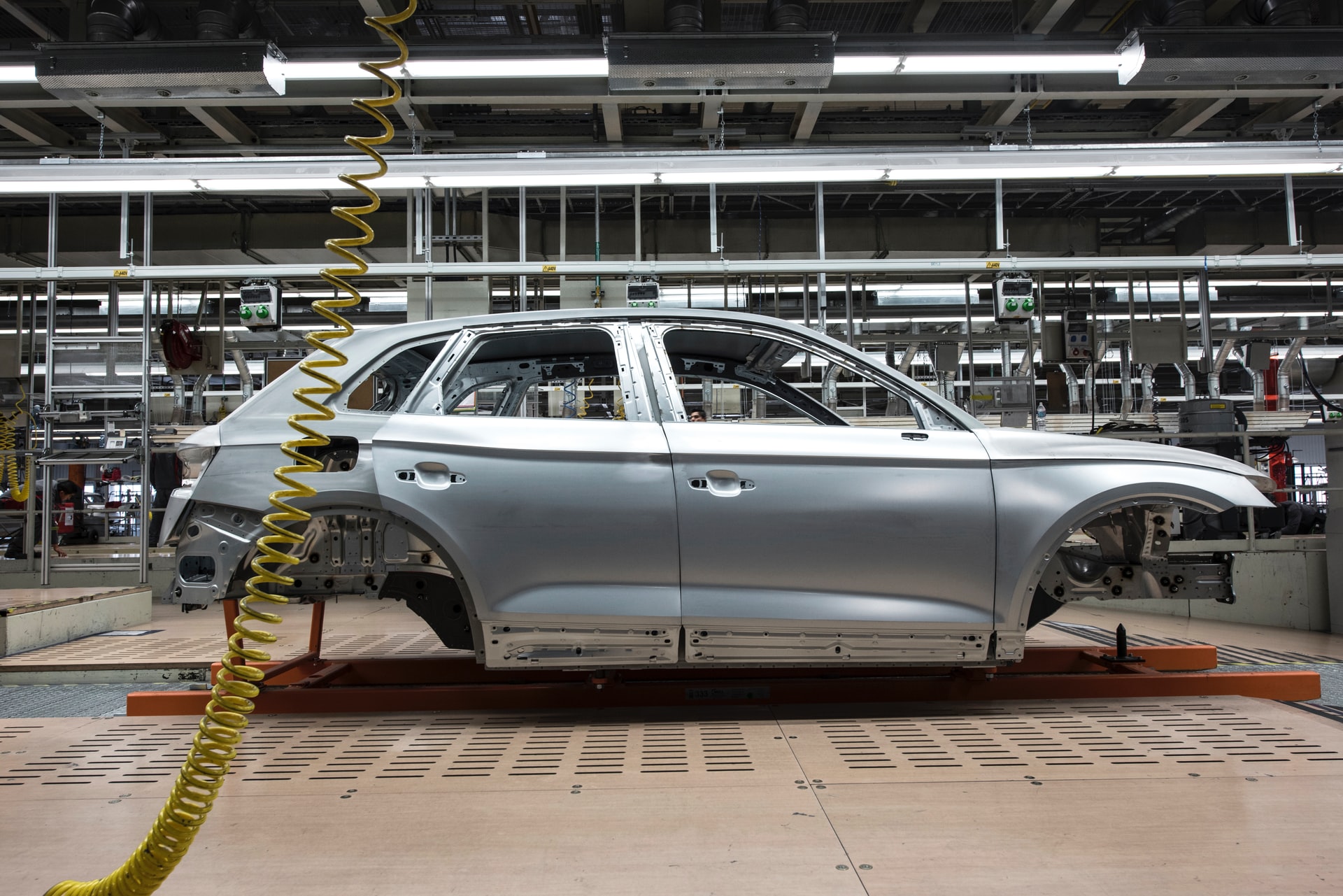
Italian car output decreases
Italian passenger car production decreased in August following an upward trend until July, Kallanish notes from local carmakers’ association Associazione Nazionale Filiera Industria Automobilistica (Anfia) preliminary data.
Italian car production fell year-on-year by 8.2% in August to 13,251 cars. However, it increased by 20.7% on-year in the first eight months of 2023 to 360,313 units.
By comparison, German output also increased significantly in the first eight months, by 28% to 2.7 million units, and by 15% to 266,800 cars in August. The UK recorded a decrease in August of 9.7% to 45,052 cars but a 11.8% hike to 571,671 units in January-August. Spain’s August car production fell 24.9% to 71,417 but increased in January-August by 13.7% to 1.2 million cars, Anfia points out.
“The automotive production sector is in the context of industrial production and the overall Italian economy still decreasing compared to last year’s levels: in August 2023, the industrial production index as a whole closed 4.2% down compared to August 2022,” Anfia says in a report.
According to service centre sources in Italy, demand for coil from the automotive sector has been weakening since July, adding to the already weak European demand.
Italy has 23 car production plants. Spain has 17 plants, France 31 and Germany 42.
Italian passenger car output hiked 6.6% y-o-y in full-year 2022 to 473,149 units. Last year, Italy produced 796,394 vehicles in total, including cars, vans and trucks.
Natalia Capra France
How Ukrainian steel industry is integrating into EU
Ukraine must ensure economic integration on its way to EU. Domestic business should be adapted to the new conditions and be able to benefit from them. What exactly these conditions will be is the subject of heated discussions. We have recently heard certain statements from our European partners about the need to regulate grain supplies for Ukraine’s accession to the EU, so it is not known what other issues may arise in other sectors of the economy.For Ukraine’s steel industry, the issue of European integration has a long history and we can say that the domestic steel industry is already part of the European industry. But there are certain challenges and a long way to go to overcome them.
Ukrainian steel industry was integrated into European production chains even before the war
Indeed, it can be said that the European market was «home» for Ukrainian steel producers. Before the war, the share of sales to the EU was about 35%, compared to 20% in the domestic market. However, trade integration was not due to, but in spite of, economic policy of EU, as import restrictions were actively imposed on the EU market.This stimulated the development of another form of integration, namely vertical integration. Ukrainian steel companies were forced to build vertical integration with European rolling mills. As a result, Metinvest Holding acquired plants in Italy (Ferriera Valsider, Metinvest Trametal) and the United Kingdom (Spartan UK). ISD Corporation included plants in Hungary (Dunaferr), Poland (Huta Czestochowa) and Bulgaria (Promet Steel). The scheme of work was that Ukrainian plants supplied semi-finished products (slabs, square billets) from which European plants produced rolled products.This interaction was beneficial for both Ukrainian producers and European consumers. Ukrainian producers were able to utilize their own iron ore mining and steelmaking capacities, while European consumers received products to meet their own needs.Vertical integration also worked in the other direction. Ukraine’s largest steel enterprise is owned by ArcelorMittal, a global company with its headquarters in Luxembourg. Until 2005, the plant was known as Kryvorizhstal, and now it is called ArcelorMittal Kryvyi Rih (AMKR) in honor of its parent company. AMKR supplies pig iron, square billets and iron ore concentrate to the Group’s other EU operations.
The war has created a need to find new forms of integration
But the war broke the existing cooperation schemes. Initially, back in 2014, the ISD actually ceased to exist. And after a full-scale invasion, Ukraine lost control over Azovstal and MMK named after Ilyich, which exported more than 2.3 million tons of slabs per year to the EU. Accordingly, European factories that are part of Metinvest are forced to look for other opportunities for purchasing slabs.By the way, the issue of restarting the slab market in the EU is quite acute after the loss of supplies from Ukraine. Market erosion is possible due to the shortage of semi-finished products. A significant part of European rolling mills continue to buy Russian-made slabs. This situation distorts competition on the EU market, as Russian suppliers try to give “reputational” discounts. And this is precisely what prevents access to the market of other suppliers of slabs that cannot compete on price with Russian ones. Such a closed circle.It is possible to correct this situation by creating an additional domestic offer on the slab market. One of the possibilities is a new plant on the territory of the European Union, which will work on Ukrainian iron ore raw materials. It is this idea that the “Metinvest” group, which has announced plans to build a new plant in Italy in partnership with Danieli, is trying to implement. The new metallurgical plant would help increase the loading of Ukrainian mining and processing plants due to the production of DR pellets. So far, this project has not received the necessary permits, there is a certain bureaucratic red tape.Needless to say, the Europeans are not keen on seeing Ukrainian business in their market. Another example is when Metinvest Holding tried to buy Dunaferr in July 2023. The attempt failed due to the position of the Hungarian government, which did not allow the company to participate in the tender. However, if the deal had gone through, it would have been beneficial for both parties. Ukrainian mining and beneficiation plants would have been able to increase production meeting the needs of the Hungarian plant, and Dunaferr would have continued to operate. But Liberty Steel, which became the new owner of Dunaferr, suspended steel production at the plant in August 2023 for 3 months.

The EU has become more open to trade cooperation
On the other hand, the war has contributed to the development of trade integration between Ukraine and the EU. Back in June 2022, the European Union suspended protective import quotas and anti-dumping measures for Ukrainian steel products. And today we see that domestic companies are developing their business and opening steel service centers in the EU. The EU has become the main export market for Ukrainian steelmakers since the war began, with the share of exports to the EU increasing for all types of products.Trade integration also works in the EU-Ukraine direction. European companies are actively interested in the Ukrainian market. More than one company has already expressed its intention to open representative offices and service centers in Ukraine. Opening steel service centers is a way to attract new customers and deepen cooperation.But again, the risks of trade partnership remain. For example, the EU abolished duties on steel products, realizing that there would be no significant supplies from Ukraine during the war. But after the war is over, the situation may change, as European countries are very pragmatic about protecting domestic producers. The process of Ukraine’s accession to the EU may be lengthy, and possible reintroduction of trade restrictions will hinder economic integration. At the same time, Ukraine is unlikely to protect its market from European suppliers. This means that Ukraine’s market will remain open. This is an important area for future diplomatic work.
Climate issues have a significant impact on the future of Ukrainian integration
A separate factor that may hinder the European integration of steelmakers is climate issues and the green energy transition. What climate commitments Ukraine will make to join the EU is an important discussion that is currently taking place. The outcome of this discussion will determine the future of the steel industry in Ukraine.In particular, the introduction of a carbon payment mechanism for importers to the EU (CBAM) could lead to the fact that the pig iron segment in the EU, where Ukraine has a share of about 50%, could cease to exist and be replaced by hot briquetted iron from the Middle East or Russia. Ukraine does not produce these products. Along with the loss of 1.5 million tons of pig iron supplies, CBAM could lead to the loss of an additional 1.6 million tons of semi-finished and finished steel products.Over the past 20 years, climate policy in Ukraine and the EU has been asynchronous. Therefore, Ukrainian enterprises should have access to European decarbonization funds. Otherwise, in 5-10 years, Ukrainian companies may not be ready for economic integration into the EU market.But at the same time, we have areas for mutually beneficial cooperation in the decarbonization of steel production. European plants need DR pellets to produce direct reduced iron. Ukrainian enterprises can supply such products. In other words, the EU needs Ukraine to decarbonize its steel industry.Ukrainian steelmakers have a history of European integration that has been fraught with trade barriers. It is positive that the situation is changing for the better. But the main risks in the future are climate-related. Without overcoming them, further economic integration into the EU is impossible.


EU hot-rolled coil prices steady as buyers hug sidelines
The week started Nov. 13 on a steady note for European domestic hot-rolled coil prices as market participants hugged the sidelines awaiting a sense of price direction.
Platts assessed the price of hot-rolled coil in Northwest Europe at Eur 650/mt Nov. 13, stable from the previous session.
“[I] will have better views [about prices] later in the week,” a Belgium-based service-center source said.
Deals were heard concluded for base-grade coils at around Eur640-650/mt basis ex-works Ruhr levels while offers were heard ranging within Eur670-700/mt ex-works Ruhr levels, according to sources.
Buyers were heard holding back from booking large volumes as they remained unsure of demand fundamentals.
Even if mills were keen to hike prices, sellers in the current market were unable to pass down the costs entirely, according to sources.
“[On the] real end, customers’ demand is an issue as the cost-effectiveness of production for them, as well as for factories, continues to limit the potential for price increases,” a distributor source said.
Asian mills in Vietnam and Taiwan were heard offering coils to European buyers at Eur610/mt CIF Antwerp levels, according to sources.
Platts assessed the price of imported hot-rolled coil delivered to Northwest Europe down Eur5/mt from the previous session at Eur610/mt basis CIF Antwerp.
Authors: Rituparna Nath, Laura Varriale


EU and US still hope to reach steel agreement
The two parties failed to reach an agreement in the buildup to their much anticipated summit in Washington last month.
A potential GASSA between the EU and US could represent the first step for a wider global agreement on sustainable steel.
If no agreement is reached by year-end, Section 232 duties from the US will be reimposed on EU steel supplies, Kallanish notes.
Emanuele Norsa Italy