


German rebar prices seen sitting still till year-end
German buyers of rebar do not expect much movement in prices before the end of the year. They are bowing somewhat to mills’ demands for higher prices but transactions are rare and small.
By mid-October, base prices had sunk to some €320/tonne ($349), translating to €585/t delivered, or even less. Then distributors went on a buying spree, filling their stocks, and mills were encouraged to raise offers. Their target of €370/t base – or €635/t delivered – has not been confirmed by anyone contacted by Kallanish, although one source admits to having paid €350/t for a small fill-in volume of rebar on short notice. Wire mesh was correspondingly sold for €450/t, he adds.
Nevertheless, the same buyer suggests that price levels could drop again, possibly to under October levels, in the next restocking wave in early 2024. “The mills are facing a massive shortcoming of demand next year,” he says, with reference to this year’s decline in orders for construction projects, especially for residential buildings. “Buyers will hold back their orders, in expectation of price concessions,” he predicts.
A manager at a large distribution group confirms this impression: “Demand is just too weak overall, and each side hopes the other will give in,” he says. “The few transactions occurring these days do not change the picture much. The price has not moved substantially since summer began.”
Christian Koehl Germany


Italian HRC seen increasing further
Italian coil prices are seen increasing again as European producers are mulling a second step of hikes, Kallanish learns from market participants.
Over the past weeks, strong demand has returned to the market, as have good sales volumes for both coil and its derivatives. Italian hot rolled coil has gradually increased in contracts, reaching €650/tonne ($708) base ex-works, with producers asking for €670-680/t delivered and quickly filling January order books.
With limited import alternatives available, service centres and re-rollers are purchasing mostly in Europe. All EU safeguard quotas for Asian countries will be exhausted a few days after renewal on 1 January and the same situation is expected after 1 April.
For the first quarter, European re-rollers have been purchasing volumes in some Asian countries, which will cause available quotas for these origins to shrink. In January, buyers will find themselves obliged to pay duty for the material imported above quota levels.
Vietnamese, Korean and Japanese exporters are giving limited allocations to European buyers, prioritising domestic and neighbouring markets. Turkish material is always considered too expensive, and India will not be able to cover the needs of all of Europe. Offers of HRC from Asia are currently at €630-650/t cfr Europe.
European steelmakers, being the only sources of procurement for buyers, will increase prices to €700/t delivered in the coming days. At least another round of hikes is expected in the market in Q1, considering the low availability.
Despite this month seeing strong demand and increasing prices, the market remains fragile. Service centres’ clients report persistent weakness in consumption.
Natalia Capra France

Bullishness prevails in European steel HRC market; more price rises expected
The index was up by €8.75 per tonne week on week and by €55.67 per tonne month on month.
Restocking activity was improving in the region, sources said.
“Buyers realize that if they don’t buy today, tomorrow the price will be higher,” a mill source told Fastmarkets. “And there are talks about new increases before Christmas, so we got more inquiries this week [starting November 20].”
Transactions in the region were reported at €660-670 per tonne ex-works on Friday.
A small-tonnage HRC sale was heard in Germany at €680 per tonne ex-works, but this was not confirmed by sources.
Some mills in the region were said to selling the “last tonnages” of December-rolling coil at €640-650 per tonne ex-works, or even lower, but those offers were not widely available in the spot market.
For January deliveries, offer from integrated mills were heard at €680-700 per tonne ex-works, and because the lower end of that range was already sealed in deals, sources expected a new round of price rises to be imposed soon.
“We expect another €30-40 per tonne increase before the year’s end,” a stockholder in Germany said.
Some buyers expressed concerns about the acute uptrend not being supported by any upturn in real steel demand.
“I’m not sure [the uptrend] is a long-term story. It’s hard to increase prices for processed coil downstream. End users [will] resist any rise,” a trader in Germany said.
In Southern Europe, Fastmarkets calculated its daily steel hot-rolled coil index, domestic, exw Italy, at €658.88 per tonne on November 24, down by €0.50 per tonne from €659.38 per tonne the previous day.
The index was up by €15.96 per tonne week on week and by €58.88 per tonne month on month.
In Italy, offers from local producers were heard at €670-680 per tonne delivered, which would net back to about €655-665 per tonne ex-works, for HRC to be delivered in late January or early February.
Several sources confirmed that, in the week to Friday, several deals had already been agreed at new prices.
“There are not many buying options in the market,” a trader in Italy said. “Imports are not [feasible] because of long lead times and the high risks [of having] to pay the [EU’s import] safeguard duty. And domestically [in Europe], supplies are also reduced.”
Import offers from Vietnam, South Korea and Japan came in at around €620-650 per tonne CFR for January-February shipments, sources told Fastmarkets.
Although €620 per tonne CFR was considered a workable price, buyers were holding back from booking Asian steel, due to possible complications with customs clearance arising from the EU’s import safeguards.
Sources indicated that European ports still have quite significant tonnages of imported coil that did not fit the allocation to be customs-cleared in the first quarter of 2023, so they expected the “other countries” allocation for the first quarter of 2024 to be quickly filled with this material.
Offers of December-shipment HRC from Turkey were heard at €660 per tonne CFR, including anti-dumping duty.
Offers of India-origin HRC to Italy were heard at €640-650 per tonne CFR, for January shipment. Sources said, however, that starting in the week beginning November 27, Indian suppliers will raise their offer prices by at least €20 per tonne.

Thyssenkrupp to close Galmed plant in Spain
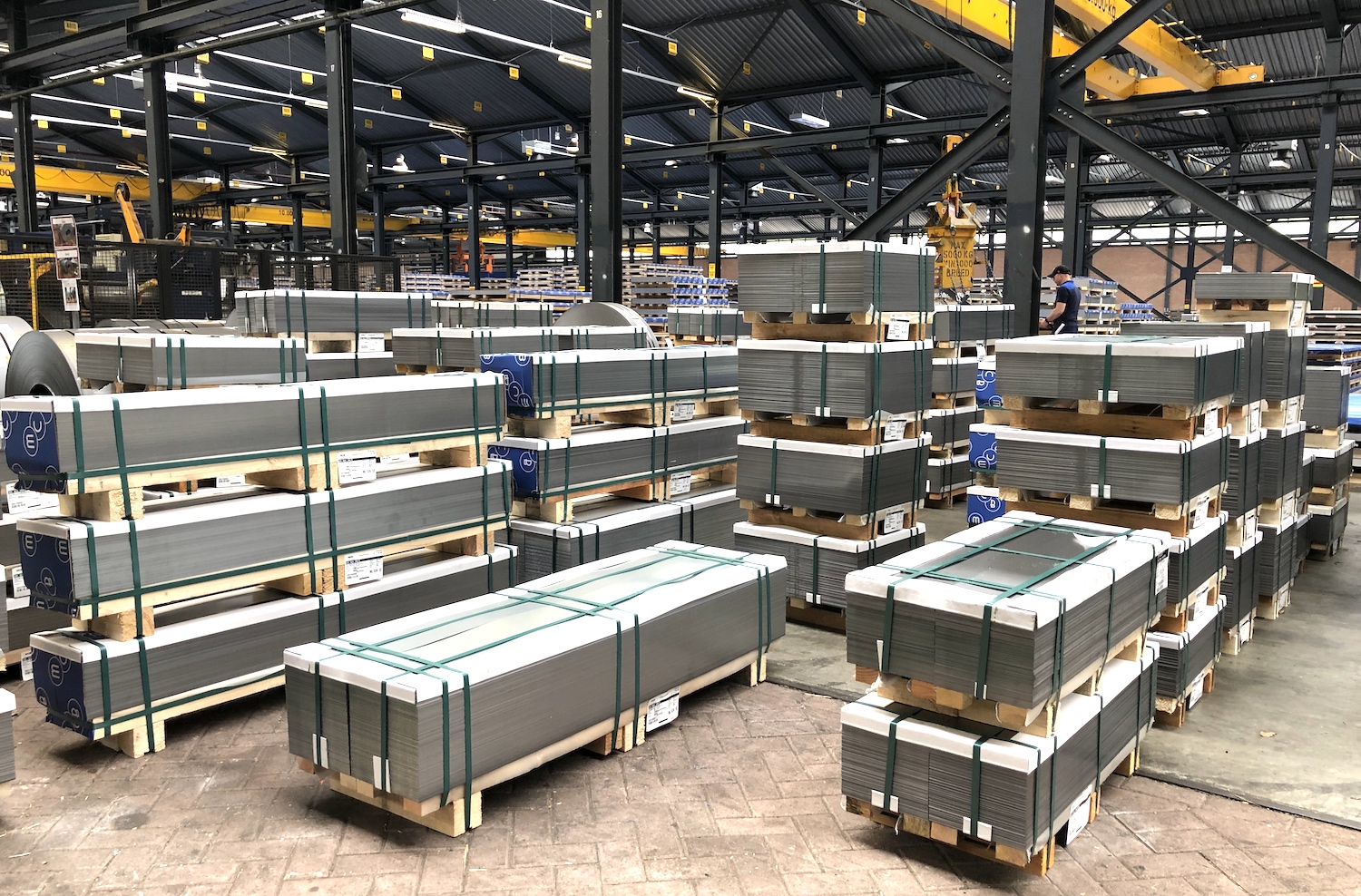
Germany’s Thyssenkrupp is closing its Spanish Galmed (FBA9) plant, located near Valencia, the company confirmed when approached by Kallanish. The Sagunto plant can produce 450,000 tonnes/year of hot-dip galvanized coil. The material is mainly supplied to the automotive sector.
The German steelmaker states it is taking the measure due to the “significant worsening of the European automobile market and the consequent reduction in demand for galvanized steel products in Spain and southern Europe”. Thyssenkrupp confirms having carried out a detailed analysis of the profitability of its ten lines. The result showed the closure of FBA9 is inevitable from an economic standpoint.
“The capacity of the Sagunto production line is already greatly underutilised and the trend will intensify in the short term; in the near future, it will no longer be possible to exploit the line economically,” the company admits.
Thyssenkrupp confirms the closure of Galmed operations will be completed within 12 months and the companies will offer “viable solutions” to its 120 workers. This includes discussions with Volkswagen Group’s battery unit, PowerCo, to identify employment possibilities.
Thyssenkrupp previously closed its FBA9 facility and laid off 165 workers in 2013 due to low market demand. The company reopened the plant three years later after massive protests and political pressure.
Todor Kirkov Bulgaria

Gonvarri, ArcelorMittal collaboration supplies Iberdrola Portuguese project
Spanish steel processor Gonvarri says it has signed a contract with Iberdrola to supply structures for the energy company’s photovoltaic project in Portugal.
The farm, which is located in Carregado, will have a total of 915 TracSmarT+1V trackers with a capacity of 41 megawatts per hour. This will be the first photovoltaic project in the Iberian Peninsula to be built with low-emissions steel, Kallanish learns from the company.
Gonvarri will use almost 211.8 tonnes of steel for the construction of the components. The supply includes ArcelorMittal’s so-called “Magnelis” product with an anti-corrosion metallic coating.
“We are proud to be able to combine our knowledge, resources and experience with Iberdrola and ArcelorMittal in this project, which will set a precedent for the development of new innovative, high-performance initiatives as a way to drive the transition to an emission-free world,” the steel processor concludes.
Gonvarri Industries, which is one of the largest flat steel customers of ArcelorMittal Europe, has an agreement with the steelmaker to jointly develop sustainability projects, with the collaboration prioritising the use of ArcelorMittal’s XCarb reduced and low-carbon products (see Kallanish passim).
Todor Kirkov Bulgaria
BNP Paribas stops financing for metallurgical coal mining
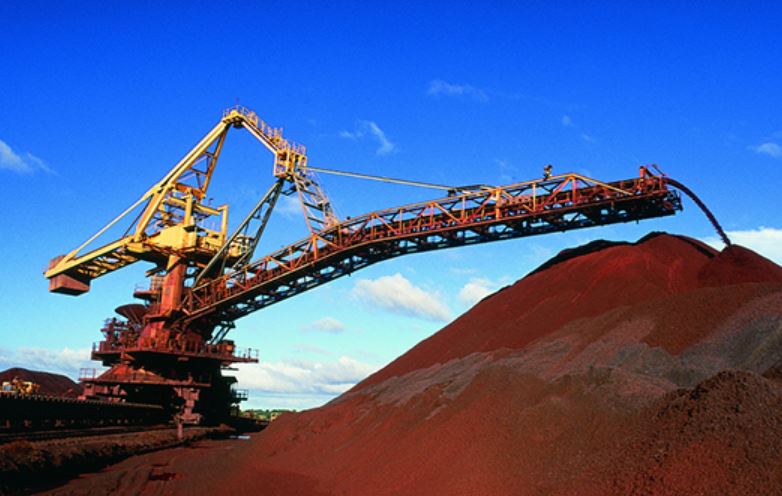
European lender BNP Paribas says it will no longer provide financing to projects dedicated to the extraction of metallurgical coal, Kallanish notes.
The bank says in its updated sector policy on the mining industry that this new commitment is part of the bank’s efforts to align its credit portfolio in the steel sector with its “net zero” commitment.
In 2022 and 2023, BNP Paribas set targets to reduce the intensity of carbon emissions financed in six sectors (oil and gas, electricity generation, automotive, steel, aluminium, and cement).
BNP Paribas recalls that since 2020 it has been committed to a path towards a complete exit from the financing of the entire value chain of companies linked to thermal coal by 2030 in Europe and in the OECD countries, and by 2040 in the rest of the world.
Siew Mung Tan Malaysia

Turkish coated coil prices increase again
Domestic prices
Fastmarkets’ weekly price assessment for steel hot-dipped galvanized coil domestic, exw Turkey was $830-840 per tonne on November 24, rising from $800-820 per tonne on November 17.
Turkish producers sold 0.5mm thick HDG with Z100 coating at around $830-850 per tonne ex-works during the past seven days, rising from the previous offers at $800-820 per tonne ex-works.
Fastmarkets’ weekly price assessment for steel pre-painted galvanized, domestic, exw Turkey was $930-950 per tonne on Friday, rising from $900-930 per tonne on November 17.
Offer prices for pre-painted galvanized iron, also known as color-coated coil, of 0.50 mm thickness with 9002 color code, came in at $930-950 per tonne ex-works over the past seven days, rising from last week offers at $900-930 per tonne ex-works.
HDG exports
Fastmarkets’ weekly price assessment for steel HDG, export, FOB Turkey was $830-840 per tonne on Friday, rising from $800-820 per tonne on November 17.
HDG of 0.50 mm thickness with Z100 coating was on offer at $830-840 per tonne FOB over the past seven days, but no major deals were heard.