

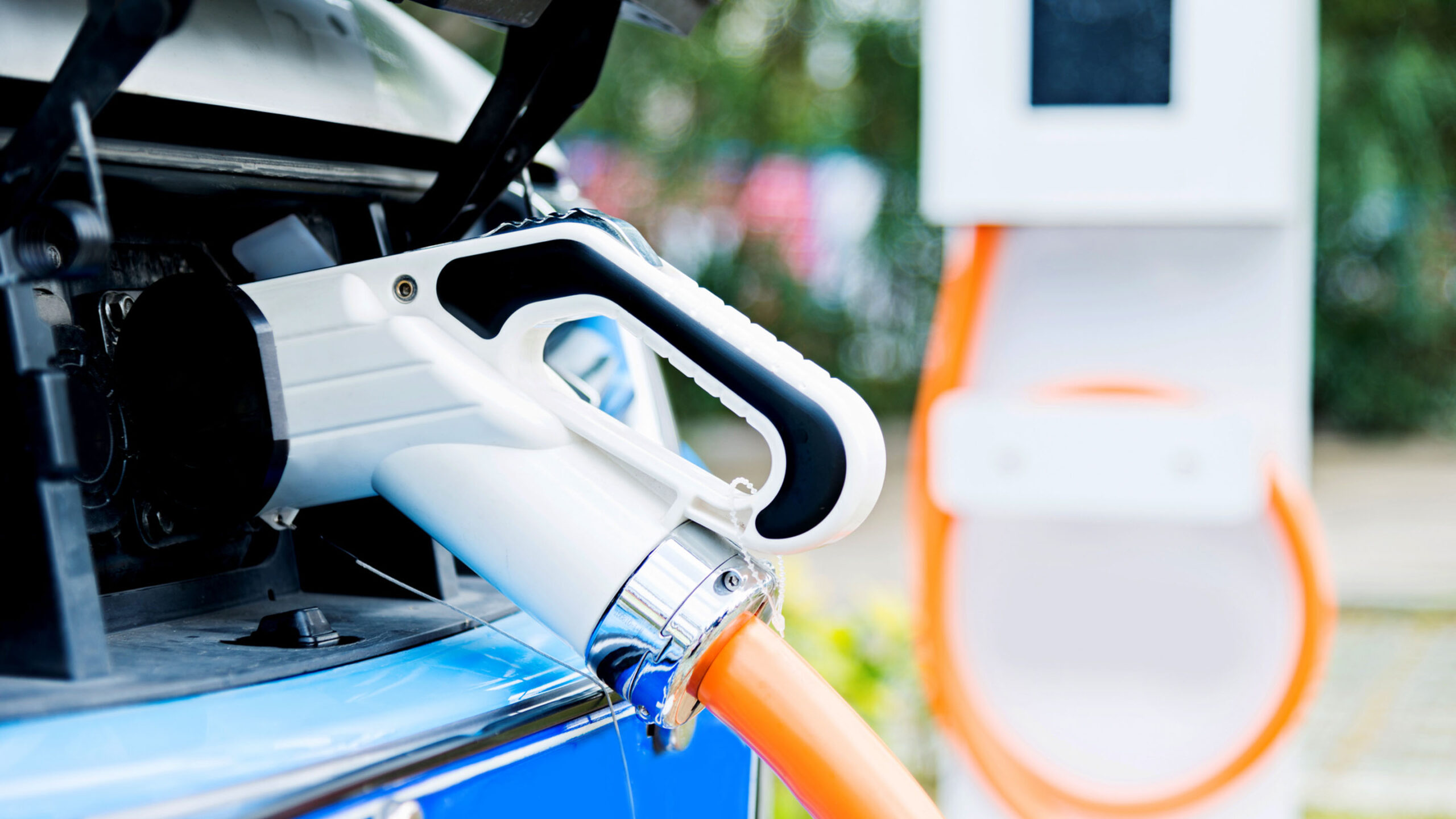
EC proposes extension to EU-UK rules of origin on EVs, batteries
The European Commission proposed on Wednesday a “one-off extension” to the EU-UK current rules of origin (ROO) on electric vehicles and batteries, now to be voted by the European Council.
EC vice-president Maroš Šefčovič told a press conference the proposal was reached after a comprehensive assessment and discussion, with input from the European automotive, battery and chemical industries. It takes into consideration the “unforeseen circumstances” that impacted the European battery industry since the rules were designed in 2020, including soaring energy prices and increased competition from new international subsidy support schemes.
The proposal stipulates that the current ROO remain in place until 31 December 2026, with the stricter requirements entering into force on 1 January 2027, instead of 1 January 2024. It also includes a lock-in mechanism making it legally impossible for the EU-UK Partnership Council to change rules again before 2032.
“We have listened carefully to those concerns and therefore put a balanced, forward-looking proposal on the table. It supports the competitiveness of our industry and protects jobs in the EU,” adds Šefčovič.
The Commissioners have also announced €3 billion ($3.23 billion) in funding for EU battery manufacturers over the next three years. The new instrument will provide support, possibly as a fixed premium, to the European manufacturers of the most sustainable batteries. They expect the new investment, to start next year through the Innovation Fund, will also create spill-over effects on the entire value chain, including its upstream segment.
European automotive trade body ACEA welcomed the proposal on a three-year extension and urged the Council to approve the deal. “This is vital to ensure the well-being of not only EU BEV manufacturing, but also of the whole European battery value chain,” ACEA director general Sigrid de Vries says in a note.
Failure to approve the proposal would come with a “hefty price tag of €4.3 billion over the next three years for EU vehicle makers,” ACEA says. BEV production could shrink by 480,000 units, which the association estimates to be equivalent to the output of two average-size auto factories.
The UK’s Society of Motor Manufacturers and Traders (SMMT) did not immediately reply to Kallanish’s request for comment.
The EC says it will closely monitor whether the European automotive and batteries industries are “on the right track” to complying with the permanent rules of origin of the trade agreement, and achieving a headline benchmark of supplying at least 70% of their demand for batteries through domestic sourcing.


Indian HRC mills hike offers, eye EU business
Indian hot rolled coil suppliers are back in the EU market, aiming to capitalise on firming prices there amid idled capacities. After selling a consignment to the EU in late November, mills have hiked their quotes in anticipation of further business. The domestic market is likely to remain sluggish till at least January.
One Indian major concluded an S235 grade HRC deal towards the end last month to the EU at $630-635/tonne fob India for December shipment, with freight at $45-50/t. Mills have since hiked prices to $640-650/t fob.
These values could grow further as “right now, exports [to Europe] look bullish”, an Indian trader tells Kallanish. Domestic business is “flat”, says another trader, after failing to take off so far after Diwali, so mills “will look to boost exports to let some steam off from the domestic market”.
The consensus is that domestic demand should pick up in January or February, which will see mills turn their attention back to local sales.
There has been much talk in recent weeks about considerable HRC import tonnages arriving now in India and how they will impact the market. Opinion is split. One trader says mills are keeping domestic prices subdued in order to limit the competitiveness of imported material. However, another points out the expected tonnage arriving represents only a small share of overall consumption.
“Prices are going down against released figures by mills, while raw material is on the higher side,” the latter trader observes. “Mill are trying to leverage their losses by generating sales in dollars. The same is being diverted for raw materials purchases.”
Business in the Gulf Cooperation Council meanwhile remains unattainable, with Chinese HRC suppliers dominating there (see separate story). China-origin offers in the GCC are at cost levels for Indian mills, one trader points out.
Indian DC01 grade cold rolled coil export quotes are meanwhile at $715-720/t fob India.
Adam Smith Poland

Benteler, ArcelorMittal test XCarb in car components
The Automotive Division of Benteler group says it aims to further expand its CO2-reduced product portfolio after signing a memorandum of understanding for steel supply from ArcelorMittal.
The two companies, which already have a longstanding partnership, will work together on several sustainability projects using ArcelorMittal’s XCarb recycled and renewably produced steel, Kallanish learns from Benteler. The steels will be used for chassis and structural components.
Benteler says it has set itself ambitious sustainability targets with the aim of decarbonising the company and achieving net zero by 2050. The group aims to halve production-related Scope 1 and 2 emissions compared with 2019 as soon as 2030. In addition, upstream and downstream – Scope 3 – emissions along the supply chain are also to be reduced by 30%.
The Steel/Tube Division is aiming to achieve CO2 neutrality by 2045 through increased energy efficiency, green electricity and CO2-reduced starting material, the company says.
In addition, Benteler Steel/Tube itself produces “green steel” for customers in an electric arc furnace at its Lingen steel works. However, the production volume there is not sufficient to cover the needs of Benteler within the group, it notes.
Christian Koehl Germany

European flat stainless steel prices narrow on lull in demand
Fastmarkets’ monthly price assessment for stainless steel cold-rolled sheet, 2mm, grade 304, transaction domestic, delivered North Europe, was €2,600-2,650 ($2,822-2,876) per tonne on Friday, narrowing downward from €2,600-2,680 per tonne on November 3.
Stainless steel service centers have kept to a wait-and-see approach into December, a distributor told Fastmarkets.
“We are just waiting to see the mills’ behavior. [Steel mills] will either reduce production to maintain prices or they will reduce the prices in order to book more orders. Currently, [steel mills] do not have many orders,” the distributor said.
Distributors were not looking to buy new material and, as a result, stock levels were currently low, Fastmarkets understands.
“Demand is still weak,” a second distributor said last week, “but this is no surprise. [Last month’s] prices were never backed up by better demand from the end-user side. Prices reached their peak a month ago, and my expectation is that prices will go down in January.”
The market for finished stainless steel products has been weakened throughout 2023 by poor downstream demand and a grim macroeconomic backdrop. Lower nickel costs have also been a significant factor.
The alloy surcharge for grade-304 material, which is primarily based on nickel costs, also fell on Friday. Fastmarkets’ monthly assessment of the stainless steel cold-rolled sheet, 2mm, grade 304 alloy surcharge, domestic, Europe, was €2,055-2,069 per tonne on December 1, down from €2,135-2,152 per tonne one month earlier.
Surcharges for December will typically be based on alloy component costs between October 20 and November 21, when the average three-month daily official nickel price on the London Metal Exchange was $17,774 per tonne, down by $997 per tonne from $18,771 per tonne one month earlier.
Published by: Zdravko Cherkezov


Prices stable in European steel HRC markets; bullish sentiment continues
Fastmarkets calculated its daily steel HRC index, domestic, exw Northern Europe, at €677.50 ($735.26) per tonne on Tuesday, up by €0.83 per tonne from €676.67 per tonne the previous day.
The index was up by €7.50 per tonne week on week and by €47.08 per tonne month on month.
Early in the week, Northern European mills were reported to be seeking a price of €720-730 per tonne ex-works for February-delivery HRC, Fastmarkets heard.
Meanwhile, buyers’ estimates of tradeable values were heard at €670-680 per tonne ex-works in the region.
Buyers were relatively bullish regarding possible price rises, but they did not consider prices higher than €700 per tonne exw to be workable given the current weak demand levels.
Meanwhile, Fastmarkets calculated its daily steel HRC index, domestic, exw Italy, at €665.00 per tonne on Tuesday, down by €5.00 per tonne from the calculation at €670.00 per tonne on Monday.
The Italy index was up, however, by €5.50 per tonne week on week and by €40.00 per tonne month on month.
Italian mills were reported to be offering February-delivery material at €700-705 per tonne ex-works, while buyers’ estimates of achievable prices were reported at €660-670 per tonne ex-works.
Participants in the Italian HRC market were optimistic regarding future price rises, supported by increased demand and constrained supply.
No new import offers were reported.
Published by: India-Inés Levy