


EU needs to work on CCUS: Eurofer
The inclusion of technologies to decarbonise steelmaking in the Council on the Net Zero Industry Act (NZIA)’s list of net-zero technologies sends a positive signal. However, EU authorities must seize the opportunity to drive carbon capture, usage and storage (CCUS) in Europe, says European steelmakers association Eurofer.
“All net-zero technologies, such as wind, solar and hydrogen electrolysers, depend on steel, with an estimated need for more than 74 million tonnes of steel for the expansion of EU renewables alone. Net-zero technologies made in Europe will be stronger with European low-carbon steel at the core,” Eurofer director general Axel Eggert says in a note sent to Kallanish.
The conversion of existing steel plants to hydrogen and electricity-based technologies is the first step to reaching climate-neutrality. “However, despite their recognition as net-zero technologies, the Council has not included their deployment in the Net Zero Industry Act. This means that low-carbon steel technologies will be excluded from the new rules facilitating permit-granting procedures. A potential reassessment five years after the Act’s entry into force will be too late for the first wave of the steel sector’s transition process and likely result in significant implementation delays. While progress has been made on CCUS and lead market access, further work is needed in both areas,” Eurofer observes.
The upcoming negotiations between the European Council and Parliament should aim to establish a well-functioning CCUS value chain, especially concerning the preparation of the fields for storage, transport network and financing, it adds.
The steel industry’s successful transition will also depend on the availability of markets that are willing to pay a premium for low-carbon products. The EU should therefore support green markets with ambitious sustainability criteria to reward environmentally sustainable manufacturing, the association concludes.
Adam Smith Poland


Expectations grow for Acciaierie d’Italia’s future
The meeting between Acciaierie d’Italia (ADI) joint venture partners state-owned Invitalia and ArcelorMittal has been rescheduled to 11 December. This comes after ArcelorMittal submitted a 12-page document to which Invitalia will have to respond, sources close to the matter say.
The government and the private partner are in advanced talks to relaunch the troubled steelmaker but are said to be clashing on the significant funds – €1 billion ($1.08 billion) – needed to release the steelmaker’s assets. These were seized previously by the extraordinary administrator of the former Ilva plant due to legal conundrums. An additional €320 million are needed to sort out the company’s immediate needs.
ArcelorMittal, the current majority shareholder, is said to be unwilling to sustain the costs given the heavy bureaucratic and legal difficulties that are weighing on the plant’s future. Invitalia is expected to become majority shareholder in 2024, while ArcelorMittal will retain a 40% shareholding.
In 2021, ArcelorMittal deconsolidated the assets and liabilities, including the remaining lease and purchase liability, of Acciaierie d’Italia Holding, formerly AM InvestCo Italy. On the other hand, Invitalia and the Italian government have been slow in making decisions and in paying the funds due.
Meanwhile, production in Taranto continues to be slow. Blast furnace no.2 is being idled from 4-11 December for maintenance work, meaning the plant is now only running BF no.4.
Last month, ADI Holding president Franco Bernabè urged the state and private partners to accelerate their decision-making process to save the troubled Italian steelmaker from insolvency. During a televised parliamentary hearing, Bernabè said that banks will not finance ADI because of its financial and legal woes. ADI operates using only its own cash flow, and every time cash is diverted it means less funds for raw materials.
“At every production cycle, the steelmaker is forced to reduce output. Without access to credit lines, the company will shut down because it is consuming itself,” Barnabé warned (see Kallanish passim).
According to sources, authorities are considering a future without ArcelorMittal and possibly with a partnership of local steelmakers ready to take over the plant despite its legal troubles. However, they would prefer to find a solution with ArcelorMittal.
ArcelorMittal declined to comment when contacted by Kallanish.
Natalia Capra France
Metinvest, Danieli eye 2027 Italian steelworks commissioning
Metinvest and equipment maker Danieli aim to commission Metinvest’s prospective hot strip mill in Piombino, Tuscany by 2027, President of Tuscany Eugenio Giani said after a meeting in Florence earlier this week with Metinvest-Trametal and Danieli management representatives.
The firms participated this week in two meetings with Tuscany region officials and the Piombino city council. “On the part of Metinvest-Danieli, I saw an entrepreneurial will, combined with great attention to the territory … To start [the project] now, we are missing agreements between the government, the region, other bodies and interested parties … on the concessions that are needed, as well as [agreements] on how the electric arc furnace will be built and how JSW and Metinvest will be able to co-exist without overlapping,” Giani says in a document obtained by Kallanish.
He adds that the project comes under the name of “Digital Green Steel” and the timing of the mill’s realisation will be “rather quick”, considering the venture aims for commissioning in 2027.
The new facility will entail an investment of €2 billion ($2.1 billion) and produce 2.7 million tonnes/year of hot rolled coil from the EAF route. Earlier this week, a public assembly was held in Piombino attended by Metinvest and Danieli management, as well as Piombino Mayor Francesco Ferrari, to showcase the future facility to the community.
“The investment by Metinvest and Danieli can be a concrete opportunity to relaunch the steelworks site and, more generally, the local economy, but it is necessary … that the most innovative technologies and measures are adopted to protect the environment, health and economic diversification,” the Piombino city council says in a note.
Metinvest is rumoured to have reached an agreement with the Italian government and Indian steelmaker JSW for the takeover of JSW’s Italian long steel mill in Piombino. In the first week of November, Metinvest chief executive Yuriy Ryzhenkov met Italy’s Minister of Enterprises and Made in Italy (MIMT) Adolfo Urso in Rome to discuss the takeover. The meeting was attended by Danieli chief executive Gianpietro Benedetti, as well as Ferrari.
The ministry said then that JSW and Metinvest would co-exist in the hub and the project had made a step forward in a positive and “collaborative climate”. JSW would keep and revamp the rail mill that supplies Italy’s national railway operator, Ferrovie dello Stato, while Metinvest and Danieli would build an EAF low-emission steel coil plant (see Kallanish passim).
Natalia Capra France

Demand drives up northern European rod prices
Northern European wire rod prices continued to increase this week due to firm demand in Europe, sources say. Participants, however, do not expect values to rise further before year-end due to the approaching Christmas holidays and drawing mills’ limited production amid high costs.
“There is higher demand this month so far, which has influenced prices in the European market,” one buyer from the Netherlands tells Kallanish.
The increase is for around €10-20/tonne ($11-22/t), sources say.
Domestic transaction prices for drawing-quality wire rod are at €640/t ($689/t) ex-works and mesh-grade wire rod is at €650/t.
Producers are asking for €660/t ex-works, on average, for mesh-quality rod.
“The wire rod market shows signs of new activity, but I don’t expect prices to continue to increase much in the next two weeks until Christmas, because [wire] production in Europe remains very costly,” another participant in the market notes. “European [drawing] mills will start to restock from the middle of January for February bookings. Imports also continue not to impact the market this month.”
Offers are being heard from outside the EU at €580-590/t cfr Rotterdam, with very small tonnages being booked.
At the same time, European scrap values increased in November due to exports. German old thick scrap sort 3 is at €320/t, while new scrap sort 2/8 was at €325-330/t. E40 shredded scrap was at €330/t. In Austria, scrap prices remained flat for new scrap sort 2/8, which is at €325/t, and old thick scrap sort 3 remains at €320/t.
Italian wire rod prices are also increasing by €30/t on costlier raw materials and increased production costs (see separate story). Drawing-quality wire rod transactions are rising to €650/t delivered this month. Most drawing mills, distributors and wire rod mills will shut down on around 20 December for the winter holidays and reopen after 6 January.
Svetoslav Abrossimov Bulgaria
European steel beam prices rise on mills’ bullish offers
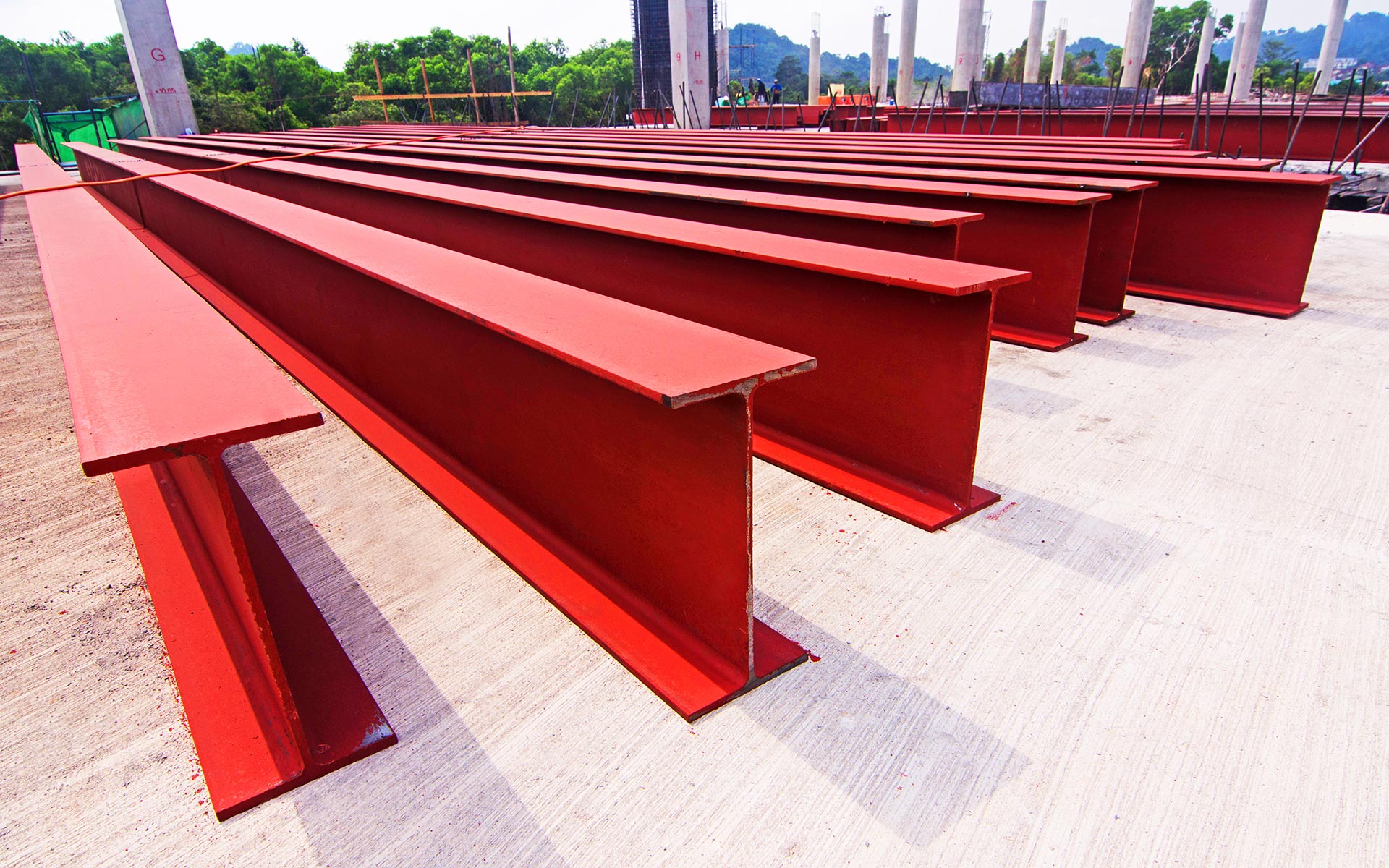
Fastmarkets’ weekly price assessment for steel beams domestic, delivered Northern Europe was €740-780 ($798-841) per tonne on Wednesday, up by €10-20 per tonne from €730-760 per tonne a week earlier.
Similarly, Fastmarkets’ weekly price assessment for steel beams domestic, delivered Southern Europe was €740-780 per tonne on Wednesday, up by €10-20 per tonne from €730-760 per tonne a week earlier.
Sources said that producers have been pushing up offer prices ahead of the end of the year to stimulate buying and to start 2024 trade at higher market levels.
But demand remains weak due to low consumption from the construction sector, which has led market participants to express uncertainty over buyers’ willingness to accept upward movement in prices in the follow-up to and first quarter of next year.
Meanwhile, scrap feedstock costs in Turkey’s bellwether market continued to increase over the past seven days.
Fastmarkets’ calculation of its daily index for steel scrap HMS 1&2 (80:20 mix) North Europe origin, cfr Turkey was $409.59 per tonne on Wednesday, up by $24.44 per tonne from $385.15 per tonne on November 29.
But Turkey’s scrap market grew quiet in the pricing period due to mills muting trade to assess domestic steel demand in relation to higher scrap offer prices.
Published by: Holly Chant


Increased feedstock costs push prices higher in Southern European rebar market; wire rod prices stable
Fastmarkets’ price assessment for steel reinforcing bar (rebar) domestic, exw Italy was €640-670 ($690-723) per tonne on Wednesday, up by €30-40 per tonne week on week from €610-630 per tonne.
Prices in the rebar market rose because mills targeted higher prices, sources said, adding that they were unsure whether an increase would be accepted by the market.
Production cuts, high scrap costs and high stable energy costs let to higher prices, Fastmarkets heard.
“Mills are increasing prices again. Customers are a little disoriented by this uptrend, they are worried that prices will go down again in January, so they have many doubts whether they have to buy or not. Producers say that this new increase is due to growing energy costs and issues in finding scrap,” a trader source said.
“Steel mills are proposing higher prices, but I don’t know if anyone is buying at these levels,” another buyer source said.
But mill sources were bullish that the market would support price rises given constrained supply.
“Last week, all producers announced big price increases on the domestic market,” a producer source said. “A lack of scrap, raw steel and billet imports for producers who mix their steel production with imported billets and ever-rising energy costs resulted in mills increasing prices. Dwindling stocks have given mills more leverage.”
Fastmarkets’ price assessment for steel reinforcing bar (rebar) domestic, delivered Spain was €620-655 per tonne, up by €30-40 per tonne week on week from €590-615 per tonne.
Southern European wire rod
The price assessment for steel wire rod (mesh quality) domestic, delivered Southern Europe was €600-620 per tonne on Wednesday, stable week on week.
Market participants expected further upward price pressure in the wire rod market amid reduced stock and high feedstock costs, Fastmarkets heard.
Published by: India-Inés Levy

Steel hollow sections producers in Europe target higher offers, prices rise
Fastmarkets’ weekly price assessment for steel sections (medium) domestic, delivered Northern Europe was €800-830 ($863-895) per tonne on Wednesday, up by €20-30 per tonne from €780-800 per tonne a week earlier.
Similarly, Fastmarkets’ weekly price assessment for steel sections (medium) domestic, delivered Southern Europe was €800-830 per tonne on Wednesday, up by €20-30 per tonne from €780-800 per tonne a week earlier.
Sources said they believed that the higher market levels would be sustained into the beginning of 2024, but weak end-user demand remained a concern.
Upward movement was also reported in other parts of Europe by a southeastern European source, with prices for sections heard at €760 per tonne cpt in Poland and at €740 per tonne cpt in Romania, on a theoretical weight basis.
The same source added that they heard prices in both markets had increased by €10 per tonne since Friday December 1.
Meanwhile, hot-rolled coil feedstock costs continued to rise, adding some support to higher sections prices, sources said.
Fastmarkets’ daily calculation of its steel hot-rolled coil index domestic, exw Northern Europe was €682.13 per tonne on Wednesday, up by €9.63 per tonne from €672.50 per tonne week on week and by €39.63 per tonne from €642.50 per tonne month on month.
But trading slowed in the HRC market, with buyers growing more cautious about whether prices could be sustained in the new year.
Published by: Holly Chant

Agir Haddecilik steel facility to build 9.2-MWp solar power plant in western Turkey
One of Turkey’s largest re-rollers, Agir Haddecilik, has decided to build a new 9.2-MWp solar power plant in Gediz, Kutahya, western Turkey, to meet its facilities’ all electricity demand with renewable energy and to reduce its energy costs as well as carbon emissions.
According to the project document submitted to the Ministry of Environment, Urbanization and Climate Change by the company on Dec. 6 for environmental impact assessment (EIA) approval and seen by S&P Global Commodity Insights, 16,740 photovoltaic solar panels will be installed for the solar power plant.
The construction works at the new solar power plant will begin following the EIA approval and is targeted to be functional within 2024.
Most of the Turkish steel producers have focused on renewable energy investments in recent years, such as solar power plants, as high energy and raw material costs harmed their competitiveness in global markets.
Turkish rebar export prices continued to increase on Dec. 6 amid strengthening scrap import prices into the country and fresh reported rebar deals to Europe.
Platts, part of S&P Global, assessed Turkish exported rebar at $600/mt FOB Dec. 6, up $2/mt on the day.
Author Cenk Can


European Council adopts position on Net-Zero Industry Act; ‘positive’ move for steel decarbonization
The European Council adopted Dec. 7 its position on a framework of measures to sustain Europe’s net-zero technology products manufacturing ecosystem, including for decarbonizing steel, called the Net-Zero Industry Act.
The main aim of this proposal is to accelerate the industrial deployment of critical technologies to support the transition toward climate neutrality, with the proposed act seeking to facilitate the conditions for investment based on a list of key technologies, by simplifying the permit granting procedures and prioritizing strategic projects.
The Net-Zero Industry Act sets out the indicative benchmark of reaching 40% of production to cover EU’s needs in strategic technology products, like solar photovoltaic panels, wind turbines, batteries and heat pumps, the council said in the statement.
The proposal also outlines specific targets for carbon capture and storage, with an annual injection capacity of at least 50 million mt CO2 to be achieved by 2030.
The inclusion of transformative industrial technologies for the decarbonization of energy-intensive sectors, such as steel, in the list of net-zero technologies in the general approach adopted by the Council on the Net-Zero Industry Act, sends a positive signal at a crucial time when governments are deliberating urgent measures to protect the climate at COP28 in Dubai, European steel association Eurofer said.
The Net-Zero Industry Act is one of the three essential legislative initiatives of the Green Deal Industrial Plan, together with the Critical Raw Material Act and the reform of the electricity market design, to support the transition and to keep the competitiveness of European industry on the path to climate neutrality.
The general approach agreed will be negotiated with the European Parliament Dec. 13. So far, as compared to the European Commission’s proposal, the council position increases the list of strategic net-zero technologies to 10 from eight, by including nuclear and sustainable alternative fuels. It also makes clear that this should not affect either member states’ right to determine their energy mix or the allocation of EU funds during the current multiannual budget.
The mandate also enlarges the list of non-strategic net-zero technologies to biotechnology climate and energy solutions, other nuclear technologies and transformative industrial technologies for energy-intensive industries.

EU HRC market supported by full order books, uncompetitive imports
Good order book of the EU steelmakers and lack of competitive imports supported domestic European hot-rolled coil prices Dec. 7, while demand remained limited.
Most mills in Northwest Europe made offers for February and March shipments although buyers remained reluctant about building inventories amid uncertainties about prices in the near-term.
“The buyers are avoiding buying big volumes as they understand the risks that the uptrend might end abruptly,” an Italian mill source said.
Mills continued to offer domestic HRC at Eur690-720/mt ex-works Ruhr with no deals heard during the day. Tradable values were reported at Eur680-690/mt ex-works Ruhr.
Platts assessed the price of domestic hot-rolled coil up Eur5/mt on the day at Eur685/mt ex-works Ruhr Dec. 7.
The market also remained concerned about capacity increases in the absence of real demand.
Some major Northwest European mills are expected to restart their blast furnaces in coming weeks.
Buyers have been more focused on the domestic supply due to high offers for the overseas coil and longer lead times.
Indonesian mills offered HRC at Eur650/mt CIF Antwerp and Turkish mills made offers at Eur670/mt CIF Antwerp, including anti-dumping duty. However, no transactions were reported.
Platts assessed the price of imported HRC in Northwest Europe up Eur10/mt on the day at Eur645/mt CIF Antwerp Dec. 7.
Platts is part of S&P Global Commodity Insights.
Author Rituparna Nath, Maria Tanatar