


Tata Steel signs lower carbon emission steel offtake agreement with auto supplier
Tata Steel Nederland signed a long-term agreement for the supply of low carbon emission steel with automotive supplier Snop, the Dutch steelmaker said Dec. 14.
The supply contract is for Tata’s Zeremis Carbon Lite product which has an allocated carbon footprint reduction of up to 90% under Scopes 1, 2 and 3 of the greenhouse gas emissions, according to Tata, with CO2 emissions of 1.54 mt of CO2 per metric tonne for the hot-rolled coil.
The steel will be used for the manufacture of high-strength structural car components, as well as outer panels for light commercial vehicles and high-end sports cars for various major car manufacturers.
“The automotive industry is looking to reduce the carbon footprint of its entire value chain and steel is a key enabler,” said Heather Wijdekop, commercial director of Tata Steel Nederland. Snop aims to reach net-zero by 2050.
Tata Steel aims to reduce its CO2 emissions by 40% by 2030, with the commissioning of its direct reduced iron plant and electric arc furnace installations, planning to be carbon neutral by 2045. The DRI plant that will enable the supply of up to 200,000 mt/year of CO2-neutral steel Tata Steel said earlier this year.
The company also said it would increase the use of scrap to approximately 30% of the total annual production by 2030. Once the new production routes are operational Tata will supply Snop with its Zeremis “green steel”.
Tata is currently operating a carbon emission intensive blast furnace production route with a capacity of producing up to 7.5 million mt/year of hot- and cold-rolled coil.
In November, Tata Steel started offering low carbon delivery of its products by trucks that run on vegetable oil-based fuel for buyers to lower their Scope 3 emissions.
All major European steelmakers are currently ramping up their lower carbon emission steel production as increasingly more end-users such as the automotive industry are looking at a lower carbon emission supply chain and looking for offtake agreements for the sought after material.
Author Laura Varriale

Japan’s Nippon Steel set to acquire US Steel; to boost output capacity to 86 mil mt/year
Japan’s largest steelmaker, Nippon Steel, said Dec. 18 that it will acquire Pennsylvania-located US Steel for a deal equating to more than $14 billion, a move Nippon Steel said would help boost its annual crude steel production capacity to 86 million mt/year.
Nippon Steel currently has an annual production capacity of 66 million mt, according to the company.
Nippon Steel produced 44.37 million mt of crude steel in 2022, while US Steel produced 14.49 million mt, according to the World Steel Association.
A successful transaction could make the combined entity the world’s third largest steel producer, after China’s Baowu Group and Luxembourg-based Arcelor Mittal, according to calculations based on the World Steel Association data.
The move would further diversify Nippon Steel’s global footprint by significantly expanding its current production, also accelerating its progress towards its strategic goal of 100 million mt/year of global crude steel capacity, the company said.
The deal would combine technology prowess of the two companies, as they look to target high-grade steel products, including automotive and electrical steel as part of their overall decarbonization plans, the two companies said.
Under the deal, Nippon Steel said it will pay $55/share in an all-cash transaction, which represented a 40% premium to the US Steel’s stock value on Dec. 15.
Both the companies said they expected to close the deal in the second or third quarter of 2024, subject to necessary approvals.
US Steel produces and sells flat-rolled and tubular steel products, primarily in North America and Europe, according to S&P Capital IQ data.
Other than its steel operations, US Steel also maintains advanced iron ore production, according to the company.
Nippon Steel’s manufacturing base is in Japan and the company has presence in 15 additional countries including, the US and India, the company said.
Before this announcement, US-based steelmaker Cleveland-Cliffs in August disclosed that it had made a private offer to acquire US Steel in July, but received a rejection letter from the US Steel board in August.
Authors: Rohan Somwanshi, Lucy Tang

Polish steel mills try higher rebar prices amid subdued demand, wire rod prices remain stable
Demand for both products remained comparatively weak due to the winter season and the upcoming holidays, however.
Rebar
Polish mills increased their offers for rebar to 2,820 Polish zloty ($716) per tonne CPT this week, which nets back to about 2,800 zloty per tonne ex-works, sources told Fastmarkets. The previous offers of the mills did not exceed 2,800 zloty per tonne CPT, which nets back to about 2,780 zloty per tonne ex-works.
Those price levels were not widely accepted by the market, and Fastmarkets’ sources estimated the workable levels for the past week at 2,700-2,770 zloty per tonne CPT, which nets back to about 2,680-2,740 zloty per tonne ex-works.
For this week, offers in the secondary market reached even higher levels of 2,850 zloty per tonne CPT, a distributor source told Fastmarkets. Offers below 2,800 zloty per tonne CPT were very few.
According to market participants, Polish mills have already sold their material and anyone who is buying now is desperate and will have to accept the new prices. This week, deals were heard to be concluded at 2,800-2,850 zloty per tonne CPT, which nets back to 2,780-2,820 zloty per tonne ex-works.
As a result, Fastmarkets’ weekly price assessment for steel reinforcing bar (rebar), domestic, exw Poland was 2,780-2,820 zloty per tonne on December 15, increasing by 80-100 zloty per tonne from 2,680-2,740 per tonne on December 8.
A distributor source told Fastmarkets that Polish mills had increased their prices quite sharply against the backdrop of poor demand.
The source added that last week they had bought small quantities of below 1,000 tonnes for 2,720 zloty per tonne CPT, which nets back to about 2,700 zloty per tonne ex-works.
Fastmarkets did not include this deal in the assessment for this week because the transaction took place in the previous assessment period.
The source added that demand will likely remain poor in the first days of January too.
“If there will not be a harsh winter after the middle of February, the new [rebar] prices will be accepted by the market, but for another round of hikes we need to wait till February,” the distributor source said.
Offers of the material from Germany to Poland were heard at €640 per tonne CPT. According to Fastmarkets’ sources, German mills were still willing to sell for €630 per tonne CPT.
Wire rod
Polish mills continued offering wire rod in the range of 3,100-3,300 zloty per tonne, unchanged from the previous week.
But these levels were not widely accepted by the market. Fastmarkets’ sources estimated the workable levels at 2,900-3,100 zloty per tonne CPT.
Thus, Fastmarkets’ weekly price assessment for steel wire rod (drawing quality), domestic, delivered Poland was 2,900-3,100 zloty per tonne on December 15, unchanged from the previous week.
Demand for wire rod remained weak and supply was limited, sources told Fastmarkets.
For example, the wire rod line in Sosnowiec currently produces smaller amounts at around 70% of its capacity, a second distributor source told Fastmarkets. The source expected that the prices would remain unchanged until the end of the month.
A third distributor source said there is a “big scarcity of the material in the market”. The source added there were no offers from Italy and Germany.
Offers of the material from other European producers to Poland were heard at €640 per tonne CPT.
Published by: Darina Kahramanova


Offers for HRC rise in Europe, despite limited demand
The leading European steelmaker increased its HRC offer price to €740 ($809.51) per tonne ex-works, up from the previous offer of €720 per tonne ex-works in the first half of November, sources said, with available lead times extending to February or March, depending on the region.
Buyers told Fastmarkets the new offer price was unworkable, however, due to a lack of demand from end users.
Tradable values were estimated by buyers at €680-700 per tonne ex-works on a Friday.
“It is a standard tactic by the European mills, to increase offers ahead of the Christmas break,” a trading source in Germany told Fastmarkets.
Some sources said the reasoning behind the increases was that mill had experienced some success in long-term contract negotiations with original equipment manufacturers (OEMs) in the automotive sector this week.
“Some progress was made in negotiations with automotive OEMs,” a trading source said, “and this week we heard contracts sealed at around €750 per tonne for [the first half of] 2024.”
Fastmarkets calculated its daily steel HRC index domestic, exw Northern Europe at €690.88 per tonne on December 15, marginally up by €0.05 per tonne from €690.83 per tonne on December 14.
The index was up by €5.46 per tonne week on week and by €36.75 per tonne month on month.
Most market participants said that some price rises could probably be achieved after the festive break, despite limited end-user demand, but only in cases where there are reduced supplies at the European mills.
In addition to the restarts recently announced by Liberty, sources said they also expect blast furnace (BF) “A” at Salzgitter and BF No6 at Tata Steel Ijmuiden to restart operations in the first quarter of 2024.
The corresponding daily steel HRC index domestic, exw Italy was calculated at €679.17 per tonne on Friday, up by €2.84 per tonne from €676.33 per tonne on Thursday.
The index was up by €13.75 per tonne week on week and by €46.67 per tonne month on month.
Italian producers were maintaining their offers for February delivery HRC at €720 per tonne delivered (€705 per tonne ex-works), although no trades were reported at that level.
Sources said that some Italian suppliers could step back to €705-710 per tonne delivered (€690-695 per tonne ex-works), but most mills remained unwilling to drop their prices below €700 per tonne delivered.
A leading European mill offered HRC to Italy at €720-740 per tonne delivered, depending on the tonnage.
But Italian buyers estimated the achievable price for HRC at €670-690 per tonne ex-works on Friday.
Import offers to the EU were limited in the week to December 15, with the lowest offers reported from Vietnam at €640-645 per tonne CFR to Italy for February delivery.
The highest offers were from Turkey at €680-690 per tonne cfr, including anti-dumping duties.
Japanese mills, meanwhile, are not expected to come back with new offers until January, sources said.
Published by: Julia Bolotova
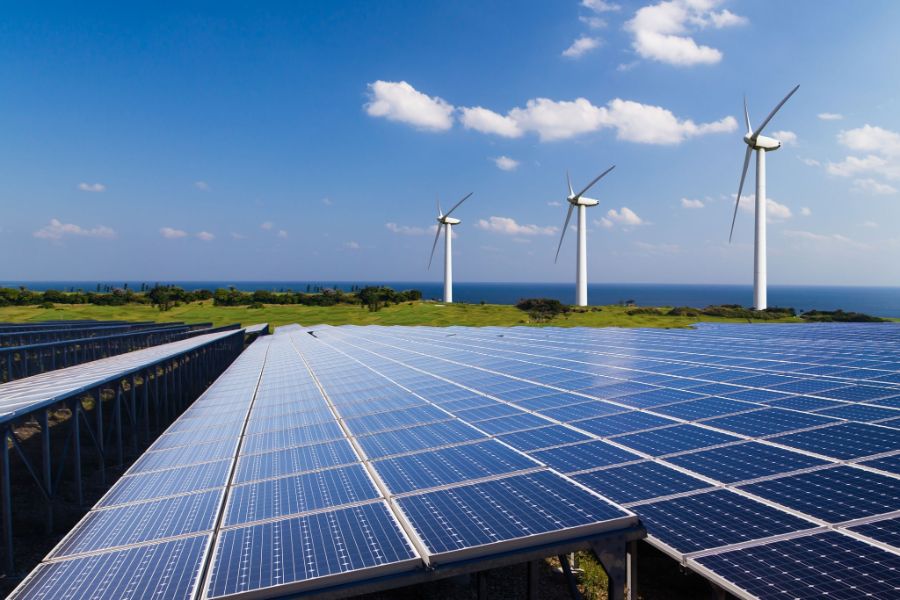
EU energy reform positive but ‘cosmetic’, says Unesid
The Spanish steel sector considers the provisional agreement to reform the EU’s electricity market, reached by the European Council and Parliament on 14 December, to be positive in the short term. However, although it provides all operators with a legal framework that avoids uncertainty, Spanish steel association Unesid deems it to be “unambitious”.
Unesid points out that, despite the government’s and other countries’ attempts, the domestic steel industry would have preferred more forceful measures. “The EU has chosen an almost cosmetic reform that we are not sure will guarantee, beyond good wishes, that our industry has electricity on the competitive terms it needs, and that will allow it to continue with the investments so relevant to those it has to face to complete decarbonisation,” comments Unesid general director Andrés Barceló.
The executive believes the current regulatory agreement may be valid in the short term, but does not guarantee a stable framework for a solid industrial base in the EU beyond 2030, Kallanish notes.
“If the solution to decarbonisation is the electrification of industry, there must be an energy supply at competitive prices because, otherwise, neither society nor companies will be able to address this electrification,” Barceló observes.
Unesid is concerned that the Iberian electricity market is still at a disadvantage compared to other European countries and this represents a great risk to the competitiveness of local steel producers.
The reform is the EU’s long-term response to the energy crisis experienced in 2022 as a result of the Russia-Ukraine war.
The provisional agreement provides the criteria for declaring a crisis, related to a sharp increase of the average wholesale electricity price. It also gives member states the possibility to exclusively support the purchase of new renewable generation, where conditions allow and in line with member states’ decarbonisation plans.
Among other measures, the legislators agreed to introduce an exemption from the application of the CO2 emission limit for already authorised capacity mechanisms, where duly justified.
Todor Kirkov Bulgaria


Salzgitter takes step towards industrial hydrogen production
Salzgitter and its partner Sunfire say they are pushing ahead with rolling out Sunfire’s SOEC electrolyser technology at an industrial scale.
They are now in talks with Technical University TU Bergakademie Freiberg to validate the latest stacks in Salzgitter’s GrInHy3.0 (“Green Industrial Hydrogen”) research project, Kallanish hears from the steelmaker.
According to Salzgitter, high-temperature SOEC electrolysers can produce hydrogen highly efficiently and at low cost effectively. The partners in the GrInHy3.0 research project are integrating the latest SOEC stack technology from Sunfire into the hydrogen network of the Salzgitter Flachstahl strip mill. The facility will produce 16.5kg of hydrogen per hour, which will be used in processes such as the direct reduction of iron ore at the µDral pilot plant.
Eight of the modules are now being replaced after clocking in over 19,000 operating hours and producing 190 tonnes of hydrogen. Two new test modules with an electrolysis output of 540kW will be integrated into the existing infrastructure. They are expected to generate important information for the upcoming serial production. Commissioning is planned for 2024.
The GrInHy3.0 research project will run until 2027 and is subsidised by the Federal Ministry for Economic Affairs and Climate Action.
Christian Koehl Germany

EU applies new UK-specific Northern Ireland steel TRQs
The European Commission has applied a safeguard measure on imports of certain steel products into Northern Ireland from the UK, effective 1 January 2024, Kallanish notes.
The UK has been allocated tariff-rate quotas (TRQs) for supply into Northern Ireland of stainless hot rolled sheets and strips (category 8), stainless cold rolled sheets and strips (category 9), rebar (category 13), large welded tube (category 25.a) and non-alloy wire (category 28). Once these quotas have been exhausted, the “other countries” quota can be used for transfers of goods from the UK to Northern Ireland.
The UK has the following TRQ quotas for Northern Ireland. Stainless hot rolled sheet has 13 tonnes in the first quarter of 2024 and the same in Q2. Stainless cold rolled sheet has 31t each in Q1 and Q2. Rebar has 2,127t in each quarter, welded tube has 14t and non-alloy wire 187t. Any UK-origin imports exceeding the TRQs will incur a 25% safeguard duty.
The Commission published a notice on 6 November explaining the new TRQs were necessary. It did not receive any comments from any interested party.
To calculate the adequate volume of the new dedicated TRQs that would ensure, as foreseen in Delegated Regulation (EU) 2023/2777, the economic viability of these direct transfers to Northern Ireland from other parts of the UK, in view of the specific circumstances in Northern Ireland, the Commission says it analysed the available statistics to calculate the volume of transfers to Northern Ireland from other parts of the UK.
These new TRQs are specifically for UK-origin material and therefore do not affect the allocation or volumes of existing TRQs for third countries into the Union territory.
Adam Smith Poland

Feralpi’s German rebar plant closes for repairs
Feralpi Stahl, the German rebar mill of Italy’s Feralpi Group, says it will stop production for four weeks for repair work.
The stoppage will last from 20 December to around 20 January. Feralpi Stahl notes that such maintenance is carried out every year around this time, but does not state if the duration is the same as in previous years.
Market sources told Kallanish earlier that numerous rebar mills have lowered production in recent months on account of weak demand, and are likely to extend maintenance breaks in winter. Feralpi Stahl has so far been the only mill to make an official announcement to this effect.
This year, the focus at the mill has been on replacing the cradle frame for the melting furnace, which is a solid steel structure on which the electric arc furnace stands and is moved.
In addition, it will undertake a conversion and addition of billet transport systems between the continuous casting plant and the rolling mill furnace. This is a vital measure to create a link between the existing steelworks and rolling mill A, with the ultra-modern, emission-free rolling mill B currently under construction, Feralpi Stahl notes. It adds that rolling mill B is a key facility for the mill on the path to producing green steel in Riesa.
Christian Koehl Germany

Italian plate prices to increase
Italian plate mill asking values are seen increasing by around €30-40/tonne ($32-43) compared to December for material to be delivered in February. Demand is lively and the market is expected to become quiet this coming week amid Christmas holiday stoppages, sources tell Kallanish.
Despite the negative expectations, the fourth quarter has been positive and will be closed with improved results compared to last year. A mill source says they are shipping and selling at full capacity “as if it were a normal month”, when usually December is shorter due to the holidays.
Another mill source says, overall, 2023 was a positive year for plate sales. Expectations for 2024 are also optimistic thanks to the several infrastructure projects expected to start, funded by the EU’s post-pandemic recovery fund.
Plate re-rollers are now quoting delivery at end-January and the second half of February. Contract prices are on an upward trend. On average, S275 grade plate is now fetching between €730-750/t delivered, while S355 is transacted at €20/t higher, sources say. New prices for S275 are expected to be between €780-800/t for S275 and €820-850/t for S355.
A distributor says 2023 has been acceptable with companies managing to cover costs and achieve some earnings. Downstream, the market remains fragile. The distributor says he is working mostly based on customers’ urgent requirements. The strong wave of increases across all products seen in Europe is causing buyers to adopt a wait-and-see attitude and the market to become extremely quiet.
Natalia Capra France