


Acciaierie Venete to buy Ascometal’s French facilities
Italian longs producer Acciaierie Venete has agreed to acquire three facilities in France from special steel producer Ascometal, part of Swiss Steel, the companies reveal.
The Italian steelmakers started negotiations to buy the plants of Hagondange in the department of Moselle, Custines in Meurthe-et-Moselle, Le Marais in the Loire region, and the Ascometal research centre Creas. The move is in line with Acciaierie Venete’s ambition to boost its presence in Europe.
“The French project will allow Acciaierie Venete to consolidate its position and increase its production capacity outside Italy. The move will give the sites a stable future with the support of a shareholder with a sound balance sheet and strong industrial experience. The group, with an ambitious investment plan for the acquired facilities, will allow several synergies, particularly in the field of purchases,” the steelmaker says in a note obtained by Kallanish.
The firm will submit its growth plan to the unions and other stakeholders in the coming months, Kallanish understands. The completion of the merger is expected in the spring of 2024.
“Swiss Steel Group is pleased that Ascometal France Holding has found a reliable and experienced partner in Acciaierie Venete, with industrial synergies, boasting an ambitious plan to strengthen the Asco-metal plants of Hagondange, Custines and Le Marais,” Swiss Steel says. It adds that the divestment is in line with its strategy to focus on core business activities.
“The transaction would allow Swiss Steel Group to strategically channel its investments into areas that promise sustained growth in alignment with its long-term vision and strengthening other production assets such as the French Ugitech,” the company adds.
The remaining two Ascometal plants, Les Dunes in Dunkirk and Fos-sur-Mer, are not included in the merger.
Ascometal produces blooms and billets as well as cold and hot rolled bars and wire rod. Acciaierie Venete produces merchant bar, round bars, billets across three production facilities in Padua, Sarezzo and Borgo Valsugana. it is expanding its product portfolio at its plant in Sarezzo where it will start manufacturing wire rod.
Natalia Capra France


Buhlmann acquires pipe support systems supplier
German pipe distribution and processing group Buhlmann says it will take over Ligesa, specialist in industrial pipe support systems, with effect from 1 January 2024.
Founded in 1964 and headquartered in Zeven in northern Germany, family-owned Ligesa is a leading supplier of industrial pipe support systems and vibration control technology, Kallanish hears from Buhlmann.
It highlights the acquisition as “a special milestone for us because we are expanding our portfolio in the best possible way and entering the field of in-house production”. With a staff of around 1,000, Ligesa operates seven production sites and is active in 80 countries.
Buhlmann Group describes itself as an internationally active trading company for steel pipe, pipe connections, fittings and other accessories, family-owned since its foundation in 1945. Its 65,000-tonne product range includes welded and seamless steel pipe, fittings, flanges and valves for use in demanding environments such as chemical and plant engineering, the oil and gas industry and offshore applications. It employs over 750 people in 16 countries and in the last financial year posted revenue of €457 million ($501m).
Christian Koehl Germany
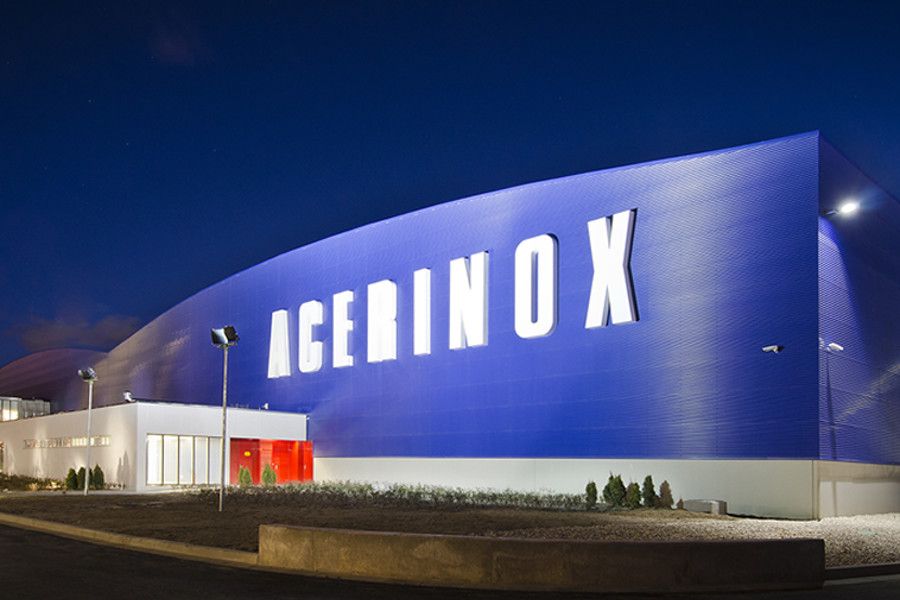
Acerinox joins AI technology development project in Spain
Acerinox has joined Spanish data economy and artificial intelligence consortium IndesIA, the stainless steel producer tells Kallanish.
Its participation shows the company’s interest in leading digitalisation in industrial processes and promoting the use of data and artificial intelligence to improve and transition to new business models, Acerinox says. It also confirms its commitment to AI technology to improve its process optimisation, energy efficiency, predictive maintenance and new product creation, it adds.
“This alliance will help improve competitiveness through automation and optimisation of industrial processes while offering us scalability in terms of data use and AI,” says Acerinox chief executive Bernardo Velazquez. “Thanks to this technology, we will continue to advance in the identification of sustainable models for efficient resource use and in reinforcing the circular economy, an area in which we serve as a role model.”
Members of IndesIA include Gestamp, Navantia, Técnicas Reunidas, Repsol, Telefónica, Microsoft, Airbus, Ferrovial, and Inditex, among other companies.
Todor Kirkov Bulgaria

Italian coil trade goes quiet amid high prices
Italian cold rolled and hot-dipped galvanised coil prices are flattening this week amid slowing trade as the market approaches winter holiday stoppages at the end of this week. Despite the short month, demand has been dynamic, particularly until last week, market sources tell Kallanish.
HDG and CRC asking prices are now at €800/tonne ($875) base ex-works. Italian HDG is fetching €780-800/t base ex-works and some €10-20/t less for CRC, sources suggest. Italian suppliers have sold good volumes on the export market this month at €830-850/t delivered in France and Germany.
There is uncertainty that prices will remain high for second-quarter delivery. A seller says it is quite difficult to shift volumes at the current high values. European producers’ intention is to continue to push up values in January considering the lack of imports. A trader believes that if steelmakers increase prices too much in the new year, the market will stall and buyers will turn to imports. Demand downstream continues to be limited.
CRC supply has been strongly reduced after one local steelmaker stopped producing it. The void is being filled by Asian offers into Europe. Some import transactions from Asian countries took place this month at €710-720/t cfr Italy, Kallanish notes.
Meanwhile, ArcelorMittal is further increasing its quotes for hot rolled coil across Europe (see Kallanish 20 December newsletter). This week, sources in the market are reporting that the mill is offering HRC for the German market at €750/t ex-works. In the Italian market, offers are at €740/t ex works.
The latest quotes indicate an increase of some €20-30/t from the previous levels tabled at the beginning of December. However, transaction prices were lagging €20-30/t behind offer levels before the latest hike.
Natalia Capra France

ArcelorMittal starts using bio-coal converted from wood in Ghent blast furnace
ArcelorMittal has commissioned its Torero plant converting waste wood into bio-coal for use in the blast furnace at its Ghent steelmaking site, the company said Dec. 20.
The first bio-coal made in the Torero plant, through a process called torrefaction, was used in a blast furnace in Ghent Dec. 18 for the first time.
According to ArcelorMittal, the project will reduce annual carbon emissions from the plant by 112,500 mt, reducing the use of fossil coal in the blast furnace.
The Torero plant was expected to convert 88,000 mt of waste wood into 37,500 mt of bio-coal annually.
The produced bio-gas during the blast furnace process is being transformed into ethanol. The ethanol can then be used as a building block to produce a variety of chemical products.
The European Commission approved Eur280 million ($308 million) under EU State aid rules in June to support ArcelorMittal Belgium partially decarbonizing its steel production in Ghent, where it operates two blast furnaces.
The aid, which will take the form of a direct grant and a soft loan, will support the construction of a direct reduction iron plant and of a new electric arc furnace that will substitute one of the two existing blast furnaces.
Natural gas, initially used in the energy mix, will be gradually phased out with the plant that will ultimately be operated using renewable hydrogen.
Platts, part of S&P Global Commodity Insights, assessed North European hot-rolled coil at Eur690/mt EXW Ruhr Dec. 19, up Eur30/mt month on month. The carbon-accounted steel premium for lower carbon emission hot-rolled coil produced in Europe was assessed at Eur110/mt, up Eur10/mt on the month.
Author Laura Varriale


European HRC producers aim for substantial rises in Q1 2024, subdued demand seen as major concern
European hot-rolled coil producers are seeking substantial price increases for the first quarter of 2024, but slow consumption remains the biggest concern, sources told Fastmarkets on Wednesday December 20.
Integrated steelmakers in Northern Europe are targeting €720-750 ($788-821) per tonne ex-works for February-March delivery HRC, Fastmarkets heard.
But those values are yet to be sealed in deals because tradeable values indicated by buyers are around €680-700 per tonne ex-works, with transactions reported within that range in December.
Sources reported several bookings during the week within the range of €680-700 per tonne ex-works for February delivery, but largely for small tonnages.
Northern European integrated mills were said to be largely sold out for February-delivery material, but sources suggested they might still have free volumes for the spot market.
“Mills claim they are booked, taking into consideration tonnages they reserved for automotive industry. In the case that the automotive industry books less, some [HRC] tonnages will be released for spot trading in January-February,” a distributor in the region told Fastmarkets.
Fastmarkets calculated its daily steel HRC index domestic, exw Northern Europe at €695.13 per tonne on Wednesday, up by €4.71 per tonne from €690.42 per tonne on Tuesday.
The index was up by €7.00 per tonne week on week and by €40.13 per tonne month on month.
In Southern Europe, Fastmarkets calculated its corresponding daily steel HRC index domestic, exw Italy at €688.33 per tonne on Wednesday, increasing by €2.08 per tonne from €686.25 per tonne on Tuesday.
The Italian index was up by €13.75 per tonne week on week and up by €53.33 per tonne month on month.
During the second half of December, €700 per tonne delivered (€680-690 ex-works) was largely achieved in deals for HRC in the nation, sources said.
New offers from Italian steelmakers for February-March delivery HRC stood at €720-730 per tonne delivered, while one European steelmaker was offering coil to the nation at €740 per tonne delivered.
On Wednesday, trading was close to zero in Italy due to the seasonal slowdown, but most sources suggested that new target prices for HRC will be achieved in Italy after the Christmas break.
“We don’t have that many buying options given all limitations in place for imports. And output is reduced at the EU mills so buyers will have to pay,” a trading source in Italy told Fastmarkets.
“Slow consumption remains the major concern for the market. We expect end-user demand in 2024 to be 10-15% below the 2023 levels,” he added.
In the secondary market, HR sheet was traded around €770-780 per tonne CPT during the week to Wednesday, but steel service centers said they need to increase downstream prices by “at least €50 per tonne” due to mounting costs.
Import HRC offers to Europe have been very limited recently.
Several sources reported a booking of a large HRC tonnage of India origin to Italy around €640-645 per tonne CFR for February shipment. The booking was reportedly done at the end of the previous week.
On Wednesday, offers from Indian mills to Europe were heard at €650 per tonne CFR minimum.
Turkey-origin HRC with February shipment was offered to Italy at €695 per tonne CFR, including the anti-dumping duty. This level was deemed too high by EU buyers.
