


3 things that will change for global steel markets next year & 3 that won’t
1) Adoption of green steel will pick up pace
Demand for green steel in Europe and Asia is expected to increase and even accelerate following commitments made by governments and steelmakers to decarbonize the sector.
One area of growing focus is the development of low-carbon technologies, which have been backed by strong support from public and private stakeholders through investments. The expected shift will include further capital available from banks/lenders, as people search for standard lending practices and more definitive methods of quantifying and testing a company’s drive toward lower-emission steel.
Such investments have already allowed steelmakers to explore commercially viable technologies and reliable sources of clean energy, such as scrap steel or natural gas-based direct reduced iron, and shift to electric-arc furnace steelmaking, which is less carbon intensive compared with the blast furnace route.
Meanwhile, the EU’s Carbon Border Adjustment Mechanism’s (CBAM) January 31, 2024 deadline for reporting is looming over the markets.
2) China’s steel consumption patterns to continue shifting
The traditional industries that consume steel in China are likely to continue changing, reducing the industry’s previously huge reliance on property and focusing on manufacturing and new infrastructure.
Output of medium-thick and wide steel strip, coated plate, welded pipe, hot-rolled narrow strip, heavy plate, seamless pipe, large-scale steel structure, electrical steel and other types of steel products had seen rapid growth in 2023 thanks to growing demand from new infrastructure, new energy and manufacturing industries such as automobiles, shipbuilding and home appliances. This has offset the demand loss from the ailing property sector, the China Iron & Steel Association said.
Steel consumption in the traditional construction sector is unlikely to maintain as high growth as previous years, while demand from new infrastructure and high-end manufacturing is set to see strong growth, market participants said.
Official data shows that investment in China’s property development dropped by 9.3% year on year in the first 10 months of 2023, while new housing starts measured by floor area tumbled by 23.2%.
During the same period, China’s completed investments in power supply projects jumped by 41.5% in terms of nuclear power, 42.5% for wind power and 71.2% for solar power. The country’s production and sales of new energy vehicles increased by 34.5% and 36.7% year on year respectively in January-November 2023.
3) Turkey HRC import volumes could decrease
Turkey’s hot-rolled coil imports are expected to decrease because of the anti-dumping investigation for HRC imports from China, India, Japan and Russia that started on October 31.
Turkish holders of the inward processing regime certificate are not subject to the duties on the condition that they export their end products. Most flat steel re-rollers used to use their certification for imports of HRC. But because demand has been weak at export markets and export tonnages have been very low, most companies cannot meet the targets to be eligible to get the certificates, market participants told Fastmarkets.
Three things that won’t change:
1) China’s bearish outlook on property market
Market participants expect the Chinese real estate market to continue weighing on steel demand in 2024, especially for rebar, amid continued concerns over property developers’ debt ratio and the eroding investment value of houses.
“The slow recovery of new house sales, sharp reduction in land transactions in the past two years, and high house inventory may continue to slow the start of new construction projects in 2024,” an industry analyst said.
Property developers’ investments into new projects totaled 9.59 trillion yuan ($1.35 trillion) in the first 10 months of 2023, down by 9.3% year on year, according to China’s National Bureau of Statistics.
Market participants do not expect property developers to increase their investment values in 2024.
Steel mills that can produce both flat steel and long steel will restrict the production of long steel but raise that of flat steel, as some of them did in 2023, sources said.
Despite various cities in China having loosened their housing policies, it takes time for investors and house buyers to regain confidence in the property market, acquiring new land for construction and eventually boosting steel demand, market sources said.
2) Uncertainty around downstream demand for ferro-alloys
Concerns about uncertain downstream demand will likely continue to dominate ferro-alloys markets, even as steel producers face their own ongoing uncertainty around their input costs, against a challenging macroeconomic backdrop.
Market participants expect the economic downturn to persist at least into the first quarter of 2024, and likely beyond, with areas such as construction and the automotive continuing to face contraction.
Hand-to-mouth buying by steelmakers will continue to restrict opportunities for small and medium-sized ferro-alloys traders who have been left reliant on back-to-back business due to high trade finance costs amid high interest rates.
3) GCC likely to continue as a net importer of flat steel
Gulf Co-operation Council (GCC) countries will likely continue to be net importers of flat steel next year.
Although the group of countries is mostly likely to have excess steelmaking capacity by 2025 onwards, with huge investment already pumped into future green steel capacity, new capacities are unlikely to start production in 2024. This will leave them still relying mainly on its traditional sources: China, India, Japan, South Korea and Taiwan for the time being.


Tubos Reunidos names Josu Calvo president
Spanish special seamless tube supplier Tubos Reunidos (TR) has appointed a new president, Kallanish learns from the company.
Josu Calvo Moreira becomes a non-executive president. He will replace Francisco Irazusta, who leaves the company after three years at the position.
“Moreira will not have executive functions at TR and will maintain his current position as ceo of Gonvarri Industries, combining this responsibility with the leadership of the board of the group as non-executive president, ” TR confirms.
Carlos López de las Heras becomes the company’s the new chief executive.
Todor Kirkov Bulgaria

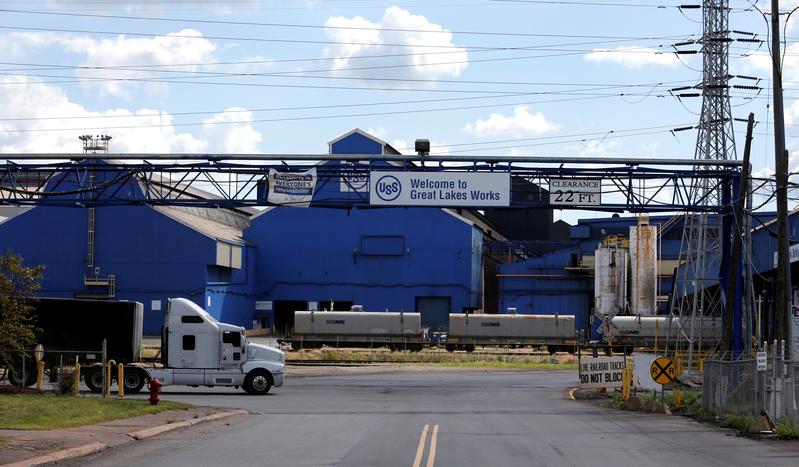
Biden administration pledges to scrutinise USS sale
The director of the US National Economic Council, Lael Brainard, says President Joe Biden’s administration will review the proposed sale of US Steel to Nippon Steel, Kallanish learns.
“The purchase of this iconic American-owned company by a foreign entity—even one from a close ally—appears to deserve serious scrutiny in terms of its potential impact on national security and supply chain reliability,” states Brainard.
The United Steelworkers union is expressing its support for a review by federal authorities.
“The USW welcomes Brainard’s statement and the administration’s assessment that the announced sale of US Steel to Japanese-owned Nippon Steel deserves ’serious scrutiny’ to determine its larger implications for our national security and critical supply chains,” says David McCall, USW’s international president, in the union’s official statement.
Brainard highlights Biden’s efforts to thwart unfair practices in the international steel trade on behalf of US producers. She credits the USW with helping to support these measures.
“President Biden has taken action to protect the US steel companies against unfair and market-distorting trade practices in China and other countries. The USW has been a leader in all of these efforts, and are an example of why union leadership is critical in building the economy from the middle out and bottom up,” notes Brainard.
The USW statement applauds the White House’s support for the USW workers.
“Brainard also rightly highlighted the continuing role that the steel industry and its workforce play in safeguarding our nation, and we agree that our nation’s security interests must remain paramount. The USW appreciates that the White House is taking a larger view, demonstrating once again the president’s unwavering commitment to domestic workers and industries,” McCall emphasises.
Kristen DiLandro USA