


Celsa’s new service centres obtain Aenor’s sustainable certification
Spanish certification authority Asociación Española de Normalización y Certificación (Aenor) has awarded steelmaker Celsa’s three new service centres with the Sustainable N Mark, Kallanish notes. This includes the Illescas facility in the Castilla–La Manch region, Barcelona-based Castellbisbal and Seville’s Dos Hermanas.
“With this recognition, we continue to make progress in building a more sustainable future and we are convinced that the market will increasingly recognise the responsible commitment of companies like ours and choose products that contribute to reducing the carbon footprint, such as our circular steel,” says Celsa Steel Services product director Xavier de la Hoz. “The certification confirms that steel products are sustainable from an ESG standpoint, and it reinforces Celsa’s commitment to achieving net zero.”
Aenor’s N Mark distinguishes more than 100,000 products in 53 countries, recognising sustainability factors through the analysis of 60 product indicators from the industry and construction sectors.
Todor Kirkov Bulgaria

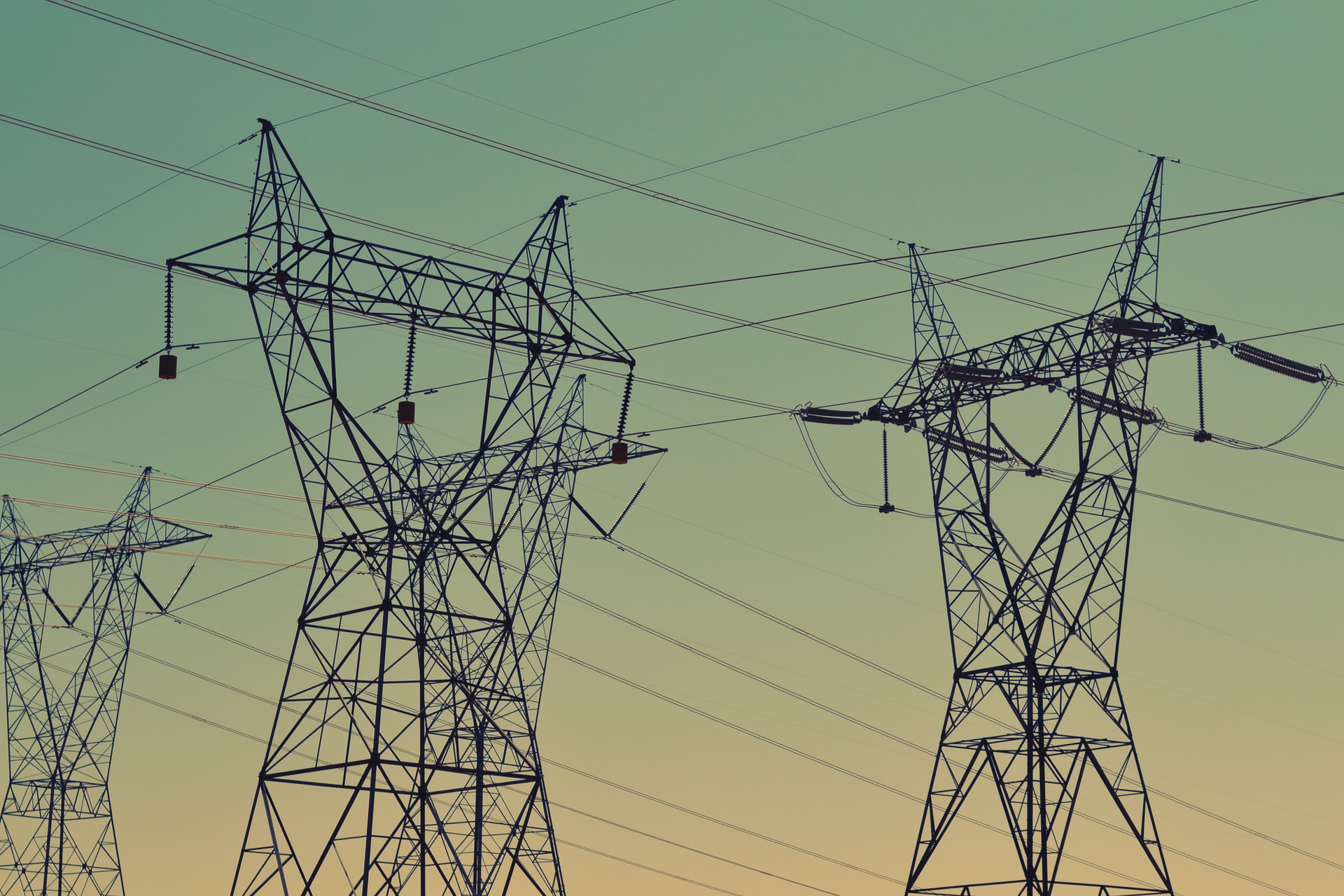
German fabricators bemoan doubling of grid fees
Germany’s steel and metals fabricators are alarmed about a doubling of power grid fees they face in 2024.
Grid operators have announced an increase of the fees from 3.12 to 6.43 euro cents (3.40-7.02 US cents) per kilowatt hour, as the federal government will be axing its subsidies. Fabricators federation WSM is calling on the economy ministry for an explanation for the measure, which will hit companies and consumers, it says in a statement received by Kallanish.
The subsidies used to amount to €5.5 billion, while the total of grid fees amounts to around €30 billion. “Why would this abandonment cause a doubling of fees for us? There is no explanation for it,” says WSM managing director Christian Vietmeyer.
WSM also questions an increase in the total fees, which will rise from €28 billion to €31 billion. “Why an increase of 10%, while regular energy actually drops in price due to lower costs for fuels?” asks WSM’s head of energy and industry policy, Holger Ade.
The federation has called on economy minister Robert Habeck to clarify the hikes. “The government must question these increases, and cannot put them on the shoulders of users and consumers alone. We need a cap and sharing of the pain, and that includes the energy industry,” WSM says.
Steelmakers federation WV Stahl, too, has addressed the topic. It issued a statement by the association of energy-intensive industries (EID), which includes construction materials, paper, chemicals, glass, and nonferrous metals. “In order to survive in international competition, and to achieve the transition to climate-friendly technologies, we need internationally competitive power costs. This includes a stabilisation of grid fees,” EID writes.
Christian Koehl Germany

Rapidly-filling safeguards quotas may support EU HRC price increase in early 2024
As of Friday January 5, around 1.18 million tonnes of HRC in the other countries and regions category were awaiting allocation to enter the EU in the first quarter of 2024, while the quota allowance was 923,594 tonnes, according to EU customs statistics.
Vietnam, Japan, Taiwan and Egypt were the major HRC suppliers to the EU under that category, with Asian suppliers offering the most competitive prices, according to EU market sources.
On the same day, indicative HRC awaiting allocation for South Korea was 60,304 tonnes, 33% of the total allowance of 184,008 tonnes for January-March 2024. Sources suggested that the South Korean quota was also likely to be exceeded.
Before the Christmas break, HRC offers from Asian and Indian mills were heard at €645-660 ($706-722) per tonne CFR to European ports, for February-shipment coil. Turkish mills were offering February-shipment HRC at €695 per tonne CFR, including the anti-dumping duty, which is broadly in line with EU mills.
New offers were to be made at even higher levels from Asian and Indian mills, partially due to freight rates spikes amid the acute Red Sea shipping crisis.
Other individual quotas for HRC for Turkey, India, Serbia and the United Kingdom were filled by less than 5% each as of January 5.
In general, Turkey, India, Serbia and the UK have been filling up their allocations at a slower pace, and prices offered from those countries were close to EU market levels, industry sources said.
Market sources suggested that a lack of competitive imports could support a domestic price rebound for HRC in Europe during January.
“The European mills are being very relaxed now,” a source in Germany said. “They are firmly offering higher prices for February-March delivery HRC because they expect buyers to be short of options with [flat steel] output [in Europe] being reduced domestically and key overseas suppliers are locked-out of the market because of depleted quotas.”
Fastmarkets calculated its daily steel HRC index domestic, exw Northern Europe at €695.00 ($760.43) per tonne on January 5, flat day on day but edging down by just €0.42 per tonne from €695.42 per tonne on Wednesday January 3.
The index was down by €0.50 per tonne week on week, but up by €17.50 per tonne month on month.
Targeted offer prices for January spot trading were reported at €730-750 per tonne ex-works from EU mills.
Meanwhile, the full quarterly quota allocated to hot-dipped galvanized coil grades used by the automotive industry from China for January 1, 2024, to March 31, 2024, was 126,603 tonnes. This quota was exceeded just a couple days after the new quota period started on January 1, with indicative amount awaiting allocation at 197,882 tonnes as of January 5.
The HDG grades traditionally used by European car-makers fall into product category 4B of the region’s safeguard measures.
Any material imported on top of the quota allowance will be a subject to 25% duty, according to EU safeguard measures.
