


Red Sea disruption set to halt Tesla production in Germany
US electric vehicle manufacturer Tesla will reportedly halt most car production at its factory in Germany for two weeks amid delays in component deliveries due to the attacks in the Red Sea.
Attacks by Houthi militants on the key shipping route to the Suez Canal have disrupted maritime commerce, forcing companies to take the much longer, alternative route. Tesla is believed to be the first company to reveal an impact on supply chains after the group stepped up attacks on ships allegedly “bound for Israel,” in support of Hamas.
Reuters said late on Thursday the automaker would suspend most production at its Giga Berlin from 29 January to 11 February. It did not, however, specify what components were preventing the manufacturer from carrying out its production shifts.
“The armed conflicts in the Red Sea and the associated shifts in transport routes between Europe and Asia via the Cape of Good Hope are also having an impact on production in Grünheide,” Tesla is quoted as saying. “The considerably longer transportation times are creating a gap in supply chains.”
The Suez Canal route, which is estimated to account for about 12% of global maritime traffic, is the fastest maritime route from Asia to Europe. The alternative – the East-West route via the southern tip of Africa – adds over 10 days to the trip, potentially running up to two weeks, according to ING Think. Due to the Red Sea disruptions, shipping giants such as Maersk have started taking the Cape of Good Hope route. Already, the number of vessels crossing the Bab el Mandeb Strait – the entrance to the Red Sea – in the first week of January has nearly halved compared to January 2022, says ING economist Rico Luman.
Market players believe other automakers could also be hit by the conflict, since most EV and battery components used in Europe currently come from China and other Asian countries.
Sam Fiorani, vice president at AutoForecast Solutions, wrote on LinkedIn: “Global conflicts have been influencing the automotive supply chain forever, and the growing reach of parts supply is just adding weak points. Now it’s Tesla’s turn to feel the pain, but it’s unlikely to be the last.”
Consultant battery electrochemist, Euan McTurk warns the longer travel would cause “supply chain delays, intermittent halts to production whilst awaiting parts, and reduced vehicle output.”
“This could result in vehicle prices increasing again, both new and used,” McTurk told Kallanish. “Given that this disruption has happened with memories of logistical chaos of the Covid pandemic fresh in everyone’s minds, it’ll be interesting to see if big automotive OEMs move to accelerate the reshoring of component manufacturing and increase the circularity of their supply chains in Europe.”
Tesla did not respond to Kallanish’s request for comment.
According to Veson Nautical, the trip from Taiwan to the Netherlands via the Cape of Good Hope is 3,500 nautical miles longer than via the Suez Canal.


German steel market expects price to remain strong, inventory to strengthen
German steel producers expected steel prices to remain strong during January as mills try to aim for higher prices, according to an S&P Global Commodity Insights survey.
The December index for traders’ sentiment stood at 68.75 points, compared to 80 points in December, data from S&P Global’s German Steel Sentiment Survey showed. The index for producers’ sentiment was at 87.25 points, compared with a December index of 81.25 points, showing that producers were more bullish regarding the near-term price direction. The overall index for prices was approximately 78 points, compared with 81 points for December.
Steelmakers in Europe were aiming for higher prices for their products. One long steel distributor source told S&P Global that European steelmakers were aiming for higher prices driven by strong scrap and power costs.
“Suppliers are talking about a shortage of scrap and they say scrap is mostly being exported since they are getting better deals there,” he said.
The Platts assessment of Northwest Europe rebar was up Eur15/mt week on week to Jan. 10 at Eur635/mt ex-works. Alongside, the Platts assessment of European medium sections price (category 1, S235 JR) increased Eur20/mt week on week to Jan. 10 at Eur790/mt delivered, S&P Global data showed.
On the flat steel side, buyers were expecting an increase in domestic prices despite uncertainties about mills being able to achieve their target levels. Some market participants were also concerned about a lack of real demand amid mills’ bullish targets as major steelmakers restarted idled blast furnaces, which would result in higher supplies in coming months.
Platts assessed domestic prices for hot-rolled coil in Northwest Europe stable day on day at Eur730/mt ex-works Ruhr Jan. 10.
The overall index for German inventory sentiment showed an improvement, reflecting market expectation of an increase in inventory levels in January, with an index of approximately 47 points compared with 35 points in December. The index for steel producers for January was at 37.50 points, compared with 25 points in December. The index for traders’ sentiment stood at 56.25 points, compared with 45 points for December, showing that traders were more bullish regarding the near-term trend compared to producers.
Production levels to increase
European flat steel sources reported the restart of idled blast furnaces from major steelmakers as the new year began amid concerns of a lack of real demand. Overall, the market expected production capacities to increase for January.
The index for production outlook was around 47 points for January, compared with 30.63 points for December. The index for traders’ sentiment was at 43.75 points, up from 30 points December. The index for producers’ sentiment was at 50 points, up from 31.25 points in December, as producers were more bullish regarding production activity compared to traders.
Author: Rabia Arif, rabia.arif@spglobal.com


UK buyers keep their distance as mills post elevated HRC offers
Market activity for hot-rolled coil remained subdued in the UK on the week of Jan. 8 with elevated offers matched against thin buying interest amid an uncertain outlook for demand.
“It is still early days for demand,” a trader source said. “No one is convinced that the higher prices will stick, and buyers are not rushing to jump back into the market following the holidays.”
Offers from European mills were generally heard across a range of GBP680-GBP700/mt with one major European producer heard offering as high as GBP750/mt DDP West Midlands.
Mill sources said that the price increases were reflective of the fact that European production capacity for first quarter delivery is nearly sold out.
Conversely, the near-term demand outlook remains highly uncertain with stockholders suggesting that activity over the next 2-3 weeks will be crucial in determining the outlook for the market.
Market participants estimated tradable values at GBP680-700/mt DDP West Midlands.
Platts assessed the price of domestic HRC in the UK up GBP40/mt from Jan. 4 at GBP690/mt basis DDP West Midlands Jan. 11.
Sources remained concerned about additional supplies coming into the market if major European mills restart their blast furnaces in coming weeks amid an uncertain outlook for demand.
Offers from Vietnamese mills were heard at GBP660-680/mt DDP West Midlands.
Author: Euan Sadden, euan.sadden@spglobal.com

Southern European long steel prices stay elevated on continuing bullish sentiment
All through November and December 2023, rising feedstock costs and small-tonnage restocking resulted in significant rebar price increases in the Italian market, but since then, they have remained largely steady, sources said, with the market only just starting to really wake up after the Christmas and New Year holidays.
Despite sluggish activity activity in the local long steel market following the Christmas closures, mill sources said they were growing more bullish about an impending upturn in demand in the coming weeks.
But demand for rebar was still slow in the week to November 10, sources said, because only a small proportion of market participants had so far returned and Fastmarkets price assessment for steel reinforcing bar (rebar) domestic, exw Italy therefore remained unchanged at €680-690 ($744-755) per tonne on Wednesday.
“This week, there [have been] very few sales, so prices are unchanged from the beginning of January – the real market starts next week,” a trader source told Fastmarkets.
But a producer source said: “Prices keep rising and the market seems very bright even in these first days [after the] winter holidays.
“Producers have all lengthened their winter production stoppages and this is creating problems for clients because key diameters are missing from the market, which is fueling speculative buying,” the source added.
In the Spanish rebar market, meanwhile, prices were mostly static, leaving Fastmarkets’ price assessment for steel reinforcing bar (rebar), domestic, delivered, Spain unchanged at €665-670 per tonne.
Southern European wire rod
Market participants told Fastmarkets they remained bullish about further upward price pressure in the wire rod market amid reduced stocks and high feedstock costs.
“We filled our order books from the end of December,” a wire rod producer source said, “meaning that, for January, there is no big pressure to catch new orders.
“Imports from Egypt and Turkey are expensive at the moment with offers coming in at €610 per tonne to Italian ports, so there is not much appetite for imports at the moment,” the producer source added.
Even so, a trader source told Fastmarkets: “Sentiment is improving across Europe in the wire rod market [and] prices have been rising gradually since early-December – [so] we forecast further price rises.”

European steel hollow sections prices widen upward on rising feedstock costs
Similarly, Fastmarkets’ weekly price assessment for steel sections (medium) domestic, delivered Southern Europe was €800-850 per tonne on Wednesday, widening upward by €20 per tonne from €800-830 per tonne a week earlier.
Trading was muted in the past seven days, with the sections market reopening after the winter holiday, sources said.
“We are not buying yet,” a trader in northern Europe said. “First we need to get used to 2024, and then customers need to start up business again. We will buy [our first material for the year] next week.”
But mills face increasing cost pressures, amid rising HRC feedstock prices, sources said.
Fastmarkets’ daily calculation of its steel hot-rolled coil index domestic, exw Northern Europe was €728.75 per tonne on Wednesday, up by €33.33 per tonne from €695.42 per tonne a week earlier, and up by €43.33 per tonne month on month.
HRC prices across Europe rose on bullish offers and tight supply, but buyers were skeptical of the tradability of higher market levels due to continued weak real steel demand.
Meanwhile, Fastmarkets heard sections prices in Poland at €770 per tonne and in Romania at €740 per tonne, on a theoretical weight basis.

European HRC market digests new offers; deal prices still way below target levels
The index was also up by €36.25 per tonne week on week and by €45.25 per tonne month on month.
Offer prices from major integrated mills in Northern Europe were heard at €800 per tonne ex-works for April-delivery HRC.
Producers in Europe claimed to be largely sold out for March-delivery volumes and therefore felt no urgency to secure sales, sources said.
Buyers, however, considered new offer levels “unworkable” in the current market conditions, with real steel demand being unsupportive of such a massive rise.
“Demand from automotive and construction sectors is very underwhelming. So, I don’t think €800 is even close to reality, even with all supply tightness in place,” a steel-service center source in Germany said.
Buyers estimated achievable levels for HRC in the region at €710-750 per tonne ex-works.
Rare sales were heard in Germany at €720-740 per tonne ex-works.
Deals were sporadic, and mainly for small tonnages of HRC, since buyers had doubts about sustainability of the price uptrend.
“I think €730-750 maximum is an achievable level [for HRC] in the next restocking round. And we really don’t expect booming restocking – we are not going to buy a single tonne [of HRC] more than necessary. I believe this is the attitude among stockholders in general,” a stockholder in Northern Europe said.
In Southern Europe, meanwhile, Fastmarkets calculated its daily steel hot-rolled coil index domestic, exw Italy at €720.00 per tonne on January 11, increasing by €5 per tonne from €715.00 per tonne on January 10.
The index was up by €30.42 per tonne week on week and by €51.67 per tonne month on month.
Trading still was largely on pause in Italy in the week starting January 8, with buyers and sellers seen assessing the market situation.
Several seller sources estimated the market at €770-780 per tonne delivered (€755-765 per tonne ex-works) with March delivery said to still be available from some sellers. Firm offers were still rare though.
Buyers, meanwhile, were pegged the market at €700-720 per tonne ex-works.
“We need to see prices for processed coil in the secondary market pick up first, it’s moving quite slowly,” a buyer source said.
In the secondary market, HR sheet was traded around €800 per tonne CPT at the highest, compared to €780 per tonne CPT in late December.
“To accept prices of even €740-750 per tonne ex-works for HRC, steel-service centers need to sell HR sheets at least at €830-850 per tonne CPT,” a second buyer source said.

European CRC, HDG producers aim for substantial rises but competitive imports
On Monday, leading European steelmaker ArcelorMittal increased its offer prices for flat steel with lead times in the second quarter of 2024.
In Northern Europe, offers from the mill were heard at €920 ($1,007) per tonne ex-works for CRC and HDG. Lead times for both products were April-May at the earliest, sources said.
Some other integrated steelmakers in the region were also heard to be pushing CRC and HDG offers toward €900 per tonne ex-works, but so far, firm offers were still rare.
An HDG offer from Italy to Germany was heard at €850-870 per tonne delivered for March delivery, several sources said.
That was in sharp contrast with buyer’s estimations of achievable prices ranging between €800 per tonne ex-works and €820 per tonne ex-works for CRC and €800-830 per tonne ex-works for HDG.
“It won’t be possible to get a price staring with ‘9’ for CRC and HDG – the demand is not supportive of it, and for CRC in particular there are still some very competitive import offers, so European mills will struggle to increase prices [for CRC and HDG],” a steel-service center source in Germany said.
“Mils in Europe are negotiating long-term contracts with automakers now, and they are pushing up spot price levels accordingly,” a buyer in Benelux area said.
Fastmarkets’ weekly price assessment for steel cold-rolled coil domestic, exw Northern Europe was €800-820 per tonne on Wednesday, up by €20-30 per tonne from €780-790 per tonne on January 3.
And the weekly price assessment for steel hot-dipped galvanized coil domestic, exw Northern Europe was €800-830 per tonne on Wednesday, up by €10-30 per tonne from €790-800 per tonne seven days earlier.
Subdued end-user demand from the key consumers – construction and automotive – was seen as the main problem for achieving higher prices, sources said.
Besides, for CRC, quite competitive offers from overseas suppliers were available to Europe.
Notably, suppliers from Vietnam, Taiwan, South Korea offered CRC at €750-760 per tonne CFR to Antwerp for March shipment.
Unlike for HRC, there are no such problems with quota allocations for CRC, so buyers in Europe were still looking for overseas bookings.
“Asian CRC is still very competitive in Europe and there are no risks with rapid quota exhaustion as with HRC, so achieving a price rise for CRC, especially if we are talking about commodity grades, will be tricky for European mills,” a trader in Southern Europe said.

ArcelorMittal restarts long steel production in Poland, Bosnia
Earlier this month, ArcelorMittal restarted the rolling lines at its wire rod mill in Sosnowiec, Poland, following almost two weeks of downtime. But the facility is operating at a reduced rate, because the demand for wire rod in the country was still subdued, Fastmarkets understands.
“Demand [for wire rod in Poland] is still very weak. There is no restocking, and no demand from construction or any other sector,” a distributor said.
“We restarted the wire rod mill in Sosnowiec on January 2, following a 12-day stoppage,” an ArcelorMittal Poland spokesperson told Fastmarkets. “The mill is still operating a three-shift system, with some employees continuing work at the Dabrowa Gornicza rolling mills.”
In November, ArcelorMittal Poland announced plans to trim its output due to the poor market conditions. The company explained at the time that it intended to undertake two stoppages. The first one ran from November 18 until November 26, while the second was from the end of December until January 2.
The Sosnowiec plant can produce 750,000 tonnes per year of wire rod from two lines, according to Fastmarkets’ information.
Fastmarkets’ weekly price assessment for steel wire rod (drawing quality), domestic, delivered Poland, was 2,900-3,100 zloty per tonne ($731-781) on January 5. This was unchanged since December 8, despite attempts by local mills to push for a price rise.
Meanwhile, a spokesperson for ArcelorMittal Zenica (Bosnia and Herzegovina) told Fastmarkets that the plant was in a preparatory phase for the restart of production.
“If everything goes according to plan in the field, we expect the start-up of the blast furnace in the next few days, followed by the successive start-up of other production facilities,” the spokesperson said.
In November, ArcelorMittal Zenica, located in the Zenica-Doboj canton in the center of Bosnia and Herzegovina, announced that it had temporarily idled its blast furnace, and production was gradually suspended at the rolling lines as well in the face of deteriorating market conditions.
The company explained that it would resume operations when market conditions normalized.
According to Fastmarkets’ information, ArcelorMittal Zenica has a blast furnace with capacity for 1.10 million tpy, and a basic oxygen furnace with capacity for 1.14 million tpy. The plant produces about 800,000 tpy of steel rebar and wire rod.


Italian rebar prices flatten
Italian rebar contract prices are flat on-month. Quiet demand and a general wait-and-see attitude is being reported this week. Post-holiday activity restarted on Monday and not many contracts have been signed so far.
Steelmakers are asking for €400/tonne ($438) base ex-works, sources tell Kallanish. This level has however not yet been achieved in transactions. Sources report purchasing limited tonnages this week at €350-360/t base ex-works. A seller reports the level of €370/t being achieved but, again, for small volumes.
Producers are preparing to pay increased scrap prices this month, expecting €5-10/t hikes compared to last month depending on their needs. Mills continue to face high processing costs. Including extras, domestic rebar is fetching €610-630/t base ex-works. Domestic mesh is meanwhile being sold at about €450-470/t, to which buyers must add transport costs and around €300/t size extras, also flat on-month.
Two sources say they have enough work until the end of the year, thanks mostly to road works and new infrastructure projects that are being financed by the European recovery fund. This is largely offsetting slower orders from the private residential construction sector. Because of several road work projects, demand for mesh is lively, Kallanish hears. Given the high European prices, some buyers are turning to imports. Offers of Turkish material have been heard at $600/t cfr Italy.
Natalia Capra France
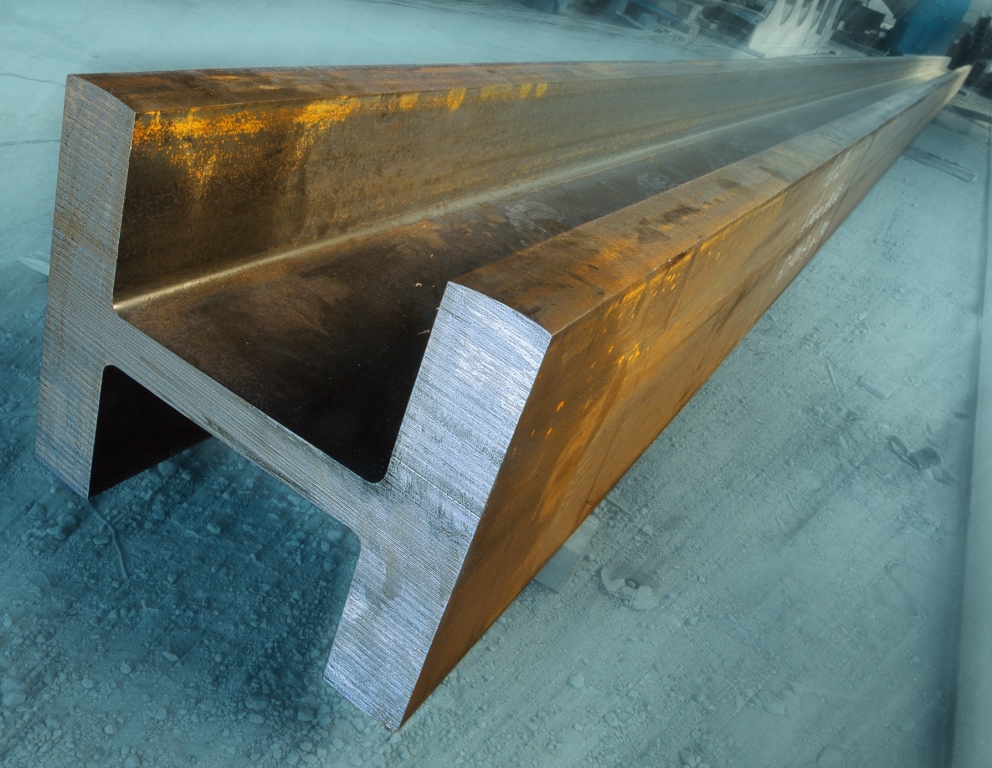
Northwestern Europe sections stable, could see further hike
Prices for beams and sections are expected to stay relatively stable in northwestern Europe going forward, following an attempted hike by mills that brought the maximum to around €750/tonne ($821) delivered.
The upward move represented a rebound from the trough of €680/t in late November. That low point partly had to do with a saturated market and a seasonal reluctance to restock before year-end, but some observers also mention the crisis at Celsa in this context. “It could well be that they shifted material in the market at low prices to generate cash, given the massive debts they have,” one speculates.
According to a Dutch buyer, the market leader mill lifted prices in the last weeks of 2023 to €750/t, and has announced further hikes this year. A German source confirms so, noting that mills have acted fairly synchronised in bringing up prices. Another source notes the hike was justified by costs for energy and scrap, and that distributors were more active before Christmas, placing deliveries for the first quarter of 2024.
Northwestern European prices appear to be below those in Italy, where offers of €800/t are heard. This could have to do with healthier construction activity in Italy. The German source believes that “our market is particularly exposed to competition, so some producers will direct their offer south, where they could earn more.”
Looking forward, “my gut feeling tells me prices will remain stable, or increase slightly, but certainly not dip to the degree they did in November,” he tells Kallanish. The Dutch buyer is more positive with his expectation. “Hikes in the coming days or weeks are quite possible, by €15-25,” he says.
Christian Koehl Germany