

Italian distributors expect market to improve in 2024
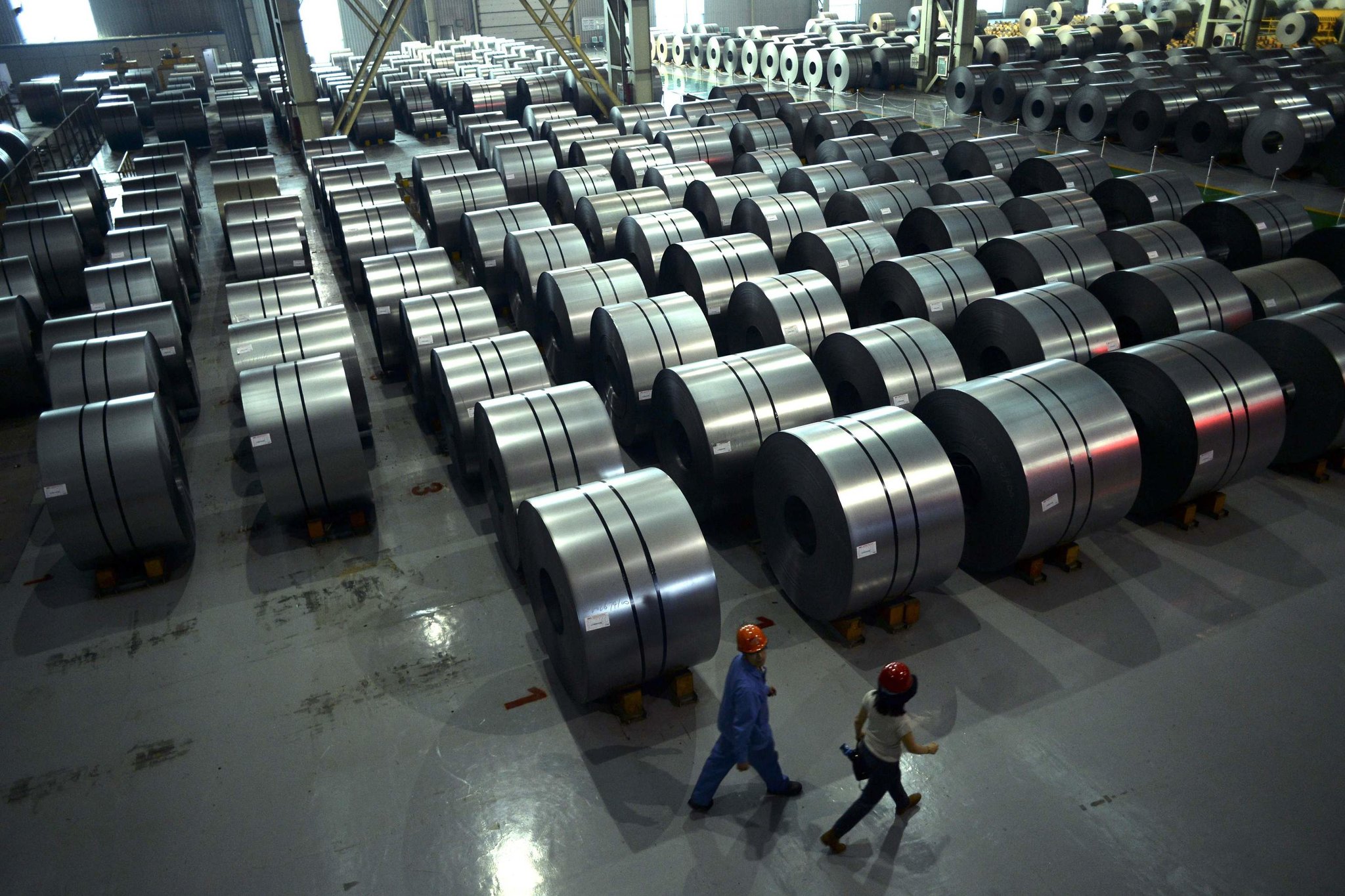
Italian steel trade association Assofermet expects an improvement in 2024 sales and earnings for the local distribution sector thanks to a general positive macroeconomic outlook.
The beginning of this year however is not seen bringing particularly positive changes as consumption is forecast to remain in line with the last months of 2023.
“The improvement in global economies and the end of interest rate hike policies are some of the elements that are driving the positive forecast for the evolution of the market … If it’s true that 2023 was worse than 2022, it is however also true that the results exceeded the pessimistic expectations of 12 months ago,” the association says in its market report sent to Kallanish.
Price reduction was the main trend in 2023 for those involved in the trade and distribution of steel. The bulk of the decline occurred from the second quarter, while during the last three months, the market returned to a stabilisation in prices.
Last year was marked by uncertainty and lower margins for distributors, lower on-year revenue and weaker downstream consumption which caused the drop in prices. The import ban on Russian steel and increase in interest rates in Europe have contributed to generating an excess of supply in the entire EU, Assofermet states.
A similar situation of lack of stability, volume reduction and weaker demand was registered in 2023 in the scrap market, for which the association also forecasts an improvement this year. It points out that besides international and geopolitical issues, the Italian steel market has been strongly impacted by the crisis in the manufacturing industry in Germany, one of the main outlet markets for Italian steel companies.
Natalia Capra France


Celsa’s new chief takes office amid worker mistrust
Jordi Cazorla Pujalte started his role as Celsa Group chief executive on Monday, Kallanish learns from the company. He replaces Francesc Rubiralta who left the steelmaker after a group of investment funds, representing the main creditors of the company, took control of Celsa last November.
Deutsche Bank, SVP, Cross Ocean, Anchorage, Golden Tree, Attestor, Goldman Sachs, Sculptor and Capital Group are among the banks and funds included in the new ownership group.
“Celsa’s current financial situation will allow, by introducing the best market practices, to take the necessary operational measures to position the company as one of the major steel companies at national and international level, committed to the production of recycled green steel,” says Cazorla.
The ceo’s first meeting was with Celsa workers’ representatives on Monday. They asked Cazorla to provide details about the new owners’ industrial and investments plan and how they will ensure jobs. “There is a climate of mistrust towards the management, because it tried to force a restructuring without any negotiation with personnel,” the CC.OO. union says in a note.
Workers have already begun voting on whether to go on strike or approve the proposed plan, the union confirms. They are also pushing the new owners of Celsa to confirm which Spanish companies are in talks to acquire the remaining 20% stake in the group, as agreed in the court-approved restructuring plan. The deadline to find the industrial partner is reported to have been set for mid-2024.
Todor Kirkov Bulgaria

Kirchhoff Automotive, H2 Green Steel sign low-carbon steel delivery offtake deal
Kirchhoff Automotive signed a seven-year agreement with H2 Green Steel for the delivery of low carbon steel to decarbonize its supply chain, the two companies announced Jan. 16.
“The message from our customers is clear, they want to see products with lower CO2 footprint,” said Michael Rank, global executive vice president of procurement at Kirchhoff Automotive.
“This matches our ambitions to be in the forefront of sustainable development in the industry, as well as our legacy where sustainability has always been important.”
The deliveries of green steel to Kirchhoff Automotive’s plants across Europe from H2 Green Steel’s Boden plant will start in 2027. The offtake agreement is reported to be worth Eur130 million, but the two companies did not disclose the tonnages volume.
The two companies will also work together on a circularity initiative where the aim is to send at least 30% of the steel scrap volume back to H2 Green Steel’s electric arc furnaces in Boden for recycling.
For Kirchhoff Automotive, 50% of its supply chain is steel, of which 90% of its carbon footprint is currently determined by the use of conventionally produced steel and aluminum.
In 2022, Kirchhoff Automotive started locating the greenhouse gas emissions in its supply chain (Scope 3), both upstream at suppliers and downstream at customers.
Author Annalisa Villa, annalisa.villa@


Spanish rebar prices rise, construction activity seen improving
Spanish rebar market prices are continuing to rise since December. The construction sector is showing signs of improvement and is expected to increase demand for long products in the first quarter, Kallanish understands.
“The improvement in longs consumption will be moderate since the industry uses the last quarter of 2023 as a reference, when activity and investment remained stagnant,” a Valencia region construction company comments. “Demand growth will not materialise in the way that we expected, but there are already positive signs coming from both private and public construction for stable long steel purchases in Q1 in most of the southern regions.”
Meanwhile, some companies in northern Spain believe the government’s decision-making for industry development and large infrastructure investment has been greatly delayed.
“There remain many unknowns regarding how the commitments that the new administration has made to secure constitutional support, especially from the Catalan nationalists, will affect the sector in general, and this keeps most of the industry indecisive to advance new projects,” a local source observes.
Rebar suppliers say their order books are gradually increasing. “Values are moving up since December in line with the international market. The new levels seem stable and I don’t think they will vary much for the rest of the month. The market situation does not yet allow us to increase our sales margins as we would like, but they are still better than a month ago,” a market participant observes.
16mm material is currently being offered at €390-395/tonne ($424.7-430.1/t) base. Including €262/t size extras and loading expenses, transaction values are at €652-657/t ex-works. Some offers have also been heard at €660/t delivered.
Meanwhile, the price of 6mm mesh with 150x150mm dimensions stands at €179/square meter delivered. The other largely sold quality, 8mm, is offered at €302/m2 on the same basis.
The monthly index for Spanish domestic rebar prices (B-500 SD 12 meter/12mm) increased in December compared to that in the previous month, according to data published by the Spanish Chamber of Commerce. The index stood at 170.62, up 2.53% over November. However, it was 7.9% weaker year-on-year. The index is based on a value of 100 in 2014.
Todor Kirkov Bulgaria

Vestas to use ArcelorMittal’s low carbon-emissions steel for wind turbines
Wind turbine maker Vestas is to use ArcelorMittal’s low carbon emission steel for its wind turbines for the Baltic Power offshore wind farm in Poland, the two companies said Jan. 16.
The steel is produced using 100% steel scrap melted in an electric arc furnace powered by 100% wind energy at the ArcelorMittal steel mill, Industeel Charleroi, in Belgium, Europe’s largest steel producer said.
The steel slabs are then transformed into heavy plates used to make wind turbine towers at ArcelorMittal’s heavy plate mill in Gijon, Spain. The steel of the heavy plate has also the EDP certification, the Environmental Product declaration that it is certificated by an independent party, detailing the complete environmental footprint of the product.
By using low carbon-emissions steel in the top two sections of an offshore tower, emissions will be 25% lower than for a tower made from steel produced via conventional steelmaking. For an entire onshore tower, the CO2 reduction is at least 52%.
Overall, steel constitutes 80%-90% of of the material needed for a wind turbine, meaning Vestas could see a 66% decrease in emission intensity per kg steel.
During 2025, Vestas will start the construction of the offshore wind farm, expected to generate up to up to 1.2 GW and ultimately supply clean electricity to more than 1.5 million households in Poland. Vestas will supply, install, and commission 76 wind turbines for the Baltic Power project, of which around 52 will be made with low carbon-emissions steel.
The Baltic Power offshore wind farm, a joint project of ORLEN Group and Northland Power, will be the first in the world to be built using Low-emission steel produced almost entirely from recycled raw material in an electric arc furnace powered by renewable energy. The use of this material will reduce the turbine’s life cycle carbon footprint by 10%.
Energy transition is gaining momentum in Central Europe and the Baltic Power wind farm is its landmark. Once it becomes operational in 2026, an additional almost 1.2 GW of capacity will be added to the Polish energy system, providing about 3% of the country’s total electricity demand.
In the following years, an additional 5.2 GW will be added, thanks to the construction of further wind farms in 5 new ORLEN Group concessions in the Baltic Sea.
“Being the largest investment in renewable sources in this part of Europe, our project is setting new benchmarks,” Jaroslaw Broda, CEO Baltic Power, said. “The use of low-emission steel from Vestas and ArcelorMittal in our wind farm underscores our commitment to innovation and environmental stewardship. We are proud to lead the way in transforming Poland’s energy landscape as we progress towards completing the construction by 2026.”
Author Annalisa Villa, annalisa.villa@

EU HRC buyers limit purchases to gauge short-term price trend
European buyers of hot-rolled coil limited purchases on Jan. 16 as they tried to get a sense of domestic price trend.
“The market is very quiet,” a Germany-based trader said. “We see limited deals as buyers are trying to understand if the price trend is sustainable.”
EU mills continued to offer April shipment at bullish prices as major producers were sold out for March shipments.
“We have seen stable demand and all our reservations for first quarter have been booked,” a steelmaker source said. “We also predict good bookings in Q2.”
Absence of real demand also concerned market participants as it threatened positive price trend sustainability, contributing to the doubt of the buyers’ additional capacities will come to the market in coming months following the restart of the blast furnaces that had been idled across Europe.
“Demand is lower than expected and lower than in the past year. So, the concerns of the buyers are understandable,” the same Germany-based trader said.
Deals were reported at Eur730-740/mt ex-works Ruhr and some at Eur740-760/mt EXW Northwest Europe. Market participants estimated tradable values at Eur730-750/mt EXW Ruhr. Majority of offers were reported at Eur800/mt EXW for April, May delivery.
Platts assessed the price of domestic HRC in Northwest Europe stable on the day at Eur740/mt EXW Ruhr Jan. 16.
Offers for imported coils were heard even though interest for the same remained dull due to concerns about Q2 safeguard quotas for HRC from other countries, also getting exhausted with no clarity on quotas for Q3.
Asian mills offered Q2 delivery HRC at Eur670-700/mt CIF Antwerp.
Platts assessed the price of imported HRC in Northwest Europe stable on the day at Eur680/mt CIF Antwerp Jan. 16.
Author Rituparna Nath, rituparna.nath@spglobal.

Italian plate prices increase
Italian plate mills are pushing up values by around €30/tonne ($32) compared to December, as expected, for material to be delivered in February. The month started slowly but demand is now picking up, sources tell Kallanish.
In the fourth quarter last year, mills are reported to have sold “significant quantities” and continue to report strong order books. 2024 is forecast to be a positive year thanks to the several infrastructure projects financed by the EU’s post-pandemic recovery fund that are seen starting this year. Mill sources say they achieved good results for 2023 despite some slower quarters.
Contract prices for S275 grade plate are now fetching between €750-760/t delivered, while S355 is transacted at €20/t higher, sources say. New prices are at €780/t for S275 and €830/t for S355.
Slab import prices are at $650/t cfr Italy on average, with Asian producers asking for increasing values of up to $700/t cfr.
Natalia Capra France

European HRC producers maintain offers despite sluggish activity
Fastmarkets calculated its daily steel hot-rolled coil index domestic, exw Northern Europe at €730.63 ($800.15) per tonne on Tuesday, down by €0.62 per tonne compared with €731.25 per tonne on the previous day.
But the index was up by €7.30 per tonne week on week and by €39.75 per tonne month on month.
Most mills in the region could only offer April-delivery HRC, sources said, with target prices at €780-800 per tonne ex-works.
Some mills, however, could still offer limited volumes for March shipment, with offers reported at €730-750 per tonne ex-works.
Some sources pointed out that mills had good books considering the volumes reserved for the automotive industry, and if end users book lower quantities, additional HRC tonnages will be released into the spot market, putting pressure on prices.
“We don’t see any uptick in [end-user] demand, all buyers are quite cautious,” a trading source said.
“We see end-user demand low with the most difficult conditions seen in Germany,” a second trader said.
Alternatively, other sources suggested that mills will achieve higher prices step-by-step, gaining support from reduced supply, restocking and limited and/or uncompetitive imports.
In Southern Europe, Fastmarkets calculated its daily steel hot-rolled coil index domestic, exw Italy at €721.67 per tonne on Tuesday, down by €0.83 per tonne from €722.50 per tonne on Monday.
But the index was up by €16.67 per tonne week on week and by €42.50 per tonne month on month.
Leading European steelmakers were heard offering April-delivery HRC to the country at €780 per tonne delivered, sources said.
HRC from local suppliers for March-April delivery was on offer at €770-780 per tonne delivered, which is equivalent to €755-765 per tonne ex-works.
But sources suggested that it would be possible to book March-delivery coil at €740-750 per tonne delivered (€725-735 per tonne ex-works).
“We haven’t started negotiations for March delivery yet, but I think the March-delivery price [for HRC] could be around €750 per tonne delivered,” a steel service center said.
Some buyer sources estimated tradable values even lower, at €700-720 per tonne ex-works, citing lack of demand and difficulty passing higher prices downstream.
Sources reported Asian HRC offers for late-March shipment at €655-670 per tonne CFR to Italy — notably from Taiwan and Vietnam.
However, sources said that European buyers were “avoiding booking material that falls under the ‘other countries’ [and regions] category due to safeguards-related risks.”
No new offers were heard from Indian mills this week so far, but sources expect offers to be “no lower than €700 per tonne CFR.”
Sources also reported an offer for Turkey-origin coil with March shipment at €730 per tonne CFR, including the anti-dumping duty.
Published by: Julia Bolotova
