


Tata confirms UK BF closures, unions threaten strikes
Tata Steel has confirmed it will close the blast furnaces at its Port Talbot steelworks and cut up to 2,800 jobs. The hot strip mill will continue to operate through the proposed transition period, while downstream units will source imported steel feedstock from Tata Steel plants in the Netherlands and India.
The first of the two BFs will close around mid-2024, with the second unit and coke ovens shutting by year-end. The proposal also includes a wider restructuring across the company, including the intended closure of the Continuous Annealing Processing Line (CAPL) in March 2025. The new electric arc furnace is to be commissioned in 2027.
Of the affected jobs, around 2,500 will be impacted in the next 18 months, with a further 300 impacted in the next three years. This could include the potential “consolidation and rationalisation” of cold rolling assets in Llanwern once the required investments are completed at Port Talbot, Tata says.
Following discussions with the UK Steel Committee, Tata agreed to revise its proposal and continue to operate the hot strip mill.
However, it commissioned an independent study that concluded continued blast furnace production while constructing the new EAF is not feasible. This is because of projected operating costs, the risks of building an EAF in an already operating steel melt shop, and the near end-of-life condition of several heavy end assets.
“The course we are putting forward is difficult, but we believe it is the right one,” Tata chief executive T V Narendran says in a note seen by Kallanish. “Having invested almost £5 billion [$6.3 billion] in the UK business since 2007, we must transform at pace to build a sustainable business in the UK for the long-term. Our ambitious plan includes the largest capital expenditure in UK steel production in more than a decade, guaranteeing long-term, high-quality steel production in the UK and transforming the Port Talbot facility into one of Europe’s premier centres for green steelmaking.”
The proposal to invest in an EAF, predominantly fed by UK-produced scrap, mirrors the successful installation of such low-carbon production facilities in other major steel producing markets such as the US. These have cut emissions whilst guaranteeing production of complex, high-quality steel, Tata Steel says.
“On completion, the programme would transform the competitiveness of Tata Steel UK, secure most of its capability in terms of end products, whilst cutting its carbon emissions by about 85% and the UK’s overall carbon emissions by about 1.5%. The proposal to use UK-sourced scrap as the raw materials for future steelmaking would also maintain the country’s self-sufficiency as almost all of the raw materials for the current blast furnaces need to be imported,” the firm adds.
The steelmaker is offering affected workers a £130m support package including redundancy terms, skills training, community-support programmes and job-seeker initiatives. It has also set up jointly with government a £100m dedicated Transition Board to support affected employees.
Reacting to the news, the GMB and Community trade unions have said “all options” are on the table to protect jobs, including industrial action. “It is an absolute disgrace that Tata Steel, and the UK Government, appear intent on pursuing the cheapest instead of the best plan for our industry, our steelworkers and our country,” they note in a joint statement. “Tata Steel and the UK Government must reconsider their positions in order to safeguard the future of British steelmaking, and head off a major industrial dispute.”
They also criticised Unite the Union for undermining the multi-union proposal by “unilaterally campaigning for discredited fantasy solutions”, urging it to return to cooperating.
Minister for the Economy of Wales Vaughan Gething said: “It is by now clear that the case set out for a future that does not require the scaling back covered in today’s announcement has not been fully explored. A key recommendation, that of operating one blast furnace for a significantly longer period was both economically convincing and underpinned a fair and just transition for TSUK [Tata Steel UK]. This proposal highlighted that the Company could have maintained a significant workforce whilst remaining commercially viable.”
“As Tata Steel has stated, any agreement is subject to relevant regulatory approvals, information and consultation processes, and the finalisation of detailed terms and conditions. We urge the Company not to make any irreversible choices based on the current levels of UK Government support,” he added.
Adam Smith | Poland


Vehicle electrification need closer partnership between metals suppliers and carmakers: Volvo CEO
Car manufacturers will have to work closer together with their suppliers to achieve net zero and governments need to make sure to pass legislation that benefits the supply chain of electric vehicle production, Jim Rowan, CEO of Swedish-headquartered car maker Volvo, said Jan. 18.
At a panel discussion on EV rollout at the World Economic Forum in Davos, Switzerland, Rowan said that 98% of the companies’ CO2 emissions come from scope 3, which is the materials supply side.
“We really need to make sure that we work with suppliers, bringing in legislation from government,” said Rowan. “We need green energy, we won’t get green steel, we won’t get green aluminum unless governments really step up in green infrastructure.”
Many companies in different industries across the value chain are reducing their Scope 1 and 2 emissions by implementing energy-efficient technologies, electrifying processes, and using zero-carbon alternatives, but in order to reduce their Scope 3 emissions, which are indirect emissions associated with their value chain, they need low-carbon raw materials.
Hilde Merete Aasheim, CEO of aluminium producer Norsk Hydro, said at the panel that the current dialogue of the electrification of cars takes place on CEO level and not procurement level. “CEOs set the tone,” she said.
Rowan added that discussing on CEO level would help establishing the long-term partnerships.
“We are not satisfied where we are today. We are chasing the CO2 emissions from bauxite to finished products,” Aasheim said, adding that Norsk Hydro’s current focus is to position itself more in producing aluminum via recycling.
The European market has seen several offtake agreements between car manufacturers and steel or aluminum producers of low carbon emission metals products. German OEM Kirchhoff Automotive secured a Eur130 million supply deal with Swedish steelmaker H2 Green Steel Jan. 17 starting in 2027.
Platts carbon-accounted steel premium for hot-rolled coil was assessed at Eur125/mt Jan. 18, up Eur25 on the week. The Platts low-carbon aluminum Good Western premium was assessed at $225/mt Jan. 18, up $30 on the week.
Author Laura Varriale, laura.varriale@


Italian government begins the process for Acciaierie d’Italia to be commissioned
The Italian government has issued a decree enabling Invitalia, the state shareholder of Acciaierie d’Italia (ADI), to interrupt the shareholder corporate continuity and put the company in extraordinary administration within fourteen days, union sources that met the Italian government told S&P Global Commodity Insights on Jan 18.
The decree is set to be signed on Jan. 19 by the President of the Republic, Sergio Mattarella, and paves the way to remove its main shareholder, ArcelorMittal, the sources said.
The Italian government was working to find a solution for the second largest Italian flat steel producer, but last week failed to find an agreement with ArcelorMittal to inject more liquidity to keep running what it was once the largest European steel company. At the moment only two blast furnaces are operational and production is at its lowest-ever level. The company this week was on the brink of having its gas supply cut and a court said that the Italian gas company Snam could stop supplying energy on unpaid bills, although ADI appealed it.
“ArcelorMittal is not a problem anymore and now there are fourteen days to understand if it actually abandons by acknowledging the errors or abandons asking for compensation for damages, but this will not cause any problem to production continuity, because the Government reiterated that there are Eur320 million available for current management and the possibility of opening to private partners as well. All this will happen after making the plants and workers safe,” Rocco Palombella, UILM union representative, said.
“We reiterate our opposition to the extraordinary administration, which in 2015 made a clean sweep and created a disaster for related companies. However, we have received reassurances from all the Ministries involved on safeguarding employment and on the management of a possible administration which will only be temporary and which aims to find a private investor worthy of the former Ilva,” he added.
With this last move from the Italian government the situation is likely to go back to 2015, when the company, formerly known as Ilva, was put under special administration and then sold to ArcelorMittal in 2018. ArcelorMittal, Europe’s largest and the world’s second largest steelmaker, owns 62% of ADI. The other 38% is owned by Invitalia, Italy’s National Agency for Investment Attraction and Business Development that is part of the Ministry of Economy.
An ADI spokesperson declined to comment.
Author Annalisa Villa, annalisa.villa@
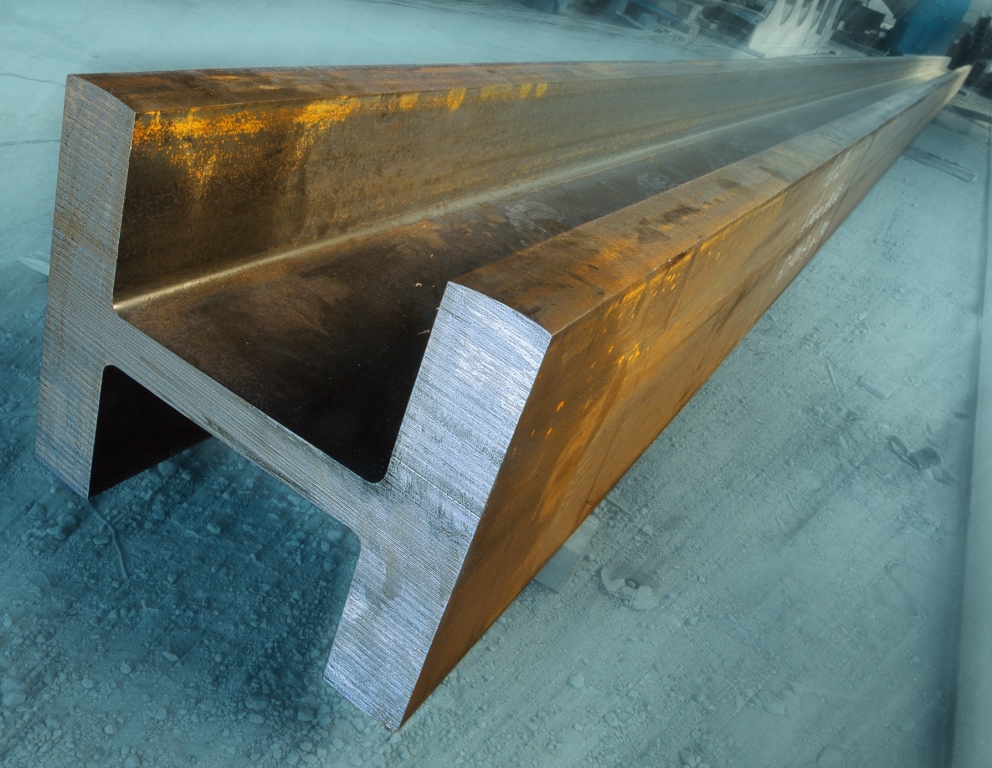
Steel beam prices widen down in quiet European market
Fastmarkets’ weekly price assessment for steel beams, domestic, delivered Northern Europe was €770-800 ($837- 870) per tonne on Wednesday, with the price range widening downward by €10 per tonne from €780-800 per tonne a week earlier.
One trader in northern Europe said there was some demand from stock, given little to no new rolling activity.
“Customers could wait a while before new orders, [especially following December price rises],” the trader said.
But a second trader in northern Europe said that trading activity was expected to soon improve and be slightly stronger than it was in December, with buyers having already held back on buying last month.
Scrap feedstock prices in Turkey’s bellwether market moved down on Wednesday after following an upward trend since January 3.
Sources told Fastmarkets that demand for scrap in Turkey had fallen away slightly amid weak finished steel sales in the country’s export markets and slower finished steel trade in its domestic market.
And Fastmarkets’ calculation of its daily index for steel scrap HMS 1&2 (80:20 mix) North Europe origin, cfr Turkey was $415.10 per tonne on Wednesday, down by $3.83 per tonne week on week from $418.93 per tonne.
Fastmarkets’ weekly price assessment for steel beams, domestic, delivered Southern Europe was €770-800 per tonne on Wednesday, widening down by €10 per tonne week on week from €780-800 per tonne.
Published by: Holly Chant


Lack of demand keeps Southern European long steel prices constrained
Rising electricity and scrap costs means that steel mills are reluctant to reduce their offer prices to encourage sales and market participants remain split over the likely price trend for the rest of the first quarter, Fastmarkets understands.
While some market participants expect to see an upward price trend heading into the warmer months due to the higher input costs, others said the lack of demand would inhibit any moves to increase prices, sources said.
Fastmarkets price assessment for steel reinforcing bar (rebar) domestic, exw Italy was €670-690 ($728-750) per tonne on Wednesday, widening down by €10 per tonne from €680-690 on January 10.
Consumption was subdued in the Italian rebar market.
“The market is quite confused because the producers are asking for €680-690 per tonne, but the buyers don’t want to pay more then €650-670 per tonne,” a buyer source in the region told Fastmarkets.
“A deal was reported at €670 per tonne, but producers will try to move prices up again. The [cost of] scrap has increased and energy costs are likely to increase in the future,” the source added.
Another buyer source said: “The rebar market is a little confused this week because scrap prices [are rising], but rebar demand is not so good. Producers would like to increase their prices, but customers are not buying and are waiting for a decrease.”
Fastmarkets’ price assessment for steel reinforcing bar (rebar), domestic, delivered, Spain was €665-670 per tonne on Wednesday, unchanged week on week.
Wire rod
Fastmarkets’ price assessment for steel wire rod (mesh quality), domestic, delivered Southern Europe, was €640-650 per tonne on Wednesday, narrowing down by €10 per tonne from €640-660 per tonne last week.
And like the rebar market, rising input costs and weak demand resulted in mixed sentiment regarding the future direction of prices.
“Mills are saying they will increase prices, but I am very skeptical that a further price increase will be accepted because [there is very little] demand,” a wire rod buyer source said.
Published by: India-Inés Levy

Prices widen up on slow trading in Europe’s steel hollow sections market
Fastmarkets’ weekly price assessment for steel sections (medium) domestic, delivered Northern Europe was €800-860 ($870- 935) per tonne on Wednesday, widening up by €10 per tonne from €800-850 per tonne a week earlier.
Similarly, Fastmarkets’ weekly price assessment for steel sections (medium) domestic, delivered Southern Europe was €800-860 per tonne on Wednesday, up by €10 per tonne at the top end of the range, from €800-850 per tonne on January 10.
Sources said there had been no fundamental changes to the market since the start of the year, with consumption from the construction sector still weak.
But one trader from Northern Europe said increased trading activity was expected in January, compared with the slower period of trade seen in December.
“The price increase should be workable,” the trader said.
Sections prices in Poland also increased by €10 per tonne, with offers heard at €780 per tonne CPT, on a theoretical-weight basis, a producer source in southeast Europe said.
In Romania, meanwhile, offer prices were stable over the past seven days, at €740 per tonne cpt levels, on a theoretical-weight basis, the producer source said.
“[Hollow sections] prices are rising due to hot-rolled coil price growth,” the source added. “And there is some demand for tubes.”
Fastmarkets’ daily calculation of its steel hot-rolled coil index domestic, exw Northern Europe was €735.63 per tonne on Wednesday, up by €6.88 per tonne from €728.75 per tonne a week earlier, and up by €42.50 per tonne month on month.
HRC feedstock price rises have been driven by limited supplies, but end-user demand remains weak.
Published by: Holly Chant

European HRC prices continue slow climb, increase said supply-driven
Despite the limited trading, prices for steel HRC were seen climbing steadily, gaining strength from reduced supply, sources said.
In Northern Europe, tradeable values for HRC were reported by buyers sources at €730-750 ($793-815) per tonne ex-works, while some sources estimated the market even higher – at €750-770 per tonne ex-works for April delivery HRC.
Transactions were reported at €740-750 per tonne ex-works in Germany and at €760-770 per tonne ex-works in Benelux area.
Producers in the region, meanwhile, were targeting €800-820 per tonne ex-works for HRC with second-quarter lead times.
Some sources, however, expressed doubts about mills’ order books, claiming that in reality shorter lead times were still available at the majority of sellers.
“Despite the wait-and-see [approach of buyers] and weak market, EU steel producers claim to have full orderbooks. But this is questionable because lead times are either normal or relatively fast,” a buyer in the region said.
“Buyers are taking a wait-and-see approach and buying only material what they need and cautiously following market developments,” a second buyer source said.
As a result, Fastmarkets calculated its daily steel hot-rolled coil index domestic, exw Northern Europe at €742.92 per tonne on January 18, up by €7.29 per tonne compared with €735.63 per tonne on January 17.
The index was up by €11.67 per tonne week on week and by €49.79 per tonne month on month.
Meanwhile, in Southern Europe, Fastmarkets calculated its corresponding daily steel hot-rolled coil index domestic, exw Italy at €734.61 per tonne on January 18, up by €4.61 per tonne from €730.00 per tonne on January 17.
The index was up by €14.61 per tonne week on week and by €48.78 per tonne month on month.
Trading in the Italian market was described by most sources as “dead” or “non-existent”, with buyers seen keeping on the sidelines, making only back-to-back bookings.
But most sources agreed that the price of €750 per tonne delivered (around €735 per tonne ex-works) was widely established in deals in the local market.
Offers still stood higher, at around €760-780 per tonne delivered for March-April lead times.
“There are not so many mills able to supply coil in Italy, if we are speaking of domestic market. And imports are quite limited and/or uncompetitive, given all trade restrictions in pace,” an Italian trader said.
Import HRC offers to Italy for late-March shipment from Taiwan, Japan and South Korea were reported at €655-670 per tonne CFR to Italy.
Published by: Julia Bolotova

Low-emission, dimension requirements pose wind plate supply challenge
Despite the abundance of global plate supply, the specific sourcing requirements of the wind power sector are giving rise to concern over supply chain bottlenecks and shortages, says the Global Wind Energy Council (GWEC).
Steel is about one-quarter of the total materials required per MW for onshore wind, but for offshore wind, steel represents 90% all of the materials consumed per MW.
Much steel in wind goes into monopile foundations; for this purpose, the most common grade used is S355 (European standard; equivalent to A572 in the USA). “This is not quite a basic commercial quality grade but it is not far off it, and most if not all plate mills would be able to make this,” GWEC says in its latest report seen by Kallanish.
Product dimension requirements are more demanding, however, tending towards the thicker end of mill product ranges. In extreme cases, plates of up to 150mm thick may be required. Most plate in general demand is 10-60mm thick.
“Achieving optimal physical properties of plate requires a certain degree of thickness reduction from the slab – ideally at least a three-fold reduction. Therefore, to make a 100mm plate you need to start from at least a 300mm slab. Not many mills can go thicker than this, meaning the pool of suppliers able to meet all of the wind industry’s product needs is small,” the report continues.
The origin of the plate is also under increasing scrutiny following Covid-19 supply chain issues and deteriorating geopolitical conditions. Following the war in Ukraine, Russia, previously a major, low-cost supplier, has been removed from many supply chains, while Ukraine’s export capability has been limited.
“But China is the true elephant in the room in this area. China produces more than 50% of the world’s reversing mill plate and is the world’s biggest exporter. Many of China’s plate mills are relatively modern, capable of producing high-quality, wide and thick products,” the report notes.
The US is leading efforts to diversify or ‘de-risk’ away from China. Several western regions have implemented trade defence measures, including high tariffs on Chinese plate. For its part, China has shown that it is prepared to act to restrict its exports of gallium and germanium, GWEC observes.
“Sourcing decisions made in such an environment are complex. It is possible that what looks like a wide range of potential suppliers is reduced, in practice, to a small number of acceptable origins,” the association says.
Low-emission steelmakers using electricity or green hydrogen are capable of producing plate with a Scope 1 CO2 footprint of below 0.4 tCO2/tonne. But they are limited in number. As the wind energy industry is growing rapidly, it may not be possible for all developers to access low-emission steel for several years to come, the report states.
There has been much coverage recently of wind power project cancellations in the US. “Since Covid-19, inflationary impacts on supply chains, shipping and logistics have pushed up capital costs of wind and other forms of electricity generation. Labour expenses have also increased, while the prices of key commodities like iron and steel remain well above pre-pandemic levels. Developers that secured offtake contracts between two and four years ago are experiencing a dramatic shift in total project costs, undermining future revenue certainty and their ability to reach final investment decisions,” the report concludes.
Adam Smith Poland

Kloeckner opens large new facility in Scotland
Kloeckner Metals UK has announced the official opening of its new state-of-the-art stockholding and processing facility in Newbridge, Edinburgh.
Kloeckner claims it is the largest metal stockholding and processing warehouse in Scotland, with an internal space of over 100,000 square feet. This “sets the stage for a transformative shift in the steel and metal processing landscape throughout the region,” Kallanish hears from the company.
Kloeckner Metals UK calls it a strategic move to serving customers in Scotland with greater efficiency, proximity and sustainable solutions. The facility has a stock capacity of 5,000 tonnes of carbon steel, stainless steel, and aluminium. The company highlights its processing expertise, which enables the delivery of a comprehensive range of sustainable solutions to a diverse array of industries, including energy, renewables, oil and gas, construction, fabrication and manufacturing.
“The opening of our new site in Newbridge is a testament to our unwavering commitment to meeting the needs of the Scottish market while actively contributing to a more sustainable future,” says Kloeckner Metals UK chief executive Peter Whiting.
Christian Koehl Germany

Tubos Reunidos reduces debt
Spanish special seamless tube supplier Tubos Reunidos (TR) is reducing debt in compliance with its strategic plan, Kallanish notes.
The company has held an auction among the financial institutions holding convertible debt in shares, buying this at a discount. This resulted in a debt reduction of €107 million ($116.4m). In addition, TR has allocated €7.5m for repaying all special financing provided as Covid-19 support by the Spanish Credit Institute (ICO) in 2020.
“These actions represent one step more to achieving the stability of the company and the execution of our strategic plan,” says TR chief executive Carlos López de las Heras.
The group’s new steelworks came into operation in October, significantly boosting TR’s competitiveness. “Our higher-added-value production is linked to the energy transition and decarbonisation processes and will allow us to address new markets and sectors of activity. With this investment we have practically completed our industrial reorganisation, guaranteeing solid growth,” the ceo adds.
In 2019, TR reached an agreement on the terms and conditions of the refinancing of its debt with its main creditor banks, in which tranches of convertible debt and convertible bonds were structured for an initial amount of €172m (see Kallanish passim).
Todor Kirkov Bulgaria