


Benteler supplies Stabilus with ‘green’ steel tube
Benteler has supplied its welded CliMore Ambition tubes for the first time to an end customer, the Stabilus Group, a supplier of motion control solutions, where they will be used to manufacture gas springs.
Benteler Steel/Tube introduced the new brand for sustainable steel tubes last autumn. The first quantities of seamless tubes were placed with European distributors at the end of last year. This has now been followed by the first delivery of welded tubes made of CO2-reduced steel from Benteler’s electric steel mill in Lingen direct to an end customer.
CliMore covers all CO2-reduced steels and steel tube products in Benteler’s Steel/Tube division and categorises them in three sustainability categories: Advantage, Ambition and Excellence. These indicate how the steel was produced and which energy sources were used for it, Kallanish understands.
For the Ambition level, green electricity is used in the tube mills and for the operation of the electric arc furnace. This results in a reduction of up to 85% in CO2 emissions. In addition, the highest level, Excellence, will focus in future on electrification of the plants or use of green hydrogen, Benteler explains.
Christian Koehl Germany

Liberty Dunaújváros, Audi Hungaria discuss cooperation
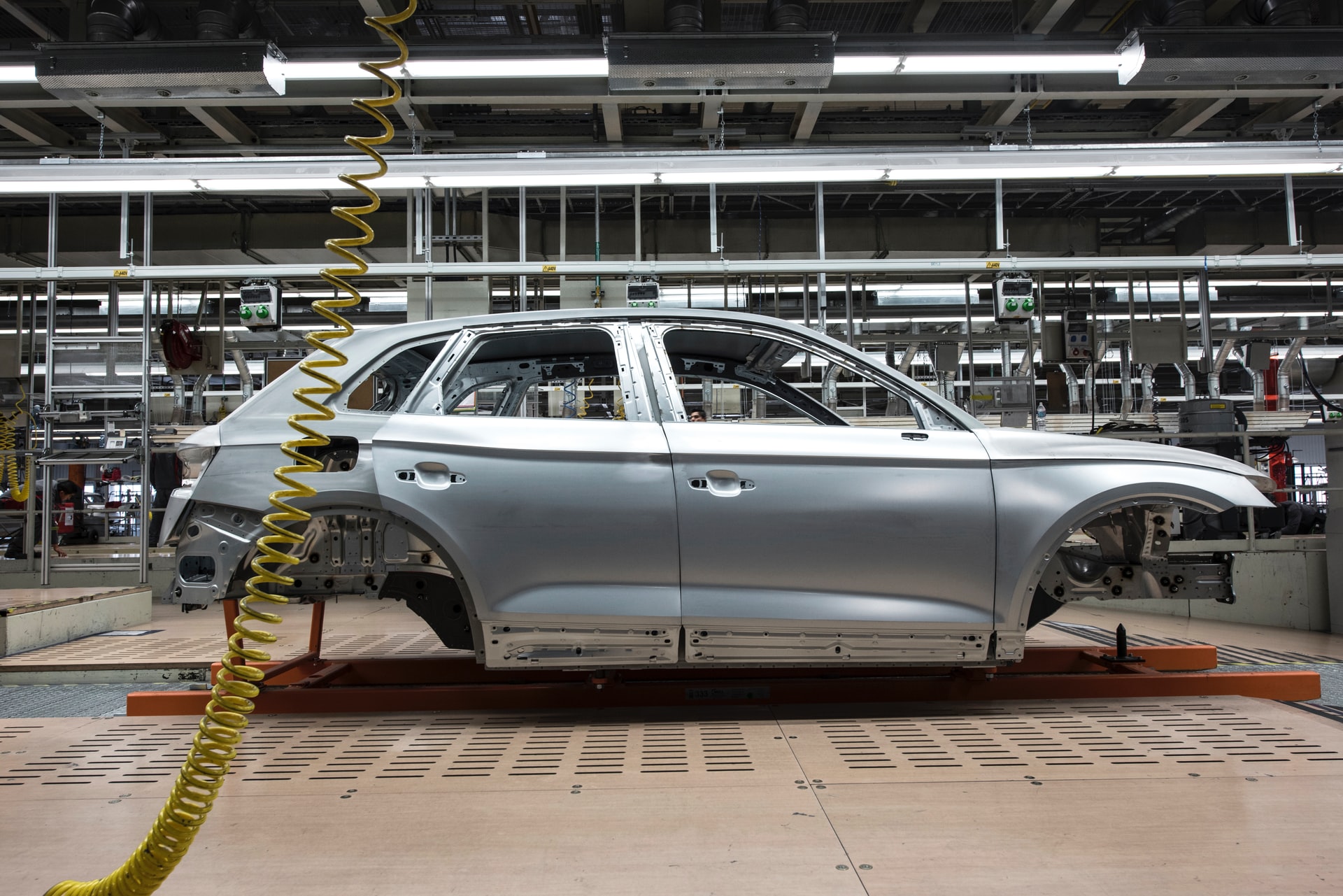
Liberty Dunaújváros (Dunaferr) management hosted Hungarian state secretary Gergely Fábián and Audi Hungaria chairman Alfons Dintner this week to hold initial discussions on future cooperation between the steelmaker and carmaker.
Dunaújváros highlighted its long-term track record in producing high-quality steel products for the international automotive industry and outlined its ambitious plans to produce “GREENSTEEL” over the next few years, a Liberty Steel spokesperson tells Kallanish. The delegates were given a tour of the Dunaújváros hot strip mill.
“We believe the LIBERTY Dunaújváros steel works can be at the heart of the automotive industry’s green revolution, which will see an even greater reduction in vehicle emissions. We look forward to continuing our discussions with Audi in the future,” says Liberty Steel Group European president Ajay Aggarwal.
Earlier this month, the Hungarian steelmaker said its rolling mills, including its hot-dip galvanised line, completed their first January campaign for specific customers, and were “on course” for their next campaign later this month (see Kallanish passim).
According to Hungarian press reports, the Dunaújváros rolling mills’ restart is the first step in its 100-day programme aimed at increasing capacity utilisation, improving efficiency and preparing for an expected market demand recovery.
According to sources, the remaining working blast furnace at Dunaújváros remains idled.
Last summer, Liberty and China’s CISDI Engineering Co. signed an agreement with the Hungarian Ministry of Economic Development to develop a decarbonisation pathway shifting Dunaferr from coal-based steelmaking to EAF technology. This will see the installation of a new 150-tonne capacity EAF to be supplied by CISDI.
Adam Smith Poland

Red Sea crisis spares German steel for now
Germany’s steel industry has not yet been affected significantly by the Red Sea shipping disruption caused by Houthi and pirate attacks on vessels trying to access the Suez Canal. Many vessels have opted to take the longer route around the Cape of Good Hope, or are considering to do so.
Thyssenkrupp Steel has not yet experienced supply bottlenecks, the company said in a statement published by Reuters. The news agency stated that the group is nevertheless thinking about alternatives, should the situation escalate. “The logistics departments of our units are in close touch with transportation partners to be able to react flexibly,” it quotes the company as saying.
Thyssenkrupp did not reply to inquiries from Kallanish.
Effects further downstream in the steel supply chain are being anticipated by market players. “The detour around the Cape will cause extra costs for transport, and, not least, for insurance,” a manager of a cold-roller company points out to Kallanish. This will mean higher prices for steel imports, “and I believe that [ArcelorMittal] is already taking advantage of this circumstance with its latest price increases”, he adds.
Christian Koehl Germany

Italian stainless flats market continues to drag
Stagnation is persisting in the Italian stainless flat steel market in the first month of the year. Service centres and re-rollers are seeing a prolonged negative performance for finished product sales. Consumption is not forecast to improve in the first quarter, sources tell Kallanish.
Demand downstream remains weak, as do prices for coil derivatives. Coil values are now beginning to descend, despite mills trying to keep values high due to elevated production costs. Distributors’ stocks are reported as medium in Italy. Distributors and service centres, as well as tube-makers are buying low quantities or not buying at all, instead satisfying demand with their stocks.
Service centres say hot and cold rolled coil prices are too high, and forecast values to decline in the coming weeks by €30-50/tonne ($32-50). Mills in Europe are said to be more willing to negotiate now and are quoting February and March lead times.
With no change seen from Q4 2023, Europe is being affected by low demand and consumption, with some companies said to be in a difficult financial situation.
CRC is seen at about €2,430-2,450/t in Italy and HRC levels are at some €120-130/t less. In the rest of Europe, values for CRC are also below €2,500/t, at about €2,470-2,480/t delivered. Distributors and service centres are chasing volumes, putting pressure on sheet and tube values. No short-term recovery is forecast.
Some CRC from Asia has been sold in Italy at €2,200/t cfr, while HRC can be found in India at €2,000/t cfr. Imported material however requires a 3-4-month delivery time, which discourages buyers. A service centre says its results are about 15% lower than last year, while another talks about a 20-25% reduction.
Natalia Capra France

European HRC prices remain below official offers; sentiment still largely positive
Fastmarkets calculated its daily steel hot-rolled coil index domestic, exw Northern Europe at €744.00 ($809) per tonne on Friday, up by €1.08 per tonne from €742.92 per tonne on Thursday January 18.
The index was up by €12.12 per tonne week on week and by €53.58 per tonne month on month.
In Northern Europe, offers of April-delivery coil were heard in the range of €780-800 per tonne ex-works. One mill was heard to be seeking €800-820 per tonne ex-works.
An offer was reported from a German supplier at €750 per tonne ex-works.
An integrated mill in the Benelux area was reported to be accepting bids at €760-770 per tonne ex-works.
Several sources said that mills are able to offer shorter lead times than announced.
“Officially, producers in Northern Europe claim to only have second-quarter delivery coil, but when it comes to a deal, some can still offer lead times in March,” a steel service center in the region told Fastmarkets.
Tradeable values for HRC were reported by most buyer sources in the range of €730-750 per tonne ex-works.
Transactions were reported at €740-750 per tonne ex-works in Germany for limited tonnages.
“Demand is still low. Customers do not believe in €800 [per tonne ex-works for HRC]. Mills still can take orders at €730-760 [per tonne ex-works],” a buyer in the region said.
Meanwhile, Fastmarkets calculated its daily steel hot-rolled coil index domestic, exw Italy at €735.42 per tonne on Friday, up by €0.81 per tonne day on day from €734.61 per tonne.
The index was up by €13.75 per tonne week on week and by €49.17 per tonne month on month.
Offers from Italian suppliers of March-April delivery HRC to Italy were heard in the range of €760-780 per tonne delivered, equivalent to €745-755 per tonne ex-works.
Sources estimated tradeable values at €740-750 per tonne delivered, equivalent to €725-735 per tonne ex-works.
One European mill was heard offering April-delivery HRC to Italy at €780 per tonne delivered.
March-delivery HRC of Serbian origin was heard offered to Italy at €790 per tonne delivered.
Offers of HRC from Asia to Italy were still rare due to risks related to import safeguards and the Red Sea shipping crisis, sources said.
Several sources reported a booking of Turkey-origin coil to Italy at €695 per tonne CFR for end-March shipment, including anti-dumping duties.
Published by: Julia Bolotova

Metinvest, Danieli, Mimit plan €2 billion, 3 million tpy steelmaking facility in Italy
The project would be financed through government grants and external investments totaling about €2 billion ($2.2 billion), a joint statement on the website of Italy’s Ministry of Economic Development (Mimit) said on Wednesday January 17.
“Now, feasibility studies will be carried out at the site [in Piombino]; after that, the binding contract will be signed, outlining specific obligations of the parties,” a source familiar with the matter told Fastmarkets.
Liquid steel production at the Piombino site was stopped in 2014, when a blast furnace with capacity of 2.4 million tpy was idled; it has been operating as a rerolling site since then, Fastmarkets understands.
“This project, with capacity of around 3 million [tpy] of steel, will play a crucial role in Italy’s green transition by implementing sustainable and environmentally friendly industrial practices,” Yuriy Ryzhenkov, chief executive officer at Metinvest Group, said in the joint statement.
The production route for this 3 million tpy facility would most likely be based on electric-arc furnaces for processing direct-reduced iron, Fastmarkets heard.
“Additionally, it will help boost the utilization of our iron ore mining and processing plants in Ukraine, driving their modernization to produce high-quality pellets,” Ryzhenkov said.
Metinvest’s iron ore operations in Ukraine are operating at 35-45% of capacity. Logistics issues, including Russia’s blockage of Black Sea ports, are the major obstacle for production ramp-up, market sources said.
Ryzhenkov has said that Metinvest would consider investing in a new steelmaking asset in Europe.
“The purpose of the industrial project is to develop, build, own, operate and maintain an environmentally sustainable plant for the production of finished steel products obtained through the transformation of ferrous materials into hot-rolled coils subject to further processing, to be produced in Piombino on an area of about 260 hectares,” the joint statement said.
“This agreement is an important first result that will lead to the construction of a plant that will be one of the first fully digital plants and will have a major positive impact on employment,” Gianpietro Benedetti, president at Danieli Group, said in the statement.
JSW Steel and Piombino
India’s JSW Steel acquired the Piombino site from Algeria’s Cevital in 2018. JSW Steel Italia operates three rolling mills in Piombino that make rail, wire rod and bar products and rely on billet and bloom shipments from its parent company.
JSW had announced plans to resume steelmaking in Piombino, but they were never implemented.
Sources familiar with the matter said the Italian government is seeking an agreement with JSW to develop rail production in Piombino.
On Thursday January 18, Minister Adolfo Urso met with Sajjan Jindal, CEO of the JSW Group, to discuss plans for relaunching the Piombino steelmaking hub.
“The meeting made it possible to define the modalities of the new program agreement, aimed at resuming rail production,” a statement on Mimit’s website said.
“In the next few days, the memorandum of understanding between Mimit and JSW will be signed — which, as in the case of Metinvest, will identify timing and procedures to allow the two production projects to be developed in the steel industry,” the statement added.
Published by: Julia Bolotova

Tata Steel to shut hot metal production at Port Talbot by end-2024, install EAFs in 2027
The announcement was made by the company on Friday, after a meeting with representatives of the trade unions in London on the previous day.
The rumors about hot-end closure at the Port Talbot site first emerged in autumn 2023, and on January 19 Tata Steel UK confirmed its plans to shut the BFs down, but keep the hot-strip mill operational.
“Port Talbot’s two high-emission blast furnaces and coke ovens would close in a phased manner, with the first blast furnace closing around mid-2024 and the remaining heavy end assets would wind down during the second half of 2024,” the company said in its press release.
The hot-strip mill will remain operational through the proposed transition period and in future. On top of that, the company’s downstream and steel processing centers would also keep working.
The steel slab for production would be supplied from Tata Steel plants in the Netherlands and India, as well as “other select strategic suppliers,” the release said.
Port Talbot green transition
Tata Steel plans to replace the existing blast-furnace basic-oxygen furnace (BF-BOF) production route at Port Talbot with the more eco-friendly EAF route, Fastmarkets reported.
The total capital costs of Port Talbot’s green transformation would amount to £1.25 billion ($1.59 billion) including a £500 million government loan that Tata Steel UK secured previously.
The combined capacity of the new EAFs at Tata Steel would be around 3 million tonnes of crude steel per year.
Tata Steel pointed out that the new EAF would be fed by predominantly UK-produced scrap. That means that the company would need to buy high-quality scrap grades with lower impurities that are suitable for flat steel production.
The UK is a net scrap exporter, but with new EAF-based steelmaking capacities coming online, it could become an importer of certain grades, sources suggested.
Currently, the UK is one of the largest exporters of steel scrap in the world, after the EU-27 and the US, with 2022 outflows reaching 8.24 million tonnes, according to the Bureau of International Recycling (BIR). In January-June 2023, the UK exported 3.68 million tonnes of steel scrap, down 10.5% from 4.11 million tonnes in the same period of 2022, according to the BIR.
The new EAFs at Port Talbot are expected to be commissioned in 2027, and the proposed investment would reduce the site’s carbon emissions by around 5 million tonnes per year.
According to Fastmarkets’ information, Port Talbot is equipped with two BFs with a combined capacity of 5 million tpy and two BOFs with a capacity of around 4.8 million tpy. The site at Port Talbot produces hot-rolled and cold-rolled coil, as well as tubes.
According to Tata Steel UK’s press release, the company has rejected the proposal of the UK multi-trade union representative body (UK Steel Committee) to keep one of its BFs at the Port Talbot site operational during its transition toward low-carbon production.
Notably, Tata Steel pointed out that such decision would not be financially feasible.
Unions’ reaction; strike possibility looms
The hot flow closure at Port Talbot would potentially result in 2,800 jobs cuts, the company said, with 2,500 of that coming within the next 18 months.
The company said it would support employees affected by the transformation plan and, jointly with the UK and Welsh government, established a transition board with £100 million funding for short-term support and long-term economic regeneration, according to the company.
Trade unions have expressed their disappointment over Tata’s decision to proceed with the BF closures and warned of possible industrial action.
“This is of course extremely disappointing. In one area, the company did accept the multi-union recommendation, which is to keep the hot-strip mill open to roll slab over a transition period, supporting hundreds of jobs there, but Tata have rejected our broader proposals to safeguard production capacity and protect jobs,” the steel unions Community, Unite and GMB said in a joint statement on January 19, seen by Fastmarkets.
“Unite is ready to use everything in its armory to defend steel workers and our steel industry. We have detailed research demonstrating how and why Tata should be expanding UK steel production in line with growing demand, not slashing its workforce. We have secured funding from a future Labour government that could do this. Tata’s plan to close the blast furnaces is simply industrial vandalism on a grand scale,” Unite general secretary Sharon Graham said.
The Community and GMB trade unions said they do not accept Tata Steel’s rejection of the multi-union plan to keep BFs operational during the transitional period.
The unions said they will consult on next steps, stressing that “all options to protect jobs are on the table, including industrial action.”
Lee Allen in London contributed to this report
