


Steel sector unsettled by Red Sea shipping crisis
Attacks on cargo vessels destined for the Suez Canal will reduce the influence of new Asian steel import offers after revised shipping routes increased costs and extended delivery lead times.
Some Asian steelmakers withdrew from the European market following the addition of around USD75 per tonne in shipping costs and three weeks of transit around South Africa’s Cape of Good Hope. Major shipping companies, including Denmark’s Maersk, have diverted all vessels away from the Suez Canal. In normal circumstances, 15% of global shipping traffic passes along the route.
MEPS research partners report that the crisis has prompted a variety of responses from Asian steelmakers. Some have shifted to FOB offers, leaving steel buyers to make their own transport arrangements, while other offers exclude the payment of duties.
Arising in the same month that embedded carbon emissions reporting gets underway under the EU CBAM regulations, the challenges severely reduce the appeal and availability of imports. MEPS respondents suggested that this would help to consolidate the higher prices offered by European mills during January.
Wider economic impact
The Houthi rebels responsible for the Red Sea attacks have reacted defiantly to retaliatory action by the United States Navy and United Kingdom’s Royal Navy. Their response has heightened concerns about the longer-term impact on the European economy.
Since Russia’s invasion of Ukraine, the EU has increased its imports of oil and liquefied natural gas (LNG) from the Middle East, via the Suez Canal. EU economy commissioner Paolo Gentiloni has warned that the Red Sea crisis could lead to a spike in energy prices.
Meanwhile, Tesla, Volvo and Suzuki have all announced the suspension of production at their European factories due to supply chain issues.
Economists believe that the EU’s key economies could experience the return of rising inflation if the shipping issues are not resolved quickly. This would negatively affect confidence in the steel sector. MEPS research partners remained hopeful that declining inflation will lead to lower interest rates as 2024 progresses – stimulating the construction sector and consumer spending.
Inflation in Germany rose from 3.2% to 3.7% in December, ending five months of decline. Energy products increased in price by 5.3% year-on-year in 2023 after an increase of 29.7% in 2022. The United Kingdom experienced its first rise in inflation in 10 months, meanwhile. UK inflation rose from 3.9% to 4%.
Overall eurozone inflation increased from 2.4% in November to 2.9% in December. This was largely attributed to the phasing-out of government energy subsidies.
EU safeguard quotas
Elevated raw materials prices and energy costs were among the factors that prompted steelmakers to raise their offers in January. Reduced domestic steel production and the limited import offers also contributed to the shift.
Tariffs will apply to certain imports after several EU steel safeguard quotas were quickly filled in the first week of January. The 923,594 tonne ‘other countries’ hot rolled coil quota was exceeded by 18.37% on January 4, with a further 169,658 tonnes awaiting allocation.
Hot dipped galvanised coil imports from China in the automotive-specific 4B grade also exceeded the 126,603-tonne balance by 52%. A further 65,499 tonnes of that material was awaiting allocation as of January 4.
Market participants are already looking towards quarter two with the expectation that EU safeguard quotas will be quickly filled.
Domestic producers are likely to welcome the reduced competition from imports, but conflict in the Middle East means that uncertainty remains.
This content first appeared in the January edition of MEPS International’s European Steel Review. The monthly report provides subscribers with steel prices, indices, market commentary and forecasts from across Europe.

Lobbying commences for Nippon acquisition of US Steel
Nippon Steel confirms to Kallanish that its executives have met with members of the US Congress to promote the Japanese company’s proposed acquisition of US Steel (USS).
A Nippon Steel spokesperson in Japan on Thursday tells Kallanish that meetings with individual members of Congress have taken place over the past few business days. The sessions were meant to “discuss how this acquisition will be beneficial to all stakeholders, including American industry and workers,” the spokesperson says without commenting further.
According to news reports, among the lawmakers whom Nippon visited was Senator John Fetterman, a Democrat from Pennsylvania. Fetterman had aggressively criticized the prospective merger, calling it “absolutely outrageous” that Pittsburgh, Pennsylvania-based US Steel would sell to a foreign company (see Kallanish 20 December).
The Nippon visits on Capitol Hill mark the beginning of formal lobbying to convince US officials that the acquisition would be in the best interest of Americans. President Joe Biden’s administration is reviewing the offer to determine if it poses risk to national security, competition, supply chain resilience, trade flows or domestic steel jobs, suggesting that the process may take as long as one year.
Former US treasury secretary Lawrence Summers has come out strongly in favor of the Nippon-USS merger and urges the Biden’s administration to approve it.
“The result will be the infusion of more capital into the US steel industry,” Summers states during a segment on Bloomberg TV’s “Wall Street Week.”
Summers adds that he hopes the government reviews will not end up as “a cloak for protectionist pandering.” He calls Japan a “staunch ally” and therefore “there is no remotely plausible national security rationale” for blocking the deal.
The public and private lobbying comes at a time when the market is learning more about Cleveland-Cliffs’ failed offer for US Steel last year. Originally Cliffs offered $35 worth of cash and stock for each US Steel share, trading under the single-digit ticker X. Now there are reports that Cliffs later sweetened the pot with an offer that added up to as much as $54/share.
However, that bid would be much more complex for US Steel shareholders to assess, because of the combination of cash and stock and a proposal for major divestitures in an attempt to satisfy US antitrust regulators. Market participants say US Steel shareholders and customers much prefer the straightforward Nippon all-cash offer.
A midwestern flat-steel distributor calls the Cleveland-Cliffs offer “a true antitrust case” that would be highly undesirable to US Steel customers.
“Cash is superior to CLF stock!” adds that distributor, referring to Cleveland-Cliffs’ three-digit stock ticker. “USS shareholders don’t want CLF stock. … If this administration doesn’t like sandwich shop mergers, it can’t possibly support CLF and X.”
Lyndon Ding Shanghai , Kristen DiLandro USA

Spain’s 2023 car production improves, outlook positive
Spanish automotive sector activity was weak in December, but 2023 full-year performance surpassed that of 2022, Kallanish notes.
“Annual production improved, but the domestic sector remained weak compared to pre-Covid-19 years,” comments national automotive association Asociación Nacional de Fabricantes de Automóviles y Camiones (Anfac) president José López-Tafall. “The improvement and stability of both the production and supply chain, as well as the evolution of markets in Europe, allow us to think that the positive trend will also continue in 2024.”
According to the executive, Spain has the resources to build a leading industry and a reference as a hub for electromobility. “This year will be decisive for electrification and we must make clear progress in the implementation of charging points and the promotion of the purchase of electric vehicles,” López-Tafall adds.
Output in December was 142,052 units, down 18.9% versus the same period in 2022. Full-year production amounted to 2,451,221 vehicles, which was 10.4% higher over 2022. From the total, EVs represented 13.5% or 332,225 units, an increase of 21.3% y-o-y.
Meanwhile, the country exported 129,574 vehicles in December. This was 15.4% less compared to a year earlier. European markets had a 91.4% share in Spanish deliveries that month, with France, Germany, the UK, Italy and Turkey being the main destinations. In 2023 exports rose 13.9% over 2022 to 2,201,802 vehicles, Anfac data show.
Todor Kirkov Bulgaria


German 2023 output hits ‘historic low’: steelmakers’ federation
Crude steel production by German mills last year totalled 35.44 million tonnes, some 4% lower than in 2022, Kallanish hears from steel federation WV Stahl. The trend lasted into the fourth quarter, which was 5% down on Q4 2022.
The federation calls the annual figure a “historic low”, drawing a comparison with output in the financial crisis year of 2009, which was even lower. However, back then, the international economy was shaken by a sudden crisis, and in many regards recovered sustainably a year later, WV Stahl observes. The federation suggests the decreasing production more recently is indicative of a more sustained economic recession.
The major causes it gives for the decrease of output are low demand in combination with high power prices, which primarily hit electric arc furnace production. In fact, at 9.8mt, EAF mills even undercut their 2009 output. The tonnage was down 11% year-on-year. These mills were hurting from the recession in the construction industry, while oxygen-route production still retained some stability, dropping 1% to 25.63mt.
WV Stahl managing director Kerstin Maria Rippel points out that power costs in Germany are still not internationally competitive. This will be aggravated by a doubling of grid fees this year, she adds.
Christian Koehl Germany

ArcelorMittal Luxembourg boosts output with new EAF
ArcelorMittal will invest in decarbonisation, product quality and increasing capacity at its Luxembourg long products facilities in Differdange and Belval. The company aims to commission new and revamped equipment at both plants between 2024 and 2026.
The investment will improve environmental footprint, relocate by-products management areas within the plants, reduce overall emissions, and increase output at Belval, the company said at an event in Luxembourg attended by Kallanish.
In Differdange, in the first phase, the project will relocate slug pits under a cover building away from neighbouring sites and closer to the electric arc furnace. The second phase of the project involves Differdange dismantling and installing a former converter secondary dedusting system from the ArcelorMittal Florange plant by year-end. The new dedusting unit will be connected to local canopy hoods for the rolling mill and steel plant by the end of 2025.
The company is also launching the “Steelup” project in Belval that involves a new digitized “no man on the floor” EAF with increased safety, a 15% energy consumption reduction, and 15% heavy sections productivity hike. The project includes a new vacuum degassing system to reduce dissolved gas and a continuous casting transformation system for new high-carbon steel grades and heavier beam blanks.
Targeting decarbonised production, the modernisation will help to reach a certified low carbon footprint for steel of below 300kg per tonne, cutting CO2 by 200,000 t/year. The Belval site will obtain the XCarb label for rails produced from mill A.
The investment for the new Belval EAF is about €67 million ($72.9m), including €15m of state subsidies. The revamp in Differdange will cost around €18m, including €5m from the local government.
ArcelorMittal Luxembourg produced 1.9 million tonnes of crude steel in 2022 and employs 3,368 workers. The new Belval EAF will increase ArcelorMittal Luxembourg production to 2.5 million t/y of steel, Kallanish notes.
ArcelorMittal has eight sites in Luxembourg including the administrative centres in Luxembourg City and Esch-sur-Alzette, several steel production units for long and wire products, beams and sheet piles as well as distribution, steel service centres, and an R&D centre in Esch-sur-Alzette.
While Belval produces steel sheet piles, Differdange manufactures heavy jumbo sections and high-performance steel grades for use in high-rise buildings. With this revamp, ArcelorMittal Luxembourg’s plants will cover the needs of finished rolled products in the Grand Duchy.
Natalia Capra France

EBRD supports green initiatives in Turkey in 2023
The European Bank for Reconstruction and Development invested Eur2.48 billion in Turkey in 2023, the bank said Jan. 25, highlighting that green financing accounted for 58% of the total investment.
The bank said it remained committed to supporting the development of Turkey’s private sector and its green transition, particularly in the aftermath of the February earthquakes that hit the southeastern region, causing widespread damage.
The EBRD is also keen to support Turkey’s metals, cement and fertilizer sectors on their journey toward carbon neutrality.
The bank and Turkey’s Ministry of Industry and Technology discussed the findings of an EBRD-led study into low-carbon pathways (LCPs) in these sectors in a meeting held in Turkey in late November.
“The LCPs are an important input into the design of the emissions trading scheme the government plans to implement to promote the cost-effective decarbonisation of industrial operations in the country,” the EBRD said.
It provided a loan of $200 million to Turkey’s largest steel pipe producer Borusan Holding’s energy subsidiary, Borusan EnBW, in 2023. The bank also said it has supported some Turkish metal companies’ investments in renewable energy.
EBRD Managing Director for Turkey Arvid Tuerkner said: “It was a significant year for green and gender-related projects in the country. The EBRD has been and will continue to be a key supporter of Turkey’s journey towards a greener, more resilient and more inclusive economy.”
With the EU’s Carbon Border Adjustment mechanism having brought some obligations to the sector, Turkish steel producers have raised their renewable energy investments in recent years, to reduce their carbon emissions and energy costs.
High energy and raw material costs as well as slow demand have affected Turkish mills’ steel pricing throughout 2023.
Turkish rebar export prices were stable on Jan. 24, as rebar producers maintained elevated offers amid softening scrap import prices into Turkey.
Platts, part of S&P Global Commodity Insights, assessed Turkish exported rebar at $615/mt FOB Jan. 24, stable on day.
Author Cenk Can


Global crude steel production remains flat in 2023
Global crude steel production reached 18.88 billion mt in 2023, largely stable with 2022, according to Worldsteel data published Jan. 25.
China, the largest steel producing country, climbed only 0.1% to 1.02 billion mt in 2023.
In December, world crude steel production stood at 135.7 million mt, down 5.3% from December 2022 with Chinese output in December sliding by 14.9% to 67.4 million mt.
According to analysts with S&P Global Commodity Insights, China’s steel production is expected to slow by 0.5% in 2024 as mills look to address oversupply and weak profit margins.
In the near term, analysts with S&P Global expect China’s iron ore imports to moderate on the back of a slowdown in steel production, exacerbated by winter emission curbs with iron ore prices to remain elevated in the first half of 2024 before easing back in the second half, as China’s steel production scales back further. Slowing growth in seaborne exports will be a key factor in keeping prices strong at an average $119/dmt in 2024.
India, the second largest global steel producer, increased production in 2023 by 11.8% to 140.2 million mt, while its December output rose 9.5% year on year to 12.1 million mt.
Production in Japan, the third largest globally, dipped 2.5% to 87 million mt. In December, Japan’s crude steel output rose 1.1% to 7 million mt.
Crude steel production in the US climbed 0.2% to 80.7 million mt in 2023, but rose 7.6% to 6.8 million mt in December.
Russia’s steel output rose 5.6% year on year to 75.8 million mt in the whole of 2023 and up by 4.3% to 6 million mt in December.
In 2023, the European Union is reported to have reached 126.3 million mt in crude steel, down by 7.4% from 2022. Steel production in Germany, Europe’s largest steel producer, reached the lowest volume in 2023 since 2009 to about 35.4 million mt of steel, down 3.9% year on year on weak fundamentals and high international electricity prices.
Hot rolled coil prices in Europe rose to Eur690/mt ex-works at the end of 2023 from Eur683/mt EXW at the start of the year. In Italy, the second-largest European steel producer, output slid 2.5% on the year to 21.06 million mt in 2023.
Turkey’s steel production fell by 4% to 33.7 million mt, but rose 21% to 3.2 million mt in December from December 2022.
Author Annalisa Villa

German rail strike starting to impact industry with delays, logistics costs
German industry has begun to show signs of strain as a six-day strike against its state-owned rail service has shown no sign of ending ahead of schedule.
Deutsche Bahn, Germany’s largest rail freight operator and the target of industrial action by the GDL train drivers union, has called the move “a strike against the German economy,” highlighting supply-chain implications across the metal, petrochemical and power sectors.
The GDL’s latest round of strikes became effective for cargo freight Jan. 23, followed by passenger rail services Jan. 24, and are set to end Jan. 29.
While industrial players have sought to mitigate strike impacts by shifting to road and shipping alternatives, product delays and rising freight costs have begun to materialize across several key sectors.
Steel
According to the German steel association, WV Stahl, the steel industry is the country’s biggest rail consumer, with limited ability to fully pivot to alternative transport routes.
The industry body estimates that 50.5% of steel transports are done via rail, with 29.8% on waterways and 19.7% via roads.
“The rail strike is getting on all our nerves. And it is a strain on our economy,” said Kerstin Maria Rippel, the association’s managing director.
Raw material shipments are transported via waterways for steelmakers in the Rhine-Ruhr region but finished steel shipments are usually via rail and road.
The car industry is particularly reliant on rail supplies, and Volkswagen told S&P Global Commodity Insights late Jan. 24 that they would be monitoring “with worry” and would not be able to rule out production disruption despite increasing transport via truck where possible.
While steelmaker ArcelorMittal stressed that production would not be impacted, it said it was expecting reduced supply of raw materials, with potential delays to some shipments.
Germany’s largest steelmaker Thyssenkrupp noted little immediate impact.
Sources were not expecting any immediate price impact as buying activity has remained muted on the week, though recurring disruption could pose a wider upside risk.
Platts assessed hot-rolled coil at Eur750/mt EXW Ruhr Jan. 24, down Eur10/mt on the day.Platts is a part of S&P Global.
Strikes are due to end next week, while the GDL has declined to accept the latest wage offers by Deutsche Bahn.
Author Kelly Norways, Laura Varriale, Mark Thomas
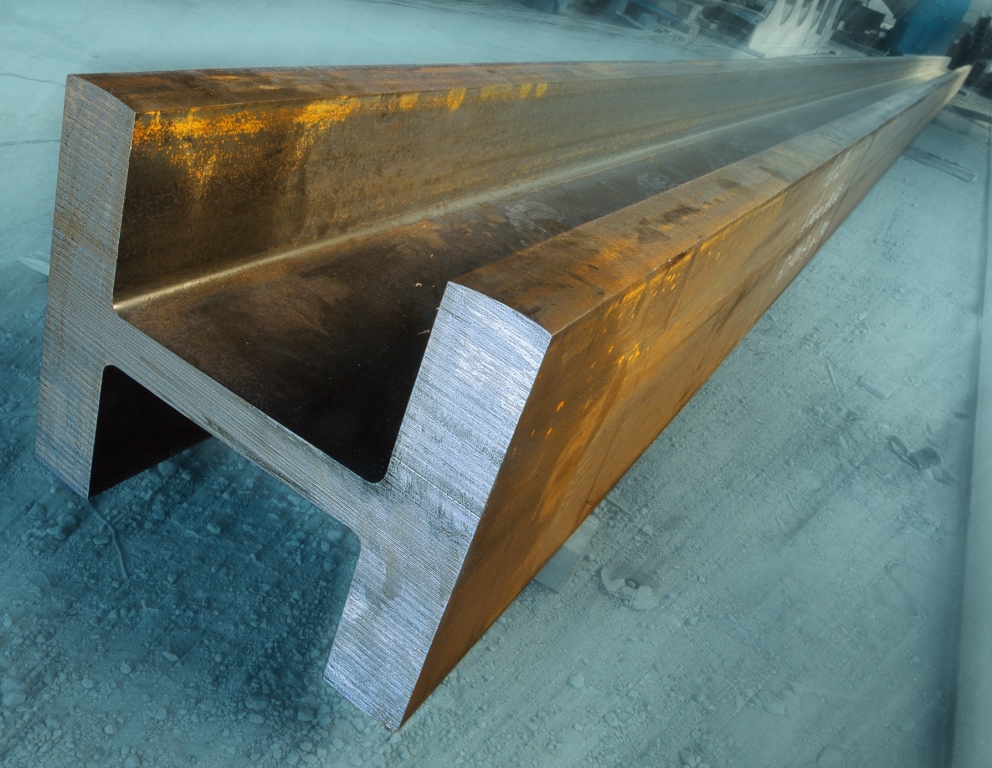
Demand increases slightly in Europe’s steel beams market; prices narrow downward
Fastmarkets’ weekly price assessments for steel beams, domestic, delivered Northern Europe and for steel beams, domestic, delivered Southern Europe were €770-790 ($838-860) per tonne on Wednesday, narrowing downward by €10 per tonne from €770-800 per tonne a week earlier.
A “small buy” was heard at €790 per tonne, and traders said there was a slight uptick in trading. However, end-user consumption remained lower than normal for the time of year, sources said.
“[Construction] consumption is not at a normal level, but it’s better than in December,” one market participant in Northern Europe said.
A second source said European mills are facing little competition from imports, but demand remains low.
“Orders are made here and there, but only for [restocking needs] — there are no greater projects in sight,” the second source said.
Meanwhile, scrap feedstock prices in the bellwether Turkish market fell during the week after rising for much of January.
Fastmarkets calculated its daily index for steel scrap HMS 1&2 (80:20 mix) North Europe origin, cfr Turkey at $407.62 per tonne on Wednesday, down by $7.48 per tonne week on week from $415.10 per tonne.
Turkish steelmakers have struggled with weak demand for finished long steel products and a large increase in mill workers’ wages that has pushed up production costs.
As a consequence, Turkish mills have limited deep-sea scrap purchases, putting downward pressure on that market.
Published by: Holly Chant


Prices edge downward in Southern European rebar market; wire rod price stable
Market participants reported confusion and mixed signals in the Italian rebar market, with producers attempting to raise prices, but the market unwilling to support any price rises.
Fastmarkets’ price assessment for steel reinforcing bar (Rebar) domestic, exw Italy was €660-680 ($718-740) per tonne on Wednesday, dropping by €10 per tonne from €670-690 per tonne week on week.
Prices edged downward in the Italian rebar market amid weak demand and a bearish outlook among buyers.
“There is significant instability in prices now. There are few requests for new material and demand is not good, but scrap prices are increasing, so there is pressure on mills to raise prices,” a buyer source said.
“The market is so strange these days. Producers would like to put up the price, due to scrap price increase, but demand is low and consumption from the building sector is weak,” a second buyer source said.
“We hope the last January days will bring us a turn in the trend, but is not so probable,” the second buyer source added.
Turkey’s scrap prices rose significantly at the beginning of January; however they have since edged downward through late January.
Fastmarkets’ calculation of its daily index for steel scrap HMS 1&2 (80:20 mix) North Europe origin, cfr Turkey was $407.62 per tonne on Wednesday, down by $7.48 per tonne week on week from $415.10 per tonne.
Meanwhile, Fastmarkets’ price assessment for steel reinforcing bar (rebar), domestic, delivered, Spain was €655-660 per tonne on Wednesday, down by €10 per tonne from €665-670 per tonne the previous week.
Southern European wire rod
Fastmarkets’ price assessment for steel wire rod (mesh quality), domestic, delivered Southern Europe was €640-650 per tonne on Wednesday, stable week on week.
“Little has changed in the wire rod market since last week; however, mills are targeting for February some additional increases. The main driver of the last increases is the trend of scrap, which has really increased in past few weeks,” a wire rod buyer source said.
There is little demand for wire rod imports due to high, uncompetitive offers, sources said.
“Imports are not interesting, with final prices being too close to what local mills are offering,” the wire rod buyer source said.
Published by: India-Inés Levy