


European HRC prices firm despite slow trading
In Northern Europe, buyers estimated that the achievable price was €750-780 ($813-845) per tonne ex-works for March-April delivery coil.
One source reported a transaction for a small tonnage at €800 per tonne ex-works.
Market participants said the official offer level from integrated steelmakers for April delivery was €800-820 per tonne ex-works, but this could not be widely corroborated in the market.
“[There have been] some sales at €800 [per tonne ex-works], but this is rather an exception, ” a buyer source said. “The vast majority of buyers wouldn’t book anything at this price.”
As a result, Fastmarkets calculated its daily steel hot-rolled coil index, domestic, exw Northern Europe at €760.63 per tonne on January 31, up by €3.75 per tonne from €756.88 per tonne on January 30.
The index was also up by €13.96 per tonne week on week and by €65.13 per tonne month on month.
The major concern remains sluggish end-user demand and market participants are worried that when some steelmaking capacities comes back online in the first quarter, it might put pressure on prices.
“Salzgitter and Tata Steel reignited big blast furnaces in January [and] everyone agrees that the recent price rise [for HRC] was mainly driven by supply tightness,” a distributor source said.
Fastmarkets calculated its daily steel hot-rolled coil index, domestic, exw Italy at €753.75 per tonne on Wednesday, stable day on day.
The index was also up by €15.00 per tonne week on week and by €65.42 per tonne month on month.
Integrated mills in Italy were offering March-delivery HRC at €780 per tonne delivered (around €765-770 per tonne ex-works).
The tradable value for domestic HRC in Italy was said to be around €750-760 per tonne ex-works.
Trading was “on pause,” sources said, because buyers have sufficient stocks and are not hungry for bookings.
“Buyers are well-booked and want to see what happens with prices in February-March,” a seller in Italy said. “At the same time, it is unlikely that [HRC] prices will drop in the short run, because supply remains reduced and importing material is getting increasingly complicated.”
In the secondary market, 4 mm hot-rolled sheet was traded around €840-850 per tonne CPT, compared with €830-850 per tonne CPT seven days ago.
Import offers were reported at €655-680 per tonne CFR from Asia and at around €690 per tonne CFR from India, for March-April shipment.
Turkish mills were offering HRC to Italy at €700-715 per tonne CFR, including the anti-dumping duty.
Published by: Julia Bolotova

US assigns initial AD duties on Italian plate
The US Department of Commerce preliminarily finds that certain Italian carbon and alloy steel cut-to-length plate products were sold in the US below average market value during the period of review from May 2022 through April 2023, Kallanish understands from monitoring the Federal Register.
Commerce also found that one mandatory respondent did not sell the subject merchandise below market value during the period of review. The department preliminarily assigns NLMK Verona SpA a weighted average dumping margin of 2.45% and Officine Tecnosider SRL 0.00%.
The products covered under this antidumping duty order are classified under the following HTSUS subheadings: 7208.40.30.30, 7208.40.30.60, 7208.51.00.30, 7208.51.00.45, 7208.51.00.60, 7208.52.00.00, 7208.53.00.00, 7208.90.00.00, 7210.70.30.00, 7210.90.90.00, 7211.13.00.00, 7211.14.00.30, 7211.14.00.45, 7211.90.00.00, 7212.40.10.00, 7212.40.50.00, 7212.50.00.00, 7225.40.30.50, 7225.40.70.00, 7225.50.60.00, 7225.99.00.90, 7226.91.50.00, 7226.91.70.00, 7226.91.80.00 and 7226.99.00.00.
Kristen DiLandro USA


Europe weakness hits SSAB earnings, foresees shipment growth
Swedish steelmaker SSAB posted lower earnings on-year in 2023 due mainly to the impact of a weaker market and lower prices, especially in Europe, Kallanish notes.
Consolidated revenue declined 7% year-on-year to SEK 119,489 million ($11.48 billion); adjusted operating result was SEK 16,467 million against SEK 29,283 million the year before. While 2022 was a record year for SSAB and most global steelmakers, 2023 was characterised by a weaker market, lower steel prices and higher raw material costs.
The weak market forced SSAB to adjust production, costs and staffing in Europe. These measures are expected to continue to be implemented during the first quarter of 2024, especially in the construction related segments. SSAB’s other European units, such as Tibnor and Ruukki Construction, also implemented cost saving programmes and personnel reductions.
Overall crude steel production at SSAB Europe surpassed 4.3 million tonnes in 2023, some 400,000t above the level registered in 2022. This is due to the fact 2022 output was impacted strongly by the consequences of the war in Ukraine.
For Q1 2024, SSAB expects shipments at the European unit to be somewhat higher than in Q4 2023; nevertheless, realised prices should be somewhat lower, therefore limiting the impact on turnover. SSAB Americas shipments are also expected to grow quaerter-on-quarter in Q1, while SSAB Special Steels shipments are expected to be significantly higher than in Q4 2023.
Despite the overall weakening of financial results in 2023, SSAB notes that demand for steel with no carbon dioxide emissions increased significantly. “We delivered more than 50,000t of SSAB Zero, a steel without scope 1 and 2 emissions. Interest increased strongly not only in Europe, but also in the USA,” the group says.
“We have started the construction of the electric arc furnace in Oxelösund, a key item for fossil-free steelmaking. At the end of January 2024, the ruling on the granted concession for the power lines to Oxelösund gained legal force and the project continues according to plan,” it continues.
Emanuele Norsa Italy

UK EAF will find metallics, DRI considered: Narendran
Tata Steel is confident it will secure sufficient ore-based metallics supply to feed its prospective electric arc furnace at Port Talbot, despite concerns over DR pellet shortages. It will also look into the viability of gas- and hydrogen-based direct reduction at the site, Tata Steel chief executive TV Narendran said during a Welsh Affairs Select Committee meeting on Wednesday.
Narendran pointed out the decision to close the Port Talbot blast furnaces was made because Tata has had no return on investment in 15 years of operation, the production assets are reaching the end of their lifecycle, and decarbonisation financing is available. To keep the BF running without the coke ovens would mean another $600 million in loss funding is required and at least $200m in capital expenditure, the ceo added.
“The electric arc furnace need not be the end – it is the beginning. Tomorrow … if there is gas available in plenty in Port Talbot … and if there is some funding available to invest in a DRI unit, we can always set up a DRI unit,” Narendran noted during the meeting monitored by Kallanish. However, the firm is yet to discuss this with UK government.
At Tata’s Ijmuiden plant in the Netherlands, thanks to gas availability in that country, the firm plans to build a gas-based DRI-EAF operation, later migrating to hydrogen when it becomes available. It is yet to conclude discussions with the Dutch government over the sum of funding, Narendran said.
Tata Steel UK ceo Rajesh Nair added that, unlike Port Talbot, Ijmuiden already has a pellet plant which facilitates the DRI route.
The firm has also studied the possibility of using a reducing electric furnace (ESF) at Ijmuiden. However, since the technology is still unproven and the investment required is considerable, it decided to wait till another firm builds it first, Narendran explained.
Pressed by Stephen Kinnock, MP for Aberavon, about concerns over access to sufficient metallics supply to blend with scrap feed in the EAF, the executive said: “We will have access, we are a big global player.” There is a lot of work going on globally to increase DR-grade pellet supply, which should address any supply problems in the next 3-4 years, he added.
Kinnock argued it is “hugely risky” to abandon the BF on the basis of there potentially being sufficient pellet supply “from somewhere in the world” to run the EAF. Narendran countered by saying that running the BF/BOF in the same meltshop as the EAF would be even more risky.
The Aberavon MP also highlighted the risk of the EAF not being commissioned in time and steel feedstock imports for Port Talbot from India then being impacted by the UK’s Carbon Border Adjustment Mechanism (CBAM). “All the more reason we want to build the electric arc furnace sooner than later,” Narendran replied.
Asked about the national grid connection for the new EAF, Narendran said power supply was initially seen as a bottleneck but it is now scheduled to be ready for 2027. Nair added: “That’s a formal commitment from the National Grid to make that happen, so it’s well within our plans.”
Narendran said that although Tata has made no commitment yet to build a scrap shredder at Port Talbot, it does plan to invest in the UK scrap supply chain.
Kinnock also pointed to concerns about Ijmuiden blast furnace no.6 operational issues impacting the Trostre site’s ability to source feedstock from there once the Port Talbot BFs are shut. “That blast furnace [BF6], yes, did get delayed … It’s starting this week, so that’s behind us … It was basically a relining of blast furnace 6, that’s now complete, so we should have the feed [for Trostre] and we are making sure that, if required, we can feed the Netherlands from India, so that the Netherlands can support the UK,” Narendran concluded.
Asked about whether Tata will in fact build the Port Talbot EAF, the ceo said: “Yes, we are committed to building an electric arc furnace.”
Adam Smith Poland
Tata Steel relights BF in IJmuiden
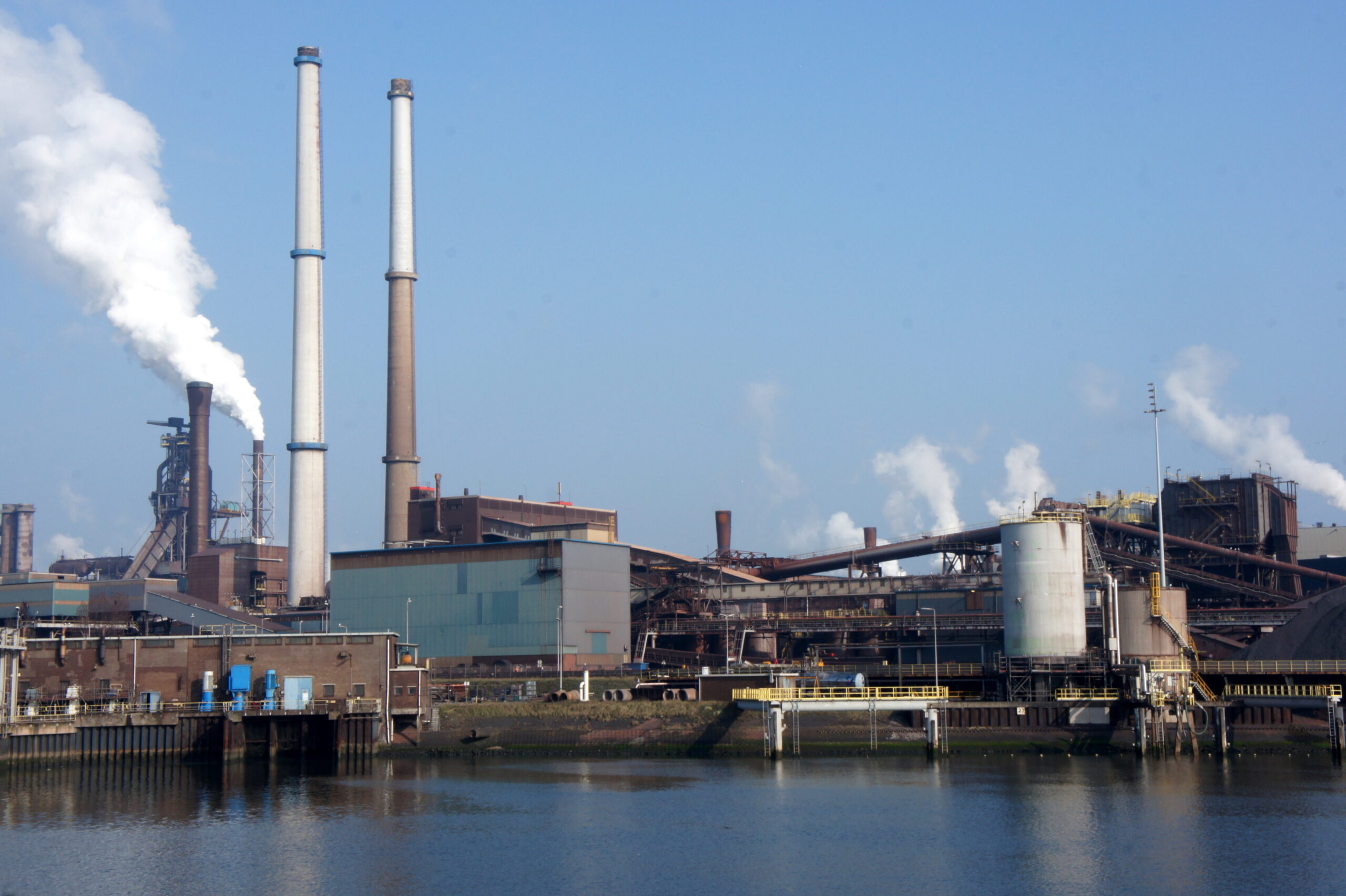
Tata Steel’s BF6 was idled late in March 2023 for maintenance work. The restart, however, was postponed several times because of “technical issues.”
“[The relining of BF6] is a large project and has a number of third-party dependencies in terms of services and equipment,” a Tata Steel spokesperson said on October 23. “As a result of certain delays and delivery issues from third parties, we have had to make changes to the schedule of the project.”
The furnace has now been finally reignited, however.
“A few days ago,” the spokesperson said on January 31, “we began the start-up process on BF6. Step by step, we are working toward a full ramp-up in the production of hot pig iron.”
Several sources familiar with the matter said that the BF in IJmuiden was restarted on January 29.
The IJmuiden steelworks can produce 6 million tonnes per year of pig iron from two BFs. BF6 has capacity for 2.5 million tpy of that total volume.
Tata Steel IJmuiden has capacity for 7.5 million tpy of crude steel, according to Fastmarkets’ company information. The site produces hot-rolled, cold-rolled, hot-dipped galvanized and pre-painted coils as well as tin-plated products.
Market concerns
Market sources were worried that, if more steelmaking capacities were brought back online in the first quarter of 2024, this might hamper the fragile uptrend in the EU flat steel market.
Prices for flat steel in Europe have been picking up in January, primarily driven by reduced supply resulting from output cuts and some limited restocking activity, although end-user demand remained low.
“The acute price rise [in HRC] is entirely supply-driven,” a source in Northern Europe said.
Fastmarkets calculated its daily steel hot-rolled coil index, domestic, exw Northern Europe, at €760.63 ($824.13) per tonne on January 31, up by €3.75 per tonne from €756.88 per tonne on January 30.
The index was also up by €13.96 per tonne week on week and by €65.13 per tonne month on month.
Earlier this month, Salzgitter restarted its BF “A” at Flachstahl in Germany after a four-month outage.

Published by: Julia Bolotova

German states form ‘Stahlallianz’, demand safeguard extension
Representatives of the 11 German states home to steel mills met on Monday with federal economy minister Robert Habeck in Berlin to found a new national steel initiative.
The so-called ”Stahlallianz” intends to combine the common interests of the states, most of them represented by their minister presidents, in order to form one voice to the federal government. They are essentially asking the government for strong support for the domestic steel industry, in view of future investment prospects.
In its statement, the alliance highlights European safeguard measures against imports as a key theme. It asks the German government to advocate at EU level for an extension until mid-2026, “to prevent a diversion of trade routes that distorts competition”.
At the national level, the partner states address high costs for power and the resulting disadvantages in international competition. They approve the Berlin government’s decision to lower the electricity tax for manufacturing industries, but caution this is not sufficient. They maintain their demand, for example, for a stabilisation of grid fees and a period of bridge financing of electricity for power-intensive industries (see Kallanish passim).
Another main theme is the technical transition following last year’s court decision that blocked €60 billion ($66 billion) in reserve funds from the Covid period from being used to de-carbonise industrial processes. In that context, the alliance highlights the importance of medium-sized companies along the production chain, which must not be overlooked for public support. That point was earnestly addressed earlier by WSM, the federation of steel-using industries.
The alliance consists of Baden-Württemberg, Bavaria, Brandenburg, Bremen, Hamburg, Lower Saxony, North Rhine Westphalia, Saarland, Saxony, Sachsen-Anhalt and Thuringia.
Christian Koehl Germany