


Spain’s Acerinox agrees to buy US steel alloy specialist Haynes
Spanish steelmaker Acerinox has agreed to buy US nickel and cobalt alloy specialist Haynes in a $798 million deal, it said in a stock market filing Feb. 5, with the takeover expected to take place in the third quarter of 2024.
With the deal, Acerinox will expand its presence in the US market, where it already operates a major stainless steel producer North America Stainless, and grow its global presence in high-performance alloys, the company said in the filing.
The financial operation, agreed by Haynes’ board, will be ratified at the company’s shareholder meeting in April, Acerinox said. The purchase will be fully funded with existing cash on Acerinox’s balance sheet, it added.
The US market has been Acerinox’s best-performing region recently, outperforming its other steel sites in Spain, South Africa and Malaysia. Its combined melt shop capacity worldwide is 4.5 million mt/year.
The company said in a presentation Feb. 5 that it will invest $200 million in the US over the next four years, including a new vacuum induction melting furnace, a new forge and additional finishing lines, all at Haynes’ production sites.
Indiana-based Haynes has three manufacturing plants in the eastern US at Kokomo (Indiana), Arcadia (Louisiana), and Mountain Home (North Carolina). These plants make alloys for use in high-temperature and corrosion applications such as aerospace and energy sector applications.
The US investment follows an announcement Acerinox made in January that it plans to invest Eur67 million in a new atomizer for the production of stainless steel and high-performance-alloy powders for use in additive manufacturing at its VDM subsidiary.
Acerinox acquired German-based high-performance alloy group VDM in 2020 at Eur532 million ($572 million).
VDM operates five production centers in Germany, with around 75,000 mt/year melt shop output as well as two centers in the US.
Platts, part of S&P Global Commodity Insights, assessed the Global Daily Dealer Molybdenum Oxide assessment at $19.375/lb Mo Feb. 2, up from $19.175/lb Mo Feb. 1.
Author Gianluca Baratti, support@platts.com


EU HRC buyers slow down procurement due to healthy stocks
Uncertainties about the near-term price trend and volumes booked from imports in Q4 weighed on buyers’ sentiment as they resorted to limiting spot purchase volumes.
“Buyers have enough material in stocks, so deals are settled only for smaller volumes of needed specifications,” a German service center source said.
Producers held on to offer levels due to healthy order books in Q1.
Several market participants remained concerned about the price trend’s sustainability as real demand remained absent, while several idled blast furnaces have come back online.
“The demand from automotives and construction is not that great, and real demand may not improve till next month,” a German service center source said.
Deals were heard at Eur750-760/mt ex-works Ruhr on average, and special transactions were reported at Eur725/mt ex-works Ruhr. The latter prices were not available to the majority of customers. Tradable values were reported at Eur720-760/mt ex-works Ruhr. Offers were reported at Eur750-780/mt ex-works Ruhr for April delivery.
Platts assessed the price of domestic hot-rolled coil in Northwest Europe down Eur5/mt day on day at Eur750/mt ex-works Ruhr Feb. 5.
Interest in imports remained dull due to concerns about safeguard restrictions and geopolitical conditions impacting freight rates.
Platts assessed the price of imported HRC in Northwest Europe stable on the day at Eur660/mt CIF Antwerp Feb. 5.
Author Rituparna Nath, rituparna.nath@spglobal.

European HRC prices largely stable amid wait-and-see attitude at buyers
Mills in Northern Europe continued offering HRC in the range of €780-820 ($841-884) per tonne ex-works.
Market participants estimated tradable market levels at €750-770 per tonne ex-works, but trading was very limited and no major deals were heard.
A buyer source in the Benelux region confirmed these were the tradable price levels for now, but implied these levels might not persist for long.
“Trading activity is very low now and market participants are in wait-and-see mode,” the buyer source said, adding that mills may have to reconsider their offers if market activity does not pick up.
A second buyer source told Fastmarkets that trading was weak and there was no restocking due to low end-user demand.
“There is not a clear price trend for now; [it is at a] standstill,” the second buyer source said, adding that mills were refusing to cut prices due to good order books.
Fastmarkets calculated its daily steel HRC index, domestic, exw Northern Europe at €760 per tonne on Monday, down by €1 per tonne from €761.00 per tonne on February 2.
The index was up by €5.83 per tonne week on week and by €65.00 per tonne month on month.
HRC offers from Vietnam and Taiwan were heard in the range of €660-670 per tonne CFR to Antwerp, but booking interest was low due to depleted import quotas.
Fastmarkets calculated its corresponding daily steel HRC index, domestic, exw Italy at €752.50 per tonne on Monday, down by €2.50 per tonne compared with €755.00 per tonne on February 2.
The index was down by €0.83 per tonne week on week and up by €62.92 per tonne month on month.
Italian mills continued offering HRC at €780 per tonne delivered, which nets back to about €765-770 per tonne ex-works. One mill was heard offering HRC at €800 per tonne delivered (€780 per tonne ex-works).
But buyer sources indicated workable market levels in the range of €740-755 per tonne ex-works.
Only one buyer source considered a higher level of €765 per tonne to be tradable. No major deals were heard in the market.
“Demand is not strong. [We see] moderate buying [mainly] case by case,” a third buyer source told Fastmarkets.
Asian HRC import offers to Italy were heard in the range of €635-660 per tonne CFR, according to the third buyer source.
The lower end was not confirmed by other market sources, however.
The third source also said that import prices at €660-670 per tonne CFR offered from Egypt to Italy could be achievable.
HRC offers from Japan, Taiwan and Vietnam to Italy were in the range of €670-680 per tonne CFR, a fourth buyer source said. Even lower offers for Asian material were heard at €655 per tonne CFR.
Import offers from India to Italy were heard at €690 per tonne CFR.
Published by: Julia Bolotova, Darina Kahramanova


World tube production rises, 2024 outlook promising: ITA
Following a slight downturn in 2022, global production of tubes and pipes rebounded last year and is expected to maintain an upward trend this year, according to the International Tubes Association (ITA).
While 2022 saw a decrease of production by 3.1%, 2023 brought what ITA calls an “impressive recovery,” with an estimated year-on-year increase by 15% to around 170 million tonnes, Kallanish learns from extrapolated figures. ITA notes that “forecasts for 2024 are also encouraging.”
The federation points to substantial regional differences and diverging trends. The USA saw an output increase by 18%, with strong growth in all product dimensions, driven by a strong economic environment.
China, which represents more than 50% of world tubes production, reported a further increase of 13%, which was far more than the overall economic growth of the country. India saw an irregular development, with a downturn in the first half by 22% y-o-y. That was then more than offset in the second half, resulting in the full year ending up 12% versus 2022.
Europe lost a significant amount of its production capacities in H2 2023 due to Vallourec’s shutdown of its major European production facilities. These capacities need to be replaced by other mills, as far as is technically possible. Some tube customers are having problems finding adequate alternatives, ITA notes.
In the CIS, output rose by 77% most likely due to Russian import substitution by local production. Contrary to that trend, production of welded tubes of less than 406 mm outside diameter dropped by 24%, ITA points out.
Christian Koehl Germany

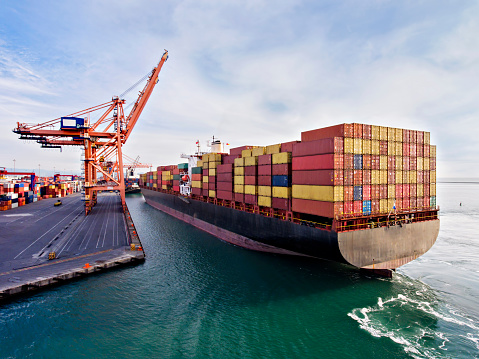
Global maritime disruptions may increase US supply-chain costs
US companies and stakeholders are warning of higher costs and supply disruptions caused by tensions in the Red Sea, Kallanish learns from an Institute of Supply Management (ISM) report.
Construction sector respondents of the ISM survey note that “transportation impacts of the Suez Canal, due to unrest in the Red Sea, and the issues at the Panama Canal are impacting both costs and schedules for the transport of global goods.”
This tone is echoed by a group of supply chain stakeholders in a US Department of Transportation (DOT) conference call last week.
A common theme was that isolated challenges are beginning to show up, including increased congestion at some US container ports, such as the ports of Los Angeles and Long Beach. This comes as shippers re-route cargo to avoid the Red Sea altogether.
In fact, shipping company Maersk indicates that it would stop sending US flagged vessels through the Red Sea in late January.
Some stakeholders on last week’s DOT call noted they were using their Covid-19 playbook as a template on handling supply chain bottlenecks. They note that it is already helping inform the response to these challenges.
The meeting took place in the context of a comprehensive US government effort to protect freedom of navigation and ensure resilient global supply chains by responding decisively to Houthi rebels’ escalating attacks against commercial vessels.
The US Maritime Administration emphasises its continued commitment to keeping mariners safe and stakeholders up to date.
John Isaacson USA

Sidenor acquires Miguel Martín, secures scrap supply
Spanish special steelmaker Sidenor has acquired Miguel Martín (MM), a company specialising in industrial scrap, Kallanish understands.
The deal will strengthen Sidenor`s position in the scrap market and ensure its supply of quality raw materials.
“This acquisition contributes to the consolidation of the sector, in which the supply security of a key product such as industrial scrap will increase, and strengthens our commitment to sustainability,” Sidenor says.
MM is located in Fuenlabrada, Madrid region. The company has facilities of 2,600 square meters.
The acquisition is now awaiting approval from Spanish authorities and other closing conditions. The transaction should be completed during the first quarter.
Todor Kirkov Bulgaria