


Celsa’s new owners evaluate foreign subsidiaries’ financial situation
The new owners of Spanish-headquartered Celsa have now taken full control of the company and are in the process of evaluating the financial situation of Celsa’s global units before presenting a new industrial plan.
Celsa has steelmaking operations in France, Norway, Poland and the UK, outside of Spain. According to local trade unions UGT, Celsa’s new management confirmed last week it is now evaluating the financial performance of the foreign units. Press sources in Spain report it might be considering selling some of the foreign units, if needed, to strengthen the group’s financial position.
Spanish trade unions add in a statement seen by Kallanish that Celsa confirmed that a new industrial plan is not yet available, but will be presented after the group-wide financial evaluation.
In addition to evaluating its global presence, Celsa is also actively looking for a Spanish industrial partner to support its industrial transformation. The trade unions were told the process of finding a new partner should last five to six months. Spanish press reported Megasa, Sidenor and Gonvarri as potential partners being considered by Celsa.
At the beginning of this year, Jordi Cazorla Pujalte started his role as Celsa Group chief executive. He replaced long-time boss Francesc Rubiralta who left the steelmaker after the group of investment funds, representing the main creditors of the company, took control of Celsa.
Emanuele Norsa Italy , Todor Kirkov Bulgaria

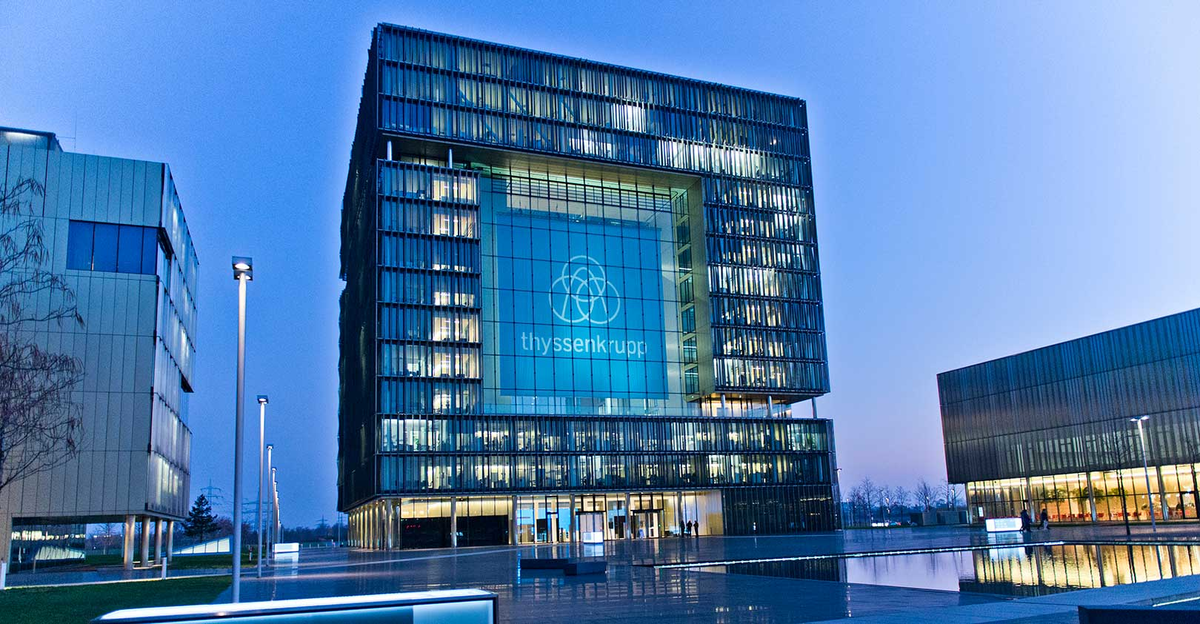
Thyssenkrupp to start DRI plant construction early
Thyssenkrupp Steel has received approval to start construction early of the first direct reduction plant at its Duisburg site, the steelmaker tells Kallanish.
Tk Steel submitted the application for approval at the Düsseldorf district government as the responsible authority in October 2023. The approval notice for the early start of construction is an important milestone in the approval process in accordance with the Federal Immission Control Act, the company notes. “We have thus cleared another important hurdle in the realisation of the first direct reduction plant,” says Arnd Köfler, tk Steel’s chief technology officer.
Over the next few months, a veritable factory town will be built on the site, with up to 2,000 people working there. The main part of the plant will be around 140 metres high and flanked by around 60 buildings.
By awarding the contract to build a DR plant with two melters to SMS group in spring 2023, tk Steel placed the largest single order in its history, it notes. Last summer, it received a grant from the federal and state governments totalling around €2 billion ($2.2billion) for its tkH2Steel project. Tk Steel’s own investment amounts to just under €1 billion.
Christian Koehl Germany

Carbon Capture viability in steelmaking decarbonisation seen fading
It is becoming increasingly clearer that carbon capture utilisation and storage (CCUS) will not play a meaningful role in steel decarbonisation, says the Institute for Energy Economics and Financial Analysis (IEEFA).
This follows the announcement last week by Rio Tinto, BHP and BlueScope Steel that they are working together on making Pilbara iron ore suitable for direct reduced iron.
DRI-EAF steelmaking, the preferred decarbonisation route globally, requires a higher grade of iron ore than the great majority of production in the Pilbara. A shift away from coal-consuming blast furnaces to DRI is therefore a major long-term challenge to Australia’s biggest export, IEEFA points out.
A promising way of enabling the use of lower-quality iron ore in DRI making is via an electric smelting furnace (ESF) – combining a DRI shaft furnace with a melting step to allow the removal of impurities, it adds.
Three of the Big Four iron ore miners, Vale, Rio Tinto and Fortescue, are investing in DR-grade ore supply. The outlier is BHP, which is not targeting high-grade ore and is instead leaning more heavily on unproven carbon capture solutions that would allow the continued use of its metallurgical coal.
Virtually all steel companies that plan to build low-carbon steelmaking capacity at commercial scale have opted for hydrogen-based or hydrogen-ready DRI plants, not CCUS.
“At this relatively early stage of the steel technology transition, it’s already time for steelmakers and iron ore miners like BHP to drop the idea that CCUS will play a major role in decarbonising the steel industry,” the IEEFA’s Simon Nicholas says in a note seen by Kallanish. Funding the new DRI collaboration would be a better way to “future proof” Australia’s biggest export and its steel industry, he adds.
This coincides with comments made by Fortescue Metals chairman Andrew Forrest during a Paris conference on Tuesday, at which he called CCUS “a complete falsehood”.
He is quoted by Reuters as saying: “We’re going to keep burning fossil fuels and somehow magically get rid of the carbon down into the ground where there is no proof that it will stay there, but heaps of proof that it fails. I say for policy makers everywhere do not be the next idiot waiting for the old lie to be trotted out and say I believe in carbon sequestration. It has only failed for 75 years.”
Adam Smith Poland

Italian sections prices decline slightly on stagnating market
The Italian merchant bar market continues to be stagnant. Mill sources and distributors report low consumption and strong competition from other European countries. Consumption is generally slow in Europe, two EU mills sources confirm, and prices are on a downward trend, Kallanish hears.
Buyers continue to purchase only back-to-back. Domestic merchant bar values are hovering at €320-330/tonne ($345-356) base delivered, reflecting an average €20/t on-month fall. Including size extras, prices are at €740-750/t, sources suggest. Domestic material is suffering from competition of imported European merchant bar offered and sold at below €300/t base delivered.
Demand for Italian sections continues to be weak and has been poor since the beginning of the year. Sections are also suffering from competition from cheaper imported material, with some distributors looking for volumes and implementing heavy discounts, sources tell Kallanish.
In the fourth quarter last year, beams sales volumes increased in Italy and some apparent demand resurfaced. Some purchases to replenish stocks are forecast towards the end of the month. So far in February, the first category of beams is flat on-month, hovering at €800-820/t, sources suggest.
Natalia Capra France