


ArcelorMittal Poland completes rail investment, readies commercial production
ArcelorMittal Poland (AMP) has completed its PLN 200 million ($49.6m) research & development investment into producing 120m-long head-hardened rails according to the latest European and American standards.
The project has been running since 2018. In 2022, AMP contracted Danieli to carry out an energy-saving upgrade at its rail mill at Dabrowa Gornicza to help produce the new rails (see Kallanish passim).
“Demand for heat-treated rails, that is harder and with better mechanical properties than standard untreated rails, is evolving strongly,” AMP chairman Sanjay Samaddar says in a note seen by Kallanish. “That is why we decided to develop a type of rail that we did not have in our portfolio in Poland to meet the expectations of our customers.”
A line for heat treatment of rails was already in operation at the former Huta Katowice works in the 1980s, but it was based on outdated technology and was closed in the early 1990s.
The first type of R350HT rail with a hardened head will go into commercial production this year.
Adam Smith Poland

Rana Gruber anticipates European improvement, courts new customer
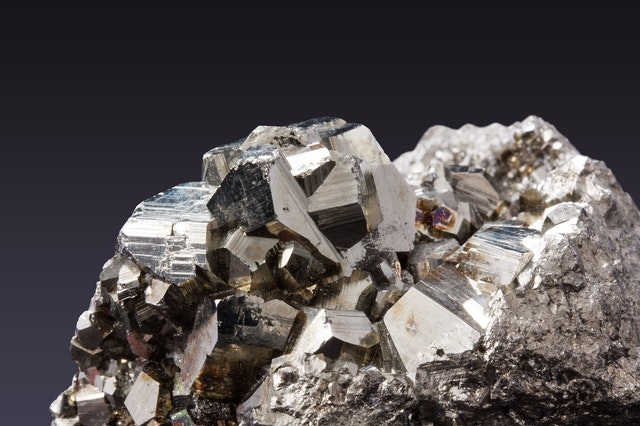
Rana Gruber anticipates a pick-up in European bookings after several of its largest customers completed extensive maintenance programmes. The Norwegian iron ore miner sent a cargo in January to a potential new European customer. Port inventory levels in China meanwhile reportedly remain at their lowest in several years, the firm notes.
In the fourth quarter of 2023, Rana Gruber increased hematite concentrate sales 9% on-year to 406,000 tonnes, but overall iron ore concentrate production, including magnetite, fell 1.7% to 452,000t, Kallanish notes.
Q4 included a maintenance stop of one week, longer than the year before. The firm says the stop was a crucial part of its strategic project to increase magnetite production. As it now slowly shifts to areas in the mine with more rich magnetite deposits, the firm is positioned to produce higher volumes of magnetite.
Iron ore prices remain elevated, driven by factors such as China’s stimulus measures and optimistic expectations for a recovery in steel demand. Lower port inventories, potential supply disruptions in Western Australia, and conservative production estimates contribute to the positive market sentiment, the firm says.
Q4 revenue surged 62% on-year to NOK 620.2 million ($59m), but net profit dropped 35% to NOK 174.6m due mainly to value adjustments of hedging of iron ore.
In full-year 2023 the miner reported hematite sales increased 11% on-year to 1.69 million tonnes, with magnetite sales up 13% to 106,000t. Overall concentrate output was up 5% to 1.82mt. Revenue surged 36% to NOK 1.93 billion and net profit inched up 1% to NOK 489.8m.
Adam Smith Poland
Thyssenkrupp opens tender for DRI plant hydrogen feed
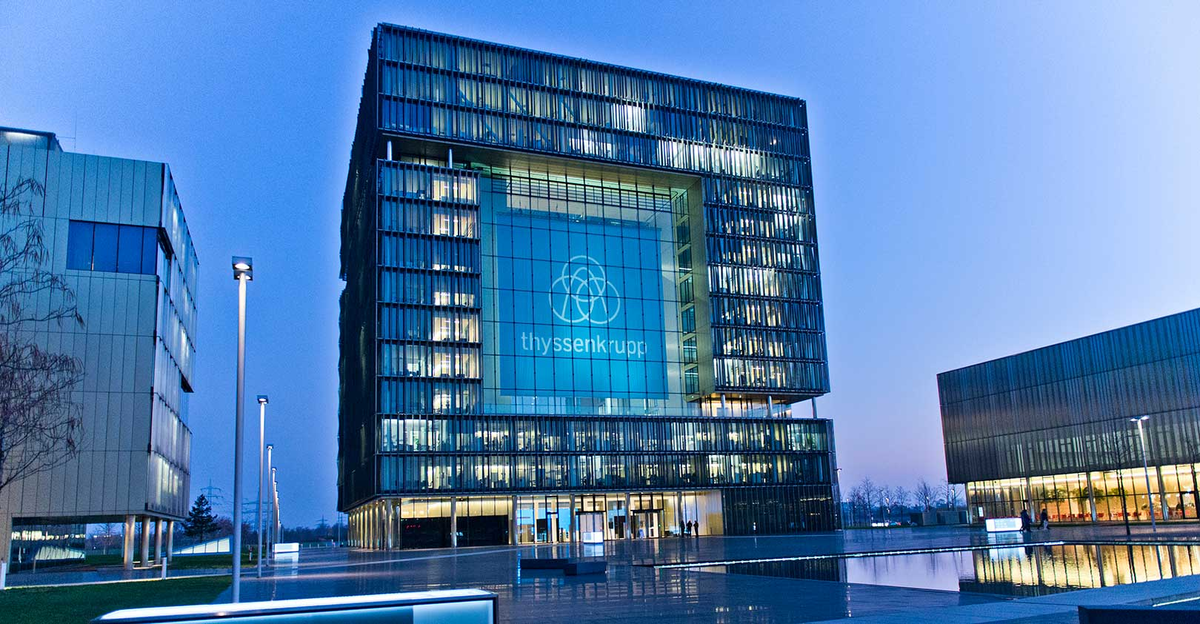
Thyssenkrupp Steel has officially launched a tender for the supply of hydrogen to its first direct reduction plant, Kallanish learns from the German company.
In conjunction with two new electric smelters, this will be the centrepiece of the first transformation step in thyssenkrupp’s decarbonisation process as part of the tkH2Steel project, the company states.
The steelmaker said last month the tender will be carried out in three phases (see Kallanish passim).
The hydrogen requirement is being put out to tender in a transparent and broad-based procedure, with the aim of operating the direct reduction plant fully on hydrogen by as early as 2029. The tender is being organised in close coordination with the German Federal Ministry for Economic Affairs and Climate Protection (BMWK). Together with the state of North Rhine-Westphalia, the ministry is funding the plant project and the associated hydrogen ramp-up to the tune of around €2 billion ($2.2 billion).
The plan will enable tk to cease using natural gas at an early stage while also firing the starting pistol for the hydrogen ramp-up in Germany, the steelmaker notes. The 100% hydrogen-capable direct reduction plant has an annual production capacity of 2.5 million tonnes of DRI.
The first use of hydrogen in the plant combination is planned for 2028. By 2029, the steelmaker will use around 143,000t of hydrogen – equivalent to 5.6 terawatt hours. As the largest German hydrogen consumer, tk Steel claims it will function as the initiator of and driving force behind a hydrogen economy.
The call for tenders for the hydrogen volumes was already published in various German federal government and EU portals. The tendering process will be divided into three phases, and is aimed at all potential hydrogen suppliers with production projects for renewable green or CO2-reduced blue hydrogen, with the ability to deliver to Duisburg.
Christian Koehl Germany

Possible sale of Celsa Steel mills sparks uncertainty for Europe metals markets
Talk of the potential sale comes during a choppy financial period for Celsa Steel, which was bought by creditors following years of issues over payment just six months ago.
Celsa, a major producer of long steel in Europe, also owns major steelmaking units in Spain and France. It is one of the largest buyers of ferrous scrap in the local markets in which it operates, including Spain and the UK.
A Celsa spokesperson said on Friday that “no decision has been taken regarding sale or acquisition of assets.” The spokesperson also noted that the company has undertaken an “exploratory exercise” with financial institution Citi to “assess the real market value of our assets.”
But a UK steel market source with knowledge of the matter told Fastmarkets on Friday that Celsa is indeed “looking to sell off some of its steel mills,” including its UK unit. That source said he believed jobs at Celsa’s facilities would be safeguarded in the short term, however.
“These mills are some of the ones that make money, whereas there have been issues with the workforce in Spain that they are struggling with,” the source said. “Even if they sell, they must ensure that jobs are kept for three to four years,” he said, but “you never know” with such a process.
In Poland, Celsa owns steel mill Huta Ostrowicec, located in Ostrowiec Swietokrzyski. The facility has two electric-arc furnaces (EAFs) with a combined capacity of around 2 million tonnes per year of crude steel. Celsa Huta Ostrowiec produces rebar and special bar quality (SBQ) steels.
In Cardiff, Celsa has two EAFs with a combined capacity of 1.2 million tpy of crude steel; that facility produces long steel products, including rebar and wire rod.
In Mo i Rana, Norway, Celsa has a 700,000-tpy EAF and produces rebar and wire rod.
Effect on Poland market
Celsa is one of only three rebar producing companies in Poland. Therefore, any change to or closure of Celsa’s assets there could have a major impact on the country’s steel market.
A distributor source in Poland told Fastmarkets that, sooner or later, the new creditor owners of Celsa Group were expected to sell Celsa’s assets in Europe. But that source said it was too soon for the creditors to do so, indicating that they believed Celsa’s owners were simply evaluating the situation to decide on future steps.
“From my point of view, it is too early to do that now. The market situation is not that good. I cannot imagine who will eventually buy the Polish assets now,” that source said.
A second Polish distributor source described the reports of a potential sale of Celsa’s plant in Poland as “rumors.”
Effect on UK market
Celsa’s position as one of the UK’s major scrap buyers and long steel producers means its operations are critical to supply and demand in both markets.
Its site in Cardiff has a nameplate capacity to produce around 1 million tonnes steel per year from an EAF, but market participants have long believed that the unit is running at reduced capacity utilization levels, Fastmarkets understands.
“The news is just breaking, but personally I do not expect any impact and business continues as normal,” a UK scrap processor source said.
A UK scrap source said that he believes the market would reserve judgement until a new owner comes in and states its plans for the company.
“All eyes will be on Cardiff ops, naturally,” he said.
Although there are no immediate changes expected, a third scrap source said that uncertainty over the company’s position could mean they need to be “careful” selling scrap to Celsa in the UK amid worries over payment.
Interestingly, the potential sale of the UK asset comes at a time when the country is moving toward greater adoption of EAF steelmaking. Both British Steel and Tata Steel have announced their intentions to switch to EAFs and away from their higher carbon-emitting basic oxygen furnaces (BOFs).
As a result of the planned rise in EAF capacity in the UK, the third source said that the UK could eventually become a net importer of scrap, swinging from its current role as a major exporter.
The UK typically generates around 10 million tonnes per year of steel scrap; of that, 8 million-9 million tonnes is exported, mostly to Turkey and the Indian subcontinent. A smaller amount is exported to short-sea destinations, such as Spain.
Restructuring plan
The reported sell-off of assets is the latest landmark in a challenging period for Celsa Group.
Creditors of Celsa, which included investment banks such as Deutsche Bank, finalized their takeover of the steelmaker in November 2023 following years of missed payments. At the time, media reports indicated that the process to sell up to 20% of the company could be launched a few months later.
This led to the implementation of a major restructuring plan, which had been approved by a Spanish court ruling in early September, to drive down Celsa’s debts and increase efficiency. The plan will allow the company to reduce its debt by €1.4 billion ($1.5 billion) and extend the maturity of the remaining debt by five years, until October 2028, Celsa said last month.
Celsa appointed Jordi Cazorla as chief executive officer of the company on November 24; Cazorla took over from Sergio Vélez, head of FTI Consulting Spain, who had acted as interim managing director.
Celsa’s most recent submission to the UK’s Companies House, on January 13, shows that Matthew Johnston of FTI Consulting LLP was delegated authority over Celsa Steel UK and has been conducting day-to-day management of the company from December 8, 2023.
According to a filing to Companies House, Celsa Steel UK lost £250,000 after tax in 2021 and made £3,000 in profit after tax in 2022. The company recorded an operating profit of £2.99 million in 2022, but £2.4 million went to interest repayments, the documents show.
Declan Conway in Galway, Ireland, and Julia Bolotova in Brussels, Belgium, contributed to this report.


Riva Brandenburg moves to rail freight
Riva Stahl, the German rebar making unit of Riva group, is shifting a good deal of its transports from truck to railway, Kallanish hears from freight train operator DB Cargo.
The steelmaker has signed a framework contract with DB Cargo for a new shuttle service from its mill in Brandenburg-an-der-Havel to southern Germany. DB Cargo will ship 200,000 tonnes/year of rebar and wire mesh to Mannheim. From there, local transporters will forward the material to the company’s processing subsidiaries in Trier and Lampertheim.
The relocation to rail will replace 8,000 truck loads per year, and save 4,000 tonnes of CO2, DB Cargo says. Until now, DB Cargo has handled Riva products in single cars. The new shuttle trains will initially go three times per week, and both partners envisage an increase of volumes over the course of the year.
The city of Brandenburg is located in the state of the same name, as is Riva’s other German rebar mill in Hennigsdorf near Berlin.
Christian Koehl Germany

Czech industry slams EU 2040 emissions reduction target
The Czech government should not support the climate goal proposed by the European Commission to reduce emissions by 90% by 2040, as it is unachievable and would hit industry-dependent Czech Republic hard. So warn Czech energy-intensive sector associations, including the Czech and Slovak steel association, Steel Union.
The Commission published a detailed impact assessment earlier this month that recommended a 90% net greenhouse gas emissions reduction by 2040 compared to 1990 levels. Eurofer responded by saying EU steelmakers back carbon neutrality by 2050 but require further much needed support.
“The proposal is based on unrealistic assumptions and completely ignores the fact that the European Union and individual member states have not yet created the conditions necessary for massive investments in the green transformation of industry in individual countries,” the associations comment in a joint statement.
“If the proposed target were to be confirmed, it would have serious economic and social impacts on millions of people across Europe and the long-term competitiveness of EU businesses,” they note. Since industry contributes significantly to Czech GDP, the country would be particularly affected, they add.
The main factors impacting competitiveness are expensive energy and emission allowances, an economic recession, the absence of an effective industrial policy, insufficient decarbonisation infrastructure, limited availability of low-emission technologies and large bureaucracy, the statement reads. These are coupled with a comparably smaller effort by third countries to reduce emissions.
The ambitious target comes “at the most inopportune time, when industrial production is stagnating in Germany and in our country. If the proposal were to pass, we would lose ten years of time, which we should have had for decarbonisation”, says Czech Chemical Industry Association director Ivan Souček.
The proposed target needs to be re-evaluated so that it reflects the real decarbonisation possibilities of European business and society in general, the associations conclude.
Adam Smith Poland