


Surprising Polish construction slump in January bodes poorly
Polish construction activity slumped 6.1% on-year in January, compared to the consensus of 8.1% growth. This follows impressive 14% on-year growth in December. ING, which projected a 3.1% increase in January, says the data bodes poorly for a recovery in investments this year.
Many EU-backed projects from the previous perspective have ended, with a slow start to new ones and a weaker housing market, the bank observes.
Production growth in civil engineering construction plunged 10.5% in January, reflecting the final phase of infrastructure projects financed by disbursements from the 2014-20 EU financial perspective. Launching new projects, financed by the new EU budget, is time-consuming.
Building construction also declined, by 7.3%. “In December, the ‘2% Safe Credit’ programme came to an end. A new programme is unlikely to be launched before the second half of 2024, and its details are still being worked out. Data for the end of 2023 show that, after a period of rapid growth in mortgage credit demand, there was a sharp slowdown,” ING observes.
“Given the cap on the price of housing qualifying for public subsidies, the completed programme saw most impact in smaller towns. It is probably difficult for developers to assess locations of the most favourable places to start new investments,” the bank adds.
In early January, Poland’s main construction steel producer, CMC Poland, said supply-side adjustments and the impact of increasing levels of residential and infrastructure construction should drive sequential improvements in financial results beginning in spring (see Kallanish passim). However, conditions in Europe are expected to remain challenging, it added.
Adam Smith Poland

European steelmakers remain concerned over green hydrogen cost
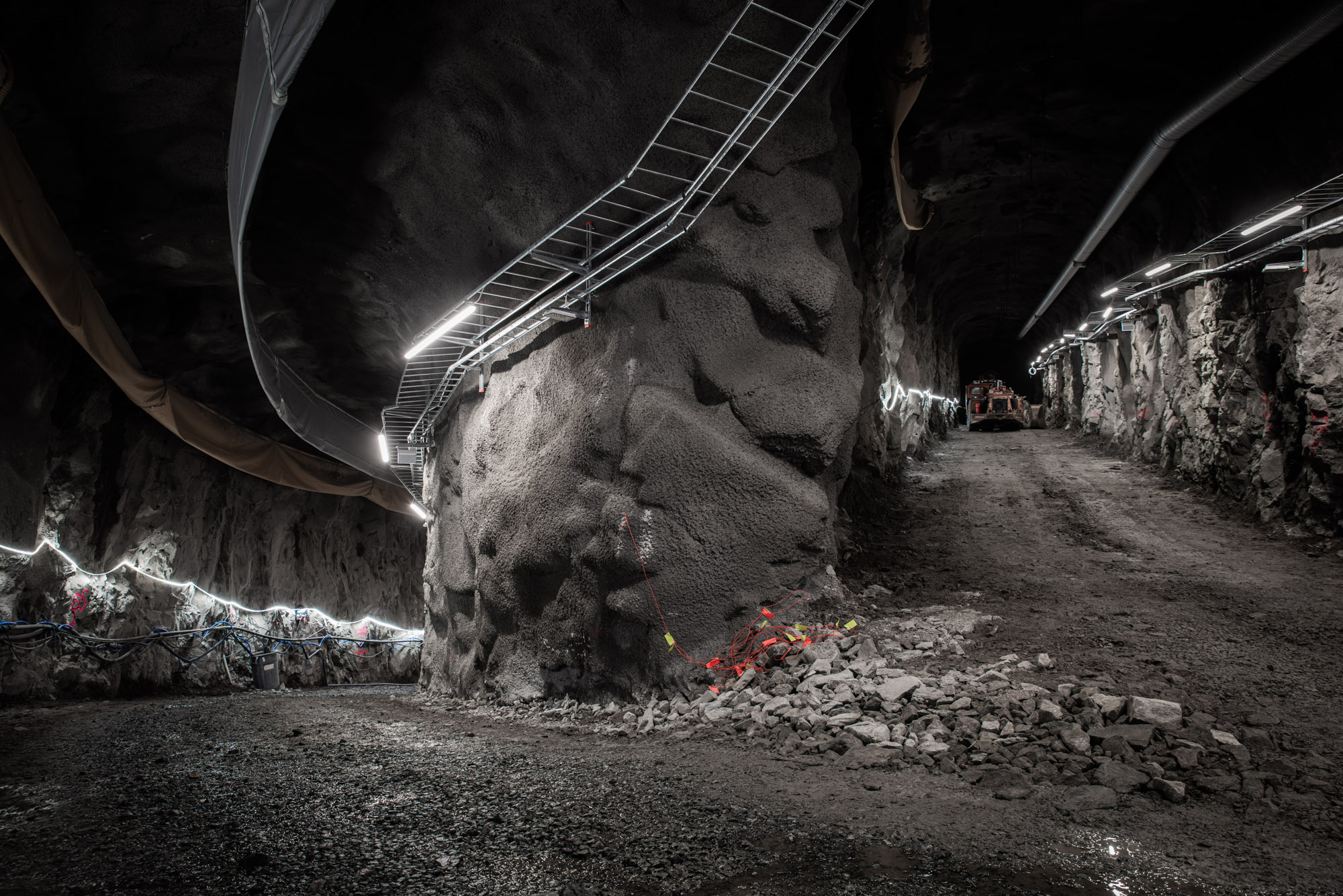
European steelmakers are concerned by the high costs of green hydrogen and how these could slow down or jeopardise the transition towards low- or zero-emission steelmaking, Kallanish notes.
ArcelorMittal Europe chief executive Geert van Poelvoorde reiterated this point by confirming that the use of green hydrogen – especially produced in Europe – would make steelmaking uncompetitive. In an interview this week with Belgian magazine Trends the executive said that using green hydrogen in the short term would push steelmakers out of the market for being uncompetitive. European green hydrogen production is still too expensive and imports from Africa, for example, still incur a high freight cost.
The view echoes the official position of ArcelorMittal reported in its climate action report published in July 2021.
Green hydrogen-based direct reduced iron production would increase the cost of steel production by $150-250/tonne compared to natural gas-based DRI, the report stated. “On a like-for-like basis (excluding CO2 costs), hydrogen would need to fall below $1/kg to compete with natural gas DRI in Europe, and below $0.7/kg to compete in the USA,” the firm said.
ArcelorMittal anticipated that green hydrogen costs could drop to $1.5/kg by 2030 if renewable energy costs drop further – on a global level.
As a result of the issues related to high costs of green hydrogen, European steelmakers might focus their attention in the short term on electric arc furnace-based steel production rather than building captive DRI plants. A solution in the medium term could be finding other sources of DRI beyond Europe, where hydrogen production costs are lower.
Emanuele Norsa Italy

Northern European wire rod prices remain flat
Northern European wire rod prices are stable again this week, with the market sluggish due to low demand, sources say. Participants do not expect the market to change this month.
“The trade in Europe is very weak. There are not much new deals,” one buyer from the Netherlands tells Kallanish.
Domestic transaction prices for drawing-quality wire rod are at €650/tonne ($702/t) ex-works and mesh-grade wire rod is at €660/t.
Producers are asking for €680/t ex-works, on average, for mesh-quality rod.
“The scrap market in Europe is also weak and prices will probably fall in March, and this is also influencing the wire rod market,” another buy-side participant notes.
German old thick scrap sort 3 is at €350/t, while new scrap sort 2/8 was at €350/t. E40 shredded scrap was at €365/t. In Austria, scrap prices are stable in February. For new scrap, sort 2/8 is at €350/t, with old thick scrap sort 3 at €360/t.
“Imports for countries outside the EU, like Algeria and Egypt, continue not to influence the European wire rod market,” another participant in the market observes. “Offers are being heard from outside the EU at €620-630/t cfr Rotterdam, which is too expensive.”
Italian wire rod prices are relatively stable this month (see Kallanish passim). Drawing quality is between €680-680/t delivered. Domestic material is, however, being challenged by competitive import offers from Northern Africa and from Europe.
Svetoslav Abrossimov Bulgaria

Northwest European coil mills keep making price concessions
The price paid for hot rolled coil from northwestern European mills has come down to around €730/tonne ($790) from the level of above €750 reached in early February. There is some doubt that mills can stabilise the softening because real demand does not support mills’ desire to cover their costs, according to market participants.
“Prices were pushed up since the [Blechexpo] trade fair [in November], but the target of €800/t the mills had called for was never achieved,” one German HRC buyer tells Kallanish. He points to the separate playing field of annual contract talks, in which mills largely succeeded in fetching a figure starting with 8. “That helped in overcoming the €600+ price range that prevailed on the spot market into November,” he observes.
Now that the surge in spot prices has stopped, “buyers have smelt blood; they see that the mills’ bookings were sparse in recent weeks,” another observer says. He notes that mills’ costs for slab have eased somewhat, but only by €10-15/t, which is “not enough [to cover] the drop of €40 or so that some are having to concede in their selling prices.”
“Some mills claimed they did get the €800 they targeted, and I even believe them,” he notes. “But I bet that would be for March deliveries to customers with shortages because they banked on imported material that got stuck at customs clearing in Antwerp.”
According to the other buyer, traders have lowered their offers for imported HRC to €649/t cif Antwerp from €700, citing one offer. “That would not be material sitting at the port, but new rollings that would take another 3-4 months to arrive,” he cautions.
Christian Koehl Germany

UK’s TRA recommends extension of steel safeguard measures until 2026
The current measures, which cover 15 categories of steel would expire on June 30, 2024, if they were not extended.
The TRA began an extension review of the safeguard measure in September 2023. At the time of conducting its review, TRA found that imports would likely increase, adding “that serious injury would recur to UK producers across all 15 categories of steel if the safeguard measures were to be removed,” the TRA department said Feb 21.
TRA conclusions are based on the data provided to the TRA, the overcapacity in the global steel market, the risk of steel being diverted to the UK due to measures in other major markets and the attractiveness of the UK steel market, the TRA explained in its press note.
Safeguard measures are a trade defense instrument as a result of trade diversion and distortions in international trade, setting tariff-free quotas based on historical imports. Once quotas are exhausted, a 25% tariff applies.
“UK Steel is delighted that the TRA has recognized that steel safeguards are more than ever necessary to shield the UK from the inevitable trade diversion of all the surplus material that will be shut out of other key markets,” Gareth Stace, Director General of UK Steel, the association of UK steel producer, said Feb 21.
“Global excess steelmaking capacity of 630 million mt is a shocking 60 times the size of the UK market. Even a small proportion of this steel being diverted to the UK would completely overwhelm our market. Capacity is still growing, mostly state-funded and largely for high-emissions steel,” he said.
According to the association, the reasons why the UK’s steel safeguards were first introduced are not only still in place, but conditions have in fact deteriorated, with the “Trump era Section 232 tariffs continuing to deflect trade to exposed markets.” “In a year alone, global steelmaking overcapacity rocketed by 23% and continues to rise against a backdrop of high costs and weak steel demand.”
The steel safeguard measures were put in place in 2018, when the UK was still part of the EU, in response to US Section 232 tariffs imposed by the former president of the US, Donald Trump, causing trade diversion and excess capacity in global steelmaking. While the US has since agreed tariff-free quotas with some countries and regions, including the EU and the UK, most countries still face 25% tariffs when they export to the US.
The UK transitioned steel safeguard measures for 19 product categories in 2021, of which 15 were maintained. Following the TRA recommendation, the Secretary of State for Business and Trade, Kemi Badenoch, must decide ahead of June 30, 2024, whether to extend the safeguard measure for all or some of the product categories.


UK HRC prices unchanged as government prepares to review safeguard measures
Activity for hot-rolled coil in the UK remained subdued during the week of Feb. 19 as most buyers continued to forgo the market owing to weak end-use demand and uncertainty surrounding the review of the country’s steel safeguard measures by the Trade Remedies Authority.
Market contacts continued to report poor UK demand with little sign of improvement in the near term.
Offers from European mills were generally heard across a range of GBP675-700/mt DDP West Midlands.
Offers for non-EU-origin HRC were heard in a range of GBP620-640/mt DDP West Midlands, with market participants suggesting that uncertainty regarding the future of the UK steel safeguard measures on HRC is weighing on demand.
On Feb. 9 the TRA announced that it would review the suspension of the safeguard import quotas in response to Tata Steel UK’s plan to idle its two blast furnaces later in 2024 and replace them with electric arc furnaces.
At the time the TRA stated that its preliminary view would be to suspend the measure for nine months because Tata Steel is the UK’s sole HRC producer.
Tata Steel hopes to commission its EAF early 2027 and will import steel products for customers from its Dutch and Indian operations or third parties until then.
TRA is collecting feedback until Feb. 25 for the review.
According to traders, the current weakness in the UK market has been exacerbated by uncertainty surrounding the measure which, if suspended, is likely to increase orders for non-EU HRC which is currently priced approximately GBP50/mt sourced material.
“A quota suspension will lead to a run on HRC from all non-EU origins except those currently under sanction,” one trader said, adding that India was a “particularly attractive target” given its prices and lead times to the UK market.
While buyers are reluctant to commit given the uncertainty surrounding the future of the trade measure, market participants noted that buyers cannot wait for a final decision from the TRA with purchasing for May and June currently below the market requirement.
“Distributors need material for May and June, and April will be too late to purchase material for this period,” one supplier told S&P Global commodity Insights.
Platts assessed HRC at GBP670/mt ($846/mt) basis DDP West Midlands Feb. 22, unchanged from Feb. 15.
Author Euan Sadden, euan.sadden@spglobal.

Southern European long steel prices flat, scrap feedstock costs start to fall
“This week has been very low in volumes and prices are unchanged, both for [domestic prices] in Italy and for exports,” a producer source said.
As a result, Fastmarkets’ price assessment for steel reinforcing bar (rebar) domestic, exw Italy was €635-655 ($685-707) per tonne on Wednesday, flat from a week prior.
Market participants had been expecting some upward movement in prices last week due to rising scrap costs. But scrap costs in Turkey’s bellwether market started to fall significantly in past seven days.
Fastmarkets’ calculation of its daily index for steel scrap HMS 1&2 (80:20 mix) North Europe origin, cfr Turkey was $405.46 per tonne on Wednesday, down by $10.56 per tonne week on week from $416.02 per tonne.
The Southern European steel market also remained unchanged in the pricing period.
Fastmarkets’ price assessment for steel reinforcing bar (rebar), domestic, delivered Spain was €630-650 per tonne on Wednesday, unchanged since January 31.
Similarly, Fastmarkets’ price assessment for steel wire rod (mesh quality), domestic, delivered Southern Europe was €650-655 per tonne on Wednesday, also flat since January 31.
Published by: Holly Chant


European HRC prices stabilize in slow market; near-term sentiment remains downbeat
Fastmarkets calculated its daily steel hot-rolled coil index domestic, exw Northern Europe at €723.13 ($781.70) per tonne on Thursday, stable day on day.
The index was down by €14.47 per tonne week on week and by €23.12 per tonne month on month.
Stocks across the entire supply chain were relatively low, some industry sources said, adding that buyers would feel the need to restock in two to three weeks.
But other sources said that most buyers prefer to maintain lower stocks due to high price volatility and slow end-user demand, so no big restocking should be expected.
“Many buyers adapted to the volatile market and learned to live with hand-to-mouth purchases, without building high inventories,” a steel service center source in Germany said.
HRC offers from integrated mills in Northern Europe were heard at €740-760 per tonne ex-works in early February, down from €780-820 per tonne ex-works in January.
Trades for low volumes were reported at €720-730 per tonne ex-works in the region.
A re-roller from Benelux was heard offering HRC at €710-720 per tonne ex-works.
Most mills were heard to be offering April lead times, suggesting that producers had weaker order books than had initially been communicated to the market, Fastmarkets understands.
Despite some price drops observed in the market lately, buying remained weak because buyers were sure that the downtrend was not over, Fastmarkets heard.
“Prices are likely to drop to €700 [per tonne ex-works] but not lower. There is no pressure from imports, and production costs remain high,” a trader in the Benelux area said.
Fastmarkets calculated its daily steel hot-rolled coil index domestic, exw Italy at €720.63 per tonne on Thursday, down by €1.31 per tonne day on day from €721.94 per tonne.
The index was down by €10.20 per tonne week on week and by €14.92 per tonne month on month.
The Italian spot market for HRC was also slow on Thursday, with only occasional low-tonnage deals reported by buyers and sellers.
Domestic buyers claimed they had “sufficient stocks, in line with low demand downstream,” and therefore had no appetite for restocking.
Domestic mills were heard offering April-delivery material around €740-750 per tonne delivered (equivalent to €730-740 per tonne ex-works).
Buyer sources estimated workable prices in the range of €710-720 per tonne ex-works.
Some buyers suggested prices will decline to €700 per tonne ex-works in the next few weeks.
Offers of imported HRC from Asia were reported at €620-650 per tonne CFR, with Vietnamese suppliers offering at the lower end of the range.
Despite lower offers from Asian mills and some room for negotiations, pressure from imports on domestic prices was minimal, sources said.
“June-July delivery times offered by most overseas suppliers are not very inspiring. The market is too volatile,” a buyer in Italy said.
Published by: Julia Bolotova
Slow trading in Europe’s steel beams market, prices static
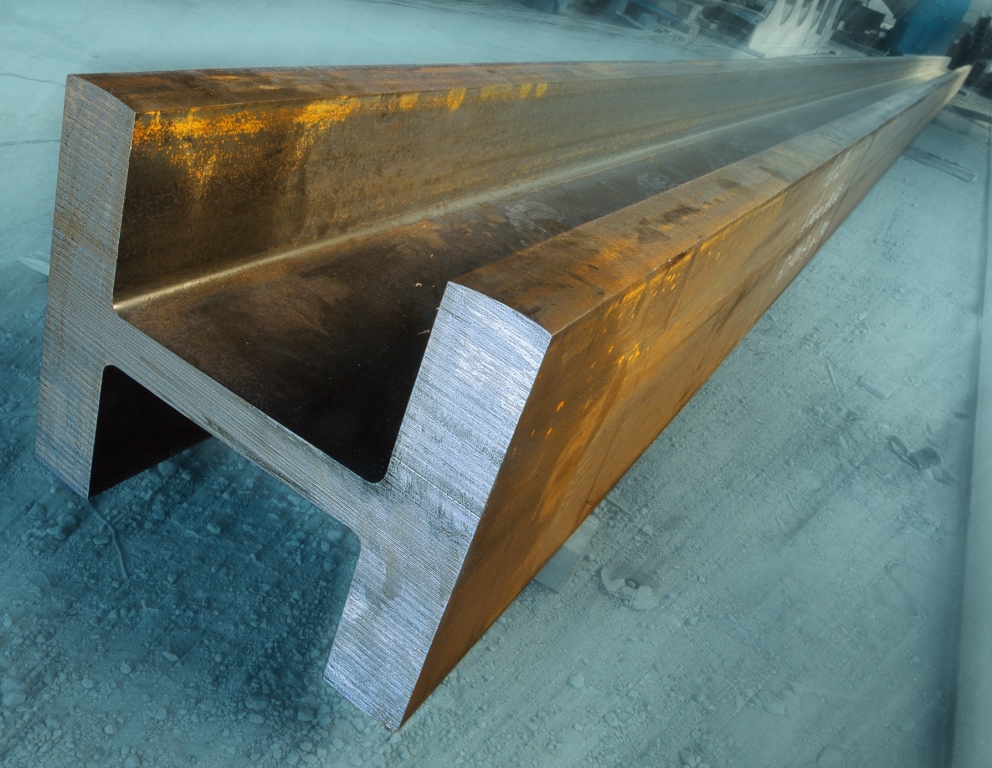
Fastmarkets’ weekly price assessment for steel beams, domestic, delivered Northern Europe, was €760-790 ($822-854) per tonne on Wednesday, unchanged from a week earlier.
Similarly, Fastmarkets’ weekly price assessment for steel beams, domestic, delivered Southern Europe, was €760-790 per tonne on Wednesday, stable week on week.
Market sources said that trading was slow because there was little need for restocking.
“Stock levels are normal in relation to the [weak demand environment],” a trader in Northern Europe said.
He added that mills have been booking orders on a limited basis, with market participants in wait-and-see mode due to their uncertainty over consumption prospects.
Meanwhile, scrap feedstock costs in Turkey’s bellwether market have dropped significantly in the past seven days amid poor finished long steel sales.
Fastmarkets’ calculation of its daily index for steel scrap, HMS 1&2 (80:20 mix), North Europe origin, cfr Turkey, was $405.46 per tonne on Wednesday, down by $10.56 per tonne week on week from $416.02 per tonne.
Published by: Holly Chant

NLMK Europe partners with Turkish plate distributor
The plate division of NLMK Europe has appointed Turkish steel service centre Askon Demir Çelik as an exclusive partner for distribution of quenched and tempered plate in Turkey, effective 1 February.
“The partnership with Askon Demir Çelik corresponds with NLMK Europe’s strategy of collaborating with well-established organisations, offering them comprehensive support in areas such as strategy, technical expertise, and marketing,” the steelmaker says.
The collaboration will be locally supported by specialists from NLMK Turkey, Kallanish notes.
Plate under the Quard brand has superior abrasion resistance for use in heavy-duty applications in harsh environments, NLMK says. Quend brand plate has exceptional structural resistance, making it suitable for demanding applications that require high-yield strength such as crane booms and chassis of heavy-duty machinery, it adds.
NLMK Clabecq is a Belgian producer of thin premium steel plate with tight thickness tolerances. Its equipment includes a reversible quarto mill, a newly revamped continuous finishing mill with four independent stands, an accelerated cooling system on the same line, as well as a modern quenching and tempering unit.
Askon Demir Çelik has steel service centres in Turkey, specialising in processing wear plate, high-strength steels, and special and commercial quality steels for the mechanical and component sheet manufacturing needs of OEMs and end-users.
NLMK Turkey is a trading unit of Russian steelmaker NLMK which manages export supplies of steel products manufactured at all group companies.
Elina Virchenko UAE