


UK HRC prices fall on weak demand, uncertainty over import safeguard measures
Market sources reported isolated buying interest with some distributers seeking to replenish stock levels for May and June. Despite the slight uptick in purchasing, market sources suggested that UK distributers are generally overstocked with end-use demand described as “poor” with little sign of near-term improvement.
Offers from European mills were generally heard as low as GBP660/mt DDP West Midlands with corresponding bids heard at GBP640/mt.
Offers for non-EU-origin HRC were heard in the range of GBP610-620/mt DDP West Midlands.
Market participants added that ongoing uncertainty surrounding the future of the UK steel safeguard measures on HRC is continuing to weigh on demand.
On Feb. 9 the TRA announced that it would review the suspension of the safeguard import quotas in response to Tata Steel UK’s plan to idle its two blast furnaces later in 2024 and replace them with electric arc furnaces.
A meeting between the TRA and ISTA, the international steel trade association, held in London on Feb. 28 failed to provide any further details about the likely outcome of the review.
At the time of the announcement, the TRA stated that its preliminary view would be to suspend the measure for nine months because Tata Steel is the UK’s sole HRC producer.
According to traders, the current weakness in the UK market has been exacerbated by uncertainty surrounding the measure with many distributers choosing to adopt a wait-and-see approach.
A decision to suspend the measure is likely to increase orders for non-EU HRC which is currently priced approximately GBP50/mt lower than EU-sourced material.
According to one trader, suspension of the measure could turn the UK into a dumping ground for non-EU HRC, resulting in a sharp reduction in prices.
Further price reductions could put significant pressure on UK distributers that purchased material in January with market prices now around GBP50/mt less.
Platts assessed HRC at GBP650/mt ($822/mt) on DDP West Midlands basis Feb. 29, down GBP40/mt from Feb. 22.

EU buyers avoid HRC bookings amid anticipated price decline
While demand remained low, production has been higher due to restart of the blast furnaces idled last year, sources said. As a result, the mills have been struggling to fill order books and still have been offering April-May delivery coil.
“Nobody wants the price decrease, it would depreciate existing stocks [of distributors],” a German service center said. “But as the mills keep production high the price drop is inevitable. So, everyone knows that the current stability is fragile, and it is not supported by either supply or demand.”
Platts assessed domestic prices for hot-rolled coil in Northwest Europe stable on the day at Eur715/mt Feb. 29.
Market participants estimated tradable values at Eur700-730/mt ex-works Ruhr. Offers from integrated mills have been heard at Eur730/mt ex-works Ruhr and from a re-roller at Eur690/mt ex-works Benelux.
Platts assessed domestic prices in South Europe down Eur25/mt on the day at Eur885/mt ex-works Italy on Feb. 29.
An Italian steelmaker has been offering HRC at Eur690/mt ex-works Italy and tradable values have been heard at Eur680-690/mt ex-works Italy.
Some market sources believe that the production cuts and furnaces stoppages are needed to prevent the coil price collapse.
“The mills need to cut the production as otherwise they would need to sacrifice the prices,” a Northwest European service center said. “And even that would not help to fill the order books as demand is low.”
Interest in imported coil has been limited as safeguard quotas for the second quarter are expected to be filled for Asian material within the first few days of April. In addition, importers have been avoiding the overseas material dur to risks with potential changes made during the safeguard review. In early February, the European Commission started the review of the safeguard measures, that can result in the extension for two more years — until mid-2026.
Platts assessed prices for imported hot-rolled coil in South Europe down Eur10/mt on the day at Eur610/mt CIF Italy Feb. 29.
“Offers of Eur620/mt CIF [Italy] from Asia are rejected by buyers, some bids are below Eur600/mt CIF [Italy] for small volumes. But the buyers are not interested in actually buying they are just testing how low the prices could drop,” a trader said.
Platts assessed prices for imported hot-rolled coil in Northwest Europe down Eur20/mt on the day at Eur614/mt CIF Antwerp Feb. 29.
Offers have been heard at Eur615-650/mt CIF Antwerp.


Pipemaker Schoeller maintains investment plans
Schoeller Werk, a German maker of stainless welded pipe, will hang on to its investment plans, despite the departure of a managing director at the end of last year.
The company, located in Hellenthal in the Eifel region of North Rhine Westphalia, intends to spend around €40 million ($43m) this year, mainly on production/processing equipment. This includes an XL laser welder for large pipes of 65-127mm diameter, Kallanish learns. For a value in the upper one-digit million euro range, “this is the largest single investment we have ever carried out”, says managing director Alexander Mertens.
Mertens is now the sole director, after the sudden departure of Frank Poschen, with whom he headed the company since 2022. Poschen left because of different strategic opinions, the company indicates.
Last year, Schoeller invested €17m, mostly on measures for energy-efficiency, as it has ambitious plans to operate climate neutrally as of 2035. This will involve in-house hydrogen production. “We want to receive all electrical energy from renewable sources,” Mertens says.
In 2023, Schoeller posted revenue of €240m with production of 64.5 million metres of pipe, Mertens observes. The company employs more than 800 people, in the Eifel and at a speciality pipes subsidiary in Thuringia, eastern Germany, which it acquired in 2019. It had temporarily planned to relocate 170 people from the Eifel to Thuringia, but these plans are off the table, Mertens notes.
Christian Koehl Germany


Continued low consumption depresses French rebar market
French rebar prices have declined only slightly compared to the beginning of February, but what concerns both buyers and sellers is low consumption and weaker on-year turnover registered throughout the value chain. With no change from last month, market sources are reporting back-to-back sales and no willingness to restock, Kallanish notes.
Customers who used to book rebar and mesh tonnages in the tens of thousands are now buying a few thousand tonnes per month. Sales of all finished long products are being dragged down by a stagnating private construction sector and weak economic growth.
No production stoppages are planned at longs mills for now, but sources believe that if orders continue to be subdued, some stoppages might be needed to balance demand and supply. Processing costs remain too high for mills to be able to continue producing and selling the current small volumes.
Purchasing groups also report buying less than usual as their members declare low visibility. They are continuing to book material in other EU countries, trying to find the best available deal.
French rebar values are hovering at €620-630/tonne ($672-683) delivered on average, sources suggest.
Natalia Capra France

Northern European rod market stable, registers downside risk
Northern European wire rod prices remain flat this week and the market is quiet again due to low demand, sources say. Participants do not expect this to change in the coming weeks.
“Activity continues to be very weak and the drawing mills are not restocking so far,” one buyer from the Netherlands tells Kallanish.
Domestic transaction prices for drawing-quality wire rod are at €650/tonne ($704/t) ex-works and mesh-grade wire rod is at €660/t.
Producers are asking for €680/t ex-works, on average, for mesh-quality rod.
“Rebar prices in Europe are weak, which is influencing the wire rod market,” another buy-side participant notes. “Scrap prices are also expected to fall in March amid low demand and exports.”
German old thick scrap sort 3 is at €355/t, while new scrap sort 2/8 was at €358/t. E40 shredded scrap was at €370/t. In Austria, scrap prices for new scrap, sort 2/8 is at €350/t, with old thick scrap sort 3 at €360/t.
“Imports from countries outside the EU, like Algeria and Egypt, continue not to influence the European wire rod market,” another participant in the market observes.
Offers are being heard from outside the EU at €620-630/t cfr Rotterdam, considered uncompetitive by European buyers.
Svetoslav Abrossimov Bulgaria
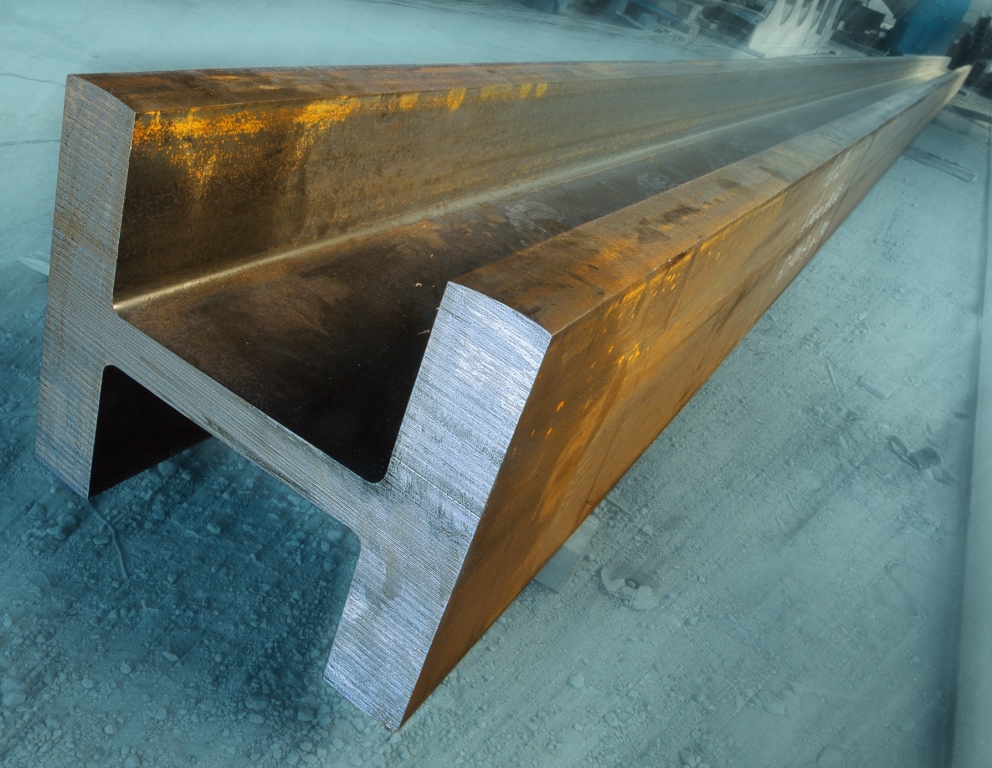
Steel beams mills in Europe under pressure, prices narrow downward
Fastmarkets’ weekly price assessment for steel beams, domestic, delivered Northern Europe, was €760-770 ($823-834) per tonne on Wednesday, narrowing downward by €20 per tonne from €760-790 per tonne a week earlier.
The corresponding weekly price assessment for steel beams, domestic, delivered Southern Europe, was also €760-770 per tonne on Wednesday, similarly narrowing downward by €20 per tonne week on week from €760-790 per tonne.
“Prices are under pressure, for sure, with much less demand [for beams],” a trader in Northern Europe said. But he added that mills have been resistant to downward movements in the market.
Falling scrap feedstock costs in Turkey’s bellwether market have added impetus to the price slide, market sources said, with HMS-grade scrap import prices falling further on Wednesday following the latest deal.
Fastmarkets’ calculation of its daily index for steel scrap, HMS 1&2 (80:20 mix), North Europe origin, cfr Turkey, was $390.27 per tonne on Wednesday, down by $15.19 per tonne week on week from $405.46 per tonne, and down by $21.06 per tonne month on month.
Sentiment has become more pessimistic as 2024 has progressed, market participants said, due to poor sales in the region.


‘Dead’ demand depresses long steel market across Northern Europe
As a result of the unchanged market conditions, prices were largely stable.
Fastmarkets’ weekly price assessment for steel reinforcing bar (rebar), domestic, delivered Northern Europe, was €650-665 ($704-720) per tonne on Wednesday, widening downward week on week by €5 per tonne from €655-665 per tonne.
Market conditions were unchanged in the Northern European rebar market. A persistent bearish outlook and weak demand resulted in minimal volumes being traded, Fastmarkets heard.
But producers, reporting lost profits for most of the year, have become resistant to offering discounts.
“The market is depressed now because so few construction projects are going ahead,” a buyer source said.
“With environmental regulations that are constantly changing, variable raw material costs, high levels of bureaucracy, labor issues, high energy costs and high interest rates, investment has shifted away from construction in Germany,” the buyer source said. “There are no incentives to build so investors are moving away from construction projects. I cannot at this point say when demand might pick up or changes will happen.”
Market participants have begun to leave the industry due to the unfavorable conditions, Fastmarkets heard.
“From developers to cut-and-benders to construction companies, many key players are removing themselves from the market due to the situation,” another buyer source said.
Meanwhile, Fastmarkets’ weekly price assessment for steel wire rod (mesh quality), domestic, delivered Northern Europe, was €650-660 per tonne on Wednesday, unchanged week on week.
Market sources reported weak demand, high logistics costs, and an overall pessimism.
High-stable scrap costs and high energy costs resulted in mills being unwilling to give discounts.
Fastmarkets’ calculation of its daily index for steel scrap, HMS 1&2 (80:20 mix), North Europe origin, cfr Turkey, was $390.27 per tonne on Wednesday, down week on week from $405.46 per tonne.
Published by: India-Inés Levy

European Commission approves $1.4 billion for ArcelorMittal steelmaking ops decarbonization in Germany
The aid will take the form of a direct grant and will support the construction of a direct-reduced iron (DRI) plant and three new electric-arc furnaces (EAFs) at ArcelorMittal’s Bremen and Eisenhüttenstadt plants.
ArcelorMittal first applied for funding in 2021, and the state aid is part of a total €2.5 billion investment in the two sites.
The DRI plant will be initially fed by natural gas with plans to switch to low-carbon, renewable hydrogen. Ultimately, the new installation will operate using exclusively renewable hydrogen.
The planned expansion of these two sites could bring an estimated 3.8 million tonnes of finished steel to the market. The new installations are expected to come online in 2026.
The new equipment will replace two of the three existing blast furnaces (BFs) and two of the four existing basic oxygen furnaces (BOFs) in Bremen and Eisenhuttenstadt.
ArcelorMittal Bremen runs two BFs with a combined capacity of 3.6 million tonnes per year of pig iron, and two BOFs with a combined capacity of 3.7 million tpy of crude steel. The Bremen steelworks can produce hot-rolled, cold-rolled and galvanized coils.
In Eisenhüttenstadt, the company has a 1.7 million tpy BF and two BOFs with a combine capacity of 2.7 million tpy. The site also produces hot-rolled, cold-rolled and galvanized coils.
ArcelorMittal Europe has set a target to reduce CO2 emissions by 35% by 2030, and to reach carbon neutrality by 2050.
Most European blast furnace-based steelmakers have been investing in green steel projects in the past years, cutting emissions to comply with strict EU regulations. Under the European Green Deal, the European Commission proposed a new EU target to reduce greenhouse gas emissions by at least 55% by 2030, compared with the levels emitted in 1990.
Additionally, the growing cost of carbon emissions in the EU has also pushed mills to seek alternative ways of steelmaking.
The price for a CO2 emissions permit in the EU reached a historical peak of €105 ($96) per tonne in February 2023. In February 2024, carbon permits prices ranged between €52-68 per tonne. When free carbon allocation under the European Emission Trading System are halved by 2030, carbon prices might jump to €200-250 per tonne, according to market participants.
Low-carbon steel is an integral part of sustainability goals for European steelmakers.
Green steel market in Europe
“There are very few suppliers in Europe who are able to supply [flat] steel [produced in electric-arc furnaces] with CO2 emissions below 500 kg [per tonne of steel], and supply is unlikely to grow substantially in the next couple of years, while demand [for such products] is likely to rise fast,” a mill source in Europe told Fastmarkets.
Fastmarkets’ weekly price assessment of green steel domestic, flat-rolled, differential to HRC index, exw Northern Europe was €150-250 ($161-268) per tonne on February 22, unchanged since December 14, 2023.
Market sources in Europe reported the premium for EAF-produced steel with CO2 emissions below 0.4 tonnes per tonne of steel at €200-250 per tonne and the premium for steel with zero carbon emissions under Scope 1 and 2 at €300-350 per tonne from a Nordic supplier.
Premiums for blast-furnace produced steel with reduced emissions were lower, and Fastmarkets’ weekly assessment of the flat steel reduced carbon emissions differential, exw Northern Europe was €40-60 per tonne on February 22, stable week on week.


Sinking ArcelorMittal Poland production reflects European deindustrialisation
ArcelorMittal Poland (AMP)’s crude steel production sunk to just 3.1 million tonnes in 2023, down 9% on-year. This represents a drop exceeding 2mt over the last five years.
Production has been gradually declining following the closure of AMP’s Krakow blast furnace in 2020, weakening European steel demand, imports’ increased share in consumption, and uncompetitive production costs in Europe. Output in 2022 was 3.4mt, after 2021 production of 4mt, a slight rebound from 3.9mt in 2020, which was plagued by the Covid pandemic, but still down from 4.8mt in 2019. In 2018, output had been 5.3mt.
According to worldsteel data, Polish crude steel production declined 13% last year to 6.44mt.
Last November, AMP announced its decision to adjust coke production levels to low demand and difficult coke pricing dynamics, by hot idling the coke oven battery in Krakow (see Kallanish passim). ArcelorMittal Tubular Products meanwhile plans to cease production at its Krakow welded pipe mill by end-March 2024 due to the weak market situation and negative economic outlook.
AMP’s electric arc furnace-based sister mini-mill ArcelorMittal Warszawa meanwhile maintained crude steel output on-year at 500,000t in 2023.
ArcelorMittal’s sales in Poland slumped 25% on-year in 2023 to $4.47 billion, seeing the country slip one place to fifth in the list of ArcelorMittal’s highest-earning countries. Of the top five, only top market the US saw sales rise in 2023, by 0.6% to $8.89 billion.
Adam Smith Poland

Argus Media EU Steel Summary
Long Steel Buyers delay restocking
Potential price increases considered by European longs producers, amid firm output costs, failed to materialise, as buyers delayed restocking, observing decreases in the international market.
In the domestic market sale prices for Italian rebar were hovering around €600/t (€340/t base) ex-works, with up to €10/t discounts available for sizable tonnages. Similar levels were indicated available for Italian rebar to nearby countries, which was still met with little interest.
Drawing quality wire rod in Italy, Spain and northwestern countries was available at €650-670/t delivered locally and to nearby markets, with Italian mesh quality wire rod quoted around €20/t lower. “Demand is low and we have to fight for every order”, a Spanish market participant said. In Poland wire rod prices locally and from other EU suppliers were still higher, at €670-700/t delivered.
In Germany and other western European countries consumption is estimated around 25-40pc down compared to previous years, with customers preferring to cover needs with local material. Smaller-sized construction companies are on short-time working as demand remains weak, a German participant said.
But German mills maintained rebar prices at €400/t delivered base, the equivalent of €665-670/t delivered including extras for sizes. Discounts for sizable tonnages up to €10/t lower were available. In the meantime, fabricators were quoting cut and bent rebar at €670-680/t, with €690/t targeted for smaller orders.
Polish rebar was still available at €640-650/t delivered to Baltic and central European customers. Spanish mills continued quoting rebar at €640-650/t cfr to nearby countries. Many participants were concerned about talks that Celsa plans to sell its assets in Poland, Norway and the UK, but the company did not respond to a request for comment.
In the Baltic region, customers adopted a wait-and-see mode amid decreasing prices, willing to restock at lower levels, given that stockists were quoting imported rebar at €630-635/t.
In Bulgaria, rebar offers stood at 1,230-1,245 lev/t (around €629-637/t) delivered, but this was negotiable.
Spanish customers were reported considering buying drawing quality wire rod at €610-615/t cfr from the Mena region last week, with Turkish suppliers willing to match the upper end of this range now, but no sales were heard concluded. In particular, Turkish rebar was quoted mainly at $610-620/t fob, with wire rod at $620/t fob and above, but some sellers were heard being more aggressive and were willing to sell $5-10/t lower.
Egyptian sellers were offering rebar and wire rod at $600/t fob and $610/t fob, respectively, but some of them were willing to accept lower levels. Sales from Egypt were reported mainly to the US, Europe and nearby markets in previous weeks. Algerian and GCC mills focused on the domestic or higher-priced outlets. Malaysian and Vietnamese wire rod was heard available at around €610/t cfr, with other Asian origins quoted slightly lower. Indonesian wire rod prices fell by $15/t lately, to $545/t fob.
European buyers were not willing to restock substantially locally or from overseas suppliers. An average distributor does not even buy at lower prices, because they are concerned of having too much inventory, an EU market participant said. Interest rates are very high too, he added.
Workable levels for high-carbon wire rod were indicated at €750-770/t delivered in Italy, with €780/t achieved in some cases.
Flat Steel
European hot-rolled coil prices have slipped over the past two weeks, with mills seeking orders in a very slow demand environment.
Argus’ daily northwest EU HRC index fell from €739.75/t on 7 February to €724.75/t on 21 February, a drop of €15/t. Over the same period of time the headline Italian index has dropped from €751.25/t to €724.25/t, a drop of €27/t.
Sentiment probably remains gloomiest in the north, given Germany’s continued manufacturing contraction. Service centres in the country are trading with each other to fill stockouts, rather than committing to imports or domestic mill production.
However, Italian prices have fallen more in recent weeks because of lower import offers. Asia has returned from the lunar new year with softer quotations from most sellers, widening the gap between import and domestic prices, and further dissuading buyers from committing to new tonnages.
Indian HRC was offered by one mill around €635/t cif, almost €90/t below domestic prices.
