


Steel transport costs still 150% higher due to Suez crisis: Italian steel body
For steel that traditionally passed through the Red Sea, the average price of transport by container ships has gone from $1,200 per twenty-foot equivalent unit in December to around $3,000/TEU, with all major container shipping companies continuing to shun the Suez route.
The cost had steadily decreased through February from its peak of $5,300/TEU in late January, but “the situation continues to be highly volatile and unpredictable, because freight prices change suddenly and make it impossible to hypothesize the evolution of costs from one day to the next,” Gian Pietro Alberti, Member of the Technical Committee of Assofermet Acciai, said.
The container freight rate for shipping from North Asia to the Mediterranean rose from $1,600/FEU Dec. 1 to $7,000/FEU Jan. 10, then a 16-month high, before easing to $4,000/FEU March 11, according to assessments by Platts, part of S&P Global Commodity Insights. One forty-foot equivalent unit (FEU) is equivalent to 2 TEU.
The Red Sea crisis has also driven up lead time — to transport steel to Europe from countries in the Far East, it takes 15-25 days more than the 30 days it previously took.
Increasing freight rates along with concerns about the exhaustion of safeguard quotas made EU buyers hesitant about booking tonnages from Asia.
The EU has had safeguard measures in the form of tariff rate quotas for imported finished steel since 2018. Market participants have expressed concerns about having to pay compensation fees to affected exporters if the measures come to an end in mid-2024.
Platts assessed the price of imported hot-rolled coil in Northwest Europe at Eur640/mt ($699/mt) CIF Antwerp Dec. 1, rising to a high of Eur680/mt Jan. 12. By March 11, it had dropped to Eur614/mt.
In Southern Europe, the price of imported coil was assessed at Eur640/mt CIF Italy Dec. 1 and at a high of Eur680/mt Jan. 25. On March 11, the price had fallen to Eur590/mt.
On long steel products, Turkish rebar market sources said sales to some export destinations — including its top export markets, Israel and Yemen — had been hampered by the Red Sea security situation, after already being affected by the Israel-Hamas war. Demand is expected to remain slow until these situations are resolved, with further pressure on Turkish export rebar prices expected.
Platts assessed Turkish exported rebar at $587.50/mt FOB March 11, flat on the day.
Author Annalisa Villa, annalisa.villa@


EU HRC market activity sluggish as buyers resist purchases
“Prices may go down further in Q2,” an Italy-based service center source said.
Lack of real demand led to some market participants anticipating mills to trim output, but others mentioned that lack of interest in imports may prompt producers to remain firm.
Offers were reported at Eur700/mt ex-works Ruhr for domestic HRC in Northwest Europe.
Platts assessed the price of domestic HRC in Northwest Europe stable on the day at Eur690/mt ex-works Ruhr March 12.
Interest in imports remained muted despite offers heard from Asian producers due to uncertainties about safeguard quotas.
“No one wants to risk buying imported material,” an Italian mill source said. “There are risks of every kind from safeguard quota exhaustion to price volatilities.”
Asian mills were heard making offers at Eur610-620/mt CIF Antwerp for July arrival cargoes.
Platts assessed the price of imported HRC in Northwest Europe stable on the day at Eur614/mt CIF Antwerp March 12.
Author Rituparna Nath, rituparna.nath@spglobal.

Germany launches first climate CFD tender with Eur4 billion on offer
Companies are to bid in a required carbon price supplement for projects to proceed. Those with the lowest supplement to compliance carbon prices in the EU ETS will proceed.
The first tender focuses on mid-sized companies in the paper, glass, chemical, steel and metals sectors.
Support has been capped at Eur1 billion per project, with a typical 15-year support contract more likely to sum in the triple digit hundred million euros range, the ministry said.
“We want to keep industrial production and sustainable jobs in Germany,” said energy minister Robert Habeck.
Companies can use funds to switch to greener processes using renewable power or clean hydrogen, or to add carbon capture equipment to existing processes.
Pre-qualified companies can now submit bids with the first tender closing in June. A second tender focused on larger projects is to open in the summer and two tenders more are planned for 2025.
Industrial carbon target
In total, the instrument is estimated to support some 350 million mt of CO2 savings by 2045 amounting to around 20 million mt/year, which is a third of the 2030 emissions reduction target for German industry, the ministry said.
The German industry, which saw annual CO2 emissions plunge 12% on year in 2023 to around 144 million mt, needs to hit a 2030 sector target of 118 million mt under Germany’s climate law.
Platts, a unit of S&P Global Commodity Insights, assessed the Dec. 2024 EUA contract at Eur56.13/mt on March 11.
Analysts at S&P Global forecast EUAs to average around Eur54/mt in 2024, rising to a Eur82/mt average in 2025.
Basis for the contracts is a dynamic CO2 price adjusted to market trends for EUAs, clean hydrogen and electricity, the ministry said in supporting documents for the tender.
Author Andreas Franke, andreas.franke@
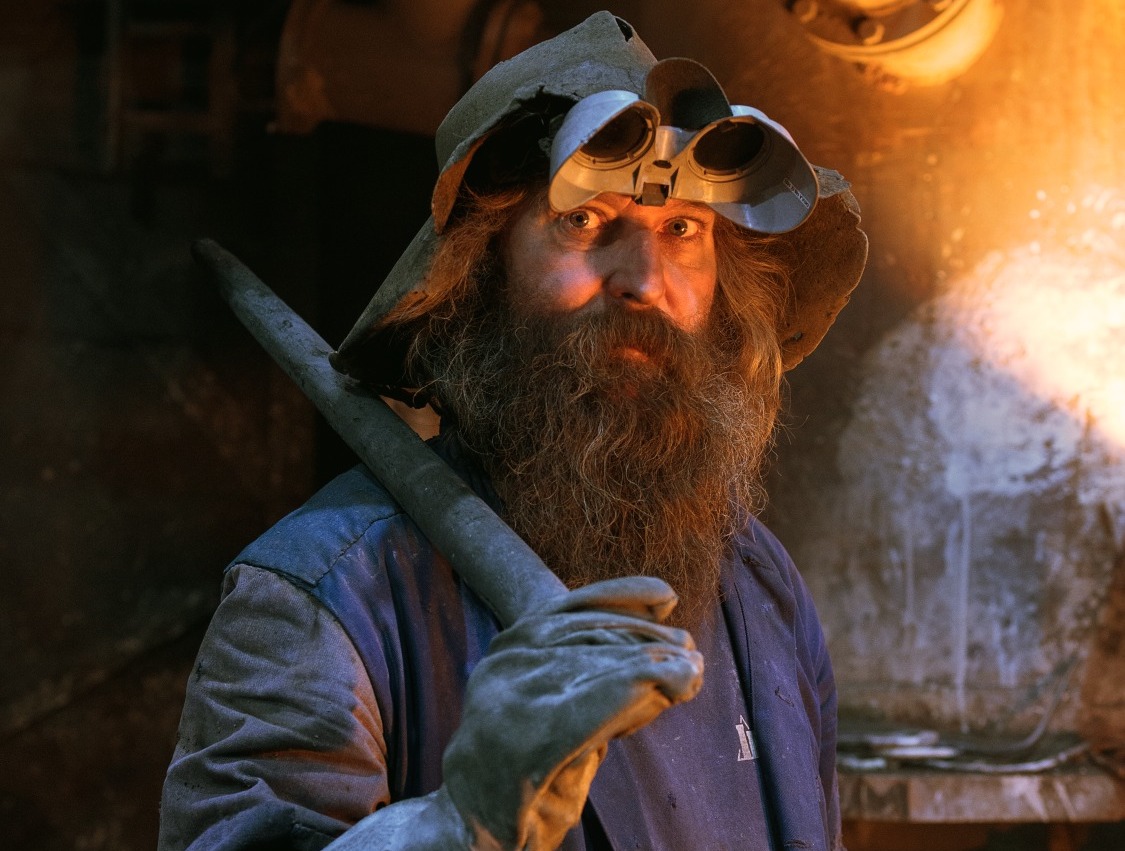
The Beauty of Steel: unveiling the enchantment of Steel with a visual archive
The steel industry, renowned for its strength and versatility, is about to be appreciated in a whole new light: its captivating beauty. Today marks the launch of a groundbreaking initiative, “The Beauty of Steel,” the first and largest visual database dedicated to celebrating the undeniable aesthetic appeal of steel.
“The Beauty of Steel” seeks to revolutionize how steel is perceived, showcasing its elegance and innovation. This one-of-a-kind platform invites the public on a virtual journey to explore the awe-inspiring world of steel production around the globe.
At the core of “The Beauty of Steel” lies a comprehensive online repository, accessible to enthusiasts, professionals, and the general public. The platform offers a treasure trove of captivating visuals, insightful articles, and compelling stories that unveil the aesthetic wonder of steel.
Beyond its vast collection, “The Beauty of Steel” prioritizes fostering a vibrant community. Interactive features like a geo map, user-generated content options, and authentic storytelling encourage global participation and a lively exchange of ideas. It extends its reach beyond the website with a strong social media presence, inviting users to connect using the hashtag #beautyofsteel.
“Steel is more than just a material; it’s a canvas for creativity and expression,” says Viktor Macha, Founder and CEO of “The Beauty of Steel.” “Our platform celebrates the inherent allure of steel while building a community of enthusiasts who share our passion for its aesthetic potential. Since 2008, we’ve documented over 355 factories across 5 continents and 33 countries. This is just the beginning.”
“The Beauty of Steel” welcomes everyone – engineers, managers, factory workers, artists, or anyone who appreciates beauty in everyday life – to explore, engage, and be inspired by the multifaceted beauty of steel.
Source: thebeautyofsteel.com

Acciaierie d’Italia attracts five interested companies: minister
Five multinational companies are interested in troubled steelmaker Acciaierie d’Italia (ADI), formerly known as Ilva, Italy’s Minister of Enterprises and Made in Italy Adolfo Urso said after a meeting with trade unions in Genova last week. Three of these five companies have projects that are “rather structured”.
“In Piombino, we managed to implement two different and complementary industrial projects. That of the Indian group [JSW] that has finally stated its intention to invest in the rail mill and that of the new investor, the largest Ukrainian multinational … the group Metinvest together with Danieli. I think this may be a model to apply in this case. We intend to build a national steel plan to present to the country before the summer, capable of showing the strategic objectives of the government,” Urso told local press.
The plan will include the relaunch of the former Ilva’s steelmaking sites, the relaunch of Piombino and Acciai Speciali Terni with Arvedi.
Last week, Urso and ADI commissioners Giancarlo Quaranta, Davide Tabarelli and Giovanni Fiori visited the plant in Genova. Union sources say the commissioners will implement a mapping of the equipment at the Taranto steelworks to understand the maintenance required.
ADI was declared insolvent by the Milan tribunal due to “an absence of liquidity”. This officially triggered the procedure of special administration initiated last month that took control of the firm from ArcelorMittal. It allows the state to inject into the company the necessary funds to guarantee production continuity (see Kallanish passim).
Authorities are seeking private investors for ADI after Prime Minister Giorgia Meloni said the government intends to avoid nationalisation. It is rumoured to be in talks with local steelmaker Arvedi, but also with Metinvest and Jindal Steel subsidiary Vulcan Green Steel.
Meanwhile, the commissioners have appointed Giuseppe Cavalli as director general of ADI.
Natalia Capra France


Abandoning ‘Power Pools’ hampers steel electrification: UK Steel
The UK government’s abandoning of the Green Power Pools policy proposal is a blow to the steel industry’s electrification aspirations. The move will likely hit steelmakers with higher wholesale electricity prices for many years before new generation is deployed in their locality, says UK Steel.
The Green Power Pool was one of the key proposals in the government’s Review of Electricity Market Arrangements (REMA) consultation process. Power Pools have been adopted in France, Italy and Greece and were proposed by government because of their ability to deliver a more efficient energy system and provide lower prices for industry.
The government has however confirmed that it will only proceed with a locational marginal pricing (Zonal LMP) model. Zonal LMP would separate the network into many individual zones, each zone with its own price, to encourage new generation near demand and encourage power users to locate near existing generation, UK Steel says. Steelmakers cannot however relocate to lower-price zones.
With a further switch to electric arc furnaces, it is expected that the sector’s electricity consumption will roughly double.
“Government is missing a golden opportunity to ensure electrified, green steelmaking can thrive in the UK,” UK Steel energy and climate change policy manager Frank Aaskov says in a note sent to Kallanish.
“As the steel industry switches to electric furnaces to reach vital Net Zero targets, we must not lose sight of how important electricity costs are in the move to green steel. We paid £117 million [$150m] more for our electricity in 2023 than our European competitors. Discarding the Green Power Pool proposal makes it unclear how the Government seeks to fix this,” Aaskov continues.
“The Government has worked hard to deliver its Industry Supercharger package to reduce industrial electricity costs, only for it to go forward with wholesale market reforms which could increase power prices. This is like giving with one hand, while taking with another,” Aaskov concludes.
Adam Smith Poland

ArcelorMittal agrees to buy 28% stake in Vallourec
ArcelorMittal has agreed to acquire 28.4% of French tubing producer Vallourec for approximately €955 million ($1.09 billion), Kallanish learns from a press release issued by the Luxembourg-based steelmaking giant late Tuesday.
ArcelorMittal will purchase 65.2 million Vallourec shares for €14.64/share from funds managed by Apollo Global Management. The parties expect to close the transaction in the second half of 2024, pending regulatory approvals.
ArcelorMittal ceo Aditya Mittal calls Vallourec “a quality, high added-value tubular business, with established positions of strength in the attractive Brazilian and US markets.”
Vallourec provides premium tubular goods for energy, automotive and construction. The statement says 85% of Vallourec’s 2.2 million tonnes of annual rolling capacity is focused around low-carbon, integrated production hubs.
“It has a critical role to play in the energy transition, producing vital products for hydrogen, [carbon capture] and geothermal applications, for which demand is expected to grow,” Mittal adds. “It also has a comparatively low carbon footprint with ambitious improvement targets.”
ArcelorMittal specifies that it will not pursue a tender offer for the remaining Vallourec shares over the next six months.
Dom Yanchunas USA

EU renews anti-dumping measures on Chinese HDG for another five years
An expiry review was started in February 2023, which concluded that injurious dumping would resume if measures were allowed to lapse, Fastmarkets understands.
The main export destinations for Chinese HDG were Thailand, South Korea, Vietnam, Brazil, Indonesia, Israel, Chile, Peru and Japan, according to data from the Global Trade Atlas (GTA).
The average export price for Chinese HDG was 15% lower than the price prevailing on the EU market during the review investigation period (February 2023-March 2024).
On top of that, shipping costs from China to Europe decreased significantly during the investigation period, the Commission said.
“If the measures were to expire and the prices at which the Chinese exporting producers would export the product concerned to the [European] Union were in line with the export price to third countries observed during the review, the level of dumping would be significant,” the Commission said.
The decision to maintain the AD duty in the range of 17.2-27.9% — depending on the supplier — for another five years was announced in the Official Journal of the EU on Monday and will come into effect on Tuesday March 12.
Renewing these measures on HDG imports from China was necessary to continue to ensure fair competition between imported and EU-produced HDG, Fastmarkets understands.
Market brief
European HDG prices have been falling since the beginning of February amid weak end-user demand.
“Lack of demand remains the key issue,” a buyer in Italy said. “Prices are sinking lower, but nobody’s buying because there is a perception that rock bottom has yet to be reached.”
“Most buyers have sufficient stocks and in fact are trying to lower their inventories,” a trading source in Europe said.
“My impression is that, due to low activity in the construction market and the threatening downturn in the automotive sector, nothing spectacular will happen,” the trading source added. “Besides, high interest rates don’t stimulate investments.”
Fastmarkets’ weekly price assessment for steel hot-dipped galvanized coil domestic, exw Northern Europe was €820-830 per tonne on March 6, down by €10-20 per tonne from €830-850 per tonne a week earlier.


EMW opens new dispatch hall in Saxony
EMW Stahl Service, a mill-independent steel service centre based in western Germany, has opened a new dispatch hall in eastern Germany.
The newly-built location in Treuen, Saxony state was commissioned in February and the firm has pledged further investment in the site, Kallanish hears. It has a storage area of over 1,200m² and an enclosed space of 10,200m³.
The interior work in the warehouse extension was completed in early December 2023. Asphalt work in the outdoor area will follow by the end of March. This will allow more trucks to be loaded in parallel and mean more loads can be handled per day, significantly reducing the dwell time of trucks, EMW underlines.
From April, a new crane system with a lifting capacity of 36 tonnes will go into operation, allowing the inventory to be increased from the current 7,700 tonnes to 16,000 tonnes.
The warehouse’s steel structure used only “green” steel from the X-Carb brand by ArcelorMittal. The “self-imposed goal is to become climate-neutral by 2030 in scope one,” says Michael Mockenhaupt, chairman of EMW’s executive board.
EMW is part of steel fabricator group Schaefer Werke, based in the Siegerland region of North Rhine Westphalia.
Christian Koehl Germany