


Voestalpine to sell German special steel unit
Buderus is part of voestalpine’s High Performance Metals division. Following its divestment, the division will concentrate its product portfolio on the high-tech segment of special materials, and reduce the production share of tool steel and engineering steel in the standard grade area. The resulting optimisation of the product portfolio will strengthen the High Performance Metals division’s competitive position, management believes.
In the Automotive Components unit – part of the Metal Forming Division – voestalpine is maintaining its internationalisation strategy. However, it will make targeted adjustments in response to the structural underutilisation of capacity in the automotive supply industry in Germany. Management has already responded by consolidating the production network, including the sale of the production site in Nagold, Germany, it says.
The above-mentioned measures will result in negative one-off effects on the group’s Ebitda of about €90 million ($98m) and on Ebit of about €410m, Kallanish understands. This means an adjustment to the Ebitda expectation for the business year 2023/24 from around €1.7 billion to around €1.6 billion.
In terms of other customer sectors targeted, the group notes that significant progress has been made, for example, in the area of automated warehouse technology. The promising railway infrastructure segment is also continuously expanding through strategic investments, it adds.
Christian Koehl Germany


OEMs ready for green steel, consumers resist: conference
“In the near term, I do not see the possibility to offer green steel without a price premium,” Eike Brünger, sales director at Salzgitter AG, said in an interview session. “However, I do imagine that green steel at some point will become the standard, and from that point will benefit from a cost effect in large-scale production.”
The other interviewee in that session, Gunnar Gütheke of Mercedes Benz, questioned the willingness of the consumer to pay more for a car. “Currently, the prices paid for cars are actually declining,” he noted. “Customers want a competitive and sustainable product, and we are working on offering this in a cost-neutral way.”
After all, the sustainability of a car is not confined to the steel used in it, Gütheke replied when the moderator asked how the company takes the “greenness” into its calculation. “We are breaking the calculation down to components,” he said, adding that the company aims to be able to offer cars with a zero-carbon footprint by 2039.
Another speaker, Guido Kerkhoff of steel distribution group Klöckner & Co, said the premium for green steel plays a negligible role in the finished product price. “Even if the steel price went up by 50%, the price for a passenger car would rise by a mere 0.7%,” he opined.
Christian Koehl Germany
Biden says US Steel must remain ‘domestically owned’
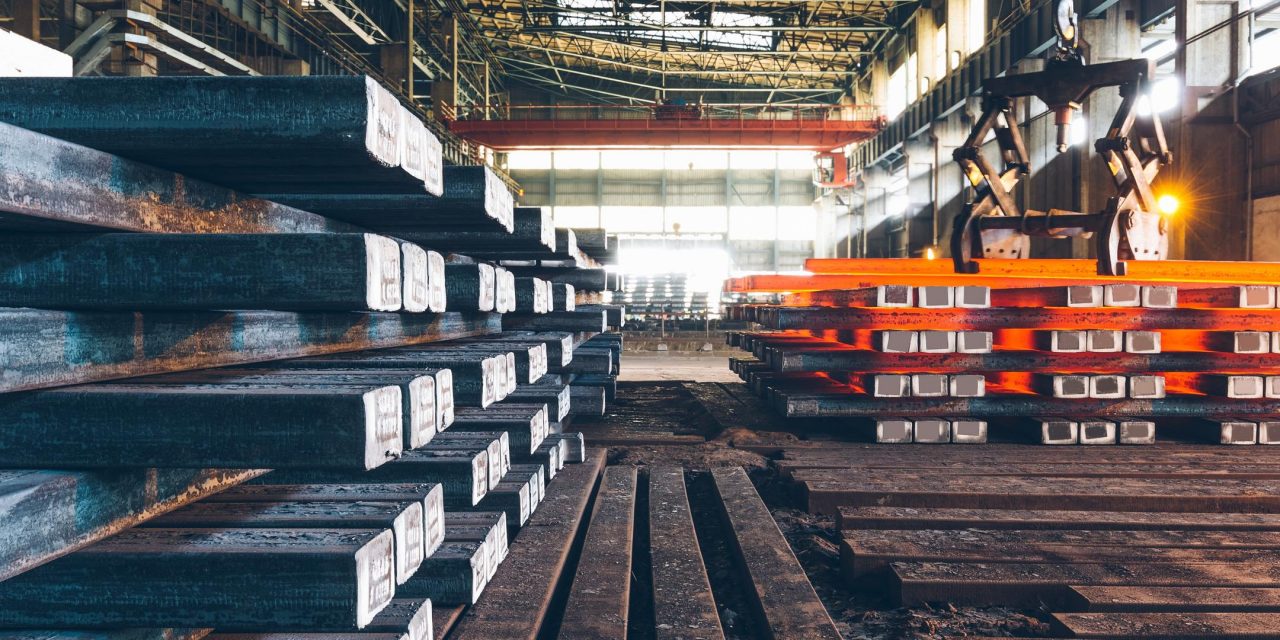
US president Joe Biden has issued new comments that are interpreted as more directly opposing the acquistion of US Steel by Japan’s Nippon Steel, Kallanish reports.
In a White House statement on Thursday, the president expresses concern about foreign ownership of a vital industrial enterprise and the impact on employees. Earlier Biden had promised a thorough review of the proposed acquisition, which the two iconic steelmakers announced in December (see Kallanish passim).
“It is important that we maintain strong American steel companies powered by American steel workers,” proclaims Biden now. “I told our steel workers I have their backs, and I meant it. US Steel has been an iconic American steel company for more than a century, and it is vital for it to remain an American steel company that is domestically owned and operated.”
The United Steelworkers (USW) labour union reacted very positively to the latest White House statement. The USW preferred an earlier takeover offer from domestic competitor Cleveland-Cliffs.
“Allowing one of our nation’s largest steel manufacturers to be purchased by a foreign-owned corporation leaves us vulnerable when meeting our defence and critical infrastructure needs,” the union emphasises in a statement of its own on Thursday.
A US flat-steel purchaser tells Kallanish that he would not favor a sale of US Steel to Nippon, but the source further argues that a takeover by Cleveland-Cliffs might be even worse for the customers.
“I would really have liked to see Steel Dynamics or some other domestic steelmaker bid. We can’t have Cliffs responsible for that much of the market. It’s too much control for them,” states the steel buyer.
Under the terms of its basic labour agreement with US Steel, the USW awarded Cleveland-Cliffs a right-to-bid assignment for the 123-year-old Pittsburgh, Pennsylvania-based company in August 2023. US Steel management rejected an unsolicited $7.3 billion buyout proposal from its Cleveland, Ohio-based rival that same month (see Kallanish 15 August 2023).
Biden’s latest remarks arrive ahead of an April visit from the prime minister of Japan, Fumio Kishida.
Technically, the Nippon acquisition agreement provides that US Steel operations would be, in effect, held by a now-small US subsidiary named NIppon Steel North America, based in Houston, Texas (see Kallanish 17 January). The USW has criticised the arrangement. Neither of Thursday’s statements directly addresses that nuance.
Kristen DiLandro USA

Weak demand inhibits trading in Northern European long steel market
Fastmarkets’ weekly price assessment for steel reinforcing bar (rebar), domestic, delivered Northern Europe, was €645-660 ($705-722) per tonne on Wednesday, down by €5 per tonne from €650-665 per tonne week on week.
Weak trading resulted in ongoing bearish sentiment in the Northern European rebar market, sources said.
“There is no demand either for domestic or imported stock,” a buyer source in Germany said.
Fastmarkets’ calculation of its daily index for steel scrap HMS 1&2 (80:20 mix) North Europe origin, cfr Turkey was $377.51 per tonne on Wednesday, up from $373.83 per tonne week on week.
Meanwhile, the corresponding Fastmarkets’ weekly price assessment for steel wire rod (mesh quality), domestic, delivered Northern Europe was €645-660 per tonne on Wednesday, stable week on week.
IREPAS
Weak consumption from the construction industry has continued to inhibit trading in the European long steel market, according to the short-range outlook published by the International Rebar Producers and Exporters Association on March 5.
“The EU market is very quiet as residential construction has declined substantially in northern Europe. There is very little activity and prices from domestic mills are as stable as a rock. There is some increase in imports including unusual origins such as China, Oman and the [United Arab Emirates]. Other sources are not able to compete with domestic offers,” the report said.
However, a softening of raw materials could take lower cost pressure on mills, the report added.
“In Europe, the slow economy has reduced ferrous scrap flow and also demand from the steel industry which is struggling with poor order books. The only good news for steel mills nowadays could be that the raw material prices, both for iron ore and scrap, are going down. Also, lower activity means lower volumes, reducing supply pressure on the markets,” the outlook added.


HRC prices little changed in Europe amid ‘non-existent’ trading
“There is no pick-up in trading. Lowering prices failed to spur steel demand. Buyers just keep purchasing hand-to-mouth, expecting prices to drop more tomorrow,” a buyer in Germany said.
Buyers were not interested in replenishing stocks due to lower order intake from end users, Fastmarkets understands.
Besides, industry sources expected domestic HRC prices to keep sliding in the short term, with a downtrend in raw materials prices adding pressure to already weak finished steel markets.
“Mills are hungry for orders but at the same time not prepared to cut prices significantly,” a buyer source in Northern Europe said. “[End-user] demand is also very weak; therefore, most buyers don’t feel the need to restock.”
Sources pointed out that buyers were destocking, with tough competition in the secondary market among steel service centers, traders and stockists.
Northern European steelmakers were reportedly trying to keep offers at €700-730 ($766-798) per tonne ex-works, while buyers’ ideas of achievable prices were heard at €680-700 per tonne ex-works.
Mills in Northern Europe were heard offering April-May lead times.
Fastmarkets calculated its daily steel hot-rolled coil index domestic, exw Northern Europe at €695.33 per tonne on Thursday, down by €0.92 per tonne from €696.25 per tonne on Wednesday.
The index was down by €12.80 per tonne week on week and by €50.67 per tonne month on month.
In Southern Europe, Fastmarkets’ corresponding steel hot-rolled coil index domestic, exw Italy was calculated at €673.75 per tonne on Thursday, down by €1.25 per tonne from €675.00 per tonne on Wednesday.
The index was down by €13.75 per tonne week on week and by €61.88 per tonne month on month.
In Italy, low tonnages of HRC were reported traded around €670 per tonne ex-works, with buyer estimates of achievable prices at €650-680 per tonne ex-works.
April-delivery HRC was still available from Italian suppliers, Fastmarkets understands.
Buyers said that the bottom for HRC prices in Italy has yet to be reached, so they were in no rush to make any bookings.
“There is still room for [HRC] price correction. The only efficient way to stop the downtrend would be output cuts, but European mills are not in a hurry to implement those,” a buyer in Italy said.
HRC offers for June-July arrival from Taiwan, Vietnam and Japan were heard at €580-600 per tonne CFR on Thursday.
But buying interest in import coil was also limited, despite prices being lower than domestic ones, Fastmarkets understands.
EU import safeguard risks were high, especially for the “other countries” category, where the cheapest offers come from — namely Vietnam, Japan and Taiwan — and lead times were quite long, sources said.
Buyers also expected import prices to sink even lower in the short term due to poor demand and sliding raw material costs, sources said.

Southern European steel longs prices stable; IREPAS outlook remains bleak
Fastmarkets price assessment for steel reinforcing bar (rebar) domestic, exw Italy was €625-645 ($684-705) per tonne on Wednesday, down by €5 per tonne week on week from €630-650 per tonne.
Minimal buying appetite and a bearish outlook resulted in weak trading in the Italian rebar market during the week, sources said.
“The minimum price is a little lower than last week, as the market is still flat,” a buyer source in Southern Europe said.
“Rebar seems to edge down every week as mills don’t seem to be able to sustain prices or increase them. And demand remains low as bad weather has slowed construction,” a second buyer source said.
“I would say prices are stable but with very limited volumes. We have had 10 days of almost constant rain, so many major construction sites are closed,” a producer source said.
“Scrap prices have not been lowering as quickly as expected, so I think producers will soon have to push for increases, hopefully aided by better weather and higher demand as construction projects related to Italy’s National Recovery and Resilience Plan try to catch up for lost time,” the producer source added.
Fastmarkets’ calculation of its daily index for steel scrap HMS 1&2 (80:20 mix) North Europe origin, cfr Turkey was $377.51 per tonne on Wednesday, up week on week from $373.83 per tonne.
And Fastmarkets’ price assessment for steel reinforcing bar (rebar) domestic, delivered Spain was €625-645 per tonne on Wednesday, down by €5 per tonne week on week from €630-650 per tonne.
Southern European wire rod
Fastmarkets’ price assessment for steel wire rod (mesh quality) domestic, delivered Southern Europe was €640-650 per tonne on Wednesday, narrowing downward by €5 per tonne week on week from €640-655 per tonne.
IREPAS
Weak consumption from the construction industry has continued to inhibit trading in the European long steel market, according to the short-term outlook published by the International Rebar Producers and Exporters Association (IREPAS) on March 5.
The outlook for future demand remained bleak.
“The current status of the market can be described as unstable in many markets or stable at a low level at best. The outlook, unfortunately, is slow and unsatisfactory,” the report said.
But lower raw materials prices could reduce cost pressure on mills, according to the IREPAS report.
“In Europe, the slow economy has reduced ferrous scrap flow and demand from the steel industry, which is struggling with poor order books. The only good news for steel mills nowadays could be that the raw material prices, both for iron ore and scrap, are going down. Also, lower activity means lower volumes, reducing supply pressure on the markets,” the report said.