


EU market participants call for production cuts to support HRC prices
Market sources said production cuts are needed to prevent further price drops in the European hot-rolled coil market as demand remained subdued March 18.
“Mills must correct the market announcing real cut in production and firm prices,” a trader source said.
Market participants are unwilling to buy domestic HRC at current levels and expect prices to bottom out further.
“Mills have to reduce capacities heavily to stop further drop of the prices,” a distributor source said. “There is no bottom price at all now.”
Tradable values domestic HRC in Northwest Europe were reported at Eur680-690/mt ex-works Ruhr, with the majority of data heard at Eur680/mt ex-works Ruhr.
Platts assessed the price of domestic HRC in Northwest Europe down Eur5/mt on the day at Eur680/mt ex-works Ruhr March 18.
In Southern Europe, tradable values for domestic HRC were reported at Eur650-670/mt ex-works Italy.
Platts assessed the domestic price of HRC in South Europe down Eur5/mt on the day at Eur660/mt ex-works Italy March 18.
Market participants were awaiting clarity on safeguard quotas for imported HRC, and as a result, import activity remained low.
In Southern Europe, offers for Vietnam and India-origin imported HRC were heard at Eur600/mt CIF Italy for May shipment and June delivery.
Author Devbrat Saha, devbrat.saha@spglobal.


European HRC prices continue trending lower; buyers claim output cuts needed
[CHECK PRICE]
https://dashboard.fastmarkets.com/p/MB-STE-0028
The index was down by €10.33 per tonne week on week and by €43.13 per tonne month on month.
Offers for HRC in Northern Europe were heard in the range of €700-710 per tonne ex-works. Compared to late February, when hot-rolled coil was offered at €730-750 per tonne ex-works, this is a decrease of €30-40 per tonne.
But these lower offers did not stimulate trading, and no major deals were heard in the market.
“Buyers prefer to live ‘hand-to-mouth’ and do not stockpile [HRC],” a German trader said.
Fastmarkets sources estimated the tradable market level to be in the range of €670-690 per tonne ex-works.
“Demand is very low because buyers wait for the ‘rock bottom’ of HRC prices,” a buyer source told Fastmarkets.
The buyer source added that only small tonnages of 100-200 tonnes were traded in the spot market, but there was no restocking.
A second buyer source told Fastmarkets that mills were still expected to cut output, but there was no official information from steel producers in that regard.
“This is the only option for the mills. Further price reduction makes no sense because the result will be lower prices, but customers will still not be motivated to buy,” the second buyer source added.
But other market sources pointed out that such a decision would not have an immediate effect on the market, because it takes some time to idle a blast-furnace. Besides, a few mills have just restarted some capacity in January and February.
In early 2024, several European steelmakers restarted blast furnaces that were idled in late 2023.
In Southern Europe, Fastmarkets’ corresponding daily steel HRC index, domestic, exw Italy was calculated at €670 per tonne on Monday, down by €1.67 per tonne from €671.67 per tonne on March 15.
[CHECK PRICE]
https://dashboard.fastmarkets.com/p/MB-STE-0892
The index was down by €5 per tonne week on week and by €60.83 per tonne month on month.
Offers for HRC in Italy were heard at €690 per tonne delivered, which nets back to about €680 per tonne ex-works.
Market participants estimated the tradable market level in the range of €660-670 per tonne ex-works.
Offers of imported material remained limited in the European market.
From Asian suppliers, HRC offers for June-July arrival were reported at €580-600 per tonne CFR.
May-shipment HRC from India was offered to Italy at €600 per tonne CFR.
Some bids for Asian HRC in Italy were heard at €550 per tonne CFR.
No fresh deals have been reported on Monday.
“Both domestic and import [HRC] prices are declining, so buyers prefer to wait,” a buyer in Italy said.
“Besides, there are high chances that some quotas might be quickly exceeded, and duties will be applied, so that also limited demand for imported coil,” he added.

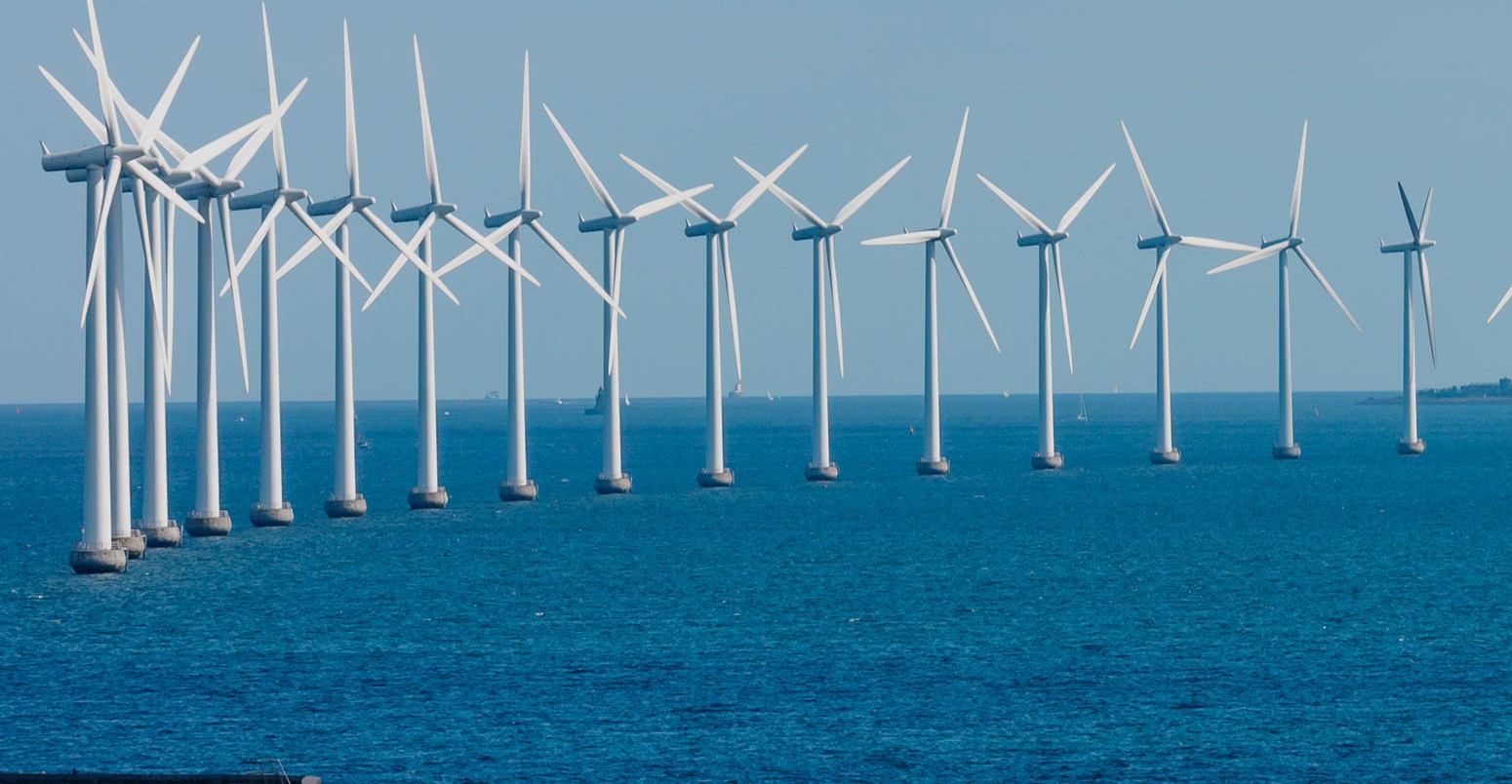
Ørsted to source first lower-emission plate from Dillinger
Wind farm operator Ørsted intends to procure lower-emission heavy-plate steel for offshore wind foundations from Dillinger (Hütte).
The German platemaker notes that the memorandum of understanding signed between the two companies will support its efforts in this field, and the optionality to deliver on expected future costumer demands.
Ørsted will be offered the first production of lower-emission steel from Dillinger, subject to availability and commercial terms and conditions. The plates form a part of the offshore wind monopile foundations and are intended to be used for future projects. According to Dillinger, the reduction of the process-related carbon emissions from production is expected to be around 55-60% compared to conventional heavy plate steel production.
Germany’s other big platemaker, Salzgitter’s Ilsenburg works, is currently in negotiations for a similar purpose, with Siemens Gamesa for the projected “Greener Tower” brand, its executives told Kallanish last week.
Christian Koehl Germany


Higher prices, cheaper energy to boost USSK earnings
Higher steel prices and lower energy costs, as well as management cost improvements are projected to drive better first-quarter Ebitda at US Steel Kosice (USSK) versus Q4 2023, says parent company US Steel.
In Q4, USSK saw lower average realised prices and product mix versus Q3; however, iron ore and coal costs were also lower.
In 2023, although USSK shipments rose 4% on-year to 3.9 million net tons, net sales fell 17% to $3.55 billion, while Ebitda was down 81% to $98m (see Kallanish passim).
Despite the lower sales in 2023, USSK’s merchant semi-finished steel sales rose 63% on-year to $168 million, US Steel’s annual report reveals. Of the main products, the largest fall in revenue came from cold rolled sheet, which saw sales drop 30% to $269m.
Of the main customer segments, shipments to construction rose 25% to 1.3mnt. Deliveries to steel service centres, and transportation and automotive each rose slightly to 848,000nt and 636,000nt respectively. However, deliveries to containers and packaging, and appliances and electrical equipment fell 26% and 24% respectively to 312,000nt and 172,000nt.
Adam Smith Poland

JSW Italy mulls EAF in Piombino: sources
JSW Italy may build an electric arc furnace in Piombino, as well as revamp the rail mill, sources close to the matter tell Kallanish.
Italy’s Ministry of Enterprises and Made in Italy (MIMT) signed this month a memorandum of understanding with JSW Steel to relaunch part of the troubled long steel facility in Piombino for an investment of €143 million ($155m).
JSW is vowing to double the Piombino rail mill capacity to 600,000 tonnes/year (see Kallanish 15 March). Part of its future investment is to build head hardening equipment and a tandem mill, with the aim of producing longer rails of 120 meters. The mill currently produces rails up to 108m, a source confirms.
The EAF project, still at a very early stage of development, may happen in a second phase. Due to the EU’s CBAM regulation, from 2026 the Piombino mill will not be able to import blooms from India and will be forced to produce them in-house. “Thanks to the revamp, JSW will be able to produce longer rails and intercept the large €1 billion order from the national railway company, Rete Ferroviaria Italiana (RFI). RFI is said to be ready to guarantee the order to JSW,” one source comments.
Last year, production at the Piombino rail mill was often disrupted due to delays in semis deliveries from JSW plants in India, but also amid weak orders. However, “there is no crisis in the rail market, but the €140m revamp is necessary to produce grades to reach certain EU nations where extreme cold or heat requires slightly different grades,” another source explains.
The rail mill is now idle for a week because of the late delivery of a vessel of semi-finished products from India. When Piombino’s rail capacity increases, an EAF to produce blooms will be necessary to guarantee constant and steady procurement of feedstock for rail production, particularly in view of the RFI order, the source argues.
In 2023, the mill is said to have produced approximately 20,000 t/month on average for about ten months, but this figure is unconfirmed by the company. MIMT minister Adolfo Urso, who visited the Piombino facility last week, said he expects the final binding agreement with JSW for the rail mill revamp to be signed by the summer.
JSW Steel is the $23 billion flagship business of the JSW Group. Its current capacity stands at 29.7 million t/y, but the company plans to increase this to 38.5m t/y by March 2025.
In Piombino, the steelmaker produces rails, bars and wire rod. At present, only the rail mill is operating, with 1,354 workers laid off until January 2025. The rail mill represents about 400 workers, a union source confirms. JSW did not respond to Kallanish request for comment.
Natalia Capra France

Klöckner’s Americas optimism fails to extend to Europe
Klöckner & Co is less optimistic about the outlook for the European market than for North America, which is expected to perform strongly.
The steel distribution group said in its annual results presentation last week that it expects “considerably stronger demand in its key European and North American markets,” in 2024. This contradicted the dim outlook given by many European players for demand and consumption in Germany and its neighbouring markets over the coming months.
On the day following the results presentation, chief executive Guido Kerkhoff clarified to Kallanish that Klöckner’s optimism is valid for North America, and much less so for Europe. He detailed that 60% of the company’s revenue now comes from North America, with Germany accounting for 25% and Switzerland for 15%. Only this month, Klöckner finalised the divestment of its operations in four other European countries – France, the United Kingdom, the Netherlands and Belgium. This leaves Germany and Switzerland as its only remaining markets in Europe.
Kerkhoff noted that he would welcome very much if Europe saw a recovery this year. He praised the prospects in Mexico especially, which he said “is booming enormously”.
Klöckner’s optimism triggered a rise in its share price by 3% after the announcement of annual figures. The same logic apparently applies for Klöckner as for other German groups with a strong international presence. These companies have defied over recent months the current lull in domestic investment and demand, and seen their share prices climb, leading to new highs for the DAX index this month at 18,000.
Christian Koehl Germany