


Demand, Chinese exports pressure global longs market: Irepas
While weak demand persists worldwide, “China’s aggressive exports” are putting pressure on the global long steel market. The market is perceived as unstable and challenging, with uncertainty looming, particularly beyond July, according to the according to the International Rebar Exporters and Producers Association (Irepas) in its April Short Range Outlook.
The global market anticipates positive signals from financial authorities overall, as customers in the US, EU, and Canada are postponing projects as they await easing interest rates, Kallanish notes.
China ramped up its exports in the first two months of 2024, surpassing its own record exports seen in 2015. Chinese steel producers are believed to be profitable, benefiting from reduced iron ore and coke prices, as well as lower energy costs within China, according to Irepas. Notably, China’s long steel exports continued to trail behind the country’s exports of flats.
Turkey’s Ministry of Commerce has imposed restrictions on exports of 54 product groups to Israel, including steel reinforcing bars and wire rods. Israel stands as one of the primary markets for Turkish exports within these product categories.
Following Turkey’s local elections at the end of March, there is anticipation of an economic slowdown in the country. The Turkish government aims to stabilize the value of the Turkish lira, which could be a disadvantage for Turkish steel mills in terms of their competitiveness.
In Europe, demand remains subdued, especially in Germany, where prices for reinforcing bars and wire rods are exceptionally low. The market saw a brief improvement at the end of 2023 but is not expected to recover until the second half of the year. Cut and bend prices are currently below replacement costs, and it may take several months for spreads to normalize.
Meanwhile, US steel output decreased by 600,000 tonnes in January-March compared to the same period in 2023.
Elina Virchenko UAE


Weak sales of finished product impact scrap: Assofermet
The outlook for finished steel product sales remains negative, says Italian steel trade association Assofermet. “Without a recovery in steel production and an improvement in the finished product sales – a picture that would lead to an increase in scrap demand– it is difficult to imagine possible increases in prices in the short term,” the association says in its market note monitored by Kallanish.
March domestic scrap prices declined between €15-20/tonne ($16-21/t). Demand from local mills remained consistently low due to production stoppages, which generated a significant slowdown in scrap deliveries. Despite the reduced deliveries, mills’ scrap yard stocks remain medium-high, Assofermet observes.
On the collection side, merchants noted a drastic drop in scrap availability on the market owing to the slowdown of manufacturing activity. This has sparked concern and may cause shortages if scrap demand recovers.
Meanwhile, the positive sentiment in the April pig iron market is forecast to drive some more scrap demand in Italy.
In March the Italian and European markets were generally weak with mills not showing particular interest in pig iron procurement. Russian producers refused last month to decrease their offers to Italy and the difference between pig iron and scrap prices remains significant. Internationally, Assofermet registered good pig iron demand and price levels. Offers from Brazil and Ukraine have resurfaced in addition to Russian offers.
US pig iron imports increased last month, allowing Brazilian suppliers to maintain a price level about $40/t higher than the European market.
Natalia Capra France
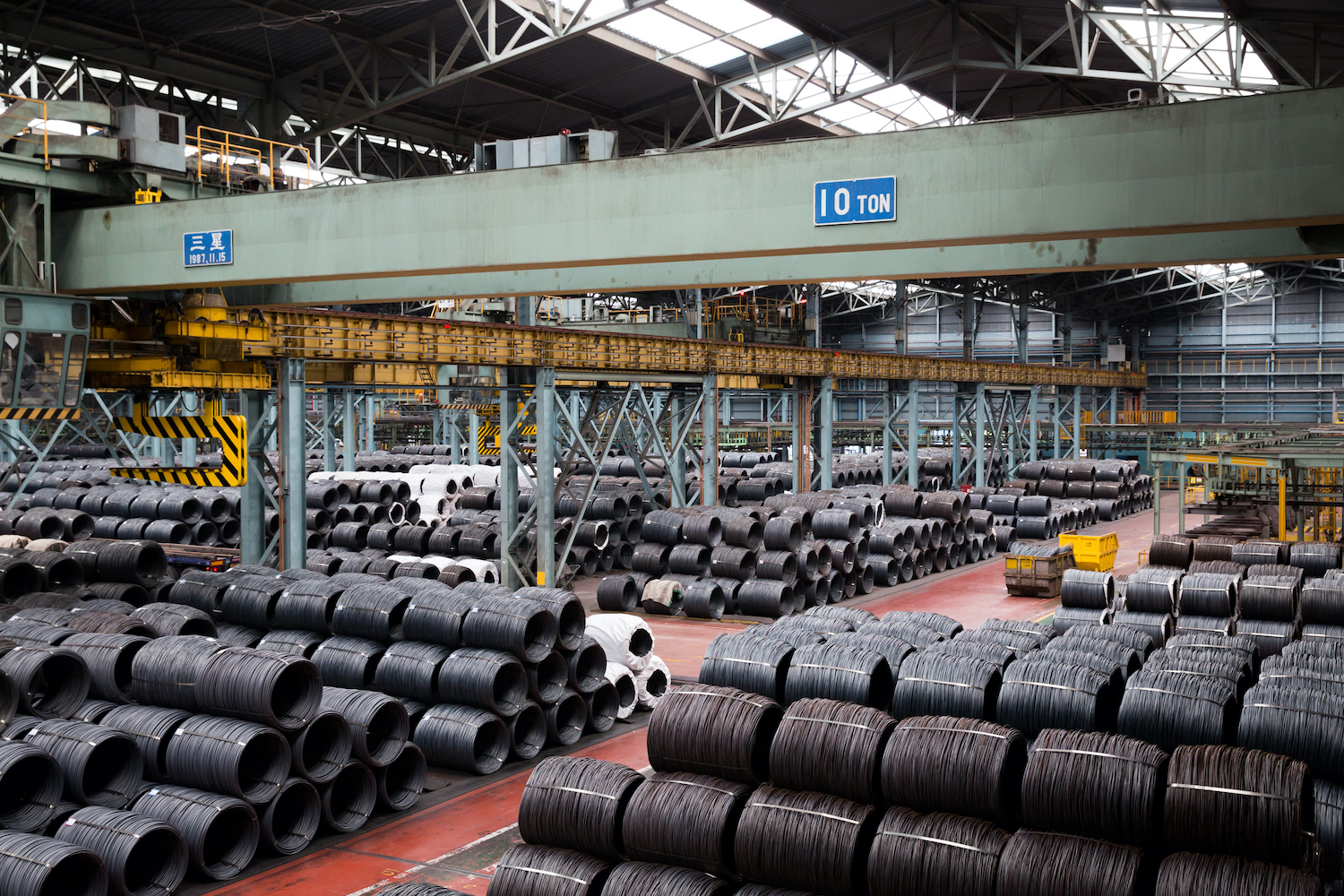
Worldsteel predicts modest steel demand rebound in 2024-25
Demand for steel worldwide will rebound by 1.7% in 2024 and will grow a further 1.2% next year, worldsteel predicts in a new short-range outlook examined by Kallanish.
Noting that those consumption growth rates are still relatively weak, worldsteel observes that the global economy seems headed for a soft landing and steel will be in heavy demand from public infrastructure and decarbonisation programs.
“After two years of negative growth and severe market volatility since the Covid crisis in 2020, we see early signs of global steel demand settling in a growth trajectory in 2024 and 2025,” comments Martin Theuringer, chairman of the worldsteel economics committee.
Steel demand in 2024 is projected to be 1.79 million tonnes, according to worldsteel’s outlook. For 2025, the volume should reach 1.81mt.
The apparent end of the monetary tightening cycle will provide relief from the downturn in housing activity and global manufacturing, Theuringer emphasises.
“We expect to see continued strength in investments in public infrastructure and manufacturing facilities,” the outlook document mentions. “However, we also observe that high construction costs and labour shortages emerge as major constraints for many major economies, and this might constrain further growth in public infrastructure and manufacturing facility investments in the short-term.”
Worldsteel predicts that steel consumption in China will remain flat this year compared with 2023. India is experiencing strong steel demand growth. A rebound is occurring in the MENA and ASEAN regions.
“The developed world is also expected to show a strengthening recovery with 1.3% in 2024 and 2.7% in 2025, as we expect to see steel demand finally showing a meaningful pick up in the EU in 2025 and continued resilience in the US, Japan and Korea,” the outlook specifies.
Further, “risks have moderated since our last update in October 2023 and are balanced,” worldsteel observes.
“On the upside, we believe that a faster than expected disinflation accompanied by further monetary policy easing could provide a significant boost to steel using sectors, particularly housing construction,” the authors comment. “We also believe that an acceleration in global decarbonisation efforts or in efforts to strengthen public infrastructure against rising climate change risks are significant positive risks that can support global steel demand going forward.”
Escalating geopolitical tensions, persistent inflation, and rising public borrowing in major economies, however, “are significant risks that certainly have the potential to slow down the ongoing economic recovery or even derail it.”

European HRC prices continue to slide on lack of demand
Offers from integrated mills in Northern Europe for HRC with May-June lead times were heard in the range of €650-660 ($704-715) per tonne ex-works on Monday.
This was in sharp contrast with offers reported in early March at €720-730 per tonne ex-works.
But the lower prices failed to spur buying and trading remained very slow. Sources told Fastmarkets that demand from key steel-using sectors has dropped by around 15-20% year on year and this has affected purchases.
Trading was also limited by buyers’ expectations that the rock bottom for HRC prices has not yet been reached, while producers resisted further price drops citing high input costs.
“Mills claim that current [HRC] prices are already at cost-line for them and everyone sees that reducing the price doesn’t have any effect on the market – trading remains weak,” a buyer in Germany told Fastmarkets.
“Next week [at the Tube and Wire trade fair on April 15-19] in Dusseldorf, we might see some restocking, but prices are unlikely to rebound unless mills announce output cuts. And even in this case, effects on the [HRC] market will not be immediate,” a second buyer said.
Industry sources estimated tradeable market levels in the range of €640-660 per tonne ex-works, depending on tonnage.
Fastmarkets calculated its daily steel HRC index domestic, exw Northern Europe at €651.25 ($705.64) per tonne on Monday, down by €5.83 per tonne from €657.08 per tonne on Friday.
The index was down by €12.50 per tonne week on week and by €53.00 per tonne month on month.
Fastmarkets calculated the corresponding daily steel HRC index domestic, exw Italy at €635.00 per tonne on Monday, down by €0.83 per tonne from €635.83 per tonne on Friday.
The index was down by €10 per tonne week on week and by €43.75 per tonne month on month.
HRC offers in Italy were mainly heard at €650-660 per tonne delivered, which is equivalent to €640-650 per tonne ex-works.
Fastmarkets’ sources estimated tradeable market levels in the range of €630-640 per tonne ex-works, but trading remained very limited.
“It is not a question of price – it is a question of [end-user] demand. Demand remains very, very limited and most buyers can live on hand-to-mouth [HRC] bookings,” a trading source in Europe said.
Import offers of HRC from Asian producers to Italy were heard at €560-580 per tonne CFR. According to a buyer source, even lower levels by €5-10 per tonne can be negotiated for potential deals.
But customers remained reluctant to buy due to the overall downtrend with HRC prices, the buyer source added.
Another reason for the postponed signing of import contracts was the lack of clarity with the allocation of the import quotas for the second quarter of the year.
Published by: Julia Bolotova, Darina Kahramanova


Lindqvist steps down as SSAB chief
Lindqvist has six months’ notice and has agreed to stay until a successor is in place, according to the announcement. A recruitment process to find his successor will start immediately.
Lindqvist has been SSAB’s CEO for 13 years and has worked at the company for 26 years.
“During Martin’s time as CEO, SSAB has developed into a publicly traded company with global markets and a strong financial position,” SSAB board chairman Lennart Evrell said in the announcement. “He has been fundamental in building the company that SSAB is today and in driving the transformation to fossil-free production.”
SSAB Americas, a division of SSAB, was selected for award negotiations as part of the US Department of Energy’s $6 billion investment in projects to decarbonize energy-intensive industries.
The company was chosen for the potential construction of a HYBRIT manufacturing facility, which can produce fossil-free iron by using green hydrogen instead of fossil fuels.
SSAB Americas, the largest producer and supplier of steel plate in North America, operates a mill in Muscatine, Iowa, and the company’s special steels division has a facility in Mobile, Alabama.
Published by: Rijuta Dey Bera

European HRC market sentiment bearish on weak demand, oversupply
European hot-rolled coil prices remained under pressure on April 9 due to combination of poor demand and excess supply.
The mills have been trying to hold prices stable in local markets but were giving discounts when making offers to other European countries, sources said.
“We see different prices from the mills depending on the destination and a buyer, there is no unified approach,” a Benelux-based service center said.
Platts assessed domestic prices for hot-rolled coil in Northwest Europe stable on day at Eur640/mt ex-works Ruhr on April 9.
Tradable values were reported at Eur630-640/mt ex-works Ruhr with majority of data reported at Eur640/mt ex-works Ruhr.
German mills offered material to local buyers at Eur650-670/mt ex-works Ruhr, offering material with a discount to other European countries. Market participants said the discounted prices – around Eur610-620/mt ex-works Ruhr – were not available to the German market and were excluded from the assessment.
Steelmakers across Europe have been offering May delivery coil.
Platts, part of S&P Global Commodity Insights, assessed domestic prices for hot-rolled coil in South Europe stable on day at Eur620/mt ex-works Italy on April 9.
Offers have been heard at Eur640-650/mt delivered Italy, bids – at Eur620/mt delivered Italy and tradable values – at Eur620/mt ex-works Italy. Some sources, however, said that the prices of Eur620/mt ex-works would not be accepted for sales within Italy.
Demand, in the meantime, remained muted from end consumers and distributors have been avoiding bookings in the bearish market. Majority of market sources believe that steelmakers need to stop some furnaces to tackle excess supply and, therefore, to prevent price drops.
“The only way to deal with lack of demand and oversupply is stoppages of the furnaces, but the steelmakers take their time,” a German service center said.
Some market sources, however, reported that the distributors might need to restock soon as they have been avoiding booking of substantial volumes since the start of the year.
“Demand still low, with possible small improvement during second half of April due to restocking, with May feeling more positive,” an Italian service center said.
“There are some lights are there by the end of the tunnel, bigger distributors started to talk about restocking, searching for bottom and intensifying the interest,” a distributor said.


Turkey restricts exports to Israel amid ongoing attacks in Gaza
Turkey’s Ministry of Commerce has announced that it has restricted the exports of 54 product groups to Israel, which continues to violate international law with its attacks on Gaza in Palestine since October 7, 2023.
No details regarding these restrictions, which came into force as of today, April 9, have been disclosed yet. There was already public pressure for measures against Israel. Market sources see this decision as “more of a political one”, SteelOrbis understands.
The restricted products include rebar, wire rod and flat steel products, as well as steel pipes and fittings, profiles, iron and steel construction materials, iron-steel wire, cement, aviation and jet fuel and metal processing machinery. It was reported that the measure will remain in effect until Israel declares a ceasefire in Gaza and allows an uninterrupted flow of humanitarian aid to the Gaza Strip.
Meanwhile, in the January-February period this year, Turkey exported 49,990 mt of rebar and 11,387 mt wire rod to Israel. In the given period, Israel was Turkey’s second and fourth main market for rebar and wire rod exports, respectively.
