

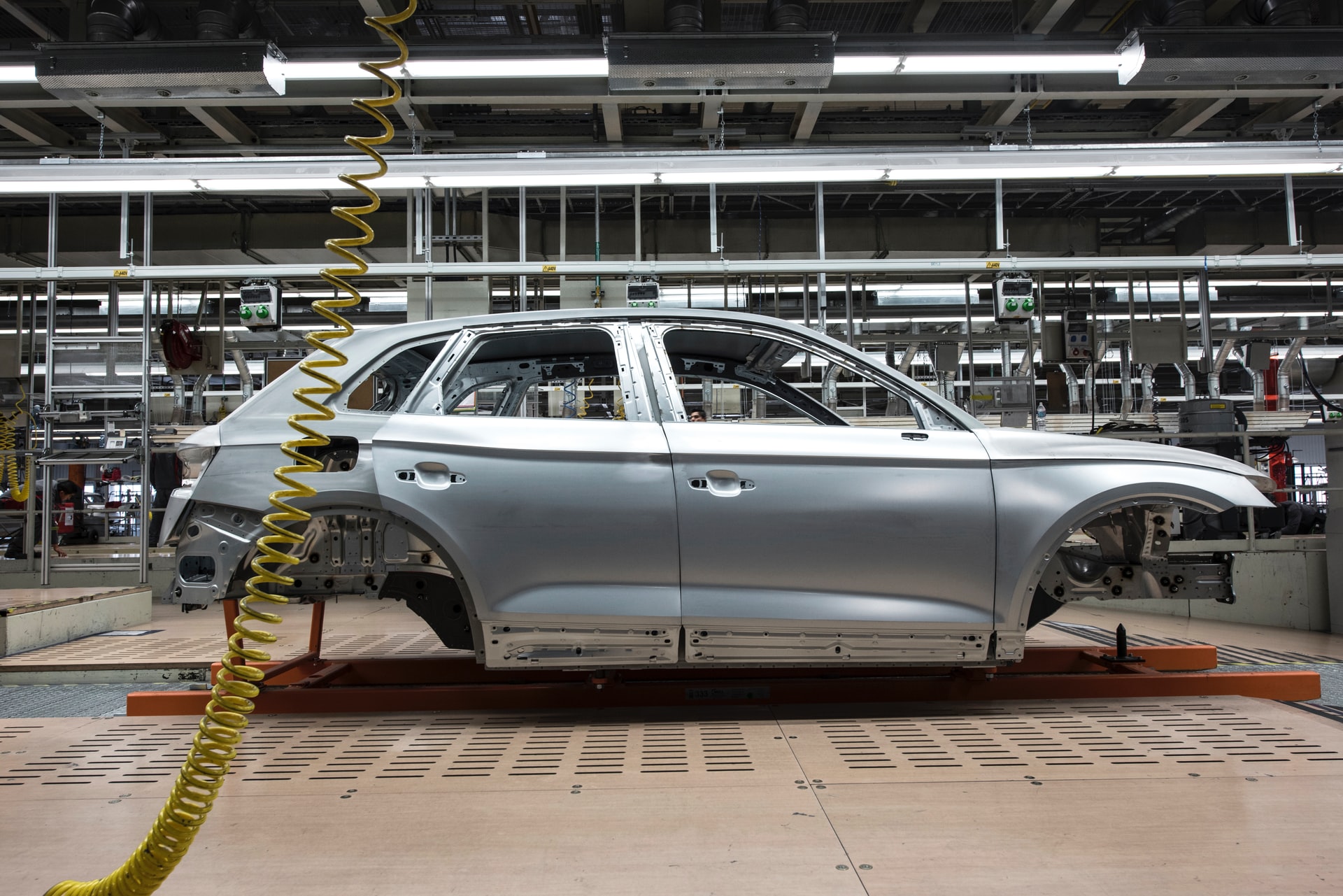
Italian car output declines, underperforming European neighbors
Italian passenger car production declined in February and in the first two months of the year, Kallanish notes from local carmakers association Associazione Nazionale Filiera Industria Automobilistica (Anfia) preliminary data.
Car output fell year-on-year by 5.1% in February to 41, 873 units and by 19.1% on-year in the January-February period to 69,249 units.
By comparison, German two-month output declined by 5% to 674.900 units, and by 2% to 374,800 cars in February. The UK recorded a rise in February of 14.6% to 79,907 cars and of 17.8% to 162,904 units in January-February. Spain’s February car production increased by 1.8% to 182,567 cars and in January-February by 9% to 359,375 cars, Anfia points out.
“The automotive production sector is in the context of industrial production still decreasing in February compared to the previous year’s levels. In February, the industrial production index as a whole closed down 3.1%, and is down 4.4% in the first two months of the year compared to the same period in 2023,” Anfia says in a report.
Italy has 23 car production plants. Spain has 17 plants, France 31 and Germany 42.
Last year, Italy produced 796,394 vehicles in total, including cars, vans and trucks. Anfia is collaborating with the government and Stellantis to define a roadmap for the automotive industry’s relaunch and energy transition. It aims at boosting Italy’s automotive production capacity beyond the level of 1 million vehicles/year through state support on decarbonisation, research and development and new production plant investments.
“We hope that in the coming weeks, consumers will be able to take advantage of the upcoming incentives of the new green bonus for the purchase of low-emission vehicles. Together with the actions to support demand for new technologies, it is important to create the conditions to increase national vehicle production volumes in the short-medium term, ensuring the levels of employment and competitiveness of the supply chain during and beyond the energy transition,” Anfia general director Gianmarco Giorda comments.
According to the World Steel Association’s Short Range Outlook (SRO) steel demand forecast for 2024 and 2025, while other steel-consuming sectors should show some recovery in 2024 and 2025, the automotive industry which showed a strong activity improvement in 2023 is expected to experience weak growth in 2024 (see Kallanish passim).
Natalia Capra France


SSAB ceo Lindqvist to step down
After 26 years with SSAB, and 13 years as its president and chief executive officer, Martin Lindqvist has decided to leave the company, it informs Kallanish.
He has six months’ notice, but has agreed to stay until a successor is in place. A recruitment process will start immediately, the Swedish steelmaker says.
Lindqvist has been employed at SSAB since 1998 and served as the company’s president and ceo since 2011. Under his leadership, SSAB completed the acquisition of Finnish company Rautaruukki. In 2016, work began to transform the steel industry to fossil-free production through Hybrit, a joint venture involving SSAB, LKAB and Vattenfall.
SSAB has since then taken a policy decision to transform the entire Nordic production system to fossil-free production.
”At some point, you have to step down, and for me that time has come. In the future, I will spend more time on board assignments and advisory roles,” Lindqvist says.
Christian Koehl Germany

Market slowdown hits Van Leeuwen performance, remains profitable
After highly favourable market conditions in the previous two years, Van Leeuwen Pipe and Tube Group’s performance stuttered in 2023 but remained positive.
Demand in various markets declined, causing price pressure which resulted in lower gross margins, Kallanish hears from the Dutch company. Revenue stayed virtually the same as in 2022 due to a higher volume of direct deliveries and projects, at €1.62 billion ($1.72 billion). Operating result amounted to €60 million, after €104m 2022, and net result came to €43m, down from €88m.
Sales from stock were lower in all markets than the previous year due to decreased market demand. This was, however, offset by a higher volume of direct deliveries and projects.
Van Leeuwen notes it maintained its share in the European industrial markets. Demand was lower in the construction and mechanical engineering markets, but was good in the hydraulics and automotive sectors. The group benefited from solid activity in the global energy markets, as it supplied energy projects in the Middle East, Asia and the US.
The company invested in logistics and storage systems, specialised processing systems, and in the modernisation and expansion of warehouses and offices. It also invested in sustainable solutions. It has the ambition to be the greenest pipe and tube distributor in the world by 2030. To date, Van Leeuwen has invested €6.5m in captive green electricity generation at sites in the Netherlands, Germany, Romania, Denmark and Australia.
Christian Koehl Germany
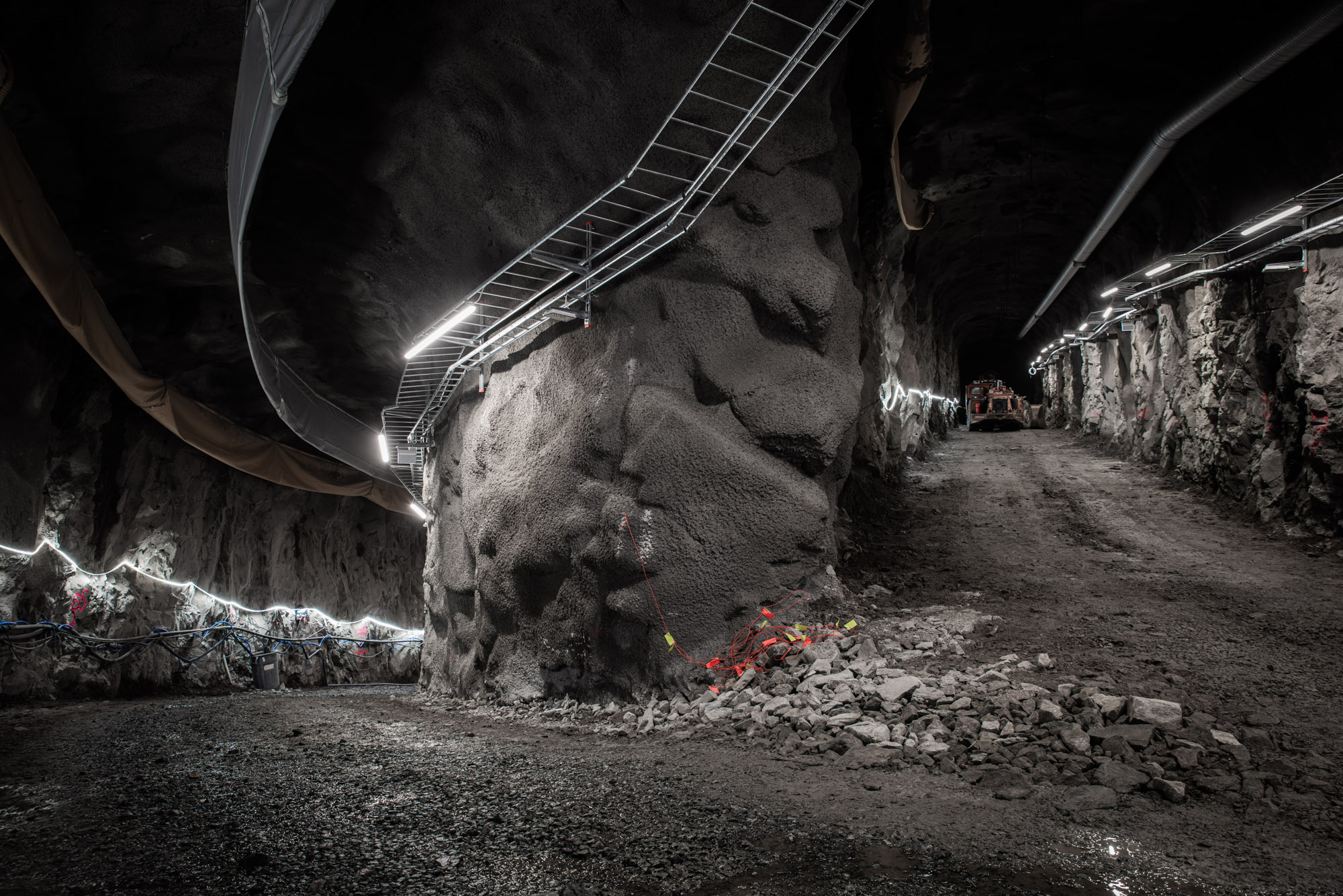
European steel lacks hydrogen, CCUS needs accelerating: panel
It will likely take 20-25 years for Europe to secure sufficient hydrogen supply to decarbonise its steel industry. In the meantime, Polish coking coal will continue to play a role, while carbon capture use and storage (CCUS) must be accelerated. This was the conclusion of a panel during Monday’s Industry in Transition conference held in Poland’s industrial capital, Katowice.
Europe’s steel industry requires 5 million tonnes/year of hydrogen supply to decarbonise its operations, Eurofer director general Axel Eggert pointed out at the event organised by the Katowice commerce and industry chamber, attended by Kallanish. Major steelmaking projects in the region will be ready to use hydrogen by 2026/27, but there is no hydrogen supply. Conventionally-produced hydrogen is available at €10-11/kg but it needs to be at €2-3 to be competitive, he added.
Coking coal will be required as long the alternative technology is not fully implemented, which will take a long time in the EU, opined Tomasz Slezak, who recently became chief executive of state-owned Polish coal exporter and steel processor Weglokoks. Poland has the coal mines, the skilled workforce and the knowhow, which gives it some breathing space. However, coking coal is negatively perceived despite being on the EU’s Critical Raw Materials list.
European Parliament Member and former Polish Prime Minister Jerzy Buzek, moderating the panel, pointed out that by utilising CCUS, industrial firms could use coal for the next 100 years if they wished.
Eggert added that CCUS is critical for the development of Europe’s steel industry. There will not be sufficient renewable energy supply to meet demand by 2034, when the EU’s free carbon emissions allowances are due to expire. That means CCUS will be necessary to continue coal-based steelmaking for a time.
The EU’s Net Zero Industry Act (NZIA) has set a target of 50 million tonnes of annual CO2 storage capacity by 2030. This would need to increase to 280mt by 2040 and 450mt in 2050 to achieve climate neutrality. “We need to speed up the process because ten years is not a lot,” warned Eggert, adding that CCUS locations still need to be chosen and the installations set up.
Adam Smith Poland