


EUROMETAL at Wire & Tube 2024 in Düsseldorf
This week took place the Wire & Tube 2024 Düsseldorf fair. Considered the world’s most important trade fair for the tube, wire & cable industry and the central hub for international business, the 2024 edition brought together around 2.700 exhibitors from 60 countries and thousands of visitors from 135 countries in Düsseldorf.
The desire for personal exchange in these – economically and geopolitically – difficult times was clearly noticeable in the industry. “The world seems to turn faster and we turn with it. Every two years our industries get together here in Düsseldorf – the community stands by its location on the Rhine. We are very grateful for this and are working consistently to ensure that wire and Tube will also remain their industries’ No. 1 trade fairs in future,” delights Daniel Ryfisch, Director wire, Tube & Flow Technologies.
EUROMETAL’s presence at the fair made it possible to meet colleagues, members and and introduce our federation to dozens of contacts.
In 2026 wire and Tube will again fly their flags in Düsseldorf, from 13 to 17 April 2026.



EU’s CBAM to spur other countries to introduce carbon border levies
The EU’s introduction of a Carbon Border Adjustment Mechanism is prompting some countries to introduce their own carbon border levies while others are considering retaliatory measures, the International Emissions Trading Association said April 18.
IETA, in a report, gave an overview of country-level responses to CBAM, finding that some — including Australia, Turkey and the UK — were developing their own carbon border levies in response.
“CBAM is making waves around the world, although it is still a decade before the system will be fully in place” IETA EU Policy Director Julia Michalak said in a statement. “It has triggered varying reactions ranging from threats of WTO challenges to commitments to establishing domestic carbon markets.”
Japan, Singapore and South Korea were the most likely supporters of CBAM, IETA said.
Canada may enter into bilateral agreements with the EU, while South Korea was considering changes to its own emissions trading system, the association said.
However, more hostile responses have come from petrostates and other countries exposed to exports to the EU.
“South Africa calls it discriminatory, India is considering retaliatory measures and China has raised concerns within WTO,” IETA said.
Phasing in from 2026, CBAM will levy a carbon tax on imports of selected energy intensive materials and products into the EU, removing the gap between the EU’s ETS carbon price and the export country of origin’s carbon price.
Analysis by S&P Global Commodity Insights found Brazil, Canada, South Africa and Turkey will be most exposed to the mechanism, with iron and steel by far the biggest sector targeted.
Platts, part of S&P Global Commodity Insights, assessed nearest December EU ETS allowances at Eur69.98/mt CO2 ($75/mt CO2) on April 17.
UK Emissions Trading System allowances settled at GBP35.62/mtCO2 ($44/mt) on April 17, while South Korea allowances were assessed at just Won 8,800/mt ($6.4/mt).
The new EU carbon border tax entered into application in a transitional phase Oct. 1, 2023, with the first reporting period for importers originally set to end Jan. 31, 2024. That was later extended by 30 days.


European HRC prices approaching bottom, supported by uncompetitive import
Domestic hot-rolled coil prices almost reached bottom on April 18 and such sentiment has been supported by rising import offers.
The rise of import offers was mainly driven by euro to the US dollar exchange rate.
Demand remained muted with no end-user consumption rise expected and distributors holding back from big bookings. Spot buyers have been avoiding to build stocks and preferred to buy smaller lots more frequently to cover the immediate needs and to avoid risks related with possible price decrease in the future.
Majority of sources believe that prices would stabilize around the current levels as costs would not allow a drop and support from some restocking and less competitive import would not be enough to push prices up, unless domestic capacities are cut.
Some market participants, however, believe that prices might drop below Eur600/mt ex-works Europe if the exchange rate changes.
Platts assessed domestic hot-rolled coil prices in Northwest Europe down Eur5/mt on the day at Eur625/mt ex-works Ruhr on April 18.
Tradable values were reported at Eur620-630/mt ex-works Ruhr.
A deal was heard at Eur625/mt ex-works Ruhr.
A German mill has been offering the material at Eur630/mt ex-works Ruhr.
Platts assessed prices for imported material in Northwest Europe up Eur5/mt on the day to Eur595/mt CIF Antwerp.
Offers were reported at Eur600-610/mt CIF Antwerp for the material from Asia.
Platts assessed domestic prices for hot-rolled coil in South Europe unchanged on the day at Eur620/mt ex-works Italy April 18.
Tradable values were reported at Eur620/mt ex-works Italy and a deal for a bigger lot with a pipemaker was heard at Eur615/mt ex-works Italy, but the price was not available for the wider market.


Ovako and FNsteel partner to boost low carbon wire rod production in Europe
Sweden-based steelmaker Ovako has announced that it has signed a partnership deal with the Netherlands-based premium wire rod manufacturer FNsteel to boost low carbon production of high value-added wire rod in Europe.
The deal will last for a minimum of two years, commencing in 2025.
The partnership will see Ovako’s Smedjebacken mill managing the production flow of the low carbon-footprint steel raw material used by FNsteel to manufacture premium wire rod. The low carbon and high value-added wire rod to be produced will be supplied to the automotive, construction and engineering sectors in Europe.
Ovako emerged as the ideal partner for this partnership as the steel it produces has an 80 percent lower carbon footprint compared to the global average.


France’s GravitHy secures electricity supply for its DRI plant to be built in Fos-sur-Mer
France-based sustainable iron company GravitHy has announced that it has signed an agreement with UK-based energy company EDF to guarantee a stable supply of electricity for its low-carbon direct reduced iron and hot briquetted iron production plant to be built in Fos-sur-Mer in southern France.
This partnership will enable GravitHy to benefit from low-carbon electricity at a price that is competitive over the long term.
The plant, which is expected to have an annual production capacity of two million mt, is scheduled to begin production in 2027. The plant will be France’s first low-carbon direct reduced iron and hot briquetted iron production plant.
“Our mission to decarbonize the steel industry depends essentially on a supply of green, low-carbon electricity, in sufficient quantities and at a competitive price,” José Noldin, CEO of GravitHy, said.
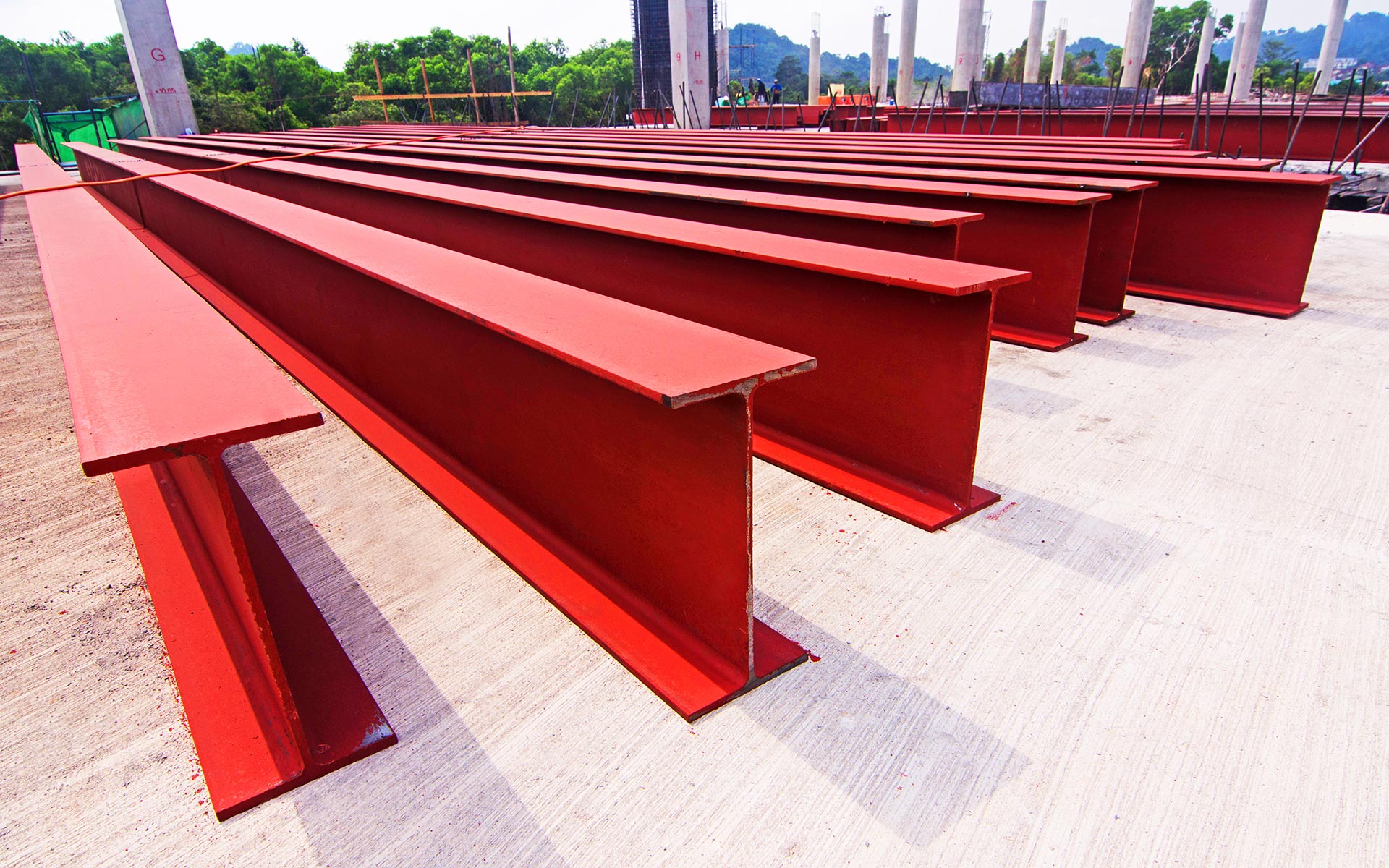
Weak market conditions drag down steel beam prices in Europe
Fastmarkets’ weekly price assessment for steel beams, domestic, delivered Northern Europe was €690-755 ($734- 804) per tonne on Wednesday, down by €10-15 per tonne from €700-770 per tonne a month earlier on March 20.
Similarly, Fastmarkets’ weekly price assessment for steel beams, domestic, delivered Southern Europe was €690-755 per tonne on Wednesday, down by €10-15 per tonne month on month from €700-770 per tonne.
Sources told Fastmarkets there was heavy downward pressure from stockholders and traders due to slow consumption and a depressed European economic outlook.
In its Winter 2024 Economic Forecast in February, the European Commission revised its growth outlook for the EU in 2024 to 0.9%, down from 1.3% in its autumn 2023 forecast.
Inflation in Europe is expected to fall to 3% this year from 6.3% in 2023, according to the forecast.
Many market participants were attending the Tube Trade Fair in Dusseldorf at the end of the latest pricing period, from April 15-19, with price movements traditionally following the event.
Scrap prices in Turkey’s bellwether market have remained relatively stable so far this month.
Fastmarkets’ calculation of its daily index for steel scrap HMS 1&2 (80:20 mix) North Europe origin, cfr Turkey was $378.74 per tonne on Wednesday, up $3.31 per tonne month on month from $375.43 per tonne on March 18.
Published by: Holly Chant


HRC prices in Europe might be at ‘rock bottom,’ sources say
Trading was still rather limited in the European HRC market, but producers were reluctant to reduce their prices further, citing high costs.
“Restocking is slow; buyers do not want to commit to big volumes because demand downstream is still bad,” a mill source told Fastmarkets.
“But trading activity is still a bit better than two weeks ago,” the mill source added.
“Demand remains quite limited from all major steel-using sectors, and it is not likely to rebound, so the stabilization of steel prices is the best-case scenario we can count on now,” a source at a steel-service center said.
Northern European mills were offering HRC with May-June lead times at €630-640 ($671-681) per tonne ex-works.
Deals were reported at €620-630 per tonne ex-works in Germany.
A Benelux-based re-roller was offering HRC with lead times of four to five weeks at €600 per tonne ex-works.
“The market is oversupplied, and output cuts needed to be done at least a month ago, so the market could see the effect on prices in the second quarter,” a buyer in Germany said.
So far, only Slovakia-based producer US Steel Kosice has confirmed a blast furnace stoppage, Fastmarkets reported on Tuesday.
As a result, Fastmarkets calculated its daily steel HRC index, domestic, exw Northern Europe at €627.08 ($667.44) per tonne on Thursday, down by €3.34 per tonne from €630.42 per tonne the day before.
The index was down by €13.27 per tonne week on week and by €61.92 per tonne month on month.
Sources said that some mills have already started negotiations for the long-term contracts with end users for the second half of 2024, with target prices reported around €780 per tonne, compared with around €750-800 per tonne settled for the first half of 2024.
In Southern Europe, meanwhile, Fastmarkets’ daily steel HRC index, domestic, exw Italy, was calculated at €620.42 per tonne on Thursday, up by €0.42 per tonne from €620.00 per tonne on Wednesday.
The Italian index was down by €4.58 per tonne week on week and by €49.58 per tonne month on month.
Official offers for May-delivery HRC from one local supplier in Italy were reported at €640 per tonne delivered on Thursday, which is equivalent to €630 per tonne ex-works.
Buyers’ estimations of tradeable values were heard at €600-620 per tonne ex-works, but transactions were heard done at no lower than €620 per tonne ex-works so far.
In the secondary market, 4mm HR sheet was heard traded at prices no higher than €720-740 per tonne CPT. Several sources reported that some sellers were selling such material at €700 per tonne CPT, but it was not widely confirmed by the market.
Restocking was limited in Italy, but further price drops were seen as unlikely due to high costs of production.
Besides, import prices were firming up, which was also seen as a supportive factor.
Offers from Asia were heard at €590-600 per tonne CFR, for June-shipment HRC.
A sizable tonnage of Japan-origin coil had been transacted at €590 per tonne CFR earlier this week
Some Asian suppliers had withdrawn their HRC offers from the market by Thursday and were expected to come back with higher offers next week, sources said.
From Turkey, an offer was reported at $660 per tonne CFR without the anti-dumping duty, but the price was considered by buyers to be too high.
Published by: Julia Bolotova

NW European rebar prices remain weak
Rebar players in northwestern Europe see no signal for a resurgence of prices, but do not see much room for a further deterioration either, Kallanish hears.
There has been little move since base prices in many cases undercut the mark of €400/tonne ($427) in March. That translated to a delivered price of €665/t, including the size extra of €265/t. The Lent period meant lean business, and Easter did not bring a resurrection for the construction industry and its suppliers.
A buyer at a distributor in southwestern Germany sees base prices at €390/t, “and with a lot of luck at €380.” One regional mill is recognised for attempting keeping prices up, whilst other buyers report softer figures. A manager of another mill does not contradict the suggestion that €370-380/t is a fair assessment these days.
According to one Dutch buyer, who also reports €375/t as his purchasing price, the mills cannot go any further down to cover their costs. “The only way would be up,” he tells Kallanish.
The mill manager maintains that there is little movement to be expected in the next two quarters on the construction market, neither for volumes nor for prices.
According to another buyer, eastern German rebar mills these days sell material to Poland, noting that this traditionally used to be the other way round. “The European Union has resumed its subsidies for construction there, which had been suspended temporarily,” he states, explaining the better grounds for business in Poland.
Christian Koehl Germany


Italian coil derivative prices continue to weaken
Prices continue to be weak for coil derivatives with the market slow. Sales volumes of both sheet and tube remain weak. The sector is looking at the Tube & Wire trade fair in Düsseldorf which sources hope it may stimulate some buying activity, sources tell Kallanish.
This week the market continues to be quiet. A service centre source says that demand resumed slightly in April. His order books are being filled and lead times are lengthening.
An agent however and another service centre report that volumes have not properly returned and the current orders are delivered at low prices, strongly impacting company results. In Dusseldorf multiple sources report high attendance in the flat world from all over Europe but “nothing concrete is achieved. Contracts are not being agreed,” a source from the trade show comments.
Today the main point of concern is that service centres’ and end-users’ margins are squeezed. The current price of sheet is unsustainable considering coils prices. Sheets sellers do not have the support to increase values. End-users report low values and throughout the value chain sources do not believe in durable increases for hot rolled coils. Some European HRC producers are mulling price hikes to stop the current slide and on the basis of stable import volumes from Asian countries. According to a source, EU levels may rise by about €30/tonne ($32) after the Düsseldorf event.
While Italian HRCs contracts hover at €620-630/t delivered, domestic hot rolled sheets stand at around €700-710/t ex-works. Those service centres trying to sell at €730-740/t will lose orders. Pickled sheets are at €730-740/t. The proposed level of €750/t has been refused by buyers. Service centres now receiving arrivals of HRC paid €680-700/t delivered on average, the prices at the beginning of March. With the current sheet levels they are losing money.
In a previous interview this week, another service centre said demand should continue to improve for about a month “before gaining confidence and refusing customers’ low bids, and then think about increasing our prices.”
Natalia Capra France

Italian rebar flattens, long producers prepare for increases
Italian rebar prices are flattening week-on-week as the latest effort by local producers to implement an increase was not successful, market sources tell Kallanish.
Rebar makers were seeking €30-40/tonne ($32-42) increases ten days ago but the stagnating market and low consumption caused values to remain stable. The increases have had the effect of at least stopping the price decline. Producers are asking approximately €330/t base ex-works. Domestic values are still pegged at €290-300/t base ex-works. Including extras, rebar contracts remain at €550-560/t base ex-works. Domestic mesh is flat in contracts at about €380-390/t base ex-works. Buyers must add transport costs and around €300/t in size extras, sources suggest.
“Mesh is particularly difficult product to sell at the moment because stocks are extremely high,” a seller says.
On other long products such as beams, merchant bars and wire rod, producers are mulling increases starting next week, multiple source confim, at an average of €20/t. This follows ArcelorMittal’s move to raise all commodity grade long steel prices by €20/t across Europe this week, effective immediately for all new orders.
Several long mills will implement production stoppages in the final week of April for the two bank holidays of 25 April and 1 May, balancing demand and supply. A longs distributor says he continues to adopt a wait-and-see attitude and refuses to buy at rising values.
Natalia Capra France