


SSAB’s high-strength steels prevail in weak environment
SSAB expects lower but stable prices in the second quarter, on higher shipments compared with Q1, the steelmaker’s executives said in a conference call on Wednesday monitored by Kallanish.
The company’s operating result for Q1 amounted to SEK 3.16 billion ($290 million), a drop by around one third from the first quarter of 2023. Revenue was SEK 27.15 billion, down from SEK 31.90 billion.
The decrease compared to a year earlier was primarily due to US plate prices that reversed from a high level. The market in Europe continued to be relatively weak, whereas the market for high-strength steel was more stable, the company states.
Demand for high-strength steel was slightly lower compared to the start of 2023, mainly within segments related to the construction industry in Europe and North America. Demand for standard steel in Europe was relatively weak and restocking was less pronounced than normal, outgoing chief executive Martin Lindqvist told call participants.
Market prices for strip and heavy plate in Europe took a downturn during the first quarter following the recovery that took place at the end of 2023. Distributors adopted a cautious approach during the quarter and import volumes increased compared to a year earlier. Inventory levels in the market are estimated to be normal.
In North America, demand for heavy plate was lower and market prices fell during the first quarter. Inventory levels at North American distributors were still low, but they remained generally cautious against a backdrop of lower market prices. For the second quarter, SSAB Americas’ shipments are assessed to be somewhat higher, while prices will be somewhat lower.
Christian Koehl Germany

French car output ticks up in 2023
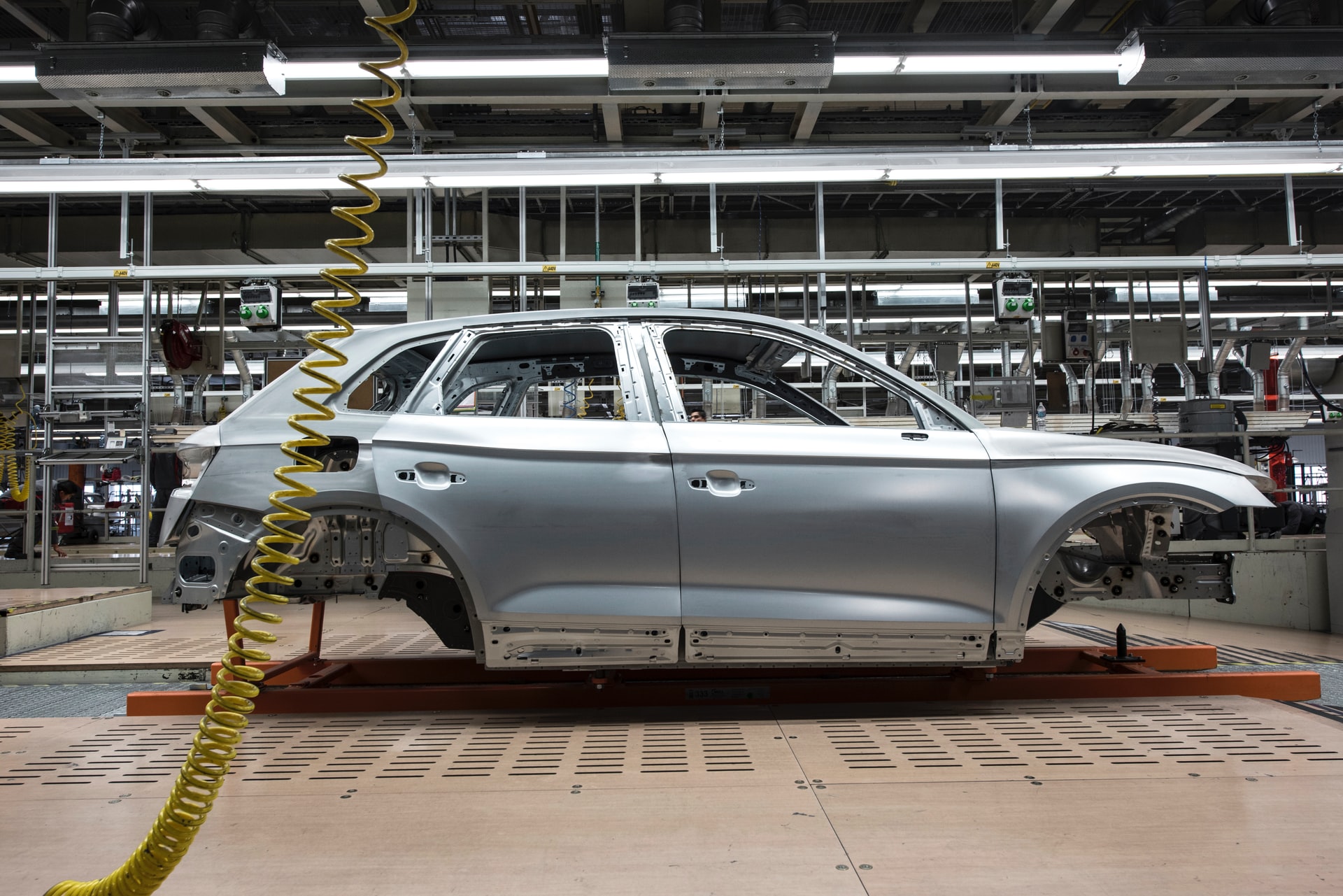
French passenger car production increased by 2% last year compared to 2022, says French carmakers’ association Organisation Internationale Des Constructeurs Automobiles (OICA).
The country’s automakers produced 1,026,690 passenger cars in 2023. When compared to 2019, however, the year before the pandemic, output decreased by 38%. In 2019, France produced 1,662,963 cars, compared to 927,344 produced in 2020 and 918,825 in 2021, Kallanish notes.
Light commercial vehicles (LCV) output in 2023 jumped by 28% year-on-year to 478,386 units. French production of passenger cars and LCVs combined increased last year by 11% to a total of 1,505,076. Compared to 2019, when the country produced 2,172,515, production declined by 31%.
According to the latest World Steel Association data, first-quarter crude steel production was slightly over 2.5 million tonnes. In 2023, the country’s output stood at 10mt.
Natalia Capra France
Acerinox focuses on US market development
Acerinox will focus on “maximising” synergies with the acquisition of Haynes International (HI) and developing its presence in the US market. The group does not anticipate new mergers in the short term but is evaluating the path forward for its business in Malaysia. So says the global stainless supplier’s president, Carlos Ortega, during the company’s shareholders meeting.
“Haynes is a very relevant opportunity to increase the importance of the United States within the group and is in line with our strategy, together with the German VDM Metals highly valued supplier, to promote what we call the triple ‘A’: more America, more special alloys and more aerospace,” he comments.
HI’s transaction received approval from US antitrust authorities last week and is expected to close in the third quarter of 2024. Acerinox’s commitments include the absorption of its debt and other adjustments of approximately $172 million and an additional investment of $200m (see Kallanish passim).
The company’s chief executive, Bernardo Velázquez, states that Acerinox’s Bahru Stainless unit in Malaysia is going through a difficult situation. He suggests that the company is losing competitiveness following the flooding of cheaper steel from China in the region.
“We are making strategic reflection. The only thing that can be done is to stop production. We can’t compete there,” he observes.
Velázquez confirms that the board is trying to seal the new collective agreement with the workers at the Los Barrios plant in Cádiz, who have been on an indefinite strike since 5 February.
“In these moments when we are having losses, we have to be responsible and ensure everything goes forward,” he adds.
Acerinox produced 1.18 million tonnes of crude steel in 2023, down 11% year-on-year. Full-year cold rolled coil output fell by 15% to 1.22mt, while longs production dropped 41% on-year to 138,000t.
High-performance alloys output amounted to 76,000t in 2023, a decrease of 7%.
Acerinox’s 2023 net sales fell 24% y-o-y to €6.6 billion ($7.14 billion), while the group’s Ebitda was 45% lower at €703 million.
Todor Kirkov Bulgaria

Germany introduces new green steel certification standard
The LESS certification was introduced on Monday April 22 at an industry event in the Hannover Messe and announced more widely in a WV Stahl press release.
It was said to be the first standard for the steel industry that allows for tracking and comparing emissions from two key steelmaking routes: the conventional blast furnace route in the transition to low-emitting hydrogen-based production processes, and the electric-arc furnace route. The system therefore enables comparisons of the decarbonization efforts of both steelmaking methods.
LESS was developed by WV Stahl and its member companies and is supported by the BMWK.
The core part of the LESS standard is the labelling system, which allows for classification of low-CO2 steel by carbon intensity, using a graduated scale.
According to the LESS standard, low-emission steel can be grouped into five categories – A,B,C,D,E – depending on carbon and scrap content.
Steelmaking companies that would like to get LESS certificates would have to report their scrap content and Product Carbon Footprint (PCF) in the finished steel product, in accordance with an Environmental Product Declaration (EPD).
This EPD would be provided by independent certification bodies TÜV Nord and DNV.
“The definition of green steel has long been the subject of intense debate worldwide,” WV Stahl president Bernhard Osburg said. “I am delighted that, by joining forces, we have succeeded in developing a widely agreed solution based on international standards which we are now putting into practise. This will provide steel clients with all the information they need to achieve their CO2 reduction targets with the help of low-emissions steel.”
He also emphasized that the LESS standard will help steel-using companies to obtain initial funding for transformation projects.
The introduction of LESS was supported by stainless steel producer Swiss Steel Group.
“LESS creates transparency through a uniform labelling system and a step-by-step classification of low-CO2 steel, and enables steel users to achieve their climate targets with the help of sustainably produced steel,” Swiss Steel Group said on April 24.
The LESS standard was created for international cooperation, so industry sources hoped that it would help to achieve a more unified approach to pricing low-carbon steel and that this would help to promote its uptake across supply chains.
Industry sources estimated that the volume of green steel traded in Europe in 2023 was no higher than 50,000 tonnes, with very few suppliers able to offer “physically produced green steel, with emissions proven by Environmental Product Declarations [EDPs],” according to one distributor.
Fastmarkets’ most recent weekly assessment of the green steel domestic, flat-rolled, differential to HRC index, exw Northern Europe, was €150-250 ($160-267) per tonne on April 18, unchanged since mid-December.
