


Polish rebar, wire rod prices increase on bullish sentiment among producers
Local mills were determined to increase their prices due to higher scrap prices in international markets and higher electricity prices, producer sources said.
But demand remained low, and both buyer and producer sources were unsure whether the uptrend would persist. According to market participants, some production cuts would be the best way to balance the market.
Rebar
After ArcelorMittal increased its prices for all long steel products across Europe by €20 ($21.43) per tonne during the Wire and Tube fair in Dusseldorf, other Polish producers also raised their offer prices.
This week, Polish mills offered rebar in the range of 2,650-2,700 zloty ($657-669) per tonne CPT, which nets back to about 2,630-2,670 zloty per tonne ex-works, sources told Fastmarkets.
This is 30-50 zloty per tonne higher than in the previous week, when offers from local mills were mainly in the range of 2,620-2,650 zloty per tonne CPT, equivalent to about 2,600-2,630 zloty per tonne ex-works.
But Fastmarkets’ sources said that 2,700 zloty per tonne CPT was not a tradeable price.
According to market participants, workable prices were in the range of 2,620-2,650 zloty per tonne CPT, equivalent to 2,600-2,630 zloty per tonne ex-works.
Based on sources’ estimates and increased offers from local mills, Fastmarkets’ weekly price assessment for steel reinforcing bar (rebar) domestic, exw Poland was 2,600-2,650 zloty per tonne on Friday, widening upward by 20 zloty per tonne from 2,600-2,630 zloty per tonne on April 19.
Polish mills had sold good quantities at lower prices in previous weeks, so they could allow themselves to wait for buyers who would accept the new, higher prices, a distributor source told Fastmarkets.
“But no one is buying at 2,700 zloty per tonne CPT, which is indicative that this price is not workable,” the distributor source said.
A second distributor source expressed skepticism about whether the upward trend would last long.
“Mills will try to keep prices higher for two weeks, but when they see there is no demand, prices will drop again. Only the cut and bend companies have a lot of work in Poland,” the second distributor said.
Prices of imported rebar had also increased by about €10-15 per tonne this week, compared with the period before the Wire and Tube fair in Dusseldorf, sources told Fastmarkets.
For instance, imported rebar offers from Germany were heard at €640-647 per tonne delivered Poland.
Wire rod
At the beginning of the week, sources said that Polish mills had not yet announced their offers for May production of low-carbon drawing-quality wire rod.
On Friday, a consumer source reported an offer at 3,050 zloty per tonne CPT.
This was close to last week’s price range of 3,000-3,086 zloty per tonne CPT.
“Polish mills want to increase prices, and currently, there is no one selling at below 3,000 zloty per tonne CPT,” the consumer source told Fastmarkets.
Fastmarkets’ sources estimated tradeable prices in the range of 2,934-3,020 zloty per tonne CPT; no major deals were heard on the market.
As a result, Fastmarkets’ price assessment for steel wire rod (drawing quality), domestic, delivered Poland was 2,934-3,020 zloty per tonne on Friday, up by 70-134 zloty per tonne from 2,800-2,950 zloty per tonne on April 19.
“A price increase is necessary because scrap [prices have] recovered, and [it] seems [they] have found certain stability,” a second producer source said.
For instance, Fastmarkets’ daily index for steel scrap HMS 1&2 (80:20 mix) North Europe origin, cfr Turkey was calculated at $382.09 per tonne on Thursday April 25, its highest since April 3.
A similar trend was observed in Fastmarkets’ daily index for steel scrap HMS 1&2 (80:20 mix) US origin, cfr Turkey, which was calculated at $385.58 per tonne on Thursday, also its highest since April 3.
The second producer source added that the electricity day-ahead price in Poland surpassed €100 per MWh recently, which also affected production costs.
Published by: Darina Kahramanova


European HRC producers aim for higher prices
A leading European steelmakers reportedly withdrew from the market at the end of the week to review their offer prices, Fastmarkets understands. But sources said they expect the mill to return with higher prices on Monday, with offers likely to be up by around €30 ($32) per tonne for June-delivery HRC.
“New offers [for HRC] will be set around €660-680 per tonne ex-works.,” a buyer in Europe told Fastmarkets. “We’ll then see if the market accepts [them], but there has been pressure [for higher prices] from the mills for about two weeks now – partially based on Asian prices rising.”
Other steelmakers are expected to follow suit, sources said.
Earlier this week, offers were reported at €630-640 per tonne ex-works from integrated mills in Northern Europe, while buyers estimated tradable prices at €620-630 per tonne ex-works.
Most market participants agreed that flat steel prices in Europe are likely to have hit rock bottom already, despite sluggish end-user demand, so mills are expected to push for higher prices.
“Trading is still weak, and volumes are not there yet, but the steel mills need better margins,” a source in the Benelux area said.
“I think there is room for some [HRC] price increases, but not a big one,” a buyer in Northern Europe said.
Fastmarkets calculated its daily steel hot-rolled coil index domestic, exw Northern Europe at €630.42 ($675.63) per tonne on Friday, up by €5.04 per tonne from €625.38 on Thursday April 25.
The index was up by €4.92 per tonne week on week but down by €37.08 per tonne month on month.
In Southern Europe, Fastmarkets’ daily steel hot-rolled coil index domestic, exw Italy was calculated at €620.63 per tonne on Friday, unchanged day on day.
The index was up by €0.63 per tonne week on week, but down by €31.04 per tonne month on month.
The domestic market in Italy was largely inactive on Friday due to a public holiday in the country.
Earlier this week, however, a domestic supplier increased its offer prices for HRC, but it was unclear whether buyers were willing to accept the higher offers, which came in at €660-670 per tonne delivered (equivalent to €650-660 per tonne ex-works), compared with €640-650 per tonne delivered (€630-640 per tonne ex-works) in early April.
This was also in stark contrast to the most recent transactions, which were heard at €620-630 per tonne ex-works.
Some sources pointed out that rising HRC import prices and restocking in mid-April were likely to have supported the bullish attempts by the steel mills.
But others were more cautious and said that a strong price rebound was unlikely in the near term because there was no support from real steel demand.
“In May, we will either see stabilization or a €10-15 per tonne rebound in a best-case scenario,” a source in Italy said. “The core problem is demand.”
In the week to Friday, offer prices for Asia-origin HRC for June shipment were reported at around €590-610 per tonne CFR, with the lower end only offered by Vietnamese mills.
Published by: Julia Bolotova
Components shortage impacts Spain’s car industry in March
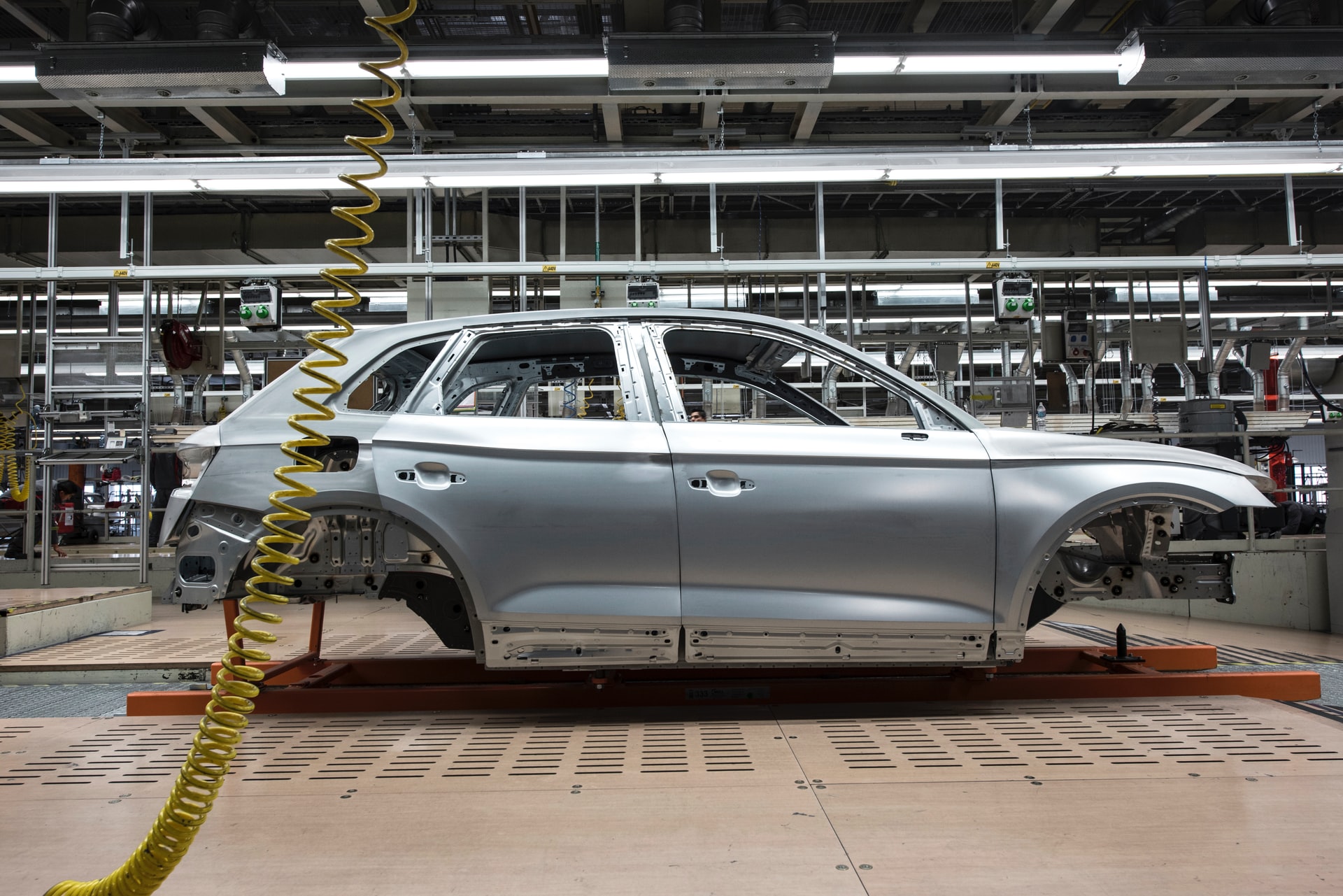
Spanish car production suffered input material supply problems during March, Kallanish notes. The country saw a shortage of components at several plants, a consequence of the delays caused by the Red Sea shipping crisis. Production and exports also declined following lower demand during Easter.
Output in March was 195,252 units, compared to 227,923 vehicles in February and down 17.7% versus the same month in 2023. Three-month production amounted to 654,825 units, 0.5% less from January-March last year.
Meanwhile, Spanish vehicle exports slipped due to lower demand in markets outside Europe. Supplies were 174,138 units, a fall of 14.7% on-month and 16.8% weaker than in March 2023.
European markets had a 92.7% share in Spanish deliveries in March, down 0.5 percentage points on-month, but up 2.5pp on-year. Three-month exports declined 1.8% over the same period in 2023 to 579,988 vehicles, Anfac data show.
Todor Kirkov Bulgaria

EU’s Ukraine-origin semis imports increase in January-February
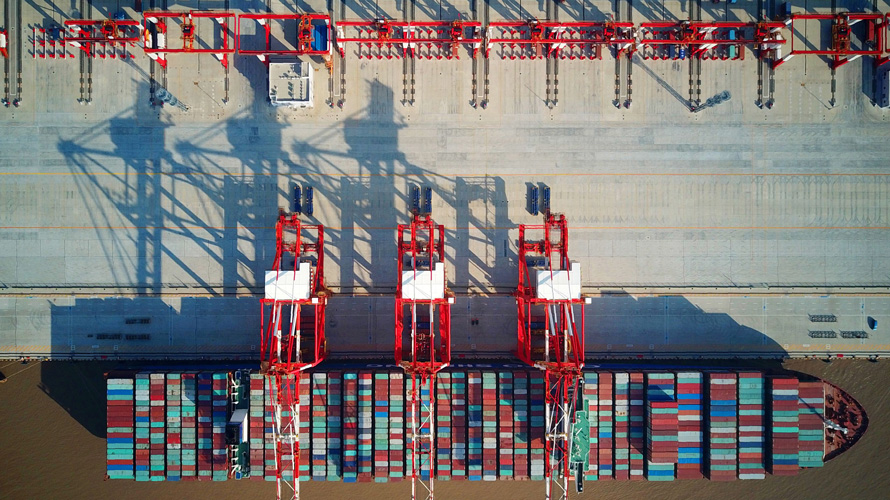
Ukraine has increased semi-finished products shipments to the EU amid the ongoing Russian invasion, Kallanish notes.
In January-February, the EU ramped up imports of semis from Ukraine by 21.6% on-year to 180,850 tonnes, according to Eurostat data.
The largest importers among the EU countries were Poland with 53,650t, less by 34.6%; Bulgaria with 40,050t, up 91%; Italy with 18,940t, up 89.5%; and Greece with 15,540t, up 155% on-year.
In February alone, the EU also increased imports of semis by 9% on-month and 6% on-year to 100,000t. The largest importers were Poland with 28,000t, up 9% on-month, Bulgaria with 38,000t, 25% more, and Italy with 13,200t, up 131%.
In 2023, the EU reduced imports of semi-finished products from Ukraine by 2.8% on-year 1.03 million tonnes. In monetary terms, intake decreased by 23% to $532 million.
Earlier, European steelmakers association Eurofer voiced concern over the European Commission’s decision to continue to allow Russian slab to enter the EU until 2028 (see Kallanish passim).
According to the latest decision, EU importers will be able to import some 3m t/year of slab from Russia until October 2026. The quota will then be reduced further to 2.6mt and then 2mt respectively during the following 12-month periods through October 2028.
Meanwhile, Russian billet imports into the EU will be prohibited from April 2024, as previously planned.
The EU reduced imports of semis from Russia in January-February to 474,600t, down by 11% on-year (see Kallanish passim).
In 2023, Russia’s steel and raw materials exports to the EU amounted to 4.8mt, down by 39.5% on-year, for €2.4 billion.
Svetoslav Abrossimov Bulgaria

Tata proceeds with Port Talbot plan, strikes incoming
Tata Steel is proceeding with its single 3 million tonnes/year electric arc furnace plan for Port Talbot following seven months of formal and informal national level discussions with UK trade unions. Unions are gearing up for industrial action, Kallanish notes.
Port Talbot’s two blast furnaces, no.5 and no.4, will be closed by end-June and end-September respectively. Discussions will continue with unions during the next two weeks on a potential memorandum of understanding on the future ambitions of the business and the impact of the restructuring on employees, Tata says.
“We urge all our members in Tata Steel to vote ‘Yes’ and ‘Yes’ in our ongoing ballot for industrial action to help us negotiate an extension of blast furnace steelmaking at Port Talbot, secure the volume for downstream sites like Llanwern and Trostre, and guarantee there will be no compulsory redundancies,” says Community union general secretary Roy Rickhuss. The ballot result is expected on 9 May.
The Unite union says 1,500 members employed by Tata in Port Talbot and Llanwern have an industrial action mandate against plans to shut both blast furnaces, with strikes to be announced soon.
Tata has meanwhile begun preparations to place equipment orders for the EAF by September, begin enabling and preparatory works at the site by December, and based on current permitting timelines, begin construction on the project by August 2025.
The firm has accepted a revised and updated connection offer from the UK’s National Grid and will be finalising documents in the coming days. This will ensure it has the power infrastructure in place to commission the EAF on schedule by end-2027, it notes.
The steelmaker has already secured most of the slab and hot rolled coil substrate required during the transition period for the UK’s downstream mills. It has agreed details with Associated British Ports to expand the slab handling and stock holding capacity in the south Wales ports and is also in advanced discussions to have the rail movement capacity ready for onward transportation of substrate to the appropriate sites.
It adds it has agreed detailed terms with the UK government on the proposed grant package to support the £1.25 billion ($1.46 billion) EAF transformation, with final documents to be executed in the coming weeks.
“Having looked carefully at all the options over the past seven months in consultation with union representatives, we have decided to proceed with our proposed restructuring and transition. This is the most viable proposal, in contrast to the unions’ unaffordable plan which has high inherent operational and safety risk,” Tata says.
The company and the unions’ adviser reached a common conclusion that this plan would involve significant additional costs of at least £1.6 billion, it adds.
Tata Steel UK has had to supplement its own production with imported material of 333,000 tonnes during the last six months. In the 2023-24 fiscal year, the unit recorded a negative Ebitda of £373 million and negative free cashflow of £623m.
Adam Smith Poland

Italian, Spanish steelmakers show interest in Ascometal
Acciaierie Vente, Marcegaglia and Sidenor are amongst the steel companies to have submitted offers to buy French steelmaker Ascometal, part of Swiss Steel, Kallanish understands from sources close to the dossier.
After failing to buy the company in March, Acciaierie Vente has again stepped forward for the specialty steel sites of Hagondange in Moselle, Custines in Meurthe-et-Moselle and Marais à Saint-Étienne in the region of Loire. The offer also includes Ascometal’s CREAS research centre in Hagondange.
Italian re-roller Marcegaglia is said to have shown an interest in the Fos-sur-Mer plant, while Spain’s Sidenor is rumoured to be targeting the Dunkirk Leffrinckoucke plant, as well as Custines. According to another source, a British fund and a Russian steelmaker have shown interest in parts of Ascometal.
The Strasbourg tribunal has scheduled a new hearing on Ascometal for 30 May. The company says in a note that all the offers received are subject to suspensive conditions.
In March, Ascometal was declared insolvent and went into receivership after the proposed sale of its units to Italian long steel producer Acciaierie Venete was terminated.
The potential buyers did not comment before press deadline.
Natalia Capra France

Czechia’s EP acquires 20% thyssenkrupp Steel stake
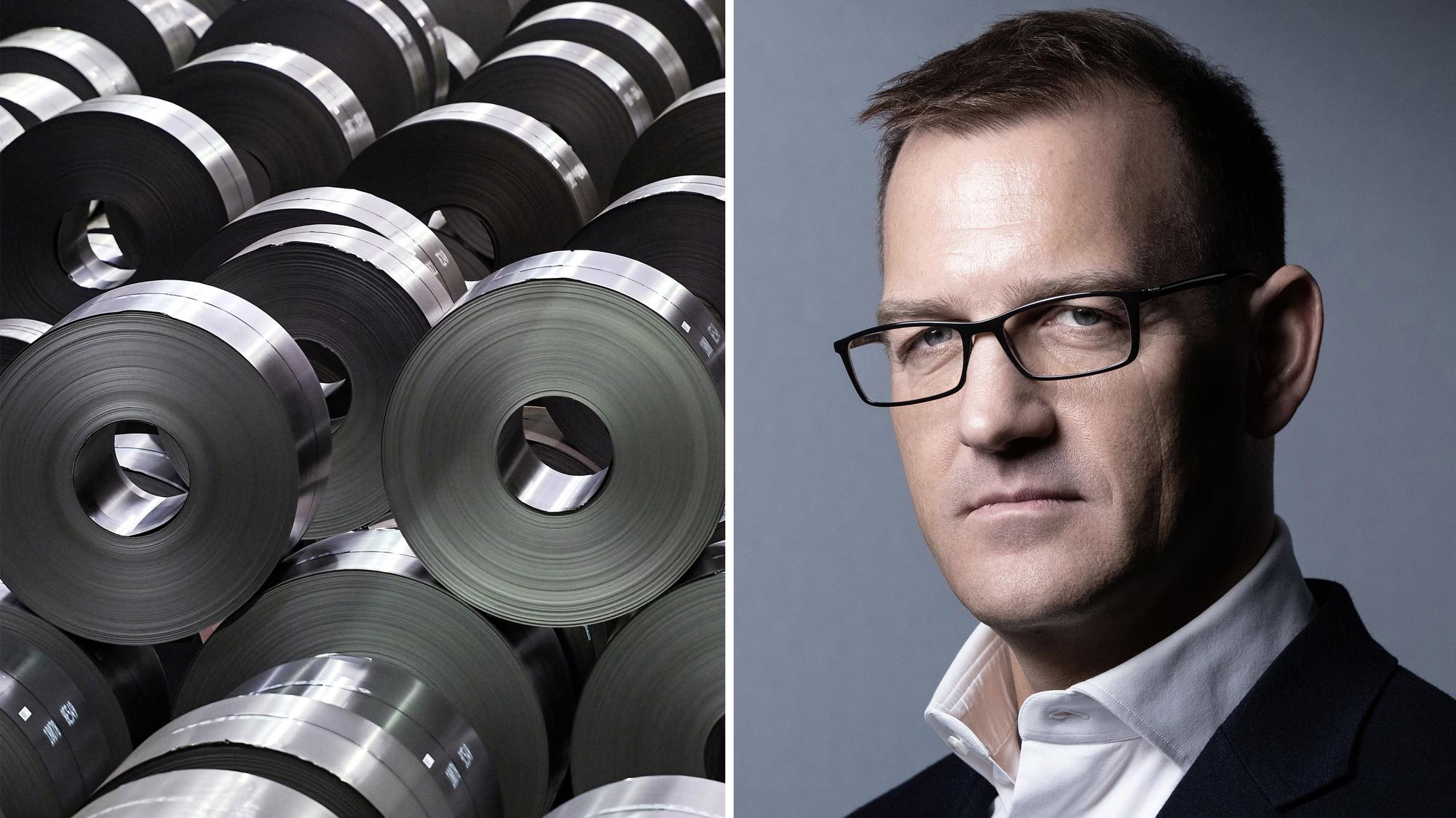
Thyssenkrupp and Czech energy company EP Corporate Group have agreed that EP will take a 20% stake in thyssenkrupp’s steel business.
The parties agreed not to disclose any valuation of the transaction, which is expected to close in thyssenkrupp’s current fiscal year, meaning by 30 September. It is subject to approval from the relevant authorities and the supervisory board of thyssenkrupp AG.
The parties are discussing the transfer of a further 30% stake in tk Steel to EP. The aim, which has long been discussed between the two groups, is to form an equal 50/50 joint venture.
“The strategic partnership with EP is an important step that contributes to a resilient, cost-efficient and climate-friendly steel production at thyssenkrupp Steel – and thus also a significant contribution to safeguarding the future of the steel industry in Germany,” tk says.
During a conference call on Friday attended by Kallanish, thyssenkrupp chief executive Miguel López stressed that “we will now have a partner with ample experience in energy, which will be a competitive advantage.”
“Our goal is a future concept that leads to economic independence for thyssenkrupp Steel, that meets the requirements of climate protection, which avoids compulsory redundancies, and which is widely accepted,” he added.
Following its entry as a stakeholder in thyssenkrupp Steel, EP will take an active role in shaping and realigning the steelmaker.
Christian Koehl Germany

Steel market outlook deteriorates further in aftermath of worse-than-expected recession
The outlook for the European steel market in 2024 continues to lose momentum amidst persisting challenging conditions. Downside factors such as worsening geopolitical tensions, coupled with growing economic uncertainty, energy prices, inflation, interest rates have further impacted demand prospects.
According to EUROFER’s latest Economic and Steel Market Outlook, these challenges have exacerbated the negative effects on apparent steel consumption, resulting in a more severe downturn in 2023 than previously projected (-9%, instead of -6.3%) and weaker growth in 2024 (+3.2%, instead of +5.6%).
Output in steel-using sectors, despite showing more resilience than expected in the past year (+1.1%), is now set to decline (-1%). Imports are once again on the rise (+11% in the last quarter of 2023), capturing a staggering 27% market share throughout 2023.
“These figures underscore the urgent need for action if we want to ensure a resilient future for the European steel industry and the interconnected clean tech manufacturing value chains, from wind to electric vehicles. From our Stronger with European Steel Manifesto 2024-2029 to the Antwerp Declaration, the message is clear: we need a robust business case in Europe for a successful transition, with a set of enabling conditions under the umbrella of an effective EU industrial policy ranging from competitive clean energy, robust trade measures ensuring an international level playing field, to funding support and lead markets for green products”, said Axel Eggert, Director General of the European Steel Association (EUROFER), following the publication of the Economic Report Q2 2024.
EU steel market overview
In the fourth quarter of 2023, apparent steel consumption – despite a statistical increase (+2.8%) due to the comparison with the very low levels of one year earlier – stood at 29.9 million tonnes. This marks the fourth-lowest volume recorded since the pandemic. Moderate quarterly improvements are expected to continue throughout 2024, yet resulting in volumes still below pre-pandemic levels. The overall evolution of steel demand remains subject to very high uncertainty. Following 2023’s more pronounced contraction (-9%), apparent steel consumption is projected to recover at a lower rate than previously estimated (+3.2%) in 2024.
Similarly, domestic deliveries grew (+1.3%) in the last quarter of the year, but they overall fell (-7.9%) in 2023. Imports also increased again (+11%) in the fourth quarter, while their share out of apparent consumption has remained considerably high (27%) throughout 2023.
EU steel-using sectors
In the same period, steel-using sectors’ output showed stronger-than-expected resilience (+1.1% in 2023, revised from +0.7%), whilst continuing to slow down (+0.2%) in the fourth quarter. This resulted from a continued downturn in the construction, mechanical engineering, domestic appliances and metalware sectors, only partly compensated by ongoing growth in automotive.
Steel-using sectors’ output is projected to experience a recession in 2024 (-1%), notably due to the persisting recessionary trend in the construction sector (which accounts for 35% of steel consumption in the EU), ongoing geopolitical tensions, and the lagged impact of high interest rates on the manufacturing sector. Growth is expected to moderately pick up (+2%) only in 2025.
