

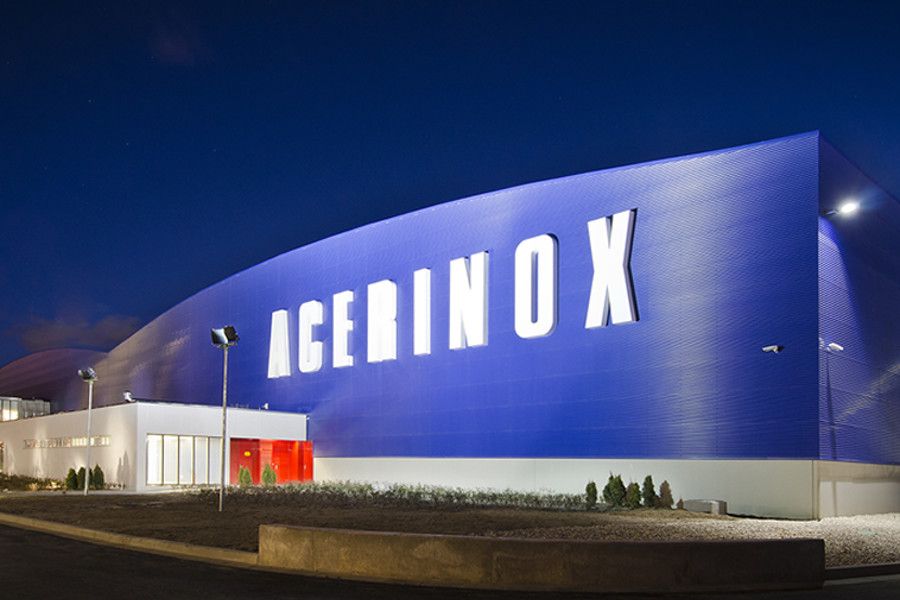
Austrian competition authority probes Acerinox’s proposed Haynes acquisition
The Austrian Federal Competition Authority (Bundeswettbewerbsbehörde – BWB) has referred the proposed acquisition of US alloy steelmaker Haynes International by Acerinox due to competition concerns, Kallanish notes.
BWB says the proposed merger should not be approved in its current form and has therefore submitted an application to the Cartel Court for in-depth examination (Phase II).
“As part of its merger control review, the BWB collected extensive data and conducted surveys of competitors and, in particular, customers. The results provided evidence for a narrower market definition than that put forward by the notifying parties. Overall, there are also concerns due to the acquirer’s very high market shares. Regardless of the exact market definition, the merger would lead to a further strengthening of Acerinox’s market position in the nickel alloy products sector, which could have a negative impact on competition,” BWB says.
The authority says there are strong competition concerns in the manufacture and distribution of nickel alloy flat products, and manufacture and distribution of plates and sheets as well as strips as submarkets of nickel alloy flat products.
“There is a risk of a considerable reduction in the intensity of horizontal competition, which would result in higher prices due to a lack of competitors. This is due, among other things, to the high market shares of the companies involved and, in the BWB’s opinion, to entry barriers for any new market participants in the relevant markets,” BWB adds.
Haynes says it is “disappointed by the BWB referral given the company’s limited presence in Austria, but plans to continue to engage cooperatively with the BWB and the Cartel Court.” It adds it “remains optimistic that the ultimate outcome of the Phase II investigation will be positive.” The firm continues to expect the merger will close in the third quarter.
Adam Smith Poland


Voestalpine buys Italian welding wire business
Voestalpine Böhler Welding, a subsidiary of the Metal Engineering Division of Voestalpine AG, is buying out the majority stake in Italian welding wire manufacturer Italfil to boost its presence in welding technology, Kallanish learns from the company.
“For Voestalpine, this acquisition expands the product portfolio, particularly in the semi and fully automated high-quality welding technology sector,” a company note says.
Voestalpine Böhler Welding supplies a full range of welding solutions, welding consumables, accessories, and welding equipment as well as related services. The company intends to supply Italfil with high-quality wire rod from its production units and consequently strengthen its value chain.
The Metal Engineering Division of the voestalpine group also offers railway infrastructure systems and signalling technology. Its Industrial Systems subunit is the European market leader for quality wire and full welding solutions, it claims. The Metal Engineering Division caters for the railway sector, the oil and gas industry, the mechanical engineering, automotive, and construction industries, as well as the renewable energy sector.
In the 2022-2023 business year, the Metal Engineering Division achieved a €4.3 billion ($4.6 billion) turnover with €586 million Ebitda. In 2023, Italfil posted €43m in sales. Voestalpine counts around 500 subsidiaries globally. In its 2022-2023 financial year, it generated €18.2 billion revenue with €2.5 billion Ebitda, and has around 51,200 employees worldwide.
Natalia Capra France
Klöckner expects increased second-quarter tonnage, revenue
Klöckner & Co expects a considerable increase in shipments and sales in the second quarter compared to Q1 and also forecasts increases for the full year.
The German stockholder group reported Q1 shipments of 1.1 million tonnes, up 5% on the prior-year quarter and 11% on Q4 2023. The latter was partially due to seasonal effects.
Klöckner generated sales of €1.7 billion ($1.8 billion) in Q1, down from €1.8 billion in Q1 2023, attributable to lower price levels. At €42 million, operating income (Ebitda) before material special effects was lower than the €65m in the prior-year quarter.
Looking at the company’s main markets, chief executive Guido Kerkhoff said during a conference call on Tuesday that most customer groups will be developing sideways in both Europe and North America over the coming months. He sees a slight increase in the energy industry, due to continued efforts to expand on renewables. Overall, “we are lacking a signal for an ignition to the markets. Buyers remain reserved, and the consumption climate remains subdued,” Kallanish heard him say during the call.
In March, Klöckner sold its stockholding assets in four European countries, in order to focus on service centres and other processing activities. “The more value added we offer, the better the business,” Kerkhoff said. Profitability for plain stockholding at the company was close to zero recently, but he noted that plain stockholding as such is not a bad business: “It can be a door-opener to customers,” he explained.
Christian Koehl Germany

EU adds Turkey, Vietnam, Taiwan stainless CRC duties
The European Commission (EC) has extended definitive countervailing duties on stainless steel cold-rolled flat products (SSCR) originating in Indonesia to cover imports of material consigned from Taiwan, Turkey and Vietnam, Kallanish notes. This is to prevent Indonesia-origin material from circumventing duties. The countervailing duty amounts to 20.5%.
The Commission has also extended the existing anti-dumping duty rate of 19.3% to imports of SSCR from Taiwan and Vietnam.
Six exporting producers from Taiwan requested and obtained an exemption from the extension of measures. Yieh United Steel Corporation, Tang Eng Iron Works Co. part of YUSCO group, Chia Far Industrial Factory, Yuan Long Stainless Steel Corp, Tung Mung Development, and Walsin Lihwa were buying part of their slab and stainless hot rolled coil of Indonesian origin, processing them into SSCR and then exporting some SSCR to the EU.
“However, the investigation found that this operation did not start or substantially increase since, or just prior to, the initiation of the original anti-dumping investigation … It follows that … the operation in question cannot be considered as circumventing the measures in force,” the EC states.
Turkey’s Trinox and Posco Assan TST Celik Sanayi A.Ş. also requested exemptions. The Union rejected Trinox’s request but accepted Posco Assan’s. The investigation found that Posco’s exports did not start or substantially increase since the initiation of the investigation. Vietnamese companies Lam Khang and Yongjin Metal Technology’s exemption requests were rejected, while Posco VST’s appeal was successful.
In 2022, the EC imposed definitive countervailing duties on stainless cold-rolled flats originating in Indonesia following an anti-subsidy investigation. The investigation established that significant volumes of stainless steel, either in the form of slab or stainless HRC, exported from Indonesia, were further processed into SSCR in Taiwan, Turkey and Vietnam to be later exported to the Union.
SSCR exports from these countries to the EU increased during the investigation in 2021 and surged after the implementation of measures in 2022. European steel association Eurofer petitioned in 2023 to investigate the possible circumvention of the countervailing measures imposed on imports of SSCR originating in Indonesia.
Eurofer has welcomed the extension of the duties. “The Commission’s investigation has confirmed that a significant circumvention is taking place through imports from Taiwan, Turkey and Vietnam,” says Eurofer director general Axel Eggert.
“The anti-circumvention measures published today are important to ensure the complete effectiveness of the original measures and to avoid that artificially cheap, dumped, and subsidised semi-products (stainless slabs and hot rolled coils) sourced from Indonesia freely enter the European market, endangering the European stainless steel industry,” he adds.
The association adds that the Commission will also apply strict monitoring on imports from Taiwan, Turkey and Vietnam to determine if they are made from steel melted and poured in Indonesia.
Natalia Capra France
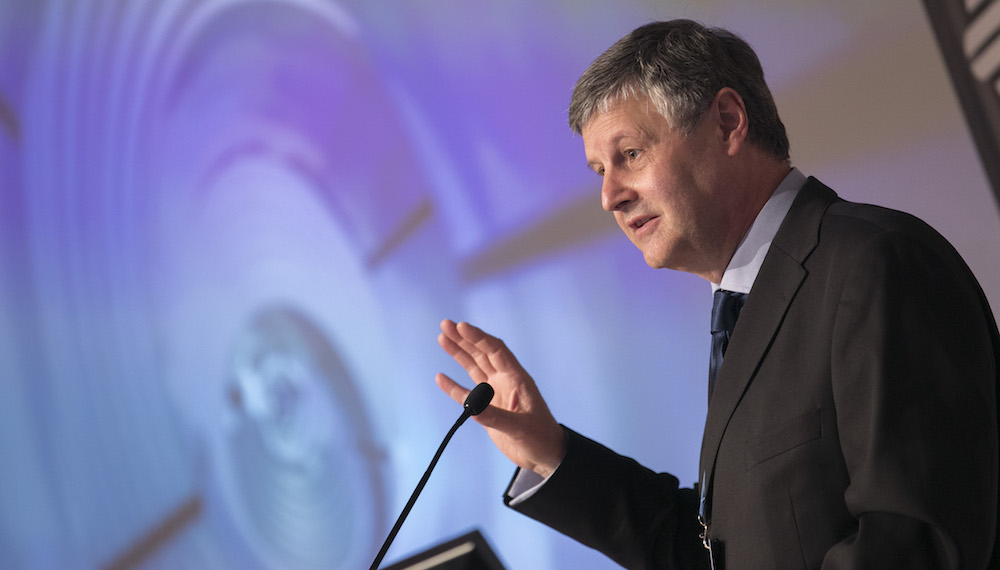
Global steel industry requires fairness amid decarbonisation: worldsteel
A level playing field is key to global steel trade remaining open while the industry undertakes the challenge of decarbonisation, worldsteel director general Edwin Basson said at Tuesday’s Singapore Green Steel Forum attended by Kallanish.
The harmonised measurement of carbon dioxide emissions and reduction, common principles for standards and branding, such as mass balance approaches, and the fair trading of steel amid decarbonisation efforts are being discussed, he noted.
Measurement approaches developed by worldsteel over the past 20 years are becoming the basis for the future harmonised measurement, he added. The G7 and G20 countries are currently discussing harmonised measurement approaches in emissions and these require new agreements on boundary conditions, among other details.
Many steel producers are marketing their own brands of decarbonised steel using mass balance approaches. In most cases, CO2 savings in one part of the production process are bundled together and made available in the form of CO2 savings certificates for products produced in another part of the production process. Harmonised principles have been agreed by worldsteel members and will be used to develop formal guidelines, Basson told Kallanish. This will ensure that decarbonisation is promoted in a responsible, transparent way.
The trading of steel has always been open, with 30-40% of output traded between regions. A fair and open system of trade is therefore necessary. “For this to be maintained, we need a rules-based trading environment that ensures a level playing field between producers in different countries,” Basson noted.
The WTO must be at the centre of this process, he added. Countries around the world are working on developing new trade rules, such as the EU’s CBAM, that will take account of emissions and, in some cases, the cost of carbon and decarbonisation efforts in steel production.
Global steel output could see 20-25% growth to 2.4-2.6 billion tonnes by 2050, depending on assumptions around circularity. Most steelmaking countries have committed to having net zero emissions by that time. The global steel industry has set a target for a 50% reduction in emissions by 2050.
Limited ferrous scrap and direct reduced iron feedstock supply can only sustain around 50% of projected global steel production by 2050. Given the industry will continue to rely on the integrated BF/BOF route to meet around 50% of total steel demand, existing technologies must also reduce their CO2 intensity. Asia will remain BF-BoF dominated, including China, India, Japan, Korea and ASEAN. For China, the EAF share of steel production could grow over the next ten years to 30% from 10% currently.
The shortage of hydrogen for steelmaking is another challenge for the industry, as are problems with hydrogen storage and transportation. Basson also noted that less carbon-intensive steelmaking will require additional energy to replace met coal as an energy carrier. This could however prolong the requirement for coal in the electricity industry.
Worldsteel recognises that decarbonisation will take time, be expensive and also require significant change in supporting industries such as energy. Despite the challenges, Basson concluded: “I am optimistic that we will begin to see examples in the integrated route with significantly lower carbon-dioxide intensity in the foreseeable future.”
Tomas Gutierrez UK , Anna Low Singapore

HRC market more positive in Italy, quiet in Northern Europe
In Italy, a local steelmaker was maintaining its offers at €670 ($722) per tonne delivered (€660 per tonne ex-works). Additionally, several sources said that the mill was planning to raise their prices to €690 per tonne delivered during May on improved buying and cost factors.
But other sources suggested that the talk of a price rise was “speculation, aimed at stimulating bookings.”
These sources added that transaction prices were still lagging offers, with tradeable values heard at €640-650 per tonne delivered (€630-640 per tonne ex-works) for June-delivery HRC.
As a result, Fastmarkets’ daily steel hot-rolled coil index, domestic, exw Italy, was calculated at €638.75 per tonne on May 7, up by €5 per tonne from the previous calculation of €633.75 per tonne on May 3.
Fastmarkets’ European HRC indices were not published on May 6 because of the Early May Bank Holiday in the UK.
The index was up by €11.50 per tonne week on week and up by €2.92 per tonne month on month.
Supply in the nation was reduced, with only one local mill currently being active with HRC production.
Apparent buying has picked up in Italy since late April, but with a “cautious attitude,” sources told Fastmarkets.
“Buyers avoid stockpiling [and] there is no clarity on whether it is a sustainable price rebound,” a trading source said.
Import prices for HRC have also been firming lately, with offers for Asia-origin coil ranging from €600 per tonne CFR up to €620 per tonne CFR. Vietnam remained the cheapest origin, sources said.
A reduced gap with domestic prices and long lead times (July-August) were limiting buying interest for imported coil.
Meanwhile, Fastmarkets calculated its daily steel hot-rolled coil index, domestic, exw Northern Europe, at €640.83 per tonne on May 7, down marginally by €0.42 per tonne from €641.25 per tonne on May 3.
The index was up by €8.83 per tonne week on week but down by €16.25 per tonne month on month.
Offers from integrated mills in the region were reported at €640-660 per tonne ex-works on May 7, with lead times reported at around 4-5 weeks.
Tradeable values were heard at €630-640 per tonne ex-works.
Market sources reported improved trading in the spot market in late-April to early May due to some restocking.
At the same time, most sources were skeptical about the possibility of a significant price rebound, because real demand has remained quite limited.
“Real demand is still quite slow, and we are heading into the summer lull, so I wouldn’t expect a strong improvement in the short run,” a trader in Northern Europe said.
Industry sources remained confident that output cuts could help sustain the uptrend and balance the market, but so far, only one steelmaker in Central Europe has confirmed an extended blast furnace stoppage, Fastmarkets reported.
HRC offers from Taiwan and Japan to Antwerp were reported at €620-630 per tonne CFR on May 7.
Published by: Julia Bolotova


EU HRC prices inch up despite low end-user demand
Domestic prices for European hot-rolled coil rose slightly on May 7, despite limited end-user demand and insubstantial re-stocking.
“Demand is still low, and the market is waiting for production cuts before buyers would be willing to book volumes,” a German trader source said. “Costs are high so the mills really cannot accept the lower prices.”
Re-stocking activity has picked up, however sources said that real demand remains weak.
“[The] level of real activity is still weak,” an Italian service center source said. “Although there has been some demand improvement from restocking.”
Platts assessed domestic prices for hot-rolled coil in Northwest Europe up Eur5/mt on the day at Eur640/mt ex-works Ruhr May 7.
Tradable values have been reported at Eur630-650/mt ex-works Ruhr. No deals or offers from integrated mills have been heard.
Interest in imported HRC from Asia has been dull because of longer lead times and risks related to safeguard measures in the EU. While exporters from Turkey have been benefiting from available quota volumes and shorter lead times.
“Asian mills are trying to increase offers by $20/mt and there is no interest in imports as lead times are long,” the trader source said.
“Taiwan offers [are] not interesting as the material would be custom cleared in October,” another service center source said.
Import offers from Turkey were reported at Eur620/mt CIF Antwerp including anti-dumping duties, while offers from Asia were reported at Eur610-620/mt CIF Antwerp.
Platts assessed domestic prices in South Europe up Eur6/mt on the day at Eur635/mt ex-works Italy on May 7.
Tradable values were heard at Eur635/mt ex-works Italy, and offers were reported at Eur660/mt ex-works Italy.
Platts assessed imported HRC in South Europe stable on the day at Eur605/mt CIF Italy.
Offers were reported at Eur610-615/mt CIF Italy, and at Eur620/mt from Turkey, including anti-dumping duties.
Devbrat Saha | Maria Tanatar


European Commission extends anti-dumping, countervailing measures on Asian SSCR imports
The European Commission extended May 7 the anti-dumping and countervailing measures already in force on imports of stainless steel cold-rolled flat products (SSCR) originating in Indonesia to imports of SSCR from Taiwan, Turkey and Vietnam.
The EC extend the existing anti-dumping duty rate of 19.3% to imports of SSCR from Taiwan and Vietnam and extend the existing countervailing duty rate of 20.5% to imports of SSCR from Taiwan, Turkey and Vietnam.
In July 2023, European steel body Eurofer asked the EC to investigate the possible circumvention of the anti-dumping measures imposed on imports of SSCR originating in Indonesia by imports of SSCR consigned from Taiwan, Turkey and Vietnam, whether declared in Taiwan, Turkey and Vietnam or not, and to make such imports subject to registration.
According to the EC document, the request contained sufficient evidence of a change in the pattern of trade involving exports from Indonesia, Taiwan, Turkey and Vietnam to the EU that had taken place following the imposition of measures on SSCR from Indonesia.
“The commission’s investigation has confirmed that a significant circumvention is taking place through imports from Taiwan, Turkey and Vietnam,” said Axel Eggert, Director General of Eurofer. “The anti-circumvention measures published today are important to ensure the complete effectiveness of the original measures and to avoid that artificially cheap, dumped, and subsidized semi-products (stainless slabs and hot rolled coils) sourced from Indonesia freely enter the European market, endangering the European Stainless Steel industry.”
Due to the severity of the circumvention practices, the EC also will apply strict monitoring with importers that are requested to declare whether Indonesia is the country where the stainless steel inputs used for the processing of the product in Taiwan, Turkey or Vietnam was originally melted and poured. Customs authorities shall record such transactions as provided by the importers.
Annalisa Villa