


Proposed EU steel import quotas change market dynamics
Steel price rises and a search for new suppliers have already begun following the European Commission’s announcement of proposed changes to its import safeguard measures.
Consultation on plans to cap any country selling imports in the regulations’ “other countries” category to 15% of the EU’s quarterly hot rolled coil quota ended yesterday (June 10). The change is part of a proposal that would extend the current safeguard rules for a further two years – to June 30, 2026.
If implemented, the new cap would limit tariff-free imports from nations without a country-specific hot rolled coil quota to 141,849 tonnes for the two remaining quarters of this year. This volume has been comfortably exceeded by certain countries under the current regime. Consequently, concerns are growing that many importers will soon be forced to pay the EU’s 25% above-quota tariffs on a portion of their imported material.
MEPS International research partners suggest that the EU importers most exposed to the added costs resulting from the proposed cap have already started to increase prices in anticipation of its implementation from July 1.
Headaches for steel traders
MEPS steel market analyst Jonathon Carruthers-Green said: “Trade patterns have changed since the introduction of the safeguard mechanism. In 2023 the three largest suppliers of Non Alloy and Other Alloy Hot Rolled Sheets and Strips into the EU were Vietnam, Japan and Taiwan. However, none of these countries have a country-specific quota due to their lower level of exports in 2015-2017, which was the reference period when the quotas were first set.
“In the current regime, each of these countries is allowed to use up to 30% of the ‘other countries’ quota for this product category. This comes to around 300,000 tonnes of material each quarter and the data that we have seen shows that they are using it.
“If the EU reduces the cap to 15% then this could cause headaches for traders for the remainder of the year as they work to adjust their supply chains.”
Research compiled by the Italian steel industry body Assofermet highlighted the effects of the EU’s proposed cap on imports from Vietnam, Taiwan, Japan and Egypt. It pointed out that the proposed reduction on the cap on imports from the four countries could remove 1.63 million tonnes of steel from the market each year.
Benefits of reduced quota cap
Nonetheless, Carruthers-Green suggests that the proposed 15% cap on hot rolled coil exporting nations in the “other countries” category would benefit those with their own country-specific volume quota. He said that the change would increase the likelihood of “residual import volumes” which will be made available to them when the ‘other countries’ quota is opened to them from April to June 2025.
European steelmakers will also benefit from the European Commission’s proposed changes. After months of subdued steel demand, which has forced down hot rolled coil prices across Europe, any restriction of supply should provide upward price pressure and improve mills’ margins.
MEPS’s June research period has already recorded evidence of major mills’ attempts to implement short-term price increases. International traders who are able to adjust their supply chains in accordance with the new rules could also find opportunities.
Further analysis of the effects of the European Commission’s proposed changes to its import safeguard measures will feature in the June edition of MEPS International’s European Steel Review. Drawing on information gathered in interviews with market participants, the monthly review features price data, commentaries and forecasts from Europe’s major steel markets.
Source: mepsinternational.com


Czech consumption, output fall in first quarter
Czech apparent steel consumption dropped to 1.37 million tonnes in the first quarter, down by over 130,000t on-year due to weak demand. This comes amid still high energy prices, the impact of high inflation and the uncertain geopolitical situation, says the Czech and Slovak steel association, Steel Union.
Consumption was however up from a multi-year low of 1.23mt in Q4 2023, Kallanish notes.
Crude steel output in Q1 plummeted by over 300,000t to 642,000t. Finished products output also fell significantly, with only rail and thick plate falling more moderately, and sheet piling increasing.
Steel exports thus dropped by over 200,000t on-year in Q1 to 830,000t, among the lowest totals since 2009, while imports inched up by 34,000t to 1.68mt. Exports did nevertheless rise from 796,000t in Q4 2023.
In February, Steel Union was among a group of Czech energy-intensive sector associations that warned the Czech government should not support the climate goal proposed by the European Commission to reduce emissions by 90% by 2040, as it is unachievable and would hit industry-dependent Czech Republic hard (see Kallanish passim).
Adam Smith Poland


UK Steel requests policy support ahead of election
Trade association UK Steel has published a new election manifesto calling for policies to level the playing field and boost the competitiveness of the UK’s steel industry, Kallanish notes.
“Steel must be the backbone of a strong and successful British economy. Our industry is critical to our nation’s future, and we should not be importing nearly 70% of the steel we use in the UK from abroad,” UK Steel director general Gareth Stace says with the UK general election only weeks away.
“Our nation’s steel sector is a significant economic keystone. We fed in £1.8 billion [$2.29 billion] to the UK economy and an added £2.4 billion through supply chains, as well as £3.4 billion to the UK’s balance of trade,” he adds.
While in its manifesto before the UK’s 2019 general election it named six key measures, the association has now outlined seven key policy pillars. These include ensuring competitive electricity prices – parity with competitors on network charges and wholesale electricity market reform. Steel scrap competitiveness and recycling capability are also key. The third pillar is decarbonisation through government-industry partnership, employing matched investment and a wider enabling environment.
Investment in innovation to become a global leader in green steelmaking will also be key. As will the UK implementing CBAM by 2026 rather than 2027, ensuring robust trade defence, and leveraging the power of public procurement, with over 10% of steel demand in the UK each year accounted for by public projects, UK Steel notes.
The UK general election will take place on 4 July, with the opposition Labour Party ahead in the polls.
Adam Smith Poland

Assofermet: More than 1.5 million tons of steel will be missing every year
The European Commission notified the WTO in recent days of its intention to extend the Safeguard measures on steel imports for another 24 months by imposing an extremely low ceiling on imports from some countries. An unprecedented threat to the competitiveness of steel-using companies.
There could be a shortage of 1.63 million tons of steel under the new version of the Safeguard measures notified last week to the WTO by the EU Commission. A shortage of these steel volumes would have catastrophic repercussions on lots of traditionally steel-devouring sectors: automotive, construction, mechanical engineering and all European manufacturing using this raw material.
European companies would lose further competitiveness after already experiencing years of severe restrictions on steel imports.
The numbers speak for themselves: according to the Commission’s notification, a 15 percent cap will be placed on imports of HRC from every country included in the “Other Countries” quota of the safeguard as of July 1, 2024. Vietnam, Japan, Taiwan and Egypt, which are the countries in this quota that export the most HRC to the EU, sold 3.9 million tons in 2023.
Assofermet analyzed the data, formulating a projection for 2024 on how the import of this product would change with the proposed renewal.
The annual flow from the four countries would reach a maximum of 2.26 million tons imported, effectively wiping out 1.63 million tons of steel.
This would be a debacle that would irreparably impact the entire European manufacturing industry, which, moreover, is already grappling with a worrying consumption crisis.
These are steel grades that are not available in sufficient quantities in the European Union. For this reason, imports are necessary in order to guarantee the system the supplies it needs.
Added to this is the overlap with the CBAM, another measure that will increase steel costs: if no changes are made, the two measures will remain in effect at the same time for the first six months of 2026.

“This is the worst scenario we could have expected from the extension of the Safeguard measures,” commented Paolo Sangoi, president of Assofermet Acciai. “Maintaining the Safeguard for another 24 months implies an overlap with the CBAM, destined to generate de facto double taxation. If we add to this the various changes that the Commission envisages, Assofermet’s position can only be firmly against its final approval. The 15 percent cap on imports of HRC from each country included in the “Other Countries” quota runs counter to the very nature of the rule, which is to maintain historical import flows. About this, it’s necessary to mention that the historical flows of the three-year period 2015-2016-2017, to which the rule refers, should be updated. Compared to that period, the scenario has changed a lot: many countries that were once exporters to the EU today are no longer present as suppliers because they are under embargoes, under sanctions or simply because they find it in their interest to allocate their steel elsewhere.”
The consequences of the Safeguard on the market are well known to operators: uncontrolled increase in raw material costs due to duties, unavailability of goods already landed waiting for customs clearance at the opening of the next quarter, financial strains for all importers, clogging of port terminals with related disruptions of service by shippers, who are forced to operate in precarious situations. “It is of paramount importance,” Paolo Sangoi continues, “that the European Commission becomes a guarantor of the steel supplies that European manufacturers need. The success and future of our economic system is also guaranteed by the consumption generated precisely by the steel-using industry.”
Assofermet is active with the Italian and EU institutions and has given full readiness to explain again the serious implications resulting from the approval of the rule as notified to the WTO.

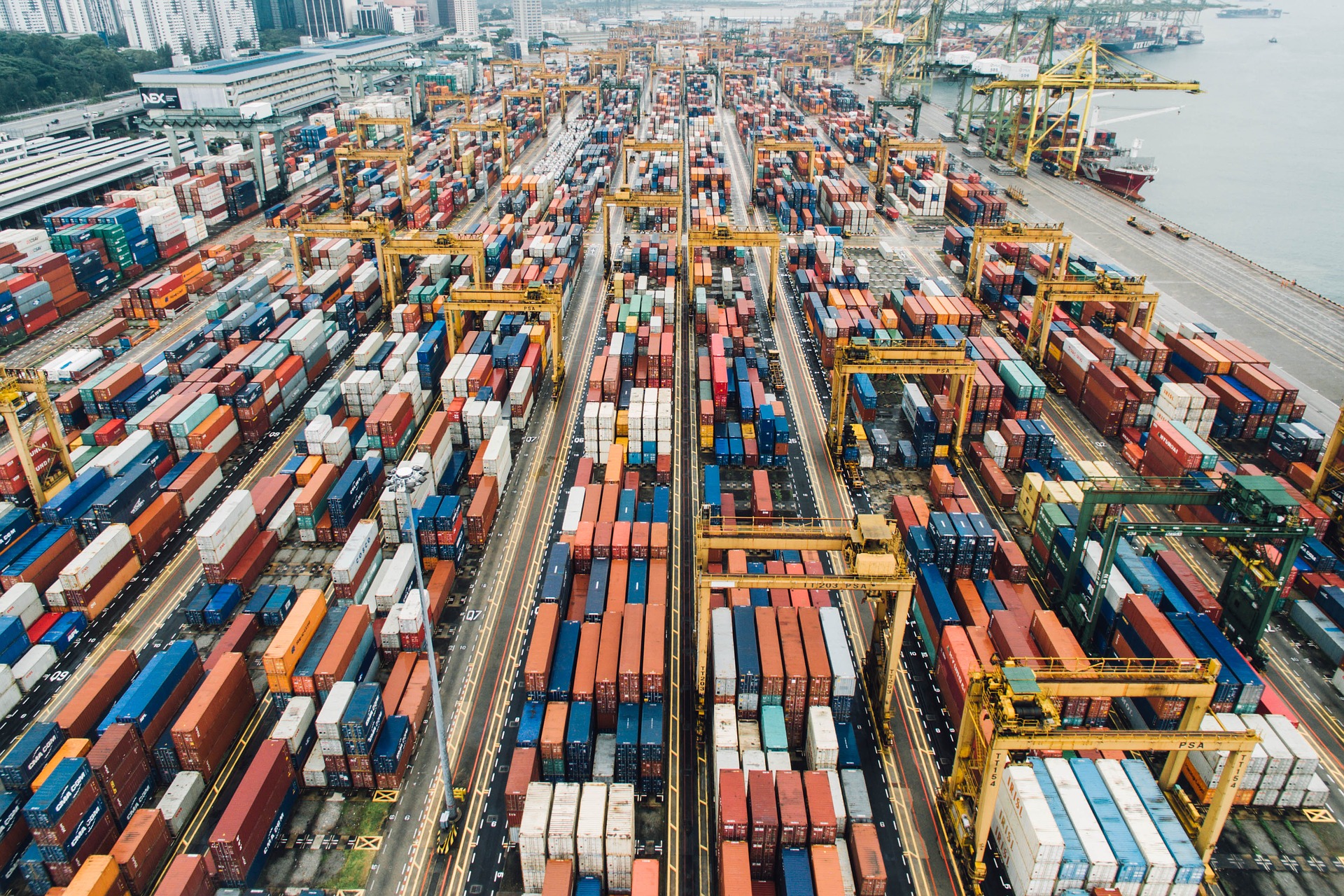
Global steel product exports rise 6.4% in 2023: worldsteel
The most exported steel product in 2023 was hot-rolled sheets and coils at 75.6 million mt, rising 11.2% on the year, followed by 53.2 million mt of ingots and semi-finished material, up 19.3%.
Platts, part of S&P Global Commodity Insights, assessed domestic HRC prices in Northern Europe at Eur630/mt ex-works Ruhr on June 6, down 8.7% since the start of 2024.
Globally, 41 million mt of galvanized sheets were exported in 2023, up 6.8% from 2022, followed by 36.5 million mt of steel tubes and fittings, rising 6.7%, 35.2 million mt of plates, up 9.3%, and 30.3 million mt of cold-rolled sheets and coils, down 1.6% on the year.
Global crude steel production in 2023 was 1.89 billion mt, up 0.1% on the year. Of the total, 71.1% was produced using blast oxygen furnaces and 28.6% using electric arc furnaces, according to the worldsteel data.
The top exporting country in 2023 was China at 94.3 million mt, which was also the top crude steel producer at 1 billion mt.
This was followed by Japan, which exported 32.2 million mt in 2023, South Korea at 27 million mt, the European Union at 26 million mt and Germany at 22.5 million mt.
Meanwhile, the top five importers in 2023 were the EU at 39.2 million mt, the US at 26.4 million mt, Germany and Italy both at 18.7 million mt and Turkey at 18 million mt.
Worldsteel noted that the EU export and import volumes excluded intra-regional trade, while the German and Italian volume included intra-European trade.


EU HRC remains stable as buyers avoid bookings amid new safeguard rules
“Demand is still weak, with no improvement expected,” a service center source said. “Buyers very cautious due to the new safeguard rules.”
Some mills have used proposed changes to the existing safeguard measures to push their offers higher. However, there has been no improvement in market fundamentals, sources said.
“Price increase does not reflect demand,” another service center source said. “Real demand remains unchanged.”
The European Commission said May 30 that it was considering a 15% cap for a single country over the Tariff Rate Quota volume for HRC initially available in each quarter. European authorities are scheduled to announce definitive measures by June 30. As HRC imports from Japan, Taiwan, Vietnam and Egypt are likely to be reduced as a result of the proposed changes, European buyers will have to substitute the material with either European coil or alternative non-EU suppliers that do not have a country-specific quota.
Platts assessed domestic prices for HRC in Northwest Europe stable on the day at Eur640/mt ex-works Ruhr.
A service center source reported offers and tradable values at Eur615-620/mt delivered Germany. The level could not be confirmed with other market participants. No deals were heard.
Platts assessed domestic prices for HRC in South Europe stable on the day at Eur635/mt EXW Italy June 10.
Offers were reported at Eur635/mt ex-works Italy.
In addition, scheduled maintenances at EU mills during the summer would provide some support to the prices.

European HRC producers consider higher offers amid slow demand
End-user demand remained poor but producers were still targeting higher prices ahead of the long-term contract negotiations with customers, expected to start in mid-June.
Bullish sentiment among producers was supported by the news that EU import safeguards had been extended for two years and the imposition of a 15% cap on residual quotas for HRC, which should limit supply of Asian material, which was being offered at competitive prices.
A steel mill in the Benelux area was heard raising its spot HRC offer price by €20 ($21.59) per tonne to €650-660 per tonne ex-works on Monday, sources told Fastmarkets.
Another European integrated mill was heard withdrawing its offers at the end of last week, with market participants expecting it to come back with new higher offers at the end of this week. There was no official information on this, however.
But buyers in Northern Europe were skeptical there was space for price increases due to slow consumption and a downtrend in the raw materials market.
“Distributors and steel service centers are not stockpiling,” one steel service center source in Germany told Fastmarkets.
According to buyer estimations, the workable price level in Northern Europe was in the range of €620-640 per tonne ex-works.
Fastmarkets calculated its daily steel HRC index domestic, exw Northern Europe at €634.75 per tonne on Monday, increasing by €1 per tonne from €633.75 per tonne on Friday.
The index was up by €1.42 per tonne week on week and down by €5.25 per tonne month on month.
Fastmarkets’ daily steel HRC index domestic, exw Italy was calculated at €630.00 per tonne on Monday, down slightly by €0.83 per tonne from €630.83 per tonne on Friday.
The index was up by €0.62 per tonne week on week, but down by €7.08 per tonne month on month.
Last week, July-delivery HRC was offered by an Italian integrated mill at €650 per tonne delivered, which nets back to about €630-635 per tonne ex-works.
The mill has sold some quantities and is no longer in the market, according to a buyer source, who added that the mill will probably come back with slightly higher prices.
Buyers estimated the tradeable market level at €630 per tonne ex-works.
Regarding imports, a buyer source told Fastmarkets that Asian suppliers were not very active at present, awaiting more clarity about the new safeguard adjustments.
Turkey was heard increasing its export offers for HRC to Europe by about €20 per tonne.
On Monday, offers of Turkish material were heard at €600-630 per tonne CFR, including the anti-dumping duty.
Published by: Darina Kahramanova


Business in the EU is in total stagnation, says Irepas
The global long steel market is yet to reach bottom, with supply still outpacing demand. The market is waiting for action from Chinese authorities to stem exports, as iron ore prices drop below $110/tonne, but nothing has materialised so far, says the International Rebar Exporters and Producers Association (Irepas).
Turkish mills are waiting for EU demand to improve. Otherwise, along with continuing Chinese exports, Turkish mills will be forced to reduce production further.
“Business in the EU … is in total stagnation,” the association says in its June short-range outlook seen by Kallanish. “This situation has been continuing in the EU for about a year now and there are no signs of improvement in sight. Investments are still low despite the interest rate decrease and most of the cut and bend shops have free capacities such as they have never had for ages.”
The EU’s safeguard extension “will keep imports away from Europe despite the need to meet the CO2 emission agenda and the lack of adequate qualities for some products. It looks like Europe is supporting old industry instead of investing in new industry and technology,” it adds.
In the US, domestic mills have built enough new capacity to meet all demand, with prices equal to or better than import prices, making imports unattractive.
Scrap prices in the international market are still holding, which is eating the margins of steel producers down towards zero. North American scrap has been down every month this year; however, flows have kept on coming.
Market regionalisation continues to gain ground, and those markets with overcapacities will suffer. “At the same time, downstream industry will suffer everywhere where no competitive feedstock products are available. Consequently, the EU will be bombarded with ready finished products from the same sources which previously provided only the feedstock products,” Irepas notes.
Market players are mostly in wait-and-see mode, with the outlook unsatisfactory and in line with the international political outlook, it concludes.
Adam Smith Poland