

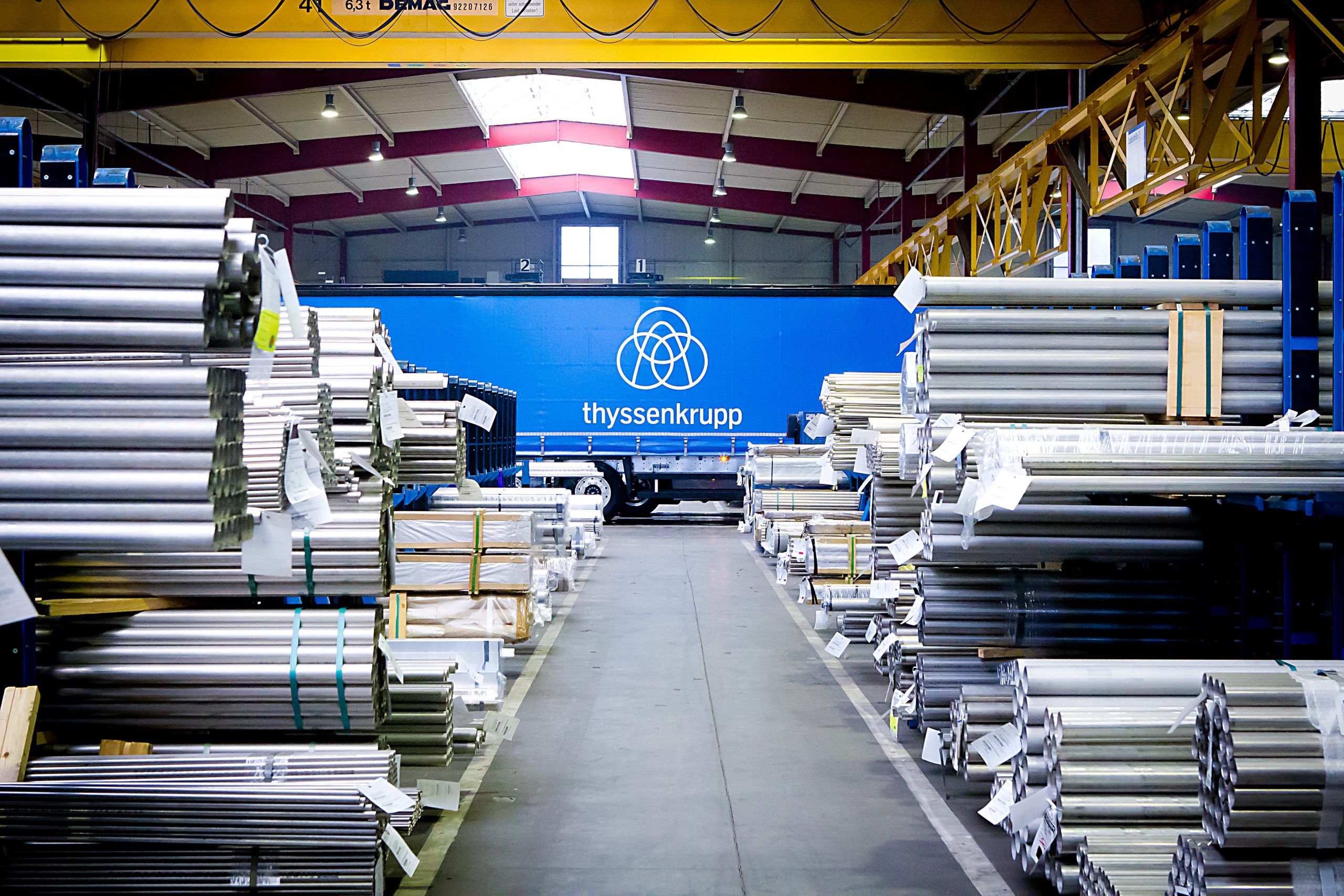
Thyssenkrupp Steel loses influential technology chief
Arnd Köfler, chief technology officer at thyssenkrupp Steel, will leave the company by mutual agreement on 30 June, for personal reasons, Kallanish learns from the firm.
Köfler’s departure on short notice is remarkable as he has been a driving force behind the strategy and implementation of the German steelmaker’s transformation to carbon-neutral steel production. He was “driving it forward in crucial times with remarkable dedication and passion right through to the funding decision and start of construction,” says supervisory board chairman Sigmar Gabriel.
He will be succeeded by Dennis Grimm, currently cto at Hüttenwerke Krupp Mannesmann (HKM), in which thyssenkrupp Steel holds a 50% stake.
HKM is also seeing Peter Biele take over as managing director, after eight years in the top position at thyssenkrupp Rasselstein, Germany’s only tinplate producer.
At Rasselstein, he will be succeeded by Clarissa Odewald in the role of chairwoman of the management board and chief sales officer. Before taking over the position in Andernach, Odewald held various positions in purchasing and sales at thyssenkrupp Steel in Duisburg, since 2007. She was responsible for the procurement of raw materials and overseas logistics, and was in charge of sales for the entire Steel business segment.
Christian Koehl Germany


Potential buyers visit Acciaierie d’Italia plants
Representatives of Indian trading company Steel Mont and Oman-based Vulcan Green Steel (VGS) have visited Acciaierie d’Italia’s (ADI) plants in Genova, Novi Ligure and Taranto in recent days, with a view to potentially acquiring the troubled producer. Metinvest representatives are meanwhile expected to visit Taranto later this month, sources close to ADI confirm to Kallanish.
According to multiple sources close to the dossier, several steelmakers have been contacted by the Italian government to consider purchasing ADI, including Arvedi, but there is no real industrial plan for the steelmaker. There is talk of breaking the company up and selling the different facilities, while turning Taranto into an electric arc furnace steelworks.
Acciaierie d’Italia’s special administration commissioners have promised trade unions that two blast furnaces at Taranto, no.1 and 4, will be replaced by two electric arc furnaces. Construction is likely to begin in the first half of 2025 (see Kallanish passim).
The commissioners have presented to unions a draft of a new industrial plan that aims to increase production with the restart of BF no.1 and 2. Taranto is currently working at minimum production levels, using only BF no.4. The plan is to operate BFs no.1, 2 and 4 by 2025 in order to reach 6 million tonnes/year of steel production. The EAFs are to be commissioned in 2027.
According to the initial plan, there is no intention to revamp and restart BF no.5, which has been idled for several years. The Italian government is now preparing to inject €150 million ($161m) into the company and lobbying the EU for a loan of €320m following the submission of a detailed industrial plan. The special administration is also said to be considering a €600m loan from a pool of banks.
Meanwhile, the former Ilva’s three commissioners, Giancarlo Quaranta, Davide Tabarelli and Giovanni Fiori, are building up a new management team. Maurizio Saitta has been appointed ADI general director, replacing Giuseppe Cavalli. Angelo Colucci has become supply chain chief, while Benedetto Valli has taken up the role of Taranto plant manager.
Despite prioritising its future Italian flat steel mill in Piombino, Metinvest said it may later consider becoming a shareholder in ADI. Metinvest is currently supplying Taranto with raw materials and sourcing slab from Taranto for its Italian facilities.
Natalia Capra France

EU HRC prices inch down on day amid muted activity
“Market is still quiet and there is very low demand,” a service center source said. “There is no re-stocking activity and barely any movement in the market.”
Some mills have used proposed changes to the existing safeguard measures in Europe to push their offers higher. However, market fundamentals do not support an increase in prices, sources said.
The European Commission said May 30 that it was considering a 15% cap for a single country over the Tariff Rate Quota volume for HRC initially available in each quarter. European authorities are scheduled to announce definitive measures by June 30.
As HRC imports from Japan, Taiwan, Vietnam and Egypt are likely to be reduced as a result of the proposed changes, Europe-based buyers will have to substitute the material with either European coil or alternative non-EU suppliers that do not have a country-specific quota.
Platts assessed domestic prices for HRC in Northwest Europe at Eur630/mt ex-works Ruhr, down Eur10 on the day.
Offers were reported at Eur620-650/mt ex-works Benelux. Tradable values were heard at Eur620-640/mt ex-works Northwest Europe. No deals have been heard.
Platts assessed domestic prices for HRC in South Europe stable on the day at Eur635/mt ex-works Italy June 10.
In addition, scheduled maintenances at EU mills during the summer are expected to provide some support to the prices.


China’s push to start emissions trading for steel industry this year faces critical challenges
China launched its ETS in July 2021, which currently only covers the power sector. There have been many politicians and industrial stakeholders calling for an accelerated ETS expansion to include other emissions-intensive sectors, especially those liable under the EU’s Carbon Border Adjustment Mechanism, like cement, aluminum, iron and steel.
Earlier in 2024, the Ministry of Ecology and Environment or MEE released for public consultation emissions accounting and reporting guidelines targeted toward the cement and aluminum sectors, paving way for their inclusion in the ETS. However, the guideline is yet to be released for the iron and steel industry due to its long list of products and sophisticated emissions accounting procedures.
A spokesperson for the China Iron and Steel Association or CISA told state media China Environment News June 6 that “the iron and steel sector is expected to be included in the national ETS this year after a series of early-stage preparations, following the government’s call.”
Some industrial experts regarded this as a quasi-official voice that committed to onboard the iron and steel sector despite challenges.
China Environment News is the mouthpiece of MEE, which oversees carbon market development. Articles on this newspaper usually aim at lobbying other government bodies and industrial stakeholders to take certain actions.
Despite MEE’s clear push, the central government is wary of any policy that could compromise the economy. This becomes even tricker for the iron and steel sector as it contributes about 15% of the country’s CO2 emissions but also over 50% of global steel production.
Lack of carbon management capacities
“Compared with power sector, iron and steel sector has much more complicated industrial processes, raw materials and products. As such, it will be much more difficult to conduct emission accounting and verifications, as well as crafting the allocation plan of ETS allowances,” CISA said in an interview with China Environment News.
Since 2013, China has established several provincial, pilot carbon markets. These pilots have covered about 80 iron and steel companies, enabling them to accumulate experience in carbon asset management and emissions trading, CISA said.
“However, these companies only contributed about 13% of crude steel outputs. Majorities of iron and steel companies still lack the ETS-related experiences,” the spokesperson said. Even for some companies that have already participated in provincial markets, they mainly focus on fulfilling liabilities and did not actively participate in emissions trading, CISA noted.
“When I ask steel producers about their decarbonization strategies, most of them still give me a confused look,” a China-based steel market analyst said.
The analyst used a Chinese idiom to describe the iron and steel sector’s situation — “the arrow is already on the bowstring, so you have to shoot.”
“They must follow the government’s call to participate in the ETS no matter how challenging it can be. Meanwhile, the EU’s CBAM is coming and there may be more CBAMs from more countries coming.”
Compromised profitability
Including the sector in the ETS will exert a stronger push for more decarbonization investments. However, some steel producers worry that the costs could be unbearable, questioning whether investing in decarbonization is “luxurious” as they are facing razor thin profit margins.
In January-February, China’s steel export volume increased by 32.6%, but the average export price dropped by 32.1%, CISA told the state media, highlighting that, since 2023, low prices have triggered investigations by the US, the EU and Thailand and caused trade frictions with India.
Notably, China’s emissions allowance price was at Yuan 96.07/mtCO2e ($13.26/mtCO2e) on June 7. Steel producers said their current profits were Yuan 100-300 ($13.80-$41.39) for each ton of steel.
Around 1.78 mt of CO2 emissions will be incurred for producing a ton of product, a China-based long steel producer said, adding that carbon footprints vary significantly by steel products and many producers are still unable to conduct such emissions accounting.
The producer expected ETS costs to start low, because, like the power sector, the government will give each producer a free emissions quota based on its annual output. Producers only need to buy emissions allowances if they emit more than their free quotas.
CISA has published a decarbonization roadmap for the iron and steel sector that targets to peak the sector’s emissions in 2030, reduce the sector’s emissions by 40% in 2040 from 2020 levels and by 95% in 2060, as well as achieving carbon neutrality with carbon capture, utilization and storage technologies and carbon offsets.
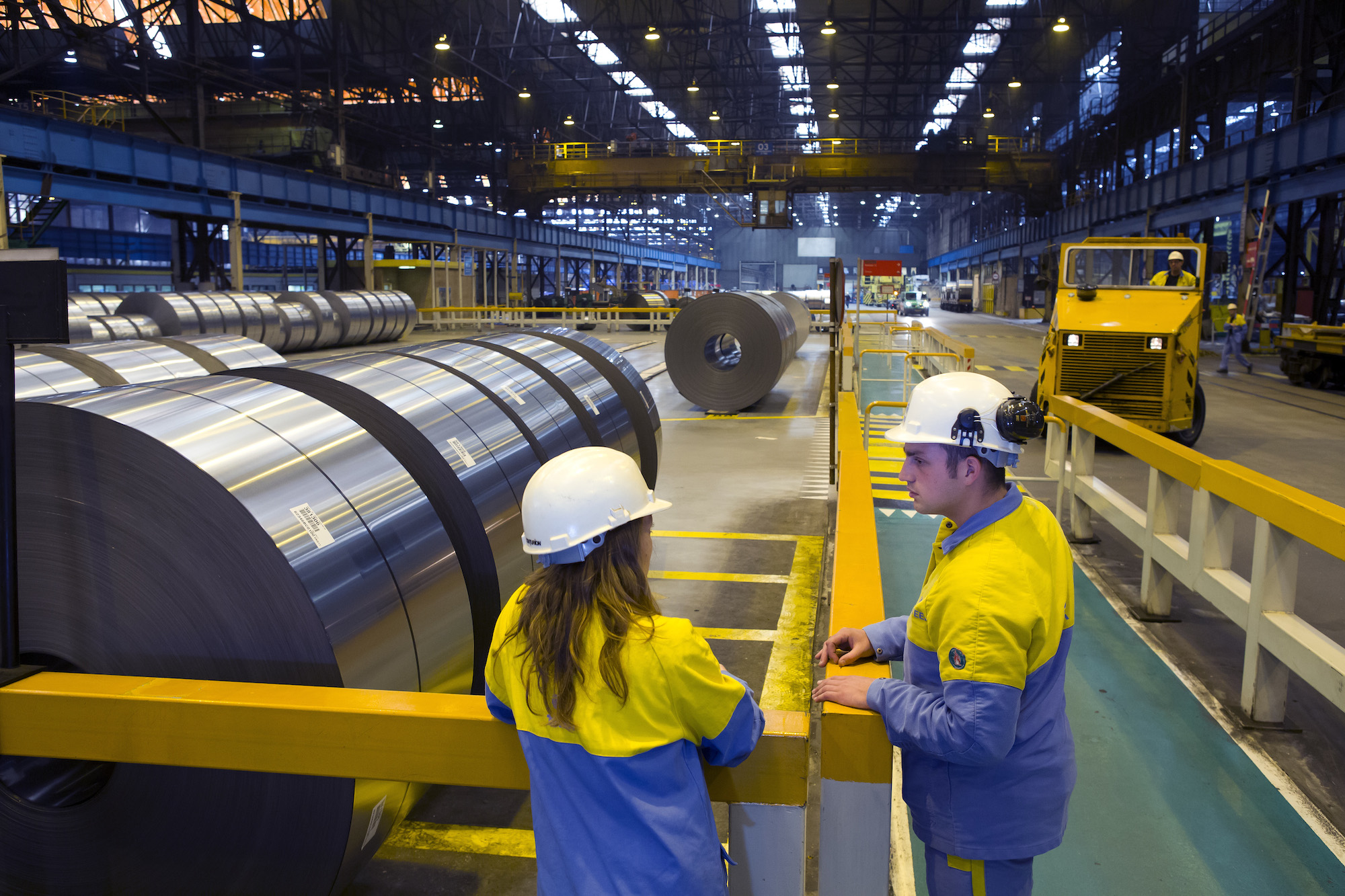
Tata continues UK transformation despite election concerns
Tata Steel says it will continue with its Port Talbot blast furnace operations closure despite being “apprehensive” about reports the upcoming UK general election may put the investment under threat.
“We urge and request the current and the incoming government post-elections, to adhere to and safeguard the agreed terms of the £500 million package of support for the Electric Arc Furnace (EAF) project announced in September 2023,” Tata Steel writes in a note seen by Kallanish.
“The proposed grant funding from the UK Government is ring fenced for building the new EAF, which is critical to securing long-term supply of steel for Tata Steel’s UK downstream assets and protecting 5,000 jobs in various Tata Steel UK sites. It is not linked to the ongoing financial losses and the instability of the existing heavy end assets, whose closure is now underway and immutable. We are therefore concerned with the UK media reports since yesterday as further political uncertainty on the timing and form of the grant will place the EAF project and the long-term future of steelmaking at Port Talbot at significant risk,” it added on Tuesday.
Tata said in April it is proceeding with its single 3 million tonnes/year electric arc furnace plan for Port Talbot following seven months of formal and informal national level discussions with UK trade unions (see Kallanish passim). Unions responded by saying they plan to call a strike.
Port Talbot’s two blast furnaces, no.5 and no.4, are scheduled to be closed by end-June and end-September respectively. The UK general election is scheduled for 4 July, with the opposition Labour Party ahead in the polls.
Tata Steel UK’s deliveries in the March quarter fell 9% on-year but rose 8% on-quarter to 690,000t, while liquid steel output fell 11% on-year and dropped 8% on-quarter to 660,000t.
Adam Smith Poland

European HRC producers mull price increases; buyers stay on sidelines
Since June 7, some integrated flat steel producers have withdrawn offers, and market participants told Fastmarkets they expect them to come back shortly with increased prices.
One integrated mill in the Benelux area has reportedly increased its offer prices for July-August delivery by around €20 ($22) per tonne to €650-660 per tonne ex-works.
Sales were reported within that range, but for only for small volumes.
“This [increase of €20 per tonne] is a reasonable price rise, considering costs of production,” a supplier source said. “Getting even €10 per tonne above that would be impossible due to [the lack of] demand.”
In general, trading remained weak on Tuesday, with sources pointing out that most suppliers in Europe were “strongly looking for orders” and had short order books.
“Demand is low, restocking is very modest and we are heading into summer, so a strong rebound [in demand] is unlikely. Mills [in Europe] are actually hungry for orders,” a steel service center source in Germany said.
In Germany, offers were heard at €640-650 per tonne delivered – equivalent to €630-640 per tonne ex-works for July-delivery coil.
Buyers estimated achievable prices at €620-640 per tonne ex-works.
Sources told Fastmarkets they expect a major European steelmaker to come back to the market with higher prices by the end of this week and suggested that the move might be “a wake-up call for the market.”
Fastmarkets calculated its daily steel hot-rolled coil index domestic, exw Northern Europe at €635.42 per tonne on Tuesday, up by €0.67 per tonne from €634.75 per tonne on Monday.
The index was up by €1 per tonne week on week but down by €4.58 per tonne month on month.
Meanwhile, Fastmarkets calculated its corresponding daily steel hot-rolled coil index domestic, exw Italy at €631.25 per tonne on Tuesday, up by €1.25 per tonne from €630.00 per tonne on the previous day.
The index was down by €0.75 per tonne week on week and by €5.83 per tonne month on month.
No major price changes or trading were reported in the Italian HRC market this week.
An Italian supplier was heard offering July-August delivery HRC at €650 per tonne delivered, which nets back to €635-640 per tonne ex-works.
“[An Italian mill] has a short portfolio and proposed to roll over [HRC prices] to book some tonnages,” a buyer source in Italy said.
Trading remained weak, however, after the announcement of an extension in EU import safeguard measures.
“There are strong discussions in the market; buyers are worried about price hikes, but nothing has happened so far,” a second buyer said. “The market is waiting for the [European] Commission to confirm new safeguards and publish an official document.”
The imported HRC market was also quiet.
Some suppliers withdrew offers after the news on EU safeguards, while others were testing the market with higher offers, sources said.
And some Turkish suppliers were reportedly trying to increase offers by around €20 per tonne.
On Tuesday, offers of Turkish HRC were heard at €610-630 per tonne CFR, including the anti-dumping duty.
August-shipment HRC from Saudi Arabia was offered to Southern Europe at €635 per tonne CFR, but most buyers described this offer as “unworkable.”
“The gap between domestic and import HRC has to be at least €50 per tonne to make imports attractive – taking into account all risks,” a buyer said.
From South Korea, offers were reported at €600-610 per tonne CFR.
Published by: Julia Bolotova


Tata’s Port Talbot steel BFs to shut down regardless of UK election result, company says
Tata’s sprawling Welsh steelworks is caught in a stark political division between the incumbent Conservative Party and the opposition Labour Party, with the latter widely seen to be likely to win the UK general election scheduled for July 4, and thus put an end to 14 years of Conservative administrations.
The Conservatives have agreed a support package of £500 million ($636 million) intended to help Tata transition from its current blast furnace (BF) based steelmaking model to a scrap-heavy electric-arc furnace (EAF) facility by 2027.
As part of these plans, Tata Steel intends to decommission both of its BFs by the end of September this year, and to import steel slab for re-rolling until EAFs can be brought into operation later this decade.
The Labour Party, meanwhile, has distanced itself from these plans amid concerns about the number of job losses expected to result from the BF stoppages.
Labour Party leader Keir Starmer said earlier this month that he would “fight for every single job and fight for the future of steel in Wales.” Labour’s position is supported by steelworkers’ trade unions, including its plans to create a £3 billion investment steel fund to preserve steelmaking in the UK.
The issue has come to the fore in the UK press in the past few days, with an increasingly hostile tone adopted by trade union Unite toward Tata Steel UK’s management, and a visit from Labour’s shadow secretary of state for business and trade, Jonathan Reynolds, to the Port Talbot works.
BF shutdown to proceed
Tata UK “confirms that it will continue with the announced closure of the heavy end assets and the restructuring program at Port Talbot in the coming months,” it said on Tuesday. This would be irrespective of the result of the general election.
Port Talbot’s heavy end assets “are nearing their end of life, are operationally unstable, and are resulting in unsustainable financial losses,” Tata said.
It added that the coke ovens had already been closed, in March 2024, because operations had become “unfeasible and unsafe.”
“Therefore, the company is compelled to continue with its plans to decommission Blast Furnace No5 at the end of June, followed by decommissioning of Blast Furnace No4 by the end of September,” the firm said. Downstream assets would continue to operate by using imported semi-finished steel until the new EAFs begin to operate.
At the same time, Tata said that it was “concerned” about UK media reports on Monday. It believed that the political uncertainty and differences between the two political parties, concerning the timing and form of the £500 million grant, “will place the EAF project and the long-term future of steelmaking at Port Talbot at significant risk.”
“We urge and request the current and the incoming governments, post-election, to adhere to and safeguard the agreed terms of the £500 million package of support for the electric-arc furnace project announced in September 2023,” the company said.
Tata also noted that the grant funding was not linked to the continuing financial losses and the instability of the existing heavy plate assets, stressing that their closure was already “under way and immutable.”
According to Fastmarkets’ information, the two BFs at Port Talbot have combined capacity for 5 million tonnes per year of hot metal. The site at Port Talbot produces hot-rolled and cold-rolled coil, as well as tubes.
Tata Steel UK planned to replace the BF capacities with EAFs. But the combined capacity of the new EAFs would only be around 3 million tpy of crude steel.
Scrap processors in the UK have already been contacted by Tata Steel with the purpose of preparing them to produce higher-grade, lower-residual scrap for the future Tata EAF, a major scrap seller source told Fastmarkets last week.
The scrap required for the unit must be of high grade because the EAF will produce flat steels for consumption in the automotive sector, which has much stricter impurity requirements than the commodity grades of rebar typically made in European EAF-based operations.
Similar moves have been seen in Germany, where scrap processor TSR produces the high-grade TSR40 scrap grade designed for use by flat steelmakers to produce automotive-grade steel coil.
Threat of industrial action looms large
Despite Tata Steel’s firm resistance to any suggested changes to its plans, the Unite trade union was likely to put the steelmaker’s resolve to the test, and could launch strike action.
Unite last week confirmed its intention to start industrial action on June 18. According to the union, around 1,500 Tata steelworkers at Port Talbot and Newport Llanwern will take part in the protest against Tata’s plans to close its BFs and to eliminate 2,800 jobs.
Unite members were expected to begin a “work to rule” action on June 18, which would mean that no additional shifts or overtime would be worked.
The planned action would severely disrupt and delay Tata’s operations and its order book, according to Unite. But Tata contested this, with a spokesperson saying that output at the steelworks would not be affected, and that two other major British trade unions, Community and GMB, would not be participating in the action.
Nevertheless, both Community and Unite said that Tata Steel UK should halt its plans to close its BFs until after the election in July.
“[Jonathan] Reynolds is absolutely right to call on Tata not to take irreversible decisions before an election,” Roy Rickhuss, general secretary of trade union Community, said on Monday, “and to engage with Labour and the [trade] unions to consider alternatives to protect jobs.”
Julia Bolotova in Brussels contributed to this report.
Published by: Lee Allen, Darina Kahramanova