


Günther + Schramm rüstet in Königsbronn auf
Neuen Herausforderungen begegnet man mit der entsprechenden Technik. Günther + Schramm und entschied sich vor diesem Hintergrund für eine neue automatisierte Schnellkreissäge mit Roboteranbindung am Standort Königsbronn.
Die neue Schnellkreissäge vom Systemdienstleister Günther + Schramm am Standort Königsbronn zeichnet sich durch eine hohe Präzision und Wiederholgenauigkeit aus. Die Komplexität der neuen Anlage liegt in ihrer Vielseitigkeit: Sie sägt, entgratet und verpackt. Damit bietet sie einen großen Vorteil gegenüber der Monosäge, die zuvor bei Günther + Schramm im Einsatz war. Da diese lediglich sägen konnte, musste ein Mitarbeiter die Produkte aus Stahl, Aluminium oder Eisen manuell entnehmen, entgraten und verpacken. Durch die neue Schnellkreissäge mit Roboteranbindung entfallen diese Arbeitsschritte für die Belegschaft.
„Roboter und Roboterperipherie sind vollständig in die Maschinensteuerung integriert. Auftragseingabe, Auftragsverfolgung, Visualisierung, Diagnose usw. erfolgen ausschließlich über die Maschinensteuerung. Dies stellt eine große Entlastung für unser Team dar“, sagt Volker Walz, Betriebsleitung bei Günther + Schramm. „Mit dieser Investition können wir unsere Produktionsprozesse weiter optimieren, die Effizienz steigern und gleichzeitig die Qualität unserer Produkte erhöhen. Wir sind überzeugt, dass wir damit unsere führende Position in der Branche weiter ausbauen können.“
Günther + Schramm: Roboter unterstützt Mitarbeiter
Die vollautomatische Kreissäge ist CNC-gesteuert. Das heißt: Sie ist durch den Einsatz von Steuerungstechnik in der Lage, Werkstücke mit hoher Präzision automatisch herzustellen. Sie zeichnet sich durch eine robuste Bauweise aus und ist mit einem hinter der Sägemaschine positionierten Roboter ausgestattet. Dieser übernimmt die Abschnittsentnahme mittels Vakuumsauger oder mit einem mechanischen Greifer und ermöglicht die Stapelung auf bis zu acht Behälter- beziehungsweise Palettenplätzen. Durch das Roboter-Handhabungssystem wird die vollautomatische Abstapelung der Sägeabschnitte sowie die Entsorgung der nicht weiter verwendbaren Restlängen gewährleistet.
Ein weiteres Highlight der Anlage ist die Möglichkeit des beidseitigen Entgratens auf Kundenwunsch. Mittels eines zusätzlichen Handhabungsroboters und zweier automatisch verstellbarer Spannvorrichtungen werden Sägeabschnitte beidseitig in einem Arbeitsgang entgratet. Darüber hinaus werden den Paletten automatisch Materialbegleitscheine zugeordnet, sodass diese direkt versandfertig sind. So muss der Mitarbeiter die fertig beladenen Europaletten nach dem Sägeprozess nur noch zum Versand bringen.
Die vollautomatische Kreissäge ist in der Lage, Vollmaterial, Profile und Rohre in allen Qualitäten zu trennen, einschließlich schwer zerspanbarer Werkstoffe im Hartmetallbereich. Zum Vorlagern und automatischen Nachladen von Materialstangen mit unterschiedlichen Materialabmessungen, Qualitäten und Formen dient ein Universalmagazin mit zehn Vorlagefächern für Herstellungslängen bis 6.000 Millimeter. Das Magazin kann bis zur vollen Tragkraft von 7.500 Kilogramm ausgenutzt werden.
Foto: Günther + Schramm


Liberty’s Ostrava sale garners mostly local interest
The sale of Liberty Steel’s Czech Ostrava iron and steel works has garnered interest from a number of parties, mostly local but including Indian company Jindal Steel, a delegation from which showed up at the mill in May, industry sources said June 18.
Other potential buyers included Trinecke Zelezarny, another major steel producer in the Czech Republic with a capacity of 2.5 million-2.6 million mt/year, Czech industrial holding CE Industries (CEI) known in the steel industry for having provided Czech third-largest steel producer Vitkovice Steel with tolling financing, and Czech energy company Sev.en Group, the sources said.
Liberty Steel declined to discuss the sales process and the above-named entities were not available for comment.
Given the ongoing risks and uncertainties, Liberty Steel last week announced a sale of Ostrava and its judicial reorganization under the Insolvency Act.
It had worked on several restructuring plans for Ostrava, including a mid- to long-term transition to electric arc furnace technology.
In April, Sanjeev Gupta, head of GFG Alliance, an umbrella group which Liberty Steel is part of, met Czech finance and industry ministers but the latter found the plans “weak” and “unconvincing” with no breakthrough achieved on the mill’s restart, sources said.
Steel production at Ostrava was halted in the fourth quarter of 2023 when Liberty Steel in October idled blast furnace No. 3, the last remaining operational BF at its Ostrava steelworks, citing poor demand in Europe as the main reason.
Some downstream mills continued rolling, using up previously acquired semi-finished steel stock. Ostrava’s blast furnace No. 2 was idled in July 2022 for repairs and an upgrade but has never been restarted.
Ostrava’s restructuring was hampered by external factors, primarily a further deterioration of market conditions in Europe, an indefinite delay in the allocation of emissions allowances to the business from Czech authorities, Liberty Steel said, adding Ostrava was filing for a judicial reorganization which will provide the time and protection to undertake its sale.
The sale decision was in the best interests of Ostrava’s creditors, employees and customers, said Liberty, which intends to maintain the few assets which cover their own costs and support employees in applying for the state’s Wage Guarantee Scheme.
The Ostrava plant is the Czech Republic’s biggest steel producer capable of making up to 2 million mt/year at full steam. Liberty Steel acquired it from ArcelorMittal in July 2019. After years of underinvestment, it says it injected Eur143 million ($153 million) in the plant and led to its best performance in a few years in 2021-22.
In 2021, Ostrava produced a five-year high of liquid steel at 2.28 million mt with the plant’s two blast furnaces producing 1.93 million mt of hot metal during the year, but last year, its steel production declined to 1 million mt, according to local media reports.
Katya Bouckley


SSAB and UK’s Firth Steel in deal for SSAB Zero steel deliveries
Swedish steelmaker SSAB and Firth Steels have entered a long-term partnership for the supply of SSAB’s Zero, a product made of recycled steel and produced with fossil-free electricity and biogas.
The partnership will help Firth Steels, one of the UK main manufacturers of steel profile products for wall and roof systems, to further improve its sustainability and reduce the CO2 footprint of its products.
The steel from SSAB will be used as a key component of Firth Steels’ brand-new product series Protex Voyage, a low embodied carbon building envelope solution.
“As a UK-based roll-former of steel profiles, Scope 3 emissions represent the largest portion of our carbon footprint,” James Firth, Managing Director of Firth Steels Limited said.
“By forming strategic partnerships with the world’s leading mills, we can significantly reduce these emissions and forge a sustainable future for our planet from the outset, not offset,” Firth said.
“We are happy to add fossil-free steel to our collaboration with Firth Steels, which already uses our bio-based GreenCoat color coated steel in their products,” Dave Williams, Managing Director, SSAB Swedish Steel Ltd, said.
“By cutting our own carbon emissions, we can help our customers reduce their indirect emissions from the materials they use — it is a win-win,” Williams said.
Many companies in different industries across the steel value chain are buying increasing volumes of low-carbon and low-stainless “green” steel to reduce their Scope 2 and 3 emissions, closing supply agreements to secure low-emission steel for their products.
Platts, part of S&P Global Commodity Insights, assessed Northwest European hot-rolled carbon-accounted coil at Eur760/mt ($815/mt) ex-works Ruhr on June 17, up Eur5/mt on the day.
The assessment was in line with the sum of Platts daily carbon-accounted steel premium assessment and Platts daily hot-rolled coil price assessment in Northwest Europe.
On June 18, SSAB also said its near- and long-term carbon emissions reduction targets have been approved by the Science Based Targets initiative.
Approval means the targets are scientifically based and in line with the SBTi’s raised requirements for companies to deliver on the goal of limiting global warming to 1.5 C.
SSAB’s now validated long-term target is to reach net-zero greenhouse gas emissions for Scope 1, Scope 2 and Scope 3 by 2045. The updated near-term target is a reduction of 48% in greenhouse gas emissions in Scope 1, Scope 2 and parts of Scope 3 by 2033 compared with 2018 as the base year, the company said.
It is a raised ambition compared with SSAB’s previously validated near-term target of a 35% reduction in Scope 1 and Scope 2 emissions by 2032 compared with 2018.
With this approval SSAB is one of the first steel companies globally to receive validated decarbonization targets according to the SBTi’s steel sector guidance released in 2023.

Federacciai: Italy May crude steel production falls on year for fourth consecutive month
Italian crude steel production declined for a fourth consecutive month in May, falling 3.5% to 1.9 million mt, according to data released by Italian steel producers’ association Federacciai.
Production was weighed down by weak demand as well as low output at the country’s second-largest domestic steel producer, ADI.
In the first five months of the year, crude steel production fell 5.5% to 9 million mt.
Flat steel production saw the heaviest decline in May, falling 7.5% to 765,000 mt. Over the first five months of the year, flat steel production fell 9.3% to 3.76 million mt.
ADI has been operating at its lowest-ever rate since February, with the new management working to increase production.
Long steel production in May dropped 1.8% to 1.18 million mt, reflecting a weak construction industry, with January-May output falling 1% to 5.30 million mt.
Italian HRC prices dropped to Eur629/mt ex-works Italy by May 1 from Eur685/mt base ex-works at the beginning of January, according to assessments by Platts, part of S&P Global Commodity Insights. In May prices moved sideways and stabilized. They were last assessed at Eur620/mt base ex-works on June 17.
In April domestic hot-rolled coil prices fell to their lowest level since the beginning of the year at Eur620/mt base ex-works.
Meanwhile, Federacciai members last week confirmed Antonio Gozzi as the association’s president for the two-year period 2024-2026.
Gozzi will be supported in his role by vice presidents Antonio Beltrame, Mario Caldonazzo, Michele Della Briotta, Giuseppe Lucchini, Federico Pittini and Claudio Riva.

Europe still lacks green steel necessities
There was consensus among panellists that a green steel revolution is taking place, but they disagreed on the order of magnitude.
Carlo Beltrame, chief executive at Donalam & LME at AFV Beltrame Group, said few are willing to pay a premium for green steel at present.
“From my perspective, [the revolution] should [be] derived from the market. And from the market nothing is coming. Nobody is ready to pay anything on top,” Beltrame observed.
Beltrame noted that within Europe itself, there are different takes on electric arc furnaces, electricity supply, levels of state aid for CO2 and data for decarbonisation. As a result, Europe is already creating several different playing fields.

“The direction to a greener Europe is inevitable. It will come,” proclaimed Henrik Adam, vice president of Europe corporate affairs at Tata Steel. But, with new rules comes the reality of people trying to bend those rules.
”I think we must be aware that wherever there is regulation, there is a circumvention,“ Adam added.
Adam cited green steel coming into Europe that is not impacted by the Carbon Border Adjustment Mechanism (CBAM).
“We must have appropriate protection for the industry, cars, steel and other sectors to be able to spend money to become green without cutting the tree for which we are sitting – in terms of no jobs in the future to pay the taxes for the next generation,” Adam urged.
Adam said optimistically that Europe is approximately one or two more years away from appropriate hydrogen supplies.
Harssha Shetty, ceo of Jindal Shadeed Iron & Steel, offered a different angle toward Europe’s green steel transition.
“Europe can focus on engineering and use other pockets in the world to get low-carbon raw material,” he explained.
Shetty also highlighted China’s trend. “China is decarbonising fast. And China just recently announced 150 million tonnes of their steel production is going to be converted from blast furnace to EAF capacity,” he noted.
John Isaacson USA

USS ceo ‘extremely confident’ Nippon deal will close
US Steel’s (USS) top executive still expects that the takeover of the iconic Pittsburgh, Pennsylvania-based company by Japan’s Nippon Steel will receive all approvals by the end of 2024, Kallanish hears at the Global Steel Dynamics Forum in New York.
Speaking on the conference stage late Tuesday, USS president and chief executive officer David Burritt reiterates that a merger with Nippon is “the right choice” for his 123-year-old company and for US national security and economic well-being.
“I’m extremely confident that we will be able to close the deal this year,” Burritt proclaims.
The acquisition agreement, announced last year, has faced opposition not only from the United Steelworkers but also from both major US presidential candidates and members of Congress in Pennsylvania and other states. The arrangement is undergoing an in-depth review by the US Department of Justice (DoJ).
Burritt says his employees will come to understand that they will benefit from the takeover. He says Nippon pledges to honor current labour contracts through 2026 and will invest over $1 billion in the business, a capex commitment that exceeds existing thresholds in pacts with the union.
“They’re experts in integrated mills, and they want to invest here,” Burritt explains. “They’re upping the ante beyond what’s in the basic labor agreement.”
He argues that the “friendshoring” arrangement with a buyer based in Japan, a key US ally in the Asia-Pacific region, “strengthens national security.” Additionally, Burritt finds it a breath of fresh air that there will be technology transfer into the US instead of the usual route out of the US.
The USS ceo says there was so much interest in acquiring his company that “something like 19 NDAs” were signed, referring to non-disclosure agreements that precede negotiations. Some proposals would have bumped into antitrust roadblocks, but not with Nippon.
“Customers love it so much that they have written letters to the DoJ saying this deal will strengthen competition,” Burritt states.
Dom Yanchunas USA
French longs buyers see no market rebound
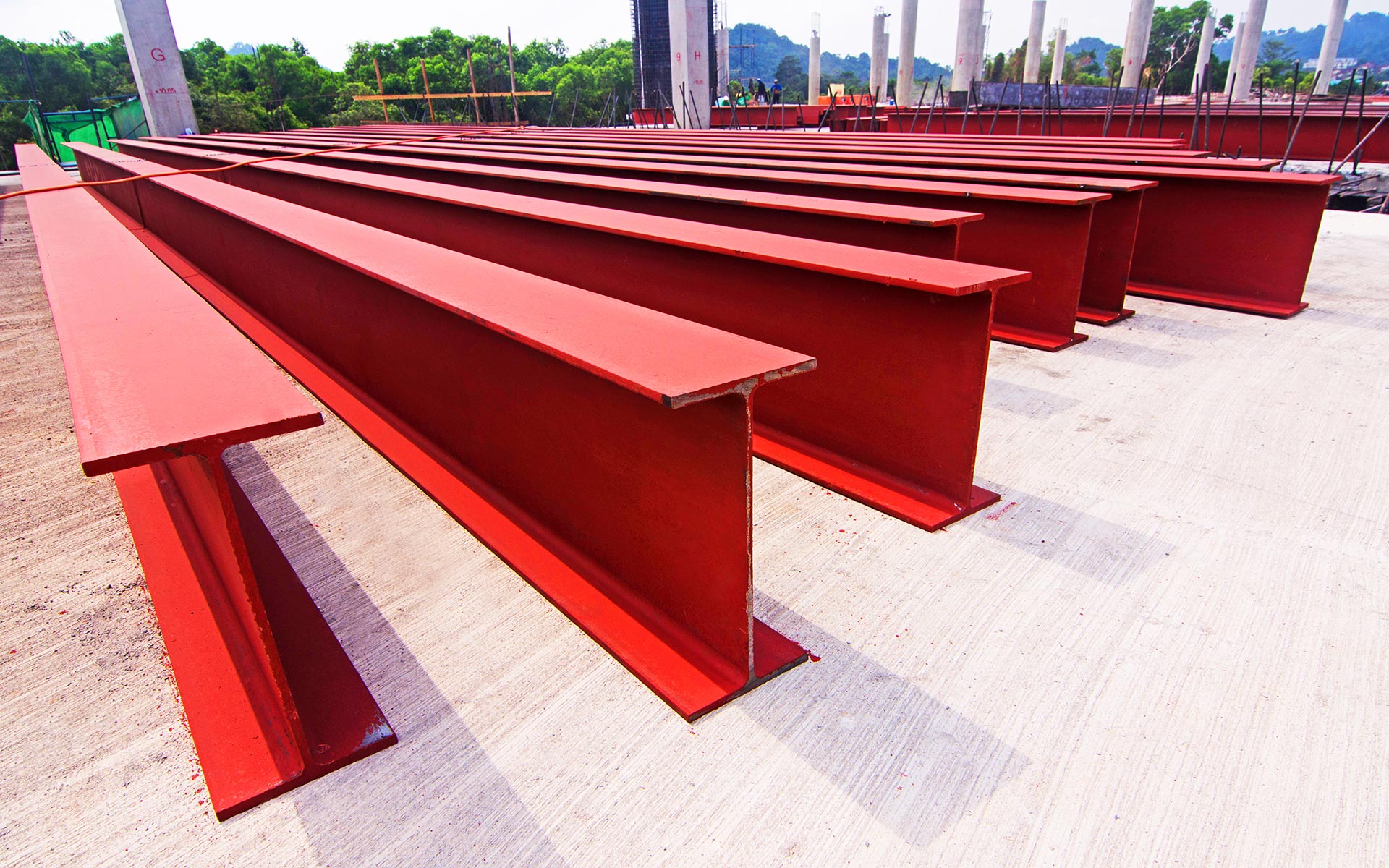
The French long steel market appears to still be experiencing stagnation, based on feedback from various distributors and buyers. There has been no significant improvement in activity across the value chain, except for a slight increase in apparent demand for rebar, associated with the Olympic Games in the Paris area.
Suppliers involved in construction works in the area are under pressure to deliver material before the planned closures of several axes in Paris from mid-July, Kallanish notes.
“We have not observed any improvement in consumption for either longs or flats. Demand is currently unfavourable due to the consumption crisis and the inclement weather, which is causing delays at building sites,” one major longs buyer says. “The Olympic Games are slowing building sites [in other parts of France], new construction is in freefall, and the political instability is not helping.”
Producers are eager to raise prices but this is not being well-received downstream. Values have remained relatively stable, with only minor fluctuations. Stockists are expected to make fewer purchases this summer, while the distribution sector is taking a cautious approach and construction companies are experiencing a decline in production volumes and order books.
“Prices are stagnating. They are neither increasing nor decreasing. Our members expect a negative 2024,” a purchasing group manager says. He adds that the sector is experiencing financial challenges this year and buyers are refusing any price increases.
Longs buyers are struggling to predict the future direction of the market. The stable prices are a cause for concern, as there is a possibility of a downward shift. Rebar values have seen a slight increase of €10/tonne ($10.7) on average since the beginning of the month, with the current domestic price at around €620/t delivered. According to sources, merchant bar prices are expected to remain steady, at €660-670/t delivered, while the first category of sections is estimated to be at around €750-770/t delivered.
The French construction crisis is continuing, as reported by national construction federation Fédération Française du Bâtiment (FFB). By the end of April, year-on-year, new building permits and new residential construction fell by 10.2% and 10%, respectively. In the first quarter, there was a significant decline in sales within the private property sector, with a drop of 29.9%. Similarly, sales of private properties experienced a sharp decline of 25.9% compared to the previous year.
Natalia Capra France

Scrap supply tightening, Red Sea disruption ‘decisive’
Largest scrap suppliers the EU and US will see exports halve in the next 5-6 years due to increased domestic demand as steelmakers decarbonise. This means current scrap importers will need to find alternative sources or use more ore-based metallics, according to McKinsey & Company associate partner Alexander van de Voorde.
Scrap generation in the mature supplier economies will grow only slowly and barely for prime scrap. This will see regulators holding scrap closer to demand centres, which will lead to reduced interregional trade flows, van de Voorde said at Kallanish Europe Steel Markets 2024 in Milan last week.
Decarbonisation will also lead to a larger oversupply of lower-grade iron ore, especially on the blast furnace side, but will cause a large deficit of higher grades, such as 67% Fe. The premium between those grades will be stretched.
Coking coal, meanwhile, “will remain an expensive commodity that people will fight for,” van de Voorde noted. Over the next 15 years, various mines will close, while new development in recent years is not sufficient to keep up with seaborne coal demand. Prices will not explode but will remain elevated, he added.

Derek Langston, global head of dry research at Braemar Shipping, meanwhile pointed out that freight rates in 2024 are elevated versus a year earlier. Bunker ships started avoiding the Panama Canal due to low water levels and then, months later, Houthi attacks started diverting shipping away from the Red Sea. The fact this happened simultaneously is “unprecedented”, Langston exclaimed.
Shipping scrap from Houston to Mundra – which normally goes via the Red Sea – now costs $54/tonne going around the Cape of Good Hope, the same price as transiting the Red Sea would cost with insurance.
Red Sea rerouting has added 1.7% to ship demand, which although does not appear like much, is enough to tighten the market, pushing prices several thousand dollars higher. “The overall effect on the market has been quite decisive,” Langston said of the Red Sea issue. The Panama Canal water levels are nevertheless expected to return to normal in the second half-year.
There has been some hesitance in recent years to order new ships due to questions over decarbonisation. This has kept the Capesize market in balance, he concluded.
Adam Smith Poland

Bullish momentum fades in European HRC market
Slow demand from the key steel-using sectors in most EU nations was keeping spot trading weak.
Industry sources said that, due to lower order volumes from the automotive industry, European steelmakers had tonnages available to sell in the spot market.
“European mills are actively looking for orders. Many suppliers still have end-July delivery available,” a buyer in Germany said.
Despite the expected positive effect on the market of newly adjusted safeguard measures, the bullish momentum stalled.
“The key issue is the bad demand. And we are heading into summer – the market is usually dead in August,” a steel-service center in the Netherlands said. “[A leading European steelmaker] seems to have dropped the idea of increasing prices [for HRC] in the current conditions.”
Offer prices for July-August delivery HRC from German mills were reported at €640-650 ($686-696) per tonne delivered, sources said, which would net back to €630-640 per tonne ex-works.
Offers from suppliers from the Benelux area for July August-delivery HRC varied between €620 per tonne and €650 per tonne ex-works, depending on the mill.
Buyer sources estimated the tradable price about €620-630 per tonne ex-works, with transactions for small lots reported at €630 per tonne ex-works in Germany.
Fastmarkets calculated its daily steel hot-rolled coil index, domestic, exw Northern Europe, at €632.50 ($677.71) per tonne on Tuesday, down by €1.25 per tonne from €633.75 per tonne on June 17.
The index was down by €2.92 per tonne week on week and by €5.83 per tonne month on month.
Fastmarkets calculated its corresponding daily steel hot-rolled coil index, domestic, exw Italy, at €629.58 per tonne on Tuesday, down by €1.05 per tonne from €630.63 per tonne on Monday.
The index was down by €1.67 per tonne week on week, and down by €3.34 per tonne month on month.
July-August delivery coil was offered by a local supplier at €650 per tonne delivered (€640 per tonne ex-works).
“Mills seem to have ended their attempts to increase prices,” a buyer source in Italy said. “Demand is very weak and there is no ground for [HRC] prices to move up. Stability is probably the best option for mills at the moment.”
Buyers estimated the market no higher than €630-635 per tonne delivered (€620-625 per tonne ex-works).
Prices for imported HRC were largely unchanged, and the number of offers was limited.
Suppliers from Taiwan were offering August-shipment HRC to Italy at €610 per tonne CFR.
But considering the high risks related to safeguarding quotas, most buyers said that these offers were not attractive.
“For Asian coil, prices should be €550-560 [per tonne CFR] at the most, to [be accepted]. But there are no such offer in the market,” a second source in Italy said.
From Ukraine, two sources reported an offer at €580 per tonne CFR.
One Turkish supplier was seeking a €30 per tonne price rise, with new offers for August shipment HRC heard at €640 per tonne CFR to Italy, including the duty. But this price was not considered workable by Italian buyers.
