

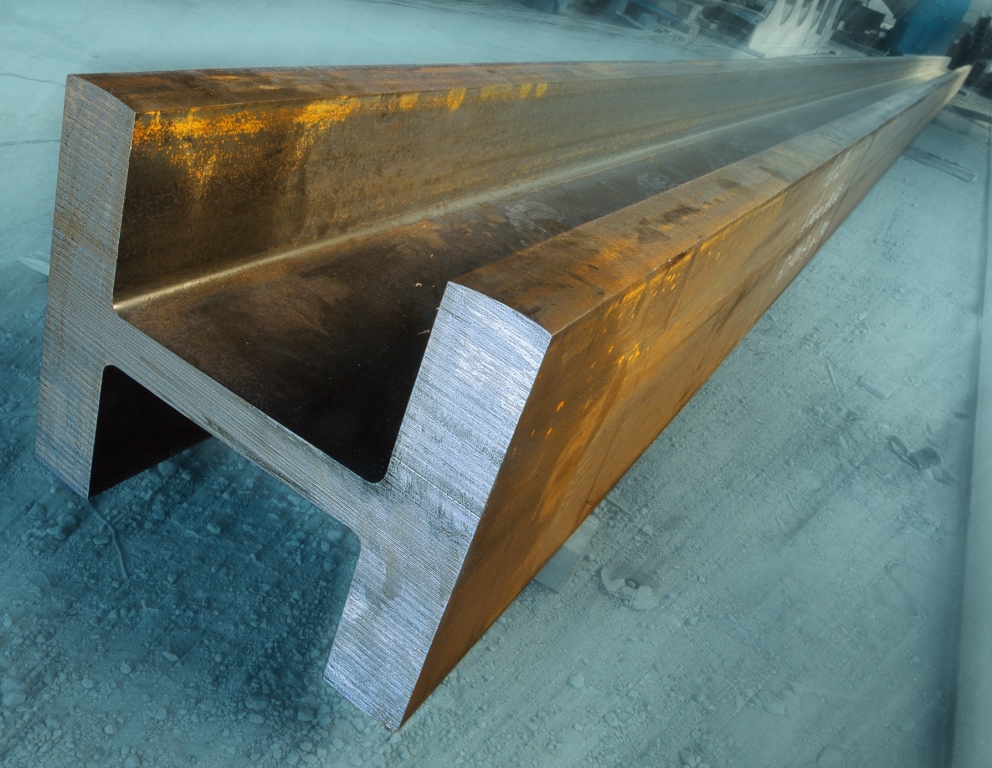
European steel beams prices rise on higher production costs
Fastmarkets’ monthly price assessment for steel beams domestic, delivered Northern Europe was €720-760 ($773- 816) per tonne on Wednesday, up by €10-30 per tonne from €690-750 per tonne a month earlier.
Fastmarkets’ monthly price assessment for steel beams domestic, delivered Southern Europe was €720-760 per tonne on Wednesday, rising by €10-30 per tonne month on month from €690-750 per tonne.
“The mills tell us that it is costing more money [to produce]. it is a cost price-raise,” said a trader source.
Scrap feedstock prices in Turkey’s bellwether market increased over the past month.
Fastmarkets’ calculation of its daily index for steel scrap HMS 1&2 (80:20 mix) North Europe origin, cfr Turkey was $380.31 per tonne on Wednesday, up $6.75 per tonne from $373.56 per tonne on May 20.
Announcements by major mills of higher offers supported the markets’ move upward.
And sources said they were concerned with weak demand and the similar pricing for beams stock and freshly rolled product.
Published by: Holly Chant


Southern European steel longs market conditions stable
Demand was stable and order books in good shape, producer sources said.
Fastmarkets price assessment for steel reinforcing bar (rebar) domestic, exw Italy was €660-675 ($709-725) per tonne on Wednesday, level for a second consecutive week.
Producers had successfully targeted higher prices in May and buyers accepted the price increases due to improved demand and high input costs. This led prices on a general uptrend during May and into early June from €635-645 per tonne on May 1.
Prices have remained stable since rising to the current level at the beginning of June.
But producers could start to target higher prices in the coming weeks ahead of summer production stoppages, sources said.
“The rebar market is not so bad this week. Producers are trying to consolidate current levels, and probably they will announce a new increase to avoid an inversion of direction in price trend,” a buyer source said.
“I would say prices are the same as last week but a new price increase is foreseen for this week, as producers have orders still to deliver in the month and the feeling is that May results will be very negative from an economic point of view for all producers due to input costs,” a producer source said.
Domestic scrap prices in Italy did not decrease as expected in June, pressuring producer profit margins, the same producer source added.
International scrap prices remained largely stable week on week.
Fastmarkets’ calculation of its daily index for steel scrap HMS 1&2 (80:20 mix) North Europe origin, cfr Turkey was $380.31 per tonne on Wednesday, up from $376.42 per tonne a week earlier.
Fastmarkets’ price assessment for steel reinforcing bar (rebar), domestic, delivered, Spain was €645-650 per tonne on Wednesday, narrowing down by €20 per tonne from €645-670 per tonne the previous week.
The Spanish rebar market was reported to be slow with sales becoming scarcer.
Producers were starting to prepare for summer stoppages from the end of July to mid-August, sources said.
Meanwhile rebar exports from Spain were reported at €575-580 per tonne FOB.
Southern European wire rod
Market conditions and prices remained unchanged in the Southern European wire rod market in the week to June 19.
Fastmarkets’ price assessment for steel wire rod (mesh quality), domestic, delivered Southern Europe was €625-640 per tonne on Wednesday stable week on week.
Market sources in Italy and Spain also pointed to summer stoppages as a trigger for wire rod producers to likely attempt price rises in the coming weeks.
IREPAS Outlook
The International Rebar Producers and Exporters Association (IREPAS) reported ongoing weak demand and pessimism in the global steel longs market in its short-range outlook, published on June 7.
“Demand in the global long steel products market continues to lag behind supply and the bottom of the market may not have been seen yet. The steel volumes being produced and being consumed are not growing. On the contrary, they are down in most regions,” the outlook reported.
Activity remained weak especially in Europe with a lack of investment resulting in a fall in construction and infrastructure projects being initiated.
Published by: India-Inés Levy

European HRC buyers see no room for price rebound
Fastmarkets calculated its daily steel hot-rolled coil index domestic, exw Northern Europe at €630.21 ($676.93) per tonne on Thursday, down by €0.67 per tonne from €630.88 per tonne on Wednesday June 19.
The index was down by €5.79 per tonne week on week and by €8.12 per tonne month on month.
Trading was close to non-existent, with only low-tonnage bookings recently reported.
A booking for August-delivery HRC in Germany was heard at €630 per tonne ex-works on Thursday.
And HRC offers from German suppliers were heard at €640-650 per tonne delivered, which would net back to €630-640 per tonne ex-works.
Most buyers estimated the tradable price at around €620-640 per tonne ex-works in Northern Europe.
Buyer sources said there was no room for a price increase, given the slow demand from key steel-using sectors.
Besides, news about some steelmaking capacity restarts in June have “raised eyebrows,” considering that most sources deemed the market as “oversupplied” and stressed all the time that output cuts were needed.
“European mills have short order books and excess tonnages [of HRC] to sell, [so there is a] need to trim output,” a buyer in the Netherlands said.
Slovakia-based steelmaker US Steel Kosice reignited its blast furnace No2 in June and is currently operating all three furnaces.
So far, no announcements about output cuts have been made, but sources told Fastmarkets that mills might consider longer-than-usual summer stoppages to balance the market.
“[A supplier in Southern Europe is] considering a three-week stoppage instead of the traditional two weeks in August and I think other suppliers will try to extend [their] downtime as well,” a buyer source in Germany said.
Sources again stressed the fact that the European flat steel market is oversupplied, and longer summer stoppages might not be enough to balance the market, given slow demand from end-user sectors.
“Demand [for flat steel] is very weak from the end-user side; stocks [at buyers] are not very high, true, but on the other hand, [stocks] are sufficient in the current market,” a second buyer source in Europe said.
Industry sources also had little hope for market effects of the new EU steel import safeguards.
“To see an [HRC price] rebound, we need demand in the first place,” a stockholder in the Benelux area said.
Fastmarkets calculated its corresponding daily steel hot-rolled coil index domestic, exw Italy at €628.75 per tonne on Thursday, up by €0.62 per tonne from €628.13 per tonne on Wednesday.
The index was down by €2.92 per tonne week on week and by €4.58 per tonne month on month.
The Italian market was quiet on Thursday, and prices were largely unchanged.
Official offers from a local supplier were reported at €650 per tonne delivered (€640 per tonne ex-works).
Buyer sources said that tradeable prices were lower at €620-630 per tonne ex-works.
Some lower bids were reported at €610 per tonne ex-works, but seller sources deemed those as too low.
Local suppliers could offer HRC with around five-week lead times.
For September delivery, sources said that one local mill was aiming at a €20-30 per tonne price increase.
But slow demand left no room for a price rise, buyers said.
The market for imported coil was quiet, with no fresh bookings reported on Thursday.
Sources reported offers from Taiwan, Japan and Malaysia for August-shipment coil at €600-625 per tonne CFR.
One source reported an offer from a Vietnamese mill €590 per tonne CFR on Thursday.
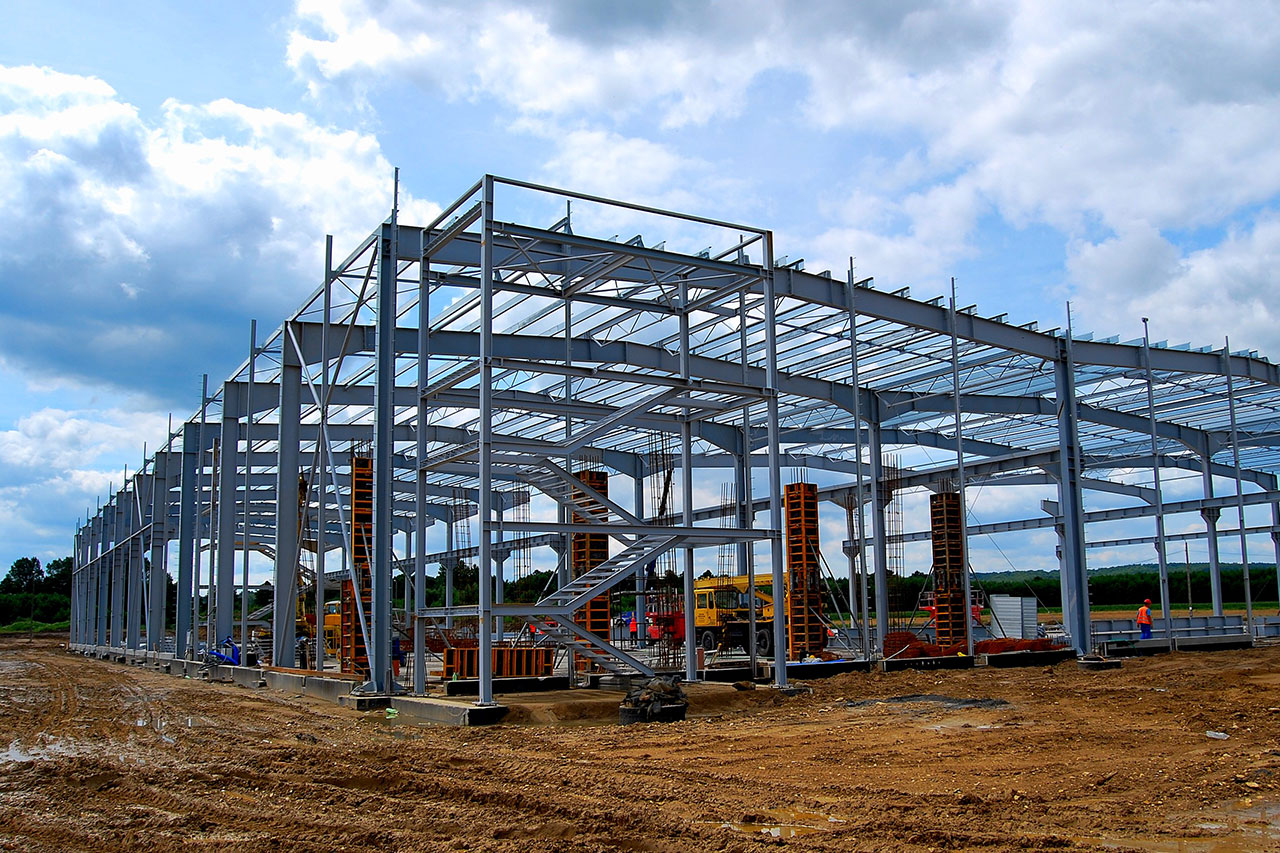
European long steel prices remain largely stable amid a slowdown in construction works
The Northwest European prices for rebar and medium sections remained largely stable in the week to June 19, as construction works were reported to have slowed down due to poor weather conditions in recent weeks.
A distributor source said that “there is no big change; prices are stable at the moment. We are not expecting a change in the short-term.”
The source indicated tradable values for medium sections at Eur740-750/mt delivered and reported mill offers at Eur750-760/mt delivered.
Sources are expecting a much quieter period in the near-term with one source saying, “demand is not great. Mills will close in July and August for the summer holidays. This has normally been the quieter period.”
Another distributor source also said that, due to unfavorable economic conditions and the push for environmental sustainability in the construction industry, demand for domestic rebar in Germany and the Benelux region was generally low.
In relation to the green steel agenda, the source reported that, “mills have increased offers and are asking for 50-100 Euros more per tonne.”
Platts assessed the price of Northwest European rebar stable on the week at Eur610/mt ex-works.
Meanwhile, Platts assessment of European medium sections dropped Eur5 on the week to Eur750/mt delivered Benelux.
Tendai Machemedze


Germany crude steel production down 2% on year in May, first fall in 2024
German steel production in May fell for the first time since the beginning of 2024 by 1.9% year on year to 3.2 million mt, according to the data published on June 20 by German steel federation WV Stahl.
From January to May, a total of around 16.2 million mt of liquid steel was produced, showing a growth of 3.7% compared to the same period last year.
Last month, steel production from the blast furnace route went down by 2.5% year on year to 2.23 million mt while from the electric arc route the decrease was more contained, down by only 0.5% to 954,000 mt.
From January to May production via blast furnace route rose by 2.5% to 11.30 million mt and up by 6.5% via electric arc furnace to 4.87 million mt.
Pig iron production in May fell 3.3% year on year to 2 million mt. In the first five months of 2024, production went up by 2.4% to 10.44 million mt.
In May, hot rolled coils prices moved from Eur640/mt base works Ruhr at the beginning of May to Eur630/mt base ex-works on May 30. Platts assessed hot-rolled coil in Northwest Europe stable on the day at Eur635/mt ($682.24/mt) ex-works Ruhr on June 19.
The German Steel Federation aims to produce steel in a climate-neutral manner by 2045, reducing one-third of the total industrial greenhouse gas emissions. With 35.4 million mt in 2023, Germany has the largest steel production in Europe.
Annalisa Villa

European Commission launches decarbonisation technology viability assessment centre
The European Commission has launched the Innovation Centre for Industrial Transformation and Emissions (INCITE), which will assess whether breakthrough decarbonisation technologies are cost-effective, energy and resource efficient, and ready for use at industrial scale.
Seville-based INCITE will be a key tool in the implementation of the revised Industrial Emissions Directive, the Commission says. It will cover all sectors under the Industrial Emissions Directive, with an initial focus on energy-intensive industries such as steel, cement and chemicals, Kallanish notes.
INCITE’s technical assessments and findings will be accessible to industry, finance institutions, technology providers, permitting authorities and research and technology organisations.
The technical information it provides will help investment decisions in innovative technologies needed to advance Europe’s transition towards a cleaner, climate-neutral, more circular and competitive economy by 2050.
Virginijus Sinkevičius, Commissioner for Environment, Oceans and Fisheries, notes: “INCITE is a pioneering initiative that will accelerate the uptake of cutting-edge technologies and drive a greener, more competitive industry in the EU. As a major tool to deliver our European Green Deal and the new Industrial Emissions Directive, INCITE will unlock the full potential of innovation, reduce investment risks, and promote sustainable growth.”
Adam Smith Poland


Unesid appoints Carola Hermoso as general director
Spanish steel association Unesid has appointed Carola Hermoso, as its new general director. She will replace Andrés Barceló, who has been in the position since July 2009, Kallanish notes.
“Barceló will continue in his duties until January, to guarantee an orderly succession and after he will continue as an advisor to the Unesid Council until June 2025,” the association says.
Hermoso is currently the executive chief of the Spanish Galvanizers Association ATEG and president of the European Galvanizers Association’s environment and safety committee. The newly elected director worked at Unesid between September 2008 and October 2019, with role in the environment, institutional relations, sustainability and corporate.
Todor Kirkov Bulgaria