


EC approves Cogne’s acquisition of Mannesmann Stainless Tubes from Salzgitter
The European Commission has cleared Italian long stainless steel and nickel alloy producer Cogne Acciai Speciali’s acquisition of Mannesmann Stainless Tubes from German steelmaker Salzgitter, the Commission said June 28 in its daily news bulletin.
The Eur135 million ($144.5 million) deal was first announced in February, with Cogne saying at the time the acquisition would widen its footprint to encompass the market for seamless tubes and stainless steel nickel alloy pipes.
The EC said the deal had been approved under the EU Merger Regulation.
“The commission concluded that the notified transaction would not raise competition concerns, given the companies’ limited market positions resulting from the proposed transaction,” it said, adding that the transaction had been examined under the simplified merger review procedure.
MST produces seamless stainless steel and nickel-based tubes at its operating plants in Germany, France, Italy and the US.
Cogne manufactures long products in stainless steel and nickel-based alloys for the aerospace, automotive and energy industries, as well as supplying the medical technology, food, chemical and plant engineering, and mechanical engineering sectors.
Cogne previously provided Mannesmann with semi-finished product.

EU greenlights €265m for H2 Green Steel plant
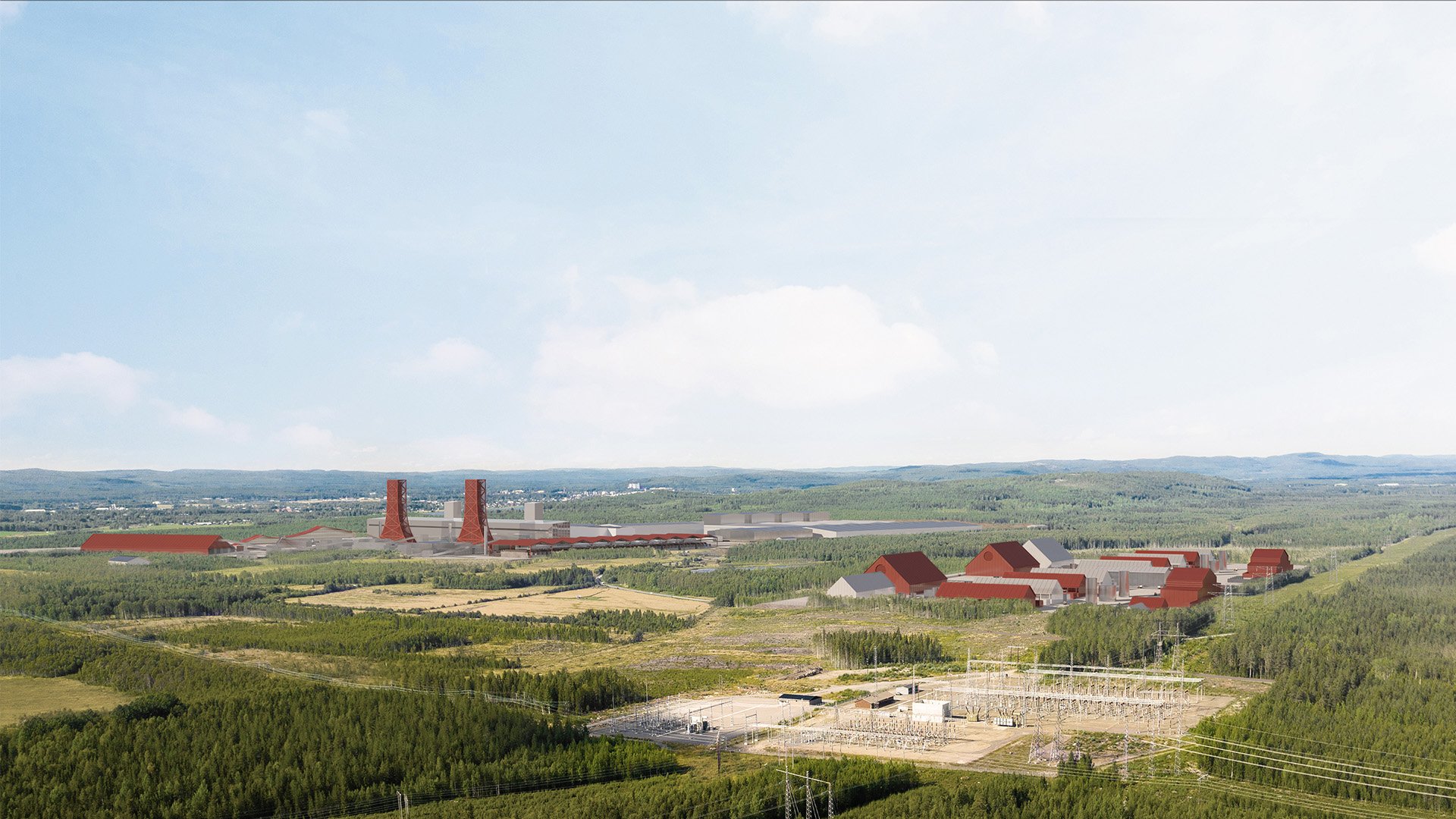
The European Commission (EC) has approved €265 million ($284m) in state aid to Swedish start-up H2 Green Steel (H2GS) for the establishment of its low-emission steel plant, Kallanish reports.
Located in Boden, the plant will have a 690-megawatt electrolyser, a direct reduction plant operating with renewable hydrogen, two electric arc furnaces, a hot strip mill and cold rolling and finishing facilities. With the installations expected to begin operations in 2026, the plant is anticipated to produce 2.4 million tonnes/year of green steel.
The grant, which will be partially funded through the Recovery and Resilience Facility (RRF), brings the total state funding for the project to over €500m. It was previously awarded €250m from the EU’s Innovation Fund. The total investment for the project, however, is estimated to be around €6 billion.
Margrethe Vestager, the EC’s executive vice president in charge of competition policy, says the Swedish aid will support the establishment of Europe’s “first large-scale steel plant based entirely on hydrogen from renewable sources”.
“This plant will also host one of the largest electrolysers in the world,” Vestager adds. “Reducing the climate impact of steelmaking is important for the achievement of the EU’s target of climate neutrality by 2050. At the same time, we ensure competition is not distorted.”
Speaking at the World Hydrogen Summit in Rotterdam last month, Kajsa Ryttberg-Walgren, H2GS vice president for growth and hydrogen business, said the firm is pursuing four new large projects. Located in Quebec, Texas, Brazil and Portugal, the projects are “close to moving into the permitting phase,” she added.
Reethu Ravi UK


Italian distribution reports negative second quarter
According to multiple Italian distribution sources, demand downstream for both long and flat steel is still weak. For many companies, the second quarter brought about a significant decrease in volumes. This has occurred during a seasonally robust period when the sector typically experiences higher profit margins and increased sales volumes.
May saw a disappointing performance in terms of sales and margins, but it was nothing compared to the disastrous month of June that followed. One distributor reports a 30% decline in Q2 turnover. According to another large distributor, volumes have decreased by more than half compared to last year. For certain products like welded tube and merchant bar, sources report selling only a quarter of their typical tonnage, Kallanish notes.
Market participants do not anticipate a resurgence in demand during July. In this challenging market, it seems crucial to maintain a healthy stock level and offer a variety of options to meet the diverse needs of customers in terms of grades and dimensions.
Some mills are also adjusting to this new way of working and are strategically selling primarily from their existing inventory, including a varied product range in their sales. Some distributors say they are striving to maintain their stock at levels consistent with the start of 2024. A third source says his firm may experience losses when it sells its product at low prices, but it can make a profit when restocking at lower prices.
Availability of both longs and flats is limited, but demand is in line with the limited supply. Drawing-quality wire rod is said to remain in the range of €620-630/tonne ($664-675) delivered, while rebar and merchant bar are at €600-630/t ex-works and about €700/t delivered respectively.
Natalia Capra France

Polish rebar prices rise on slow demand, high costs
A Polish mill was heard increasing its offer price for July production rebar by 50 zloty ($12) per tonne, to 2,800 zloty per tonne CPT. The main reasons behind this decision were high production costs, particularly electricity, Fastmarkets understands.
But this price level was not workable, according to buyers.
Most Polish producers kept their offers unchanged at 2,750 zloty per tonne CPT.
Market participants estimated the tradeable market level for volumes of up to 1,000 tonnes in the range of 2,730-2,750 zloty per tonne CPT.
According to sources, for larger volumes, Polish mills could accept levels of around 2,700 zloty per tonne CPT. This level was excluded from the final assessment because it did not comply with Fastmarkets’ methodology.
Thus, Fastmarkets’ weekly price assessment for steel reinforcing bar (rebar), domestic, cpt Poland was 2,730-2,750 zloty per tonne on Friday, narrowing upward by 20 zloty per tonne from 2,710-2,750 zloty per tonne one week prior.
Offers of German material were heard at €635-640 ($679-684) per tonne delivered Poland. This was slightly higher than the offers available in mid-June at €630 per tonne delivered Poland.
“The Polish zloty is back in a strong position again. This usually makes imports more competitive,” a distributor source told Fastmarkets.
According to the online currency converter Oanda.com, €1 was exchanged for 4.31 Polish zloty on Friday. But at the beginning of last week, the zloty was weaker, trading at 4.38 Polish zloty for €1 on June 17.
If the Polish zloty continues to appreciate, the exchange rate will support imports and can put some downward pressure on local rebar prices in the future, sources told Fastmarkets.
Moreover, market participants shared mixed views about local demand for rebar.
“Demand has picked up since the beginning of June,” a second distributor source told Fastmarkets.
The first distributor source, however, said that their sales have been moderate.

HRC prices flat across Europe; mills mull post-summer increases
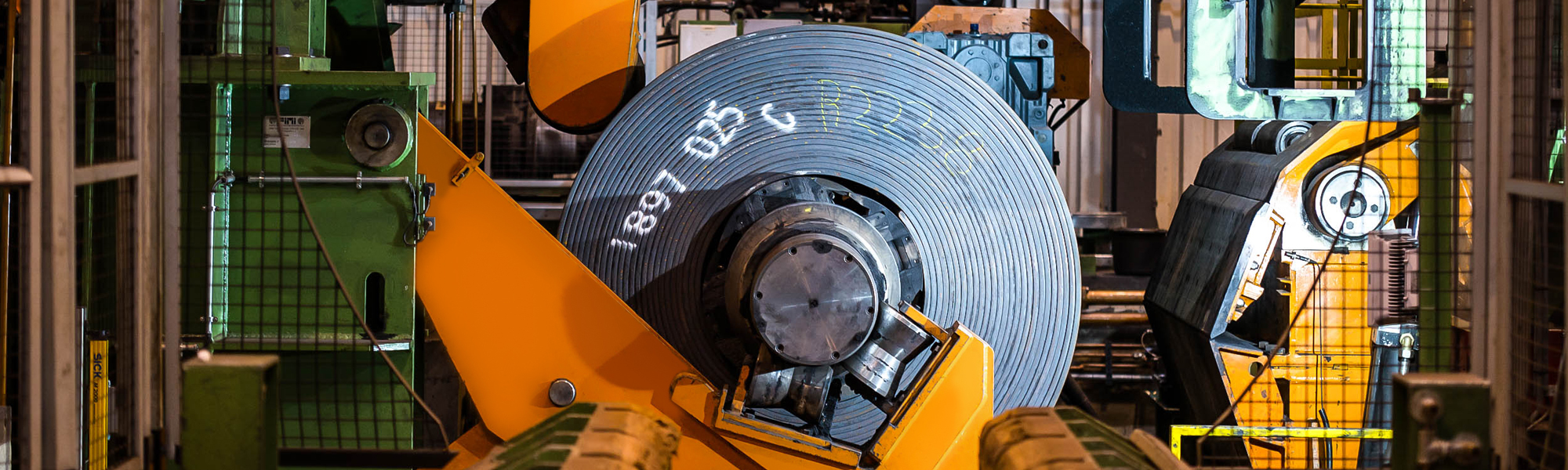
Trading in the spot market across Europe remained subdued, with buyers wary of booking big volumes of HRC ahead of the summer holiday season in Europe and before steel mills settle their long-term contracts with end users, sources said.
In addition, new customs statistics will be available from July 1, with buyers keen to find out how many tonnes of HRC are likely to be customs cleared for the third quarter under the EU’s updated safeguard system, Fastmarkets understands.
Domestic HRC prices were still under pressure from slow demand, oversupply and fierce competition in downstream markets between independent and mill-owned steel service centers or distributors.
“This [competition between service centers and distributors] is a typical when [end-user] demand is sluggish and everyone is fighting for orders,” a mill source said.
European steelmakers have weak order books, sources said, and lead times were estimated at five to six weeks, leaving HRC offers from suppliers in Northern Europe largely unchanged at around €620-650 ($663-695) per tonne ex-works.
Buyer estimates of achievable prices were slightly lower at €620-630 per tonne ex-works.
Sources said that, for September delivery, mills planned increases of €20-30 per tonne, with official announcements likely at the end of July.
Fastmarkets calculated its daily steel hot-rolled coil index domestic, exw Northern Europe at €629.88 per tonne on Friday, down by €0.12 per tonne from €630.00 per tonne on Thursday.
The index was also down by €0.12 per tonne week on week and by €6.62 per tonne month on month.
Despite slow sales, producers were unwilling to provide big discounts in the spot market.
“Negotiations with the automotive industry are now under way and mills hope to roll over prices [for second-half 2024 contracts], so they don’t want to show weakness in spot sales,” a buyer source in Germany said.
For the first half of 2024, contracts with original equipment manufacturers (OEMs) in the automotive industry have reportedly been signed at €750-800 per tonne for HRC.
Buyers have reportedly been seeking discounts of €100 per tonne for the second half of the year, while producers are aiming for a rollover, sources said.
Fastmarkets understands that negotiations are still under way, with one market participant reporting that “nothing has been finalized so far.”
In Southern Europe, meanwhile, Fastmarkets calculated its daily steel hot-rolled coil index domestic, exw Italy at €625.00 per tonne on Thursday, down by €0.42 per tonne from €625.42 per tonne on Thursday.
The index was down by €3.75 per tonne week on week and by €5.00 per tonne month on month.
The latest offers in southern Europe came from an integrated mlll in Italy €640-650 per tonne delivered (€630-640 per tonne ex-works), with a lead time of around five weeks.
But one supplier in the south withdrew from the market earlier this week, sources said, and was apparently mulling a price increase for September delivery HRC.
Bids were reported at €600-620 per tonne ex-works, but the lower end of the range was deemed unworkable by HRC suppliers, sources said.
The market for overseas coil was understandably quiet ahead of the new EU import quota period, sources told Fastmarkets.
“The chance that duties will have to be paid for HRC volumes bought under residual quota is almost 100%, [so] everyone just wants to see how many tonnes exactly will be customs cleared as of July 1, and what the situation is regarding ‘other origins’ [cargoes],” a buyer source in Italy said.