


German car production ends 2024 flat on-year
German passenger production last year came to 4.1 million units, about the same as in 2023, German automotive association VDA reports. December alone, however, saw production drop by 10% compared with December 2023.
This means there was a notable slowdown in the rebound in production seen over the last two years. In 2023, output from German plants rose by 18% year-on-year. In 2022, production increased by 11% on-year, recovering gradually from the shortage of semiconductors that dominated 2021.
However, compared to the pre-Covid year of 2019, 2023/24 output was still 12% lower, the association notes.
In its latest report, VDA provides some detailed production data for electric vehicles until November 2024, broken down by drive type. They show that in November, more electric cars were produced in Germany than in any previous month. Output amounted to 155,700 electric cars, up 29% on-year.
At 120,500 units, more battery electric vehicles rolled off production lines in Germany in a single month than ever before, Kallanish hears. In addition, 35,200 plug-in hybrids (PHEs) were produced.
In total in the first 11 months of 2024, almost 1.3m electric cars were made in Germany. This is already more than in the whole of 2023, VDA notes.
Christian Koehl Germany

Bulgaria steelmakers continue production despite electricity costs
Bulgaria’s metallurgy industry will not stop production despite restrictively high electricity prices, Bulgarian Association of the Metallurgical Industry (BAMI) executive director Politimi Paunova tells Kallanish.
“I hope this is a temporary critical situation caused by high electricity prices and the authorities will continue the compensation scheme for businesses that was in effect until the end of 2024,” she says. “After a reaction from the national employers’ organisations, a solution is expected as soon as possible. Companies, albeit with some delay, should receive the relevant financial aid.”
Bulgarian metallurgical companies continue to operate and there is no information yet about shutdowns, Paunova adds.
“The future not only of Bulgarian metallurgy, but also of the entire European energy-intensive industry depends on energy prices and their comparability with other competitive producers in the world,” the BAMI executive director notes. “At this stage, compensation for businesses is imperative and is not expected to be discontinued in the next few years. Under these conditions, Bulgarian metallurgy, as well as other sectors of industry, can operate and be competitive.”
Paunova points out that stopping production altogether would lead to very high costs when restarting the lines, so steel companies prefer to reduce production to consume less electricity, which results in losses.
Bulgaria’s main employers’ organisations received assurances this week from all political parties in the National Assembly that the mechanism for 100% compensation of companies’ costs at prices above BGN 180 ($94) per megawatt-hour will be continued this year.
Last Friday, the chairman of the Bulgarian Electricity and Gas Association (AIKB), Vasil Velev, called on businesses not to rush to pass the new, still unsubsidised price of electricity in January on to prices of their products and services. Since the beginning of the month, electricity prices have averaged over BGN 250 per megawatt-hour.
On Monday, Velev called on producers not to stop work due to high electricity prices as he is confident the compensation mechanism will be continued.
In January-November, Bulgaria saw crude steel output fall by 3.5% on-year to 426,800 tonnes, according to worldsteel latest data.
Svetoslav Abrossimov Bulgaria

French longs prices flat, market lacks momentum
French long steel prices remain largely stable in comparison to December; however, market participants anticipate mills will increase quotes across long products, Kallanish hears.
Market activity has not fully rebounded following the year-end holiday break, with both sellers and buyers indicating a sluggish beginning to the year. A surge in buying activity is however expected next week. With minimal change from the fourth quarter, moderate volumes and frequent but modest-tonnage purchases are anticipated to dominate the market in the upcoming weeks.
The primary concern is that the distribution sector has failed to transmit downstream the price increases carried out in December, as the performance of the construction sector continues to underwhelm. A significant buyer of long products expects the construction sector in France will remain lacklustre throughout the first half of the year. According to a distributor, “we do not see the light at the end of the tunnel, and consumption has not yet resumed.”
Domestic merchant bar pricing in France remains stable month-to-month, within a range of €230-250/tonne ($235.9-256.4) delivered, depending on volumes. Effective levels, including size extras, are hovering at €640-670/t delivered. The first category of sections is also flat on-month, hovering at around €760-770/t delivered.
The price increases enacted in December for merchant bar and beams failed to produce the desired results. The domestic rebar market is experiencing a mild price uptick of about €10/t; however, there has been no notable improvement in sales activity.
Rebar prices are currently averaging at €620/t delivered, occasionally reaching €630/t for smaller quantities, sources suggest.
A purchasing group source indicates that if the current subdued market conditions persist, the distribution sector will be compelled to scale back production levels.
Natalia Capra France

HRC prices in Europe hold steady; buyers assess market conditions
Mills in Northern Europe have improved their order books, which allowed them to maintain comparatively high offers for the first quarter of 2025, Fastmarkets understands.
Offers of HRC with delivery in March were heard at €570-620 ($585-637) per tonne ex-works, with the lower end of the price range not widely available in the market.
According to industry sources, some producers were even fully booked for the first quarter of the year, and offers for the next quarter were heard at €620-630 per tonne ex-works.
But the targeted prices of producers at levels of €600 per tonne and higher have not been sealed in deals yet, Fastmarkets understands.
“The market is currently a bit boring. Buyers are mainly in a ‘wait-and-see’ mode,” a distributor source based in Germany told Fastmarkets.
The source added that buyers’ warehouses had sufficient volumes of the material, and currently, there was no restocking.
The distributor was also not optimistic about future market developments.
“There are no positive signs so far from the main steel-consuming sectors, such as automotive and construction,” the source added.
Levels significantly higher than €570 per tonne ex-works were considered not workable according to industry sources.
Fastmarkets calculated its daily steel hot-rolled coil index, domestic, exw Northern Europe at €572.79 per tonne on Wednesday, down by just €0.54 per tonne from €573.33 per tonne on Tuesday.
The index was up by €6.54 per tonne week on week and by €10.29 per tonne month on month.
Meanwhile, in Southern Europe, Fastmarkets calculated its corresponding daily steel hot-rolled coil index, domestic, exw Italy at €570.00 per tonne on Wednesday, unchanged from the previous calculation on Tuesday.
The index was also up by €7.50 per tonne week on week and by €8.50 per tonne month on month.
Offers of March-delivery HRC were heard in Italy at €610-620 per tonne delivered, which would net back to €600-610 per tonne ex-works, Fastmarkets understands.
But due to a mismatch between seller and buyer views on the prices, no major deals were heard in the market.
“Buyers have been bidding at €560-580 per tonne ex-works, but without success,” a buyer source based in Italy told Fastmarkets.
The market for imported HRC also remained quiet.
A second buyer source told Fastmarkets that there was no interest in such material due to the anti-dumping investigation against HRC from Egypt, India, Japan, and Vietnam and the new steel safeguard measures review of the European Commission.
Turkey was heard offering HRC at €590-610 per tonne CFR Italy, including the anti-dumping duty.
HRC from Indonesia was on offer to Italy at €550-560 per tonne CFR.
But buyers’ estimations for the workable market level of imported HRC were lower at €530-550 per tonne CFR, and no major deals were heard in the market.


Italian steel plate prices slightly firmer, but demand limited
But the Italian market was still quiet and trading limited.
Italian plate producers were maintaining their offer prices for new rolling at €650 ($667) per tonne ex-works and even higher in some cases.
Buyers, meanwhile, estimated the tradable level at €630-640 per tonne ex-works.
Very few transactions were reported within that range during the assessment week to Wednesday.
One supplier claimed to have sold a minor tonnage at €650 per tonne ex-works, but a producer source told Fastmarkets that sales below €640-650 were not possible due to costs.
Fastmarkets’ weekly price assessment for steel domestic plate, 8-40 mm, exw Southern Europe was €630-650 per tonne on Wednesday, widening up from €630-640 per tonne seven days earlier.
Some suppliers said that a second round of increases, to around €670-680 per tonne ex-works, would be needed because of the current high costs of production – including the cost of steel slab and electricity.
However, buyers were skeptical about any potential price rise.
“There is not enough demand to support [a price rise]. Even €650 [per tonne ex-works] is still hard to get,” a buyer source said.
The Italian market for imported steel plate was also quiet, Fastmarkets understands.
“Import prices are too high. Plus safeguards are currently under review, so there’s a potential risk of stricter measures as of April,” a second buyer said.
“The European market is at a standstill and shipments from Asia are [only likely to] start in end February-early March at the earliest, means arrival in April-May, which would be too risky,” the buyer added.
Steel plate from South Korea and Indonesia, meanwhile, was on offer to Italy at €570-580 per tonne CFR in the week to Wednesday, sources said.

Hydnum Steel and Gonvarri Industries join forces to lead the green steel revolution in Iberia
Hydnum Steel, the first steelmaker to produce green steel on the Iberian Peninsula, has signed a landmark strategic agreement with Gonvarri Industries, a global leader in metal transformation, to drive the transition towards sustainable industrial practices in Spain and beyond.
The agreement, valued at €1 billion over an initial seven-year period, underscores a shared vision to promote green steel as a cornerstone for sustainable development. Hydnum Steel will supply decarbonised steel from its state-of-the-art green steel plant in Puertollano, set to become Spain’s leading producer with an annual capacity of 2.6 million tonnes of flat steel.
This partnership highlights both companies’ dedication to innovation and environmental responsibility, positioning Spain as a European leader in green steel production.
The collaboration between Hydnum and Gonvarri aims to integrate green steel into key sectors such as construction, energy, and automotive, offering high-quality, low-carbon products that meet the strictest environmental standards.
Hydnum Steel CEO Eva Maneiro highlighted the company’s ambitious mission: “It’s not enough to be part of the change; we must lead it. Every tonne of green steel and every innovation we bring to the market challenges conventions and pushes the industry towards a truly sustainable future.”
Josu Calvo, CEO of Gonvarri Industries, echoed this sentiment: “Green steel is essential to meeting the sustainability demands of our customers and society. This agreement with Hydnum Steel strengthens our commitment to cleaner and more responsible steel.”
With over 65 years of expertise, Gonvarri Industries is a Spanish multinational specializing in transforming flat steel, aluminium, and metal solutions for industries including renewable energy, infrastructure, and automotive. Operating 59 factories in 21 countries, the company is a global leader in high-quality metal products and a pioneer in adopting advanced, sustainable technologies.
GLGH Steel acquires Romanian Artrom Steel Tubes
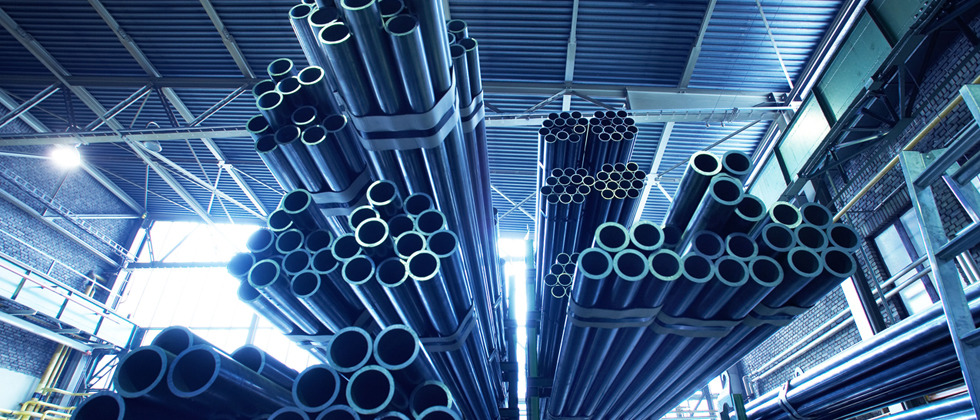
GLGH Steel, LLC, a subsidiary of Chicago-based Great Lakes Global Holdings (GLGH), has announced the acquisition of Artrom Steel Tubes S.A., a leading Romanian producer of seamless steel tubes headquartered in Slatina and Resita.
The purchase agreement, finalized in November with Artrom’s previous Serbian owners, is subject to regulatory approval from Romanian authorities.
Adam Hitchcock, Founder and Managing Partner of GLGH, emphasized the company’s enthusiasm for the acquisition: “Artrom Steel Tubes S.A. is a strong, modern industrial company with a promising future and global potential. We are committed to supporting its growth, exploring new markets across Europe, North America, and beyond.”
GLGH plans to focus on strategic areas such as defense production and decarbonization, reflecting its commitment to innovation and sustainable development. These initiatives will involve substantial investments to drive long-term competitiveness and market leadership.
This acquisition safeguards over 2.000 jobs in southern Romania’s Olt and Caras-Severin counties and promises significant economic contributions through millions of dollars in investments. The company’s development plans include expanding production lines, entering new markets, and maintaining its leadership in the steel tube industry.
Artrom will continue to play a critical role in supplying key sectors such as energy, mechanical engineering, and oil and gas industries, benefiting from GLGH Steel’s global vision and resources.
Adrian Popescu, Chairman of the Board of Artrom, expressed gratitude to the previous owners for their leadership and optimism about the company’s future: “Under new ownership, Artrom is poised to implement its development plans without delay, ensuring stability and growth for employees, clients, and stakeholders.”